 Talmud Bavli
Ketubot 17a : Youtube
Daf TubeYoutube
1 video class :
Ketubot Page 17a
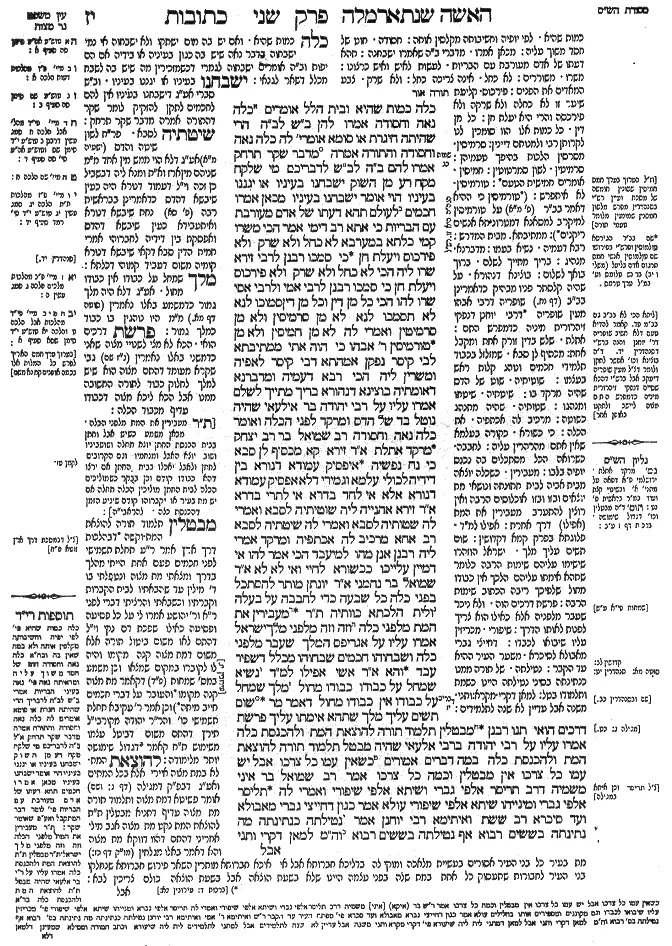
Ketubot 17a - Guemara
כלה כמות שהיא ובית הלל אומרים כלה נאה וחסודה אמרו להן ב"ש לב"ה הרי שהיתה חיגרת או סומא אומרי' לה כלה נאה וחסודה והתורה אמרה (שמות כג, ז) מדבר שקר תרחק אמרו להם ב"ה לב"ש לדבריכם מי שלקח מקח רע מן השוק ישבחנו בעיניו או יגננו בעיניו הוי אומר ישבחנו בעיניו מכאן אמרו חכמים לעולם תהא דעתו של אדם מעורבת עם הבריות כי אתא רב דימי אמר הכי משרו קמי כלתא במערבא לא כחל ולא שרק ולא פירכוס ויעלת חן כי סמכו רבנן לרבי זירא שרו ליה הכי לא כחל ולא שרק ולא פירכוס ויעלת חן כי סמכו רבנן לרבי אמי ולרבי אסי שרו להו הכי כל מן דין וכל מן דין סמוכו לנא לא תסמכו לנא לא מן סרמיסין ולא מן סרמיטין ואמרי לה לא מן חמיסין ולא מן טורמיסין ר' אבהו כי הוה אתי ממתיבתא לבי קיסר נפקן אמהתא דבי קיסר לאפיה ומשרין ליה הכי רבא דעמיה ומדברנא דאומתיה בוצינא דנהורא בריך מתייך לשלם אמרו עליו על רבי יהודה בר אילעאי שהיה נוטל בד של הדס ומרקד לפני הכלה ואומר כלה נאה וחסודה רב שמואל בר רב יצחק מרקד אתלת א"ר זירא קא מכסיף לן סבא כי נח נפשיה איפסיק עמודא דנורא בין דידיה לכולי עלמא וגמירי דלא אפסיק עמודא דנורא אלא אי לחד בדרא אי לתרי בדרא א"ר זירא אהנייה ליה שוטיתיה לסבא ואמרי לה שטותיה לסבא ואמרי לה שיטתיה לסבא רב אחא מרכיב לה אכתפיה ומרקד אמרי ליה רבנן אנן מהו למיעבד הכי אמר להו אי דמיין עלייכו ככשורא לחיי ואי לא לא א"ר שמואל בר נחמני א"ר יונתן מותר להסתכל בפני כלה כל שבעה כדי לחבבה על בעלה ולית הלכתא כוותיה ת"ר מעבירין את המת מלפני כלה וזה וזה מלפני מלך ישראל אמרו עליו על אגריפס המלך שעבר מלפני כלה ושבחוהו חכמים שבחוהו מכלל דשפיר עבד והא א"ר אשי אפילו למ"ד נשיא שמחל על כבודו כבודו מחול מלך שמחל על כבודו אין כבודו מחול דאמר מר (דברים יז, טו) שום תשים עליך מלך שתהא אימתו עליך פרשת דרכים הואי תנו רבנן מבטלין תלמוד תורה להוצאת המת ולהכנסת כלה אמרו עליו על רבי יהודה ברבי אלעאי שהיה מבטל תלמוד תורה להוצאת המת ולהכנסת כלה במה דברים אמורים כשאין עמו כל צרכו אבל יש עמו כל צרכו אין מבטלין וכמה כל צרכו אמר רב שמואל בר איני משמיה דרב תריסר אלפי גברי ושיתא אלפי שיפורי ואמרי לה תליסר אלפי גברי ומינייהו שיתא אלפי שיפורי עולא אמר כגון דחייצי גברי מאבולא ועד סיכרא רב ששת ואיתימא רבי יוחנן אמר נטילתה כנתינתה מה נתינתה בששים רבוא אף נטילתה בששים רבוא וה"מ למאן דקרי ותני
Comments from Rashi on Masechet Ketubot Page 17a
כמות שהיא . לפי יופיה וחשיבותה מקלסין אותה: חסודה . חוט של חסד משוך עליה: מכאן אמרו . מדברי ב"ה שאמרו ישבחנה: תהא דעתו של אדם מעורבת עם הבריות . לעשות לאיש ואיש כרצונו: משרו . משוררים: לא כחל . אינה צריכה כחל: ולא שרק . צבע המאדים את הפנים: פירכוס . קליעת שיער זו לא כחלה ולא שרקה ולא פירכסה והרי היא יעלת חן: כל מן דין . כל כמות אלו הוו סומכין לנו לקרותן רבי ולמנותם דיינין: סרמיסין . מסרסין הלכות בהיפך טעמיהן: סרמיטין . לשון סמרטוטין: חמיסין . אומרים חמישית הטעם: טורמיסין . לא איתפרש: (טורמיסין כי ההיא דאמר בב"ר (פ' מ"א) על טורמיסין למיקרב למסאנא דמטרוניתא אנשים ריקנים): ממתיבתא . מבית המדרש: רבא דעמיה . נשיא בעמו: מדברנא . מנהיג: בריך מתייך לשלם . ברוך בואך לשלום: בוצינא דנהורא . על שהיה קלסתר פניו מבהיק כדאמרינן בב"ב (דף נח.) שופריה דרבי אבהו מעין שופריה דרבי יוחנן דנפקי זיהרורית מיניה כדמפרש התם: אתלת . שלש בדין זורק אחת ומקבל אחת: מכסיף לן סבא . שמזלזל בכבוד תלמידי חכמים ונוהג קלות ראש בעצמו: שוטיתיה . שוט של הדס שהיה מרקד בו: שיטתיה . שיטתו ומנהגו: שטותיה . שהיה מתנהג כשוטה: שיטתיה . שיטתו ומנהגו: מרכיב לה אכתפיה . את הכלה: כי כשורא . כקורה בעלמא שאין אתם מהרהרין עליה: לחבבה . כשרואה הכל מסתכלים בה נכנס יופיה בלבו: מעבירין . כשכלה יוצאה מבית אביה לבית חתונתה ונושאי מת יוצאים ובזו ובזו אוכלוסים הרבה ואין רוצין להתערב מעבירין את המת (אפילו) דרך אחרת: אפילו למ"ד . פלוגתא בפרק קמא דקדושין: שום תשים עליך מלך . ישראל הוזהרו שישימו עליהם שימות הרבה כלומר שתהא אימתו עליהם הלכך אין כבודו מחול שלפיכך ריבה הכתוב שימות הרבה: פרשת דרכים הוה . ולא ניכר שעבר מלפניה אלא כאילו הוא צריך לפנות לאותו הדרך: שיפורי . מכריזין עליו שיבואו לכבדו: דחייצי גברי מאבולא לסיכרא . משער העיר ההיא עד הקבר: נטילתה . של תורה ממנו כנתינתה בסיני נטילתה היינו כשמת ותלמודו בטל: למאן דקרי . מקרא: ותני . משנה אבל עדיין לא שנה לתלמידים:
Comments from Tosafot - Ketubot 17a
כלה כמות שהיא . ואם יש בה מום ישתקו ולא ישבחוה אי נמי ישבחוה בדבר נאה שיש בה כגון בעיניה או בידיה אם הם יפות וב"ה אומרים ישבחוה לגמרי דכשמזכירין מה שיש בה לשבח מכלל דשאר לגנאי: ישבחנו בעיניו או יגננו בעיניו . וב"ש סברי אע"ג דישבחנו בעיניו אין להם לחכמים לתקן להזקיק לומר שקר דהתורה אמרה מדבר שקר תרחק: שיטתיה לסבא . פר"ח לשון שיטה והדס (ישעיה מ"א) אע"ג דלא הוי ממש מין אחד מ"מ שניהם מין ארז וא"ת ומנא ליה דבשביל כן זכה וי"ל דעמוד דנורא היה כעין שיבשא דהדס כדאמרינן בבראשית רבה (פ' סא) נחת שיבשא דנורא ואיתעבידא כעין שיבשא דהדס ואפסקת בין דידיה לחברוהי אמרי חמית הדין סבא דקאי שיבשא דנורא קומיה משום דעביד קמוהי דכלתא: מלך שמחל על כבודו אין כבודו מחול . אע"ג דלא היה מלך גמור כדמשמע באלו נאמרין (סוטה דף מא.) מ"מ היו נוהגין בו כבוד כמלך גמור: פרשת דרכים הואי . הכא לא מצי לשנויי מצוה שאני כדמשני באלו נאמרין (ג"ז שם) גבי שקרא מעומד דהתם מצוה הוא שיש למלך לחלוק כבוד לתורה החשובה ממנו אבל הכא ליכא מצוה דכבודו עדיף מכבוד הכלה: מבטלין תלמוד תורה להוצאת המת . וקשה דבהלכות דרך ארץ אמר ר"ע תחלת תשמישי לפני חכמים פעם אחת הייתי מהלך בדרך ומצאתי מת מצוה ונטפלתי בו ד' מילין עד שהבאתיו לבית הקברות וקברתיו וכשבאתי והרציתי דברי לפני ר"א ור' יהושע אמרו לי על כל פסיעה ופסיעה כאילו שפכת דם נקי וי"ל דהתם לאו משום ביטול תורה אלא משום דמת מצוה קנה מקומו והיה לו לקוברו במקום שמצאו וכן משמע במס' שמחות (פ"ד) דקאמר מת מצוה קנה מקומו והעובר על דברי חכמים חייב מיתה וכן אמר ר' עקיבא תחלת תשמישי כו' והר"ר יהודה מקורבי"ל תירץ דהתם משום דביטל עצמו משימוש ת"ח קאמר דגדול שימושה יותר מלימודה: להוצאת המת . לא במת מצוה איירי אלא בכל המתים ואע"ג דבפ"ק דמגילה (דף ג: ושם) אומר פשיטא דמת מצוה ותלמוד תורה מת מצוה עדיף דתניא מבטלין ת"ת להוצאת המת נקט מת מצוה אגב מילי אחריני דהתם דהוו דווקא מת מצוה והא דאמר באלו מגלחין (מו"ק דף כז:) מת בעיר כל בני העיר אסורים בעשיית מלאכה ומוקי לה בדליכא חברותא אבל אי איכא חברותא מותרין השאר פירוש חברותא שנחלקו בני העיר לחבורות שתעסוק כל אחת במת שלה בפני עצמה היינו שלא בשעת הוצאה אבל בשעת הוצאה כולם צריכין לבא:
Ketubot 17a - Mishnah translated into english
One recites praise of the bride as she is, emphasizing her good qualities. And Beit Hillel say: One recites: A fair and attractive bride. Beit Shammai said to Beit Hillel: In a case where the bride was lame or blind, does one say with regard to her: A fair and attractive bride? But the Torah states: “Keep you from a false matter” (Exodus 23:7). Beit Hillel said to Beit Shammai: According to your statement, with regard to one who acquired an inferior acquisition from the market, should another praise it and enhance its value in his eyes or condemn it and diminish its value in his eyes? You must say that he should praise it and enhance its value in his eyes and refrain from causing him anguish. From here the Sages said: A person’s disposition should always be empathetic with mankind, and treat everyone courteously. In this case too, once the groom has married his bride, one praises her as being fair and attractive.
When Rav Dimi came from Eretz Yisrael to Babylonia, he said: This is what they sing before brides in the West, in Eretz Yisrael: No eye shadow, and no rouge, and no braiding of the hair, and yet she is comparable to a graceful ibex. The Gemara relates: When the Sages ordained Rabbi Zeira, this is what they metaphorically sang with regard to him in his praise: No eye shadow, and no rouge, and no braiding of the hair, and yet she is comparable to a graceful ibex.
On a related note, the Gemara relates: When the Sages ordained Rabbi Ami and Rabbi Asi, this is what they sang to them: Anyone from people of this kind and anyone from people of that kind, ordain them for us. Do not ordain for us others, neither from those who corrupt [sarmisin] halakhot, nor from those who are worthless [sarmitin]. And some say: Not from those who provide only one-fifth [ḥamisin] of the reason for a halakha, and not from those whose knowledge is incomplete [turmisin].
The Gemara relates another instance of singing the praise of the Sages: When Rabbi Abbahu would come from the academy to the house of the emperor, the maidservants of the emperor’s house would go out to greet him, and this is what they sang to him: Master of his people and leader of his nation, candle of illumination, blessed is your arrival in peace.
With regard to the mitzva of bringing joy to the bride and groom, the Gemara relates: The Sages said about Rabbi Yehuda bar Elai that he would take a myrtle branch and dance before the bride, and say: A fair and attractive bride. Rav Shmuel bar Rav Yitzḥak would base his dance on three myrtle branches that he would juggle. Rabbi Zeira said: The old man is humiliating us, as through his conduct he is demeaning the Torah and the Torah scholars. It is further related: When Rav Shmuel bar Rav Yitzḥak died, a pillar of fire demarcated between him and everyone else, and we learn through tradition that a pillar of fire demarcates only for either one person in a generation or for two people in a generation.
Rabbi Zeira said: His branch [shotitei] was effective for the old man, as it is due to this mitzva that he fulfilled so enthusiastically that he was privileged to receive this great reward. And some say that Rabbi Zeira said: His nonsense [shetutei] was effective for the old man. And some say that he said: His method [shittatei] was effective for the old man.
Rav Aḥa would place the bride on his shoulders and dance. The Sages said to him: What is the ruling? Is it permitted for us to do so as well? He said to them: If brides are comparable for you to a beam, fine, but if not, no, you may not.
Rabbi Shmuel bar Naḥmani said that Rabbi Yonatan said: It is permitted to look at the face of a bride throughout all seven days of the wedding celebration, in order to endear her to her husband, whose appreciation of her beauty will be thereby enhanced. The Gemara notes: And the halakha is not in accordance with his opinion, as it is prohibited to look at any married woman, even a bride.
§ The Sages taught: One reroutes the funeral procession for burial of a corpse to yield before the wedding procession of a bride. And both this, the funeral procession, and that, the wedding procession, yield before a king of Israel. They said about King Agrippa [Agrippas] that although he was not required to do so, he rerouted his entourage before the wedding procession of a bride, and the Sages praised him for doing so.
The Gemara asks: The Sages praised him; is that to say by inference that he did well in yielding? But didn’t Rav Ashi say: Even according to the one who said with regard to a Nasi who relinquishes the honor due him that his honor is relinquished, i.e., he may do so, with regard to a king who relinquishes the honor due him, his honor is not relinquished. As the Master said that the meaning of the verse “You shall place a king over you” (Deuteronomy 17:15) is that his awe shall be upon you. The Torah established that the subjects’ awe is an essential component of kingship and it is not the prerogative of the king to waive it. The Gemara answers: It was at a crossroads that he encountered the wedding procession, and the fact that he yielded to the bride was not obvious to onlookers. Therefore, the honor due the king was not compromised.
The Sages taught: One suspends the study of Torah to attend the removal of a corpse for burial and to attend the entry of a bride into the wedding canopy. The Sages said about Rabbi Yehuda, son of Rabbi Elai, that he would suspend the study of Torah to attend the removal of a corpse for burial and to attend the entry of a bride into the wedding canopy. In what case is this statement said? In a case where there are not enough people with him, i.e., accompanying the corpse, to satisfy all his needs, i.e., to appropriately honor him. However, if there are enough people with him to satisfy all his needs, one does not suspend Torah study.
The Gemara asks: And how many people constitute all his needs? Rav Shmuel bar Eini said in the name of Rav: Twelve thousand men and six thousand additional men each sounding a shofar to herald the approaching funeral procession. And some say: Thirteen thousand men and, among them, six thousand men sounding a shofar. Ulla said: All his needs means a crowd large enough so that the men in the funeral possession form a partition stretching from the gate of the city [abbula] until the cemetery. Rav Sheshet, and some say Rabbi Yoḥanan, said: The number of people required for taking of the Torah from the Jewish people with the death of a Torah scholar is equivalent to the number present at its giving to the Jewish people. Just as its giving took place with six hundred thousand men present at Sinai, so too, the taking of the Torah at the funeral of a Torah scholar is with six hundred thousand men. The Gemara notes: This applies only to one who read the Bible and studied mishna, i.e., one who is a student of Torah, and consequently worthy of that honor.
Traduction : The William Davidson digital edition of the Koren Noé Talmud, with commentary by Rabbi Adin Even-Israel Steinsaltz.