 Talmud Bavli
Ketubot 8a : Youtube
Rabbi Dr. Moshe WeisblumYoutube
1 video class :
Ketubot Page 8a
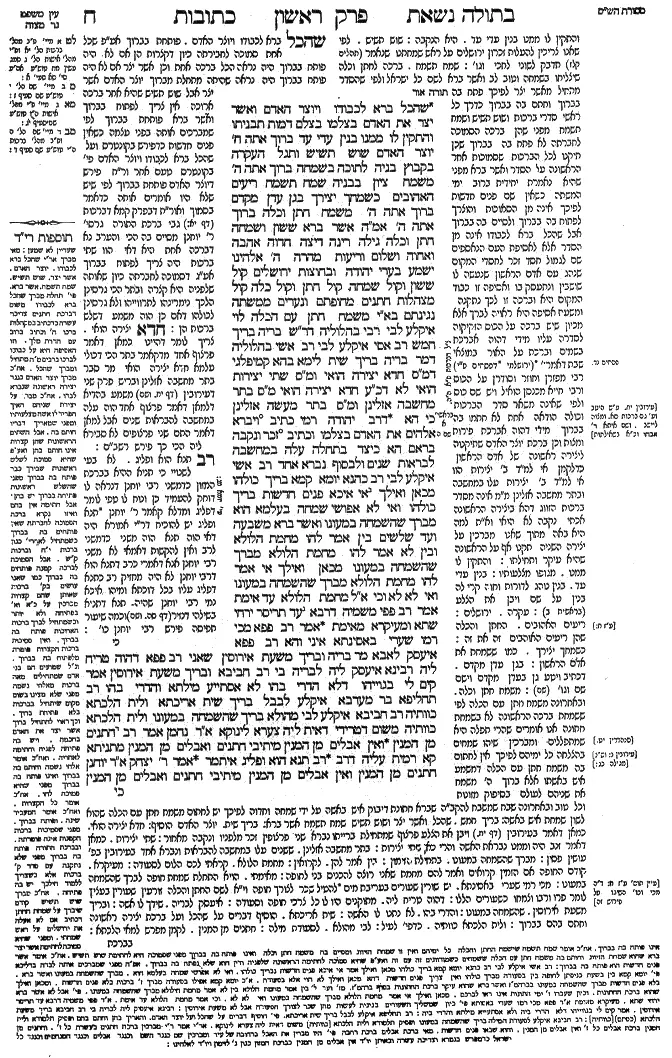
Ketubot 8a - Guemara
שהכל ברא לכבודו ויוצר האדם ואשר יצר את האדם בצלמו בצלם דמות תבניתו והתקין לו ממנו בנין עדי עד ברוך אתה ה' יוצר האדם שוש תשיש ותגל העקרה בקבוץ בניה לתוכה בשמחה ברוך אתה ה' משמח ציון בבניה שמח תשמח ריעים האהובים כשמחך יצירך בגן עדן מקדם ברוך אתה ה' משמח חתן וכלה ברוך אתה ה' אמ"ה אשר ברא ששון ושמחה חתן וכלה גילה רינה דיצה חדוה אהבה ואחוה ושלום וריעות מהרה ה' אלהינו ישמע בערי יהודה ובחוצות ירושלים קול ששון וקול שמחה קול חתן וקול כלה קול מצהלות חתנים מחופתם ונערים ממשתה נגינתם בא"י משמח חתן עם הכלה לוי איקלע לבי רבי בהלוליה דר"ש בריה בריך חמש רב אסי איקלע לבי רב אשי בהלוליה דמר בריה בריך שית לימא בהא קמיפלגי דמ"ס חדא יצירה הואי ומ"ס שתי יצירות הואי לא דכ"ע חדא יצירה הואי מ"ס בתר מחשבה אזלינן ומ"ס בתר מעשה אזלינן כי הא דרב יהודה רמי כתיב (בראשית א, כז) ויברא אלהים את האדם בצלמו וכתיב (בראשית ה, ב) זכר ונקבה בראם הא כיצד בתחלה עלה במחשבה לבראות שנים ולבסוף נברא אחד רב אשי איקלע לבי רב כהנא יומא קמא בריך כולהו מכאן ואילך אי איכא פנים חדשות בריך כולהו ואי לא אפושי שמחה בעלמא הוא מברך שהשמחה במעונו ואשר ברא משבעה ועד שלשים בין אמר להו מחמת הלולא ובין לא אמר להו מחמת הלולא מברך שהשמחה במעונו מכאן ואילך אי אמר להו מחמת הלולא מברך שהשמחה במעונו ואי לא לא וכי א"ל מחמת הלולא עד אימת אמר רב פפי משמיה דרבא עד תריסר ירחי שתא ומעיקרא מאימת אמר רב פפא מכי רמו שערי באסינתא איני והא רב פפא איעסק לאבא מר בריה ובריך משעת אירוסין שאני רב פפא דהוה טריח ליה רבינא איעסק ליה לבריה בי רב חביבא ובריך משעת אירוסין אמר קים לי בגוייהו דלא הדרי בהו לא אסתייע מילתא והדרי בהו רב תחליפא בר מערבא איקלע לבבל בריך שית אריכתא ולית הלכתא כוותיה רב חביבא איקלע לבי מהולא בריך שהשמחה במעונו ולית הלכתא כוותיה משום דטרידי דאית ליה צערא לינוקא א"ר נחמן אמר רב חתנים מן המנין ואין אבלים מן המנין מיתיבי חתנים ואבלים מן המנין מתניתא קא רמית עליה דרב רב תנא הוא ופליג איתמר אמר ר' יצחק א"ר יוחנן חתנים מן המנין ואין אבלים מן המנין מיתיבי חתנים ואבלים מן המנין
Comments from Rashi on Masechet Ketubot Page 8a
והתקין לו ממנו . מגופו מצלעותיו: בנין עדי עד . בנין נוהג לדורות וחוה קרי לה בנין על שם ויבן את הצלע (בראשית ב): שוש תשיש . לפי שאנו צריכין להעלות זכרון ירושלים על ראש שמחתנו שנאמר (תהלים קלז) תדבק לשוני לחכי וגו': עקרה . ירושלים: שמח תשמח . ברכה לחתן וכלה שיצליחו בשמחה וטוב לב ואשר ברא לשם כל ישראל ולפי שהסדר מתחיל מאשר יצר לפיכך פתח בה בברוך וחתם בה בברוך כדרך כל ראשי סדרי ברכות ושוש תשיש ושמח תשמח מפני שהן ברכה הסמוכה לחברתה לא פתח בה בברוך שכן תיקנו לכל הברכות שסמוכות אחר הראשונה על הסדר ואשר ברא מפני שהיא נאמרת יחידית ברוב ימי המשתה כשאין שם פנים חדשות לפיכך אינה מן הסמוכות והוצרך לפתוח בה בברוך ולסיים בה בברוך אבל שהכל ברא לכבודו אינה מן הסדר אלא לאסיפת העם הנאספים שם לגמול חסד זכר לחסדי המקום שנהג עם אדם הראשון שנעשה לו שושבין ונתעסק בו ואסיפה זו כבוד המקום היא וברכה זו לכך נתקנה ומשעת אסיפה היא ראויה לברך אלא מכיון שיש ברכה על הכוס הזקיקוה לסדרה עליו מידי דהוה אברכת בשמים וברכת על האור במוצאי שבת דאמרי' (ירושלמי דפסחים פ"י) רבי מפזרן וחוזר וסודרן על הכוס ורבי חייא מכנסן הואיל ויש שם כוס ולפי שאינה משאר סדר הברכות וכולה הודאה אחת לא חתמו בה בברוך מידי דהוה אברכת פירות ומצות וכן ברכת יוצר האדם שתיקנוה ליצירה ראשונה של אדם הראשון כדלקמן אי למ"ד ב' יצירות הוו אי למ"ד ב' יצירות עלו במחשבה ובתר מחשבה אזלינן מ"מ אינה מסדר ברכות הזווג דהא ביצירה הראשונה אכתי נקבה לא הואי וא"ת למה היא באה מתוך שאנו מברכין על יצירה השניה תקנו אף על הראשונה שהיא עיקר ותחילתו: ריעים האהובים . החתן והכלה שהן ריעים האוהבים זה את זה: כשמחך יצירך . כמו ששמחת את אדם הראשון: בגן עדן מקדם . דכתיב ויטע גן בעדן מקדם וישם שם וגו' (שם): משמח חתן וכלה . ובאחרונה משמח חתן עם הכלה לפי ששמחת ברכה הראשונה לא בשמחת חתונה אנו אומרים שהרי תפלה היא שמתפללים ומברכין שיהו שמחים בהצלחה כל ימיהם לפיכך אין לחתום בה משמח חתם עם הכלה דמשמע איש באשתו אלא ברוך ה' משמח את שניהם לעולם בסיפוק מזונות וכל טוב ובאחרונה שבח שמשבח להקב"ה שברא חתונת דיבוק איש באשה על ידי שמחה וחדוה לפיכך יש לחתום משמח חתן עם הכלה שהוא לשון שמחת איש באשה: בריך חמש . שהכל ואשר יצר ושוש תשיש שמח תשמח אשר ברא: בריך שית . יוצר האדם הוסיף: חדא יצירה הואי . כמאן דאמר בעירובין (דף יח.) ויבן את הצלע פרצוף שמתחילת ברייתו נברא שני פרצופין זכר מלפניו ונקבה מאחור: שתי יצירות . כמאן דאמר זנב היה וממנו נבראת האשה והרי כאן שתי יצירות: בתר מחשבה אזלינן . ששנים עלו במחשבה להבראות ונברא אחד בעירובין בפ' עושין פסין: מברך שהשמחה במעונו . בתחילת הזימון: בין אמר להן . לקרואין: מחמת הלולא . קראתי לכם הלום לסעודה: בין אמר להן . לקרואין: מעיקרא . קודם החופה אם הזמין קרואים ואמר להם מחמת שאני רוצה להכניס בני לחופה: מאימתי . הויא התחלת שמחת חופה לברך שהשמחה במעונו: מכי רמי שערי באסינתא . יש שורין שעורים בעריבת מים להטיל שכר לצורך חופה וי"א לשם החתן והכלה זורעין שעורין בעציץ לומר פרו ורבו וצמחו כשעורים הללו: דהוה טריח ליה . מתוקנים היו לו כל צרכי חופה וסעודה: איעסק לבריה . שידך לו אשה: ובריך משעת אירוסין . שהשמחה במעונו: והדרי בהו . לא נתנו לו האשה: שית אריכתא . הוסיף דברים על שהכל ועל ברכת יצירה ראשונה וחתם בהם בברוך: ולית הלכתא כוותיה . כדפי' לעיל: לבי מהולא . לסעודת מילה: חתנים מן המנין . לקמן מפרש למאי הלכתא:
Comments from Tosafot - Ketubot 8a
שהכל ברא לכבודו ויוצר האדם . פותחת בברוך אע"פ שכל אחת סמוכה לחבירתה כיון דקצרות הן אם לא היה פותח בברוך היה נראה הכל ברכה אחת וכן אשר יצר אם לא היה פותח בברוך היה נראה שהיתה מתחלת מברוך יוצר האדם אשר יצר אבל שוש תשיש שהיא אחר ברכה ארוכה אין צריך לפתוח בברוך ואשר ברא פותחת בברוך לפי שמברכים אותה בפני עצמה כשאין פנים חדשות כדפירש בקונטרס ועל שהכל ברא לכבודו ויוצר האדם פי' בקונטרס טעם אחר ור"ח פירש דיוצר האדם פותחת בברוך לפי שיש שלא היו אומרים אותה כדאמר בסמוך ואור"ת דבפרק קמא דברכות (דף יא:) גבי ברכת התורה גרסי' ר' יוחנן מסיים בה הכי והערב נא דברכה אחת היא דאי הוו שתי ברכות היה צריך לפתוח בברוך אע"ג דסמוכה לחברתה כיון שאותה שלפניה היא קצרה ובתר הכי גרסינן הלכך נימרינהו לתרווייהו ולא גרסינן לכולהו דאם כן הוה משמע דשלש ברכות הן: חדא יצירה הואי . צריך לומר דהיינו כמאן דאמר פרצוף אחד מדקאמר בתר הכי דכולי עלמא חדא יצירה הואי מר סבר בתר מחשבה אזלינן ובריש פרק שני דעירובין (דף יח. ושם) משמע בהדיא דלמאן דאמר פרצוף אחד הוה עלה במחשבה להבראות שנים אבל למאן דאמר התם שני פרצופים לא סבירא ליה הכי כך פירש רשב"ם: רב תנא הוא ופליג . לא בעי לשנויי כי תניא ההיא בברכת המזון כדמשני רבי יוחנן דנראה לו דוחק להעמיד כן ונוח לו טפי לומר דפליג ומדלא קאמר ר' יוחנן תנא ופליג יש להוכיח דר"י אמורא היה דאי הוה תנא הוה משני כדמשני לרב ואין להקשות דאמאי לא משני רבי יוחנן אנא דאמרי כרב דתנא הוא דרבי יוחנן לא היה מחזיק רב כתנא דפליג עליו בכל דוכתא ומיהו איכא נמי רבי יוחנן שהיה תנא דתניא בשילהי דנזיר (דף סה. ושם) וכמה שיעור תפיסה פירש רבי יוחנן כו':
Ketubot 8a - Mishnah translated into english
Who has created all for His glory.
And the second blessing is: Blessed are You…Creator of mankind.
And the third blessing is: Blessed are You…Who made humanity in His image, in the image of the likeness of His form, and out of His very self formed a building (see Genesis 2:22) for eternity. Blessed are You, Lord, Creator of mankind.
The fourth blessing is: May the barren city of Jerusalem greatly rejoice and delight with the ingathering of her children within her in joy. Blessed are You, Lord, Who gladdens Zion through her children.
The fifth blessing is: Bring great joy to these loving friends, as You gave joy to Your creations in Eden in ancient times. Blessed are You, Lord, Who brings joy to the groom and bride.
The sixth blessing is: Blessed are You, Lord our God, King of the universe, Who has created joy and gladness, groom and bride, delight, exultation, happiness, jubilation, love and brotherhood, and peace and friendship. Soon, Lord our God, may there be heard in the cities of Judea and in the streets of Jerusalem the sound of joy and the sound of gladness, the sound of the groom and the sound of the bride, the joyous sound of grooms from their wedding canopy and of young people from their feast of song (see Jeremiah 33:11). Blessed are You, Lord, Who makes the groom rejoice with the bride. Together with the blessing over the wine, these are the seven wedding blessings.
The Gemara relates: Levi happened to come to the house of Rabbi Yehuda HaNasi during the wedding celebration of Rabbi Shimon, his son, and recited five of these blessings. Rav Asi happened to come to the house of Rav Ashi during the wedding celebration of Mar, his son, and recited six of these blessings.
The Gemara suggests: Let us say that they disagree about this: One Sage holds: It was one act of creation with which man was created. And one Sage holds: It was two acts of creation with which man was created. The first opinion, that there was one act of creation, is based on the concept that man was created with two sides, one male and one female. There was no additional act of creation. Man and woman were subsequently separated into two independent beings. Therefore, there is no need for the two blessings: Who created mankind, and: Who created mankind in His image. The second opinion is that there were in fact two separate acts of creation. Therefore, it is appropriate to recite two blessings with regard to the creation of mankind.
The Gemara rejects that suggestion: No, everyone agrees that it was only one act of creation. However, one Sage holds: It is according to the initial thought that we proceed. And one Sage holds: It is according to the action that we proceed. God’s initial thought was to create man and woman as separate entities. Ultimately, they were created as one entity. That explanation is like the following. Rav Yehuda raises a contradiction. In one verse it is written: “And God created man in His own image” (Genesis 1:27), indicating one act of creation, and in another verse it is written: “Male and female He created them” (Genesis 5:2), indicating two acts. How can this apparent contradiction be resolved? Initially, the thought entered God’s mind to create two, but ultimately only one was actually created.
The Gemara relates: Rav Ashi happened to come to the house of Rav Kahana to attend a wedding. The first day he recited all seven blessings. From that point forward, if there were new faces present, he recited all the blessings, and if not, he would say: It is merely an extension of the original celebration, and he would recite the blessing: In Whose dwelling is joy, in the zimmun prior to Grace after Meals, and the sixth blessing after Grace after Meals: Who has created.
§ Apropos the wedding blessings, the Gemara continues: From seven days after the wedding until the thirtieth day, whether the groom said to the guests that he is inviting them due to the wedding celebration or whether he did not say to them that he is inviting them due to the wedding celebration, he recites the blessing: In Whose dwelling is joy. From this point, thirty days after the wedding, forward, if he said to them that he is inviting them due to the wedding celebration [hillula], he recites the blessing: In Whose dwelling is joy, and if not, he doesn’t.
The Gemara asks: And when the groom said to them that he is inviting them due to the wedding celebration, until when is this blessing recited? Rav Pappi said in the name of Rava: Until twelve months of the year have passed since the wedding. Since his legal status remains that of a groom, the blessing: In Whose dwelling is joy, may be recited. The Gemara asks: And initially, prior to the wedding, from when is that blessing recited? Rav Pappa said: From when they cast barley into the mortar to prepare beer for the wedding. The Gemara asks: Is that so? But didn’t Rav Pappa involve himself in preparations for the wedding of his son, Abba Mar, and begin reciting the blessing from the time of betrothal? Rav Pappa is different, because the wedding preparations had already been prepared for him, and it was merely a matter of waiting for the designated time to arrive. Therefore, the wedding celebration began for him from the time of betrothal.
The Gemara relates: Ravina arranged for his son to marry a woman from the house of Rav Ḥaviva and recited the blessing from the time of betrothal. He said: I am certain with regard to them, that they will not retract their commitment and terminate the betrothal, and the wedding will take place on time. Nevertheless, the matter was not to be, and ultimately they retracted their commitment, and the wedding was canceled. The Gemara relates: Rav Taḥlifa, from the West, i.e., Eretz Yisrael, happened to come to Babylonia, and he elaborated on the themes of the wedding blessings and recited six long blessings. The Gemara concludes: And the halakha is not in accordance with his opinion. Rather, one must adhere to the formula coined by the Sages.
It is further related: Rav Ḥaviva happened to come to the house where a circumcision was taking place. He recited the blessing: In Whose dwelling is joy. The Gemara concludes: And the halakha is not in accordance with his opinion. Since the parents of the baby are anxious, as the baby is experiencing pain, it is not appropriate to recite the blessing under those circumstances.
§ Rav Naḥman said that Rav said: With regard to the quorum of ten required to recite the wedding blessings, grooms are included in the tally. And mourners are not included in the tally for the blessing of the mourners. The Gemara raises an objection from a baraita: Grooms and mourners are included in the tally. The Gemara responds: Are you raising a contradiction from a baraita against the opinion of Rav? Rav himself had tanna status and therefore, unlike later amora’im, could disagree with opinions of tanna’im. It was stated: Rabbi Yitzḥak said that Rabbi Yoḥanan said: Grooms are included in the tally, but mourners are not included in the tally. The Gemara raises an objection from the baraita cited above: Grooms and mourners are included in the tally.
Traduction : The William Davidson digital edition of the Koren Noé Talmud, with commentary by Rabbi Adin Even-Israel Steinsaltz.