 Talmud Bavli
The learning on the whole site is dedicated : For the success of Elyahou ben H'anna & family
The learning on the whole site is dedicated : L'ilui Nishmat Yechayahou ben Moche
The learning on the whole site is dedicated : L'ilui Nishmat Amram ben Itshak Loubaton
Ketubot 9a : Youtube
Daf TubeYoutube
1 video class :
Ketubot Page 9a
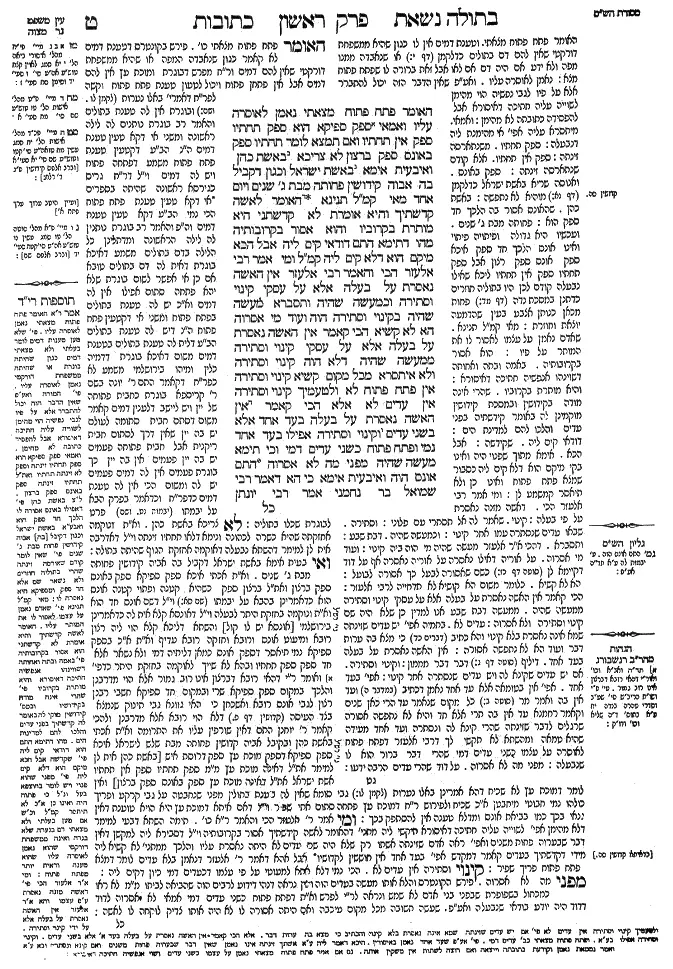
Ketubot 9a - Guemara
האומר פתח פתוח מצאתי נאמן לאוסרה עליו ואמאי ספק ספיקא הוא ספק תחתיו ספק אין תחתיו ואם תמצא לומר תחתיו ספק באונס ספק ברצון לא צריכא באשת כהן ואיבעית אימא באשת ישראל וכגון דקביל בה אבוה קידושין פחותה מבת ג' שנים ויום אחד מאי קמ"ל תנינא האומר לאשה קדשתיך והיא אומרת לא קדשתני היא מותרת בקרוביו והוא אסור בקרובותיה מהו דתימא התם דודאי קים ליה אבל הכא מיקם הוא דלא קים ליה קמ"ל ומי אמר רבי אלעזר הכי והאמר רבי אלעזר אין האשה נאסרת על בעלה אלא על עסקי קינוי וסתירה וכמעשה שהיה ותסברא מעשה שהיה בקינוי וסתירה הוה ועוד מי אסרוה הא לא קשיא הכי קאמר אין האשה נאסרת על בעלה אלא על עסקי קינוי וסתירה ממעשה שהיה דלא הוה קינוי וסתירה ולא איתסרא מכל מקום קשיא קינוי וסתירה אין פתח פתוח לא ולטעמיך קינוי וסתירה אין עדים לא אלא הכי קאמר אין האשה נאסרת על בעלה בעד אחד אלא בשני עדים וקינוי וסתירה אפילו בעד אחד נמי ופתח פתוח כשני עדים דמי וכי תימא מעשה שהיה מפני מה לא אסרוה התם אונס הוה ואיבעית אימא כי הא דאמר רבי שמואל בר נחמני אמר רבי יונתן
Comments from Rashi on Masechet Ketubot Page 9a
האומר פתח פתוח מצאתי . וטענת דמים אין לו כגון שהיא ממשפחת דורקטי שאין להם דם בתולים כדלקמן (כתובות דף י:) או שנאבדה ממנו מפה ולא ידע אם היה דם אם לאו אבל זאת ברורה לו שפתח פתוח מצא: נאמן לאוסרה עליו . ואע"פ שאין הדבר הזה יכול להתברר אלא על פיו לגבי נפשיה הוי מהימן לשוייה עליה חתיכה דאיסורא אבל להפסידה כתובתה לא מהימן: ואמאי . מיתסרא עליה אפי' אי מהימנת ליה דנבעלה: ספק תחתיו . משנתארסה זינתה: ספק אין תחתיו . אלא קודם שנתארסה זינתה: ספק באונס . ואנוסה שריא באשת ישראל כדלקמן (כתובות דף נא:) מוהיא לא נתפשה: באשת כהן . שהאונס אסור בה הלכך חד ספק הוא: פחותה מבת ג' שנים . ועכשיו היא גדולה ופיתויה פיתוי ואינו אונס הלכך חד ספק איכא ספק אונס ספק רצון אבל ספק תחתיו ספק אין תחתיו ליכא שאילו נבעלה קודם לכן היו בתוליה חוזרים כדתנן במסכת נדה (דף מד:) פחות מכאן כנותן אצבע בעין שהדמעה יוצאת וחוזרת: מאי קמ"ל תנינא . שאדם נאמן על עצמו לאסור לו את המותר על פיו: הוא אסור בקרובותיה . באמה ובתה ואחותה דשוינהו אנפשיה חתיכה דאיסורא: והיא מותרת בקרוביו . שהרי אינה מודה בקידושין ובמסכת קידושין מוקמינן לה באומר קידשתיה בפני עדים והלכו להם למדינת הים: דודאי קים ליה . שקידשה: אבל הכא . אימא מתוך שפנוי היה ואינו בקי מיקם הוא דלא קים ליה כסבור שמצא פתח פתוח ואינו כן ולא תיאסר קמשמע לן: ומי אמר רבי אלעזר הכי . דאשה מזנה נאסרת על פי בעלה: קינוי . שאמר לה אל תסתרי עם פלוני: וסתירה . שבאו עדים שנסתרה עמו אחר קינוי: וכמעשה שהיה . דבת שבע: ותסברא . דהכי א"ר אלעזר מעשה שהיה מי הוה ביה קינוי: ועוד מי אסרוה . על אוריה דאילו נאסרה על אוריה נאסרה אף על דוד דקיימא לן (סוטה דף כז:) כשם שאסורה לבעל כך אסורה לבועל: ועוד מי אסרוה . על אוריה דאילו נאסרה על אוריה נאסרה אף על דוד דקיימא לן (סוטה דף כז:) כשם שאסורה לבעל כך אסורה לבועל: הא לא קשיא . כלומר משום הא קושיא לא תדחייה לרבי אלעזר: הכי קאמר אין האשה נאסרת על בעלה אלא על עסקי קינוי וסתירה ממעשה שהיה . ממעשה דבת שבע אנו למדין כן שלא היה שם קינוי וסתירה ולא אסרוה: עדים לא . בתמיה אפי' יש עדים שזינתה שמא אינה נאסרת בלא קינוי והא כתיב (דברים כד) כי מצא בה ערות דבר ועוד הא לא נתפשה אסורה: אין האשה נאסרת על בעלה בעד אחד . דיליף (סוטה דף ג:) דבר דבר מממון: וקינוי וסתירה . אם יש עדים שקינא לה ויש עדים שנסתרה אחר קינוי: אפי' בעד אחד . אפי' אין בטומאה אלא עד אחד נאמן דכתיב (במדבר ה) ועד אין בה ואמר מר (סוטה ב:) כל מקום שנאמר עד הרי כאן שנים וקאמר רחמנא עד אין בה תרי אלא חד והיא לא נתפשה אסורה שרגלים לדבר שזינתה שהרי קינא לה ונסתרה ועד אחד מעידה שהיא טמאה ומהשתא לא תקשי לך דרבי אלעזר דפתח פתוח לאוסרה על עצמו כשני עדים דמי שהרי דבר ברור הוא לו שנבעלה: מפני מה לא אסרוה . על דוד שהרי עדים הרבה ידעו:
Comments from Tosafot - Ketubot 9a
האומר פתח פתוח מצאתי כו' . פירש בקונטרס דטענת דמים לא קאמר כגון שנאבדה המפה או שהיא ממשפחת דורקטי שאין להם דמים ור"ח מפרש דבוגרת ומוכת עץ אין להם דמים אבל אין פתחן פתוח ויכול לטעון טענת פתח פתוח וקשה לפר"ח דאמרי' באלו נערות (לקמן כתובות לו. ושם:) ובוגרת אין לה טענת בתולים והאמר רב בוגרת נותנים לה לילה ראשונה ומשני אי דקא טעין טענת דמים ה"נ הב"ע דקטעין טענת פתח פתוח משמע דפתחה פתוח ויש לה דמים וי"ל דר"ח גריס כגירסא ראשונה שהיתה בספרים אי דקא טעין טענת פתח פתוח הכי נמי הב"ע דקא טעין טענת דמים וה"פ והאמר רב בוגרת נותנין לה לילה הראשונה ומדתלינן כל הלילה בדם בתולים משמע דאיכא בוגרת דאית לה דם בתולים טובא אם כן אי אפשר לשום בוגרת שלא יהא פתחה סתום אפילו אין לה דמים וא"כ יש לה טענת בתולים בפתח פתוח ומשני אי דקטעין פתח פתוח ה"נ דיש לה טענת בתולים הב"ע דלית לה טענת בתולים בטענת דמים משום דאיכא בוגרת דדמיה כלין ומיהו בירושלמי משמע לא כפר"ח דקאמר התם ר' יונה בשם ר' קריספא בוגרת כחבית פתוחה של יין ויש ליישב דלענין דמים קאמר משום דסתם חבית סתומה לעולם יש בה יין שאין דרך לסתום חבית ריקנית אבל חבית פתוחה פעמים יש בה יין פעמים אין בה יין כך בוגרת פעמים אין לה דמים פעמים יש לה ומשום הכי אין לה טענת דמים כדפר"ח וכדאמר בפרק הבא על יבמתו (יבמות נט. ושם) פרט לבוגרת שכלו בתוליה: לא צריכא באשת כהן . וא"ת ונוקמה אחזקתה שהיא כשרה לכהונה ונימא דלאו תחתיו זינתה וי"ל דאדרבה אית לן למימר דהשתא נבעלה דאוקמה אחזקת הגוף שהיתה בתולה: ואי בעית אימא באשת ישראל דקביל בה אביה קידושין פחותה מבת ג' שנים . וא"ת אכתי איכא ספק ספיקא ספק באונס ספק ברצון ואת"ל ברצון ספק כשהיא קטנה ופתוי קטנה אונס הוא כדאמרינן בהבא על יבמתו (שם סא:) וי"ל דשם אונס חד הוא וא"ת ונוקמה בחזקת היתר לבעלה וי"ל דאונסא קלא אית לה כדאמרינן בירושלמי [אונסא יש לו קול] והשתא דליכא קלא הוי ליה רצון רובא ומיעוט אונס ורובא וחזקה רובא עדיף וא"ת א"כ בספק ספיקא נמי תיאסר דספק אונס כמאן דליתיה דמי ולא נשאר אלא חד ספק ספק תחתיו ובהא לא שייך לאוקמה בחזקת היתר כדפי' ואומר ר"י דהאי רובא דברצון אינו רוב גמור אלא הוי מדרבנן והלכך במקום ספק ספיקא שרי ובמקום חד ספיקא חשבי רבנן רצון לגבי אונס רובא ואשכחן כי האי גוונא גבי תינוק שנמצא בצד העיסה (קדושין דף פ.) דלא הוי רובא אלא מדרבנן ולהכי קאמר ר' יוחנן התם דאין שורפין עליו את התרומה וא"ת אכתי באשת כהן ובקיבל אביה קדושין פחותה מבת שלש לישראל איכא ספק ספיקא דספק מוכת עץ ספק דרוסת איש [באשת כהן אית לן למימר את"ל דאינה מוכת עץ מ"מ ספק תחתיו ספק אין תחתיו אשת ישראל את"ל דאינה מוכת עץ ספק באונס ספק ברצון] ואין לומר דמוכת עץ לא שכיח דהא אמרינן באלו נערות (לקמן כתובות לו:) גבי סומא שאין לה טענת בתולין מפני שנחבטה על גבי קרקע ופריך כולהו נמי חבוטי מיחבטן א"כ שכיח ולפירוש ר"ח דמוכת עץ פתחה סתום אתי שפיר וי"ל דאם איתא דמוכת עץ היא הויא טוענת דאין גנאי בכך כמו בביאת אונס ומדלא טענה אין להסתפק בכך: ומי אמר ר' אלעזר הכי והאמר ר"א כו' . תימה השתא דבעי למימר דלא מהימן אפי' לשוייה עליה חתיכה דאיסורא תיקשי ליה מתני' דהאומר לאשה קידשתיך אסור בקרובותיה וי"ל דסבירא ליה למקשן דאין דבר שבערוה פחות משנים ואפי' ראה אדם שזינתה אשתו רק שלא היה שם עדים לא היתה נאסרת עליו והלכך ממתני' לא קשיא ליה מידי דקדשתיך בעדים קאמר דמקדש אפי' בעד אחד אין חוששין לקדושיו אבל אהא דאמר ר' אלעזר דנאמן בלא עדים לומר דמצא פתח פתוח פריך שפיר: מפני מה לא אסרוה . פירש הקונטרס והלא אותו מעשה בעדים הוה ואין נראה דנהי דידוע לרבים הוה שהביאה לביתו מ"מ לא ראו כמכחול בשפופרת שבפני בני אדם לא שמש ונראה לר"י לפרש וא"ת דפתח פתוח כשני עדים דמי אמאי לא אסרוה לדוד דדוד היה יודע בודאי שנבעלה ואע"פ שעשה תשובה מכל מקום עיכבה ואם היתה אסורה לו לא היה אותו צדיק לוקחה לו לאשה: קינוי וסתירה אין עדים לא . הכי נמי דלא אתא למעוטי על פי עצמו דכעדים דמי כיון דקים ליה: מפני מה לא אסרוה . פירש הקונטרס והלא אותו מעשה בעדים הוה ואין נראה דנהי דידוע לרבים הוה שהביאה לביתו מ"מ לא ראו כמכחול בשפופרת שבפני בני אדם לא שמש ונראה לר"י לפרש וא"ת דפתח פתוח כשני עדים דמי אמאי לא אסרוה לדוד דדוד היה יודע בודאי שנבעלה ואע"פ שעשה תשובה מכל מקום עיכבה ואם היתה אסורה לו לא היה אותו צדיק לוקחה לו לאשה:
Ketubot 9a - Mishnah translated into english
A groom who says: I encountered an unobstructed orifice, claiming that when he consummated the marriage he discovered that his bride was not a virgin, is credible to render her forbidden to himself. Although it is not always possible to corroborate his claim with testimony that his wife committed adultery after betrothal, he is credible to render her forbidden to him as though she had in fact committed adultery.
The Gemara asks: But why is she forbidden to him? It is a case of compound uncertainty. It is uncertain whether she engaged in intercourse while under his jurisdiction, after betrothal, in which case she would be forbidden to him, and it is uncertain whether she engaged in intercourse while not under his jurisdiction, in which case she would not be forbidden to him. And if you say that she engaged in intercourse while under his jurisdiction, it is uncertain whether she engaged in intercourse by coercion, in which case she would not be forbidden to him, and it is uncertain whether she engaged in intercourse willingly, in which case she would be forbidden to him. In cases of compound uncertainty, the ruling is lenient. Why, then, is his claim deemed credible?
No, it is necessary to teach this ruling only in the case of the wife of a priest, who is rendered forbidden to her husband even if she engaged in intercourse by coercion. In that case, there is a single uncertainty. And if you wish, say instead that this ruling is relevant even to the wife of an Israelite, and it is in a case where her father accepted her betrothal when she was less than three years and one day old. Intercourse with a girl less than three years old does not permanently rupture the hymen, and therefore there is no uncertainty whether she engaged in intercourse before or after betrothal. Clearly, it took place after betrothal, and there is only one uncertainty: Did she engage in intercourse by coercion or willingly?
The Gemara asks: If this is a case where there is only one uncertainty, what is it teaching us? We already learned this explicitly: With regard to a man who says to a woman: I betrothed you, and she says: You did not betroth me, and there are no witnesses to corroborate either claim, she is permitted to marry any of his relatives, e.g., his brother, because based on her claim they are not related. And it is prohibited for him to marry her relatives, as based on his claim she is his betrothed. Apparently, one is capable of creating a prohibition for himself without corroborating witnesses.
The Gemara says that it was necessary to teach the case of the claim of virginity, lest you say: There, where certainly it is clear to him that he betrothed her, it is prohibited for him to marry her relatives. However, here, perhaps it is not clear to him that she was not a virgin, as he is not experienced in these matters and is mistaken. Therefore, Rabbi Elazar teaches us that his claim is nevertheless credible and she is forbidden to him.
And did Rabbi Elazar say that? But didn’t Rabbi Elazar say: A woman is forbidden to her husband due to adultery, only over matters of jealous warning and seclusion, and as it was in the incident that transpired involving David and Bathsheba? A wife is forbidden to her husband only in a case where he warns her not to seclude herself with a certain man and witnesses testify that she subsequently entered into seclusion with him.
And how can you understand it in that manner? Was the incident that transpired with jealous warning and seclusion? Furthermore, did the Sages render Bathsheba forbidden to her husband? Had she been forbidden to her husband, she would have also been forbidden to David, based on the following principle: Just as an adulteress is forbidden to her husband, she is also forbidden to her paramour.
That is not difficult, as this is what Rabbi Elazar is saying: The fact that a woman is forbidden to her husband due to adultery only over matters of jealous warning and seclusion is derived from the incident that transpired involving David and Bathsheba, as there was no jealous warning and seclusion, and therefore she was not forbidden to her husband. In any case, it is difficult, as the statements of Rabbi Elazar are contradictory. It may be inferred: By means of jealous warning and seclusion, yes, a man renders his wife forbidden to him; by means of the claim that he encountered an unobstructed orifice, no, he does not render her forbidden.
The Gemara rejects that inference: And according to your reasoning, that the statement of Rabbi Elazar restricts to jealous warning and seclusion the manner in which a husband can render his wife forbidden, infer: By means of jealous warning and seclusion, yes, a man renders his wife forbidden to him; by means of the testimony of two witnesses that she engaged in adulterous relations, no, he does not render her forbidden. That cannot be so, as clearly two witnesses establish her as one who committed adultery and render her forbidden to her husband.
The Gemara explains: Rather, this is what Rabbi Elazar is saying: A woman is not rendered forbidden to her husband through the testimony of one witness. Rather, she is rendered forbidden only by means of the testimony of two witnesses who testify that she engaged in adulterous relations. And if there was jealous warning and seclusion, she is rendered forbidden even by means of the testimony of one witness as well, if he comes after the husband warned his wife and testifies that she engaged in adulterous relations. And the legal status of the claim: I encountered an unobstructed orifice, is like that of two witnesses, and it renders her forbidden even without jealous warning and seclusion.
And if you would say with regard to the incident that transpired involving David and Bathsheba: For what reason did the Sages not deem her forbidden, when clearly David committed adultery with a married woman? The Gemara answers: There it was rape, and she did not engage in intercourse willingly. And if you wish, say instead that the Sages did not deem her forbidden, as that which Rabbi Shmuel bar Naḥmani said that Rabbi Yonatan said:
Traduction : The William Davidson digital edition of the Koren Noé Talmud, with commentary by Rabbi Adin Even-Israel Steinsaltz.