 Talmud Bavli
Ketubot 22a : Youtube
Daf TubeYoutube
1 video class :
Ketubot Page 22a
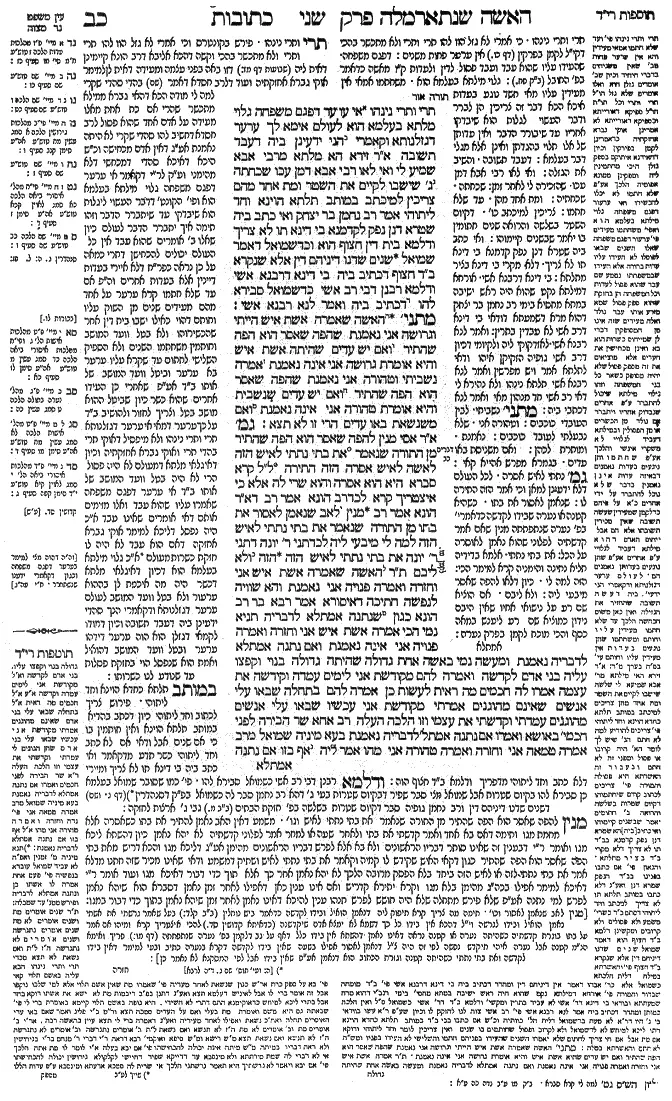
Ketubot 22a - Guemara
תרי ותרי נינהו אי ערער דפגם משפחה גלוי מלתא בעלמא הוא לעולם אימא לך ערער דגזלנותא וקאמרי הני ידעינן ביה דעבד תשובה א"ר זירא הא מלתא מרבי אבא שמיע לי ואי לאו רבי אבא דמן עכו שכחתה ג' שישבו לקיים את השטר ומת אחד מהם צריכין למיכתב במותב תלתא הוינא וחד ליתוהי אמר רב נחמן בר יצחק ואי כתב ביה שטרא דנן נפק לקדמנא בי דינא תו לא צריך ודלמא בית דין חצוף הוא וכדשמואל דאמר שמואל שנים שדנו דיניהם דין אלא שנקרא ב"ד חצוף דכתיב ביה בי דינא דרבנא אשי ודלמא רבנן דבי רב אשי כדשמואל סבירא להו דכתיב ביה ואמר לנא רבנא אשי:
מתני׳ האשה שאמרה אשת איש הייתי וגרושה אני נאמנת שהפה שאסר הוא הפה שהתיר ואם יש עדים שהיתה אשת איש והיא אומרת גרושה אני אינה נאמנת אמרה נשביתי וטהורה אני נאמנת שהפה שאסר הוא הפה שהתיר ואם יש עדים שנשבית והיא אומרת טהורה אני אינה נאמנת ואם משנשאת באו עדים הרי זו לא תצא:
גמ׳ א"ר אסי מנין להפה שאסר הוא הפה שהתיר מן התורה שנאמר (דברים כב, טז) את בתי נתתי לאיש הזה לאשה לאיש אסרה הזה התירה ל"ל קרא סברא היא הוא אסרה והוא שרי לה אלא כי איצטריך קרא לכדרב הונא אמר רב דא"ר הונא אמר רב מנין לאב שנאמן לאסור את בתו מן התורה שנאמר את בתי נתתי לאיש הזה למה לי מיבעי ליה לכדתני ר' יונה דתני ר' יונה את בתי נתתי לאיש הזה הזה ולא ליבם ת"ר האשה שאמרה אשת איש אני וחזרה ואמרה פנויה אני נאמנת והא שוויה לנפשה חתיכה דאיסורא אמר רבא בר רב הונא כגון שנתנה אמתלא לדבריה תניא נמי הכי אמרה אשת איש אני וחזרה ואמרה פנויה אני אינה נאמנת ואם נתנה אמתלא לדבריה נאמנת ומעשה נמי באשה אחת גדולה שהיתה גדולה בנוי וקפצו עליה בני אדם לקדשה ואמרה להם מקודשת אני לימים עמדה וקידשה את עצמה אמרו לה חכמים מה ראית לעשות כן אמרה להם בתחלה שבאו עלי אנשים שאינם מהוגנים אמרתי מקודשת אני עכשיו שבאו עלי אנשים מהוגנים עמדתי וקדשתי את עצמי וזו הלכה העלה רב אחא שר הבירה לפני חכמי' באושא ואמרו אם נתנה אמתל' לדבריה נאמנת בעא מיניה שמואל מרב אמרה טמאה אני וחזרה ואמרה טהורה אני מהו אמר ליה אף בזו אם נתנה
Comments from Rashi on Masechet Ketubot Page 22a
תרי ותרי נינהו . כי אמרי לא גזל הוו להו תרי ותרי ולא מתכשר בהכי דקי"ל לקמן בפרקין (כתובות דף כו.) אין ערער פחות משנים: דפגם משפחה . שהעידו עליו שהוא עבד ועבד פסול לדין ולעדות ק"ו מאשה כדאמר בפ' החובל (ב"ק פח.): גלוי מילתא בעלמא הוא . משחתמו אמאי אין מעידין עליו מאי חשד נוגע בעדות איכא הכא דבר זה צריכין הן לברר ודבר העשוי לגלות הוא שיבדקו אחריו עד שיבורר הדבר ואין עדותן של אלו תלוי בהגדתן ואינן אלא מגלי דבר בעלמא: דעבד תשובה . והשיב את הגזלה: ואי לאו רבי אבא דמן עכו . שהזכירה לי לאחר זמן: שכחתה . שכחתיה: ומת אחד מהן . עד שלא חתמו: צריכין למיכתב כו' . דקיום השטר בשלשה והרואה שנים חתומין בו יאמר שבשנים קיימוהו: ואי כתב ביה שטרא דנן נפק קדמנא בי דינא תו לא צריך . דלא מקרי בי דינא בציר מתלתא: בי דינא דרבנא אשי . אורחא דמילתא נקט שהוא היה ראש ישיבה במתא מחסיא בימי רב נחמן בר יצחק דהוא מרא דשמעתא דודאי בי דינא דרב אשי לא עבדין בתרין: ואמר לנא רבנא אשי . לאזדקוקי ליה ולקיומי דכיון דרב אשי גופיה הזקיקן איהו ודאי לתלתא אמר ויש מפרשין ואמר לנא רבנא אשי תלתא נינהו ולא נהירא לי דאי רב אשי חד מנהון מאי ואמר לנא דכתבי ביה: נשביתי . לבין העובדי כוכבים: וטהורה אני . שלא נבעלתי לעובד כוכבים: נאמנת . ומותרת לכהן: ואם משניסת באו עדים . בגמרא מפרש אהייא קאי: גמ' נתתי לאיש אסרה . לכל העולם דלא ידעינן למאן וכי אמר הזה התירה לו: שנאמן לאסור את בתו . כשהיא קטנה או נערה שבידו לקדשה כדאמרי' בפ' נערה שנתפתתה מנין שאם אמר קדשתיה לפלוני שהוא נאמן לאוסרה על הכל: את בתי נתתי . אלמא בדידיה תליא נתינה והימניה קרא למימר הכי: הזה למה לי . כיון דלאו להפה שאסר מיבעי ליה: ולא ליבם . אם הוציא שם רע על נישואי אחיו שאין היבם נידון כמוציא שם רע ליענש במאה כסף והכי מוכח לקמן בפרק נערה: אמתלא . משל וטעם למה אמרה תחלה מקודשת אני: אם נתנה אמתלא לדבריה נאמנת . הואיל ונתנה אמתלא נאמנת: אמרה טמאה אני . אמרה לבעלה נדה אני: טהורה אני . לא הייתי נדה:
Comments from Tosafot - Ketubot 22a
תרי ותרי נינהו . פירש בקונטרס וכי אמרי לא גזל הוו להו תרי ותרי ולא מתכשר בהכי וקשה דהכא אליבא דרב הונא קיימינן דאית ליה (שבועות דף מז:) דזו באה בפני עצמה ומעידה דאית לן למימר אוקי גברא אחזקתיה ועוד דלרב חסדא דאמר (שם) בהדי סהדי שקרי למה לי מודה הכא דהאי גברא ממילא מתכשר שהרי אם כת אחת מאלו מעידה על אדם אחד שהוא פסול לרב חסדא דחשיב להו סהדי שקרי לא היתה נאמנת אע"ג דאין אדם מכחישה וכ"ש היכא דאיכא סהדי דמכחשי דלא מהימני וע"ק לר"י דקאמר אי ערער דפגם משפחה גלוי מילתא בעלמא הוא ופי' הקונט' דדבר העשוי ליגלות הוא שיבדקו עד שיתברר הדבר וזהו תימה איך יתברר הדבר לעולם כיון שאלו ב' אומרים שהוא עבד אין כל העולם יכולים להכחישן דתרי כמאה על כן נראה כפר"ח דלא איירי בעדות דיינין אלא בעדות אחרים וה"פ אם עד שלא חתמו קרא ערער על אחד מהם מעידים שנים מן השוק עליו וחותם דהוי כאילו ישבו בית דין אחר שהכשירוהו ולא בטל וועד המושב וחותמין משחתמו השנים ולא הספיק השלישי לחתום עד שקרא עליו ערער בא ערער וביטל וועד המושב של אותו ב"ד אע"פ שאחרי כן העידו אחרים שהוא כשר כיון שביטל ההוא מושב בטל וצריך לחזור ולהושיב ב"ד על כך ערער דמאי אי ערער דגזלנותא תרי ותרי נינהו ולא מיפסיל דאוקי תרי בהדי תרי ואוקי גברא אחזקתיה וכיון דאיגלאי מלתא דמעולם לא היה פסול הרי לא היה בטל וועד המושב של אותו ב"ד אי ערער דפגם משפחה שאמרו עליו שהוא עבד ואלו מזימים אותם דאי אומרים שאינו עבד א"כ היה נפסל דליכא למימר אוקי גברא אחזקה דאם הוא עבד לא היה לו חזקת כשרות מעולם א"כ גלוי מילתא בעלמא הוא דכיון דאיגלאי מלתא דכשר היה מה איכפת לן בההוא ערעור ולא בטל וועד המושב לעולם ערער דגזלנותא ודקאמרי הנך סהדי ידעינן ביה דעבד תשובה וכיון דמודו לקמאי דגזלן הוא הוה ערער דידהו ערער ובטל וועד המושב דהואיל ואמת הוא שנפסל הוי בחזקת פסלות עד שנודע לנו כשרותו: במותב תלתא כחדא הוינא וחד ליתוהי . פירוש צריך לכתוב וחד ליתוהי כיון דכתב בהדיא במותב תלתא הוינא ואין חותמין בו כי אם שנים אבל ודאי אם לא כתב וחד ליתוהי כשר תדע מדקאמר ואי כתב ביה בי דינא תו לא צריך ומיירי דלא כתב וחד ליתוהי מדפריך ודלמא ב"ד חצוף הוה: ודלמא רבנן דבי רב אשי כשמואל סבירא להו . פי' כמו שסובר שמואל בעלמא כן סבירא להו בקיום שטרות אבל שמואל מצי סבר שפיר דבקיום שטרות בעי ג' דהא רב נחמן סבר לה כשמואל בפ"ק דסנהדרין (דף ג. ושם) דשנים שדנו דיניהם דין ורב נחמן גופיה סבר דקיום שטרות בשלשה בפ' חזקת הבתים (ב"ב מ.) גבי ג' ארצות לחזקה: מנין להפה שאסר הוא הפה שהתיר מן התורה שנאמר את בתי נתתי לאיש וגו' . משמע דאין האב נאמן להתיר את בתו כשאסרה אלא מחמת מגו ותימה דאם בא אחד ואמר קדשתי את בתי ולאחר שעה או למחר אמר לפלוני קדשתיה לא יהא נאמן כיון דהשתא ליכא מגו ואומר ר"י דבענין זה שאינו סותר דבריו הראשונים ולא בא אלא לפרש דבריו הראשונים מהימן אע"ג דליכא מגו והכא דריש מאת בתי הפה שאסר הוא הפה שהתיר כגון דקאי האיש שקידש לו קמיה וקאמר את בתי נתתי לאיש ושתיק דמשמע ודאי שאינו מכיר שזה חתנו מדלא אמר את בתי נתתי לזה או לאיש הזה ביחד בלא הפסק מרובה הלכך לא יהא נאמן אחר כך אלא תוך כדי דבור דאיכא מגו ועוד אומר ר"י דאיכא למימר אפילו בכה"ג מהימן בלא מגו וקרא יתירא קדריש ואם אינו ענין כאן דאפילו לאחר זמן נאמן דסברא הוא שיהא נאמן לפרש למי נתנה אע"פ שלא פירש מתחלה שלא היה חושש לפרש תנהו ענין להיכא דאינו נאמן לאחר זמן שיהא נאמן בתוך כדי דבור במגו: [מנין לאב שנאמן לאסור וכו' . תימה מה צריך קרא תיפוק ליה דנאמן הואיל ובידו לקדשה כדאמר ביש נוחלין (ב"ב קלד:) בעל שאמר גרשתי את אשתי נאמן הואיל ובידו לגרשה וי"ל דהכא אין בידו כל כך דשמא לא ימצא אדם שיקדשנה (כדאיתא קדושין סד.) להכי איצטריך קרא ומיהו אם אמר על בתו בוגרת קדשתיה כשהיתה נערה או קטנה נראה דאינו נאמן דהשתא אין בידו כלל דאף על גב דלקמן בפ' נערה שנתפתתה (כתובות דף מו.) פריך ואימא הנ"מ קטנה אבל נערה איהי תיקדש נפשה לפי זה היה צ"ל דנאמן לאסור אפילו בשעה שאין בידו לקדשה דקרא בנערה כתיב ובעי למימר דאין בידו לקדשה ואת בתי נתתי כשהיתה קטנה וגזרת הכתוב הוא דנאמן אע"פ שאין בידו אבל לפי המסקנא לא נאמר כן]:
Ketubot 22a - Mishnah translated into english
the witnesses who testified that he is unfit and the judges who testified that he is fit are two witnesses and two witnesses who contradict them, and in that case, the allegation of theft is not completely eliminated. If it was a challenge based on an allegation of flawed lineage, e.g., he is a Canaanite slave and therefore unfit to serve as a judge, that is a mere revealing of a matter that will ultimately be revealed in any case and does not require actual testimony. Therefore, there is no conflict of interest preventing the judges from asserting his fitness after they signed. The Gemara concludes: Actually, I will say to you that it was a challenge based on an allegation of theft, and these judges say: We know about him that he repented and is now fit to serve as a judge. In that case, their testimony does not contradict the original testimony that he was guilty of theft.
§ Rabbi Zeira said: This matter, I heard from Rabbi Abba, and if it was not for Rabbi Abba of Akko, I would have forgotten it. With regard to a case of three judges who convened as a tribunal to ratify a document, and one of them died before signing the ratification, the surviving judges must emend the standard formula of the ratification and write: We were convened in a session of three judges, and one of the judges is no longer alive. In that way it is clear that although only two judges signed, the document was ratified by three judges.
Rav Naḥman bar Yitzḥak said: And if the judges wrote in the ratification: This document was produced before us, the court; they no longer need to add that they were three judges, as, when unmodified, the term court connotes a tribunal of three judges. The Gemara asks: And perhaps it was an impudent court, and that is in accordance with the opinion of Shmuel, as Shmuel said: Two judges who convened a tribunal and judged, their verdict is a binding verdict; however, because they contravened the rabbinic ordinance mandating that a court be comprised of three judges, they are called an impudent court. Therefore, writing: Before us, the court, does not rule out the possibility that the document was ratified by fewer than three judges.
The Gemara answers: It is clear that the document was ratified by the requisite three judges, as it is written in the ratification: Before us, the court of our teacher Rav Ashi, which presumably conforms to rabbinic protocol. The Gemara asks: And perhaps the Rabbis of the court of Rav Ashi hold in accordance with the opinion of Shmuel and they convened an impudent court, whose ruling is binding. The Gemara answers: It is clear, as it is written in the ratification: Before us, the court of our teacher Rav Ashi, and our teacher Rav Ashi said to us how to ratify the document.
MISHNA: With regard to a woman who said: I was a married woman and now I am a divorcée, she is deemed credible and permitted to remarry, as the mouth that prohibited and established that she was married is the mouth that permitted, and established that she is divorced. However, if there are witnesses that she was a married woman, and she says: I am a divorcée, she is not deemed credible. Similarly, with regard to a woman who said: I was taken captive but I am pure, as I was not raped in captivity, she is deemed credible and permitted to marry a priest, as the mouth that prohibited and established that she was taken captive is the mouth that permitted and established that she was not defiled. But if there are witnesses that she was taken captive, and she says: I am pure, she is not deemed credible. And if witnesses came after she married, this woman need not leave her husband.
GEMARA: Rav Asi said: From where in the Torah is the principle: The mouth that prohibited is the mouth that permitted, derived? It is derived as it is stated: “I gave my daughter to this man [la’ish hazeh] as a wife” (Deuteronomy 22:16). When the father said that he married her off “to the man [la’ish]” without revealing his identity, he rendered her forbidden to all men. When he then says “this [hazeh],” thereby identifying the man to whom he married her off, he renders her permitted to her husband.
The Gemara asks: Why do I need to derive this from the verse? It is based on logic: He rendered her forbidden and he rendered her permitted. Rather, where this verse is necessary, is in order to derive the halakha that Rav Huna said that Rav said, as Rav Huna said that Rav said: From where in the Torah is it derived that a father is deemed credible to render his daughter forbidden? It is derived as it is stated: “I gave my daughter to the man [la’ish]” (Deuteronomy 22:16). The Gemara asks: Why do I need the subsequent term “this [hazeh]”?
The Gemara explains: The verse is necessary to derive the halakha that Rabbi Yona taught; as Rabbi Yona taught in a baraita that in the verse: “I gave my daughter to this man,” written in the context of a husband slandering his wife, “this” is written to infer: The halakhot in this passage apply to a man who slanders his wife and not to the yavam, in the case of levirate marriage.
§ The Sages taught with regard to the woman who said: I am a married woman, and then said: I am unmarried, that she is deemed credible. The Gemara asks: But didn’t she render herself an entity of prohibition? When she said that she was married she rendered herself forbidden to all men. How then can she abrogate the prohibition? The Gemara answers that Rava bar Rav Huna said: It is referring to a case where she provided a rationale [amatla] for her initial statement and explained why she said that she was a married woman. That was also taught in a baraita with regard to the woman who said: I am a married woman, and then said: I am unmarried, that she is not deemed credible. And if she provided a rationale for her initial statement, she is deemed credible.
And there was also an incident involving an important woman who was outstanding in beauty, and many men were clamoring to betroth her. And she said to them: I am already betrothed. Sometime later she arose and betrothed herself to a man. The Sages said to her: What did you see that led you to do so? She said to them: Initially, when unscrupulous people approached me seeking to marry me, I said: I am betrothed. Now that scrupulous people approached me, I arose and betrothed myself to one of them. And the Gemara notes: This halakha was raised by Rav Aḥa Sar HaBira before the Sages in Usha, the seat of the Sanhedrin, and the Sages said: If she provided a rationale for her statement, she is deemed credible.
Shmuel raised a dilemma before Rav: If a woman said to her husband: I am ritually impure as I am menstruating, and then said: I am pure, what is the halakha? Is she permitted based on her latter statement, or did she render herself an entity of prohibition with her first statement and therefore remains forbidden? Rav said to him: Even in that case, if she provided a
Traduction : The William Davidson digital edition of the Koren Noé Talmud, with commentary by Rabbi Adin Even-Israel Steinsaltz.