 Talmud Bavli
Ketubot 65a : Youtube
Daf TubeYoutube
1 video class :
Ketubot Page 65a
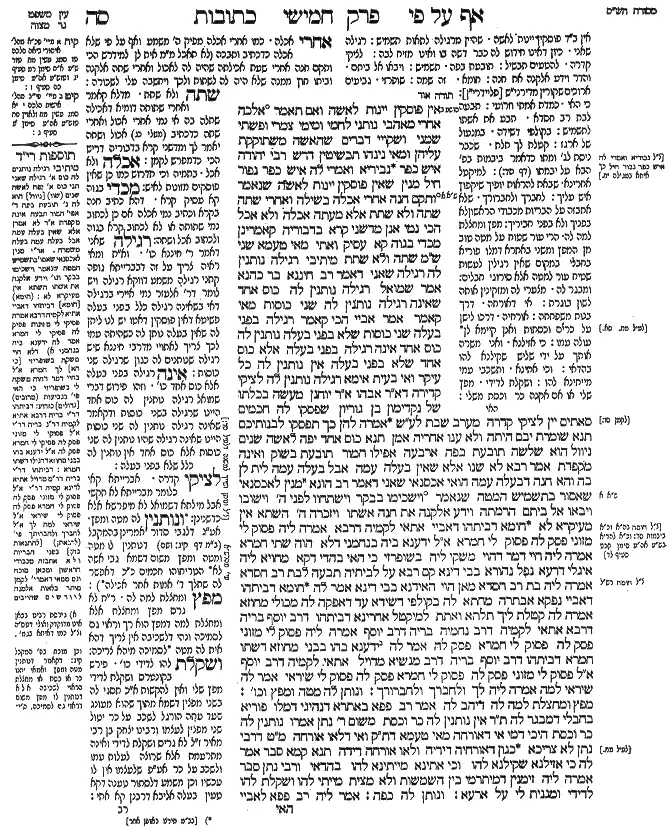
Ketubot 65a - Guemara
אין פוסקין יינות לאשה ואם תאמר (הושע ב, ז) אלכה אחרי מאהבי נותני לחמי ומימי צמרי ופשתי שמני ושקויי דברים שהאשה משתוקקת עליהן ומאי נינהו תכשיטין דרש רבי יהודה איש כפר נביריא ואמרי לה איש כפר נפור חיל מנין שאין פוסקין יינות לאשה שנאמר (שמואל א א, ט) ותקם חנה אחרי אכלה בשילה ואחרי שתה שתה ולא שתת אלא מעתה אכלה ולא אכל הכי נמי אנן מדשני קרא בדבוריה קאמרינן מכדי בגוה קא עסיק ואתי מאי טעמא שני ש"מ שתה ולא שתת מיתיבי רגילה נותנין לה רגילה שאני דאמר רב חיננא בר כהנא אמר שמואל רגילה נותנין לה כוס אחד שאינה רגילה נותנין לה שני כוסות מאי קאמר אמר אביי הכי קאמר רגילה בפני בעלה שני כוסות שלא בפני בעלה נותנין לה כוס אחד אינה רגילה בפני בעלה אלא כוס אחד שלא בפני בעלה אין נותנין לה כל עיקר ואי בעית אימא רגילה נותנין לה לציקי קדירה דא"ר אבהו א"ר יוחנן מעשה בכלתו של נקדימון בן גוריון שפסקו לה חכמים סאתים יין לציקי קדרה מערב שבת לע"ש אמרה להן כך תפסקו לבנותיכם תנא שומרת יבם היתה ולא ענו אחריה אמן תנא כוס אחד יפה לאשה שנים ניוול הוא שלשה תובעת בפה ארבעה אפילו חמור תובעת בשוק ואינה מקפדת אמר רבא לא שנו אלא שאין בעלה עמה אבל בעלה עמה לית לן בה והא חנה דבעלה עמה הואי אכסנאי שאני דאמר רב הונא מנין לאכסנאי שאסור בתשמיש המטה שנאמר (שמואל א א, יט) וישכימו בבקר וישתחוו לפני ה' וישובו ויבאו אל ביתם הרמתה וידע אלקנה את חנה אשתו ויזכרה ה' השתא אין מעיקרא לא חומא דביתהו דאביי אתאי לקמיה דרבא אמרה ליה פסוק לי מזוני פסק לה פסוק לי חמרא א"ל ידענא ביה בנחמני דלא הוה שתי חמרא אמרה ליה חיי דמר דהוי משקי ליה בשופרזי כי האי בהדי דקא מחויא ליה איגלי דרעא נפל נהורא בבי דינא קם רבא על לביתיה תבעה לבת רב חסדא אמרה ליה בת רב חסדא מאן הוי האידנא בבי דינא אמר לה חומא דביתהו דאביי נפקא אבתרה מחתא לה בקולפי דשידא עד דאפקה לה מכולי מחוזא אמרה לה קטלת ליך תלתא ואתת למיקטל אחרינא דביתהו דרב יוסף בריה דרבא אתאי לקמיה דרב נחמיה בריה דרב יוסף אמרה ליה פסוק לי מזוני פסק לה פסוק לי חמרא פסק לה אמר לה ידענא בהו בבני מחוזא דשתו חמרא דביתהו דרב יוסף בריה דרב מנשיא מדויל אתאי לקמיה דרב יוסף א"ל פסוק לי מזוני פסק לה פסוק לי חמרא פסק לה פסוק לי שיראי אמר לה שיראי למה אמרה ליה לך ולחברך ולחברורך:
ונותן לה מטה ומפץ וכו':
מפץ ומחצלת למה לה דיהב לה אמר רב פפא באתרא דנהיגי דמלו פוריא בחבלי דמבגר לה ת"ר אין נותנין לה כר וכסת משום ר' נתן אמרו נותנין לה כר וכסת היכי דמי אי דאורחה מאי טעמא דת"ק ואי דלאו אורחה מ"ט דרבי נתן לא צריכא כגון דאורחיה דידיה ולאו אורחה דידה תנא קמא סבר אמר לה כי אזילנא שקילנא להו וכי אתינא מייתינא להו בהדאי ורבי נתן סבר אמרה ליה זימנין דמיתרמי בין השמשות ולא מצית מייתי להו ושקלת להו לדידי ומגנית לי על ארעא:
ונותן לה כפה:
אמר ליה רב פפא לאביי
Comments from Rashi on Masechet Ketubot Page 65a
אין ב"ד פוסקין יינות לאשה . שהיין מרגילה לתאות תשמיש: רגילה שאני . כיון דאינו חידוש לה כבר דשה בו ואינו מזיח לבה: לציקי קדרה . להטעים תבשיל: לציקי קדרה . להטעים תבשיל: תובעת בפה . תשמיש: ויבאו אל ביתם . והדר וידע אלקנה את חנה: חומא . זה שמה: שופרזי . גביעים ארוכים שקורין מדירני"ש [פליידרי"ן]: כי האי . כמדת אמתי וזרועי: תבעה לבת רב חסדא . תבע את אשתו לתשמיש: בקולפי דשידה . במנעול של ארגז: קטלת לך תלת . שכבר ניסת לג' ומתו כדאמר ביבמות בפ' הבא על יבמתו (דף סד:): למיקטל אחרינא . שבאת להראות יופיך שיקפוץ איש עליך: לחברך ולחברורך . שלא אתבזה על הבריות מכבודי הראשון לא בפניך ולא בפני חביריך: מפץ ומחצלת למה לה . הרי עור שטוח על מטה טוב מן המפץ ומשני באתרא דמלו פוריא בחבלי במקום שאין רגילין לעשות שטיח עור למטה אלא סירוגי חבלים: ומבגר לה . מצערי לה ומזקינין אותה לשון בוגרת: אי דאורחה . דרך בנות משפחתה: אורחיה . דרכו לישן על כרים וכסתות ואנן קיימא לן עולה עמו: אורחיה . דרכו לישן על כרים וכסתות ואנן קיימא לן עולה עמו: כי אזילנא . ואני משרה אותך על ידי שליש שקילנא להו בהדאי: וכי אתינא . ותשכבי עמי מייתינא להו: ושקלת לדידי . מפץ שלי או אם אקנה כר וכסת משלי:
Comments from Tosafot - Ketubot 65a
אחרי אכלה . כמו אחרי אכלה מפיק ה' משמע ואף על פי שלא אכלה כדכתיב ותבכה ולא תאכל מ"מ אית לן למידרש הכי ותקם חנה אחרי שעת אכילתה שהיה לה לאכול ואחרי שתה אלקנה וביתו חוץ ממנה שלא היה לה לשתות ולכך ויחשבה עלי לשכורה: שתה ולא שתת . מדלא קאמר ואחרי שתותה דומיא דאכילה שתלה בה אי נמי אחרי אכול ואחרי שתה כדכתיב (משלי כג) אכול ושתה יאמר לך ומדשני קרא בדבוריה דריש הכי כדמפרש לקמן: אכלה ולא אכל . בתמיה וכי תדרוש כמו כן שאין פוסקים מזונות לאיש: מכדי בגוה קא עסיק קרא . דהא כתיב חנה בקרא וכתיב נמי אכלה אם כן לכתוב נמי שתותה או לא לכתוב קרא בגוה ולכתוב אכל ושתה: רגילה שאני דאמר ר' חיננא כו' . וא"ת ומאי ראיה צריך על זה דבברייתא גופה קתני רגילה משמע דווקא רגילה ויש לומר דר' אלעזר נמי איירי ברגילה דאי בשאינה רגילה כלל בפני בעלה פשיטא דאין פוסקין דאטו יש לנו ליתן לה שאין בעלה נותן לה כשהיתה עמו לכך צריך לאתויי מדרבי חיננא שיש רגילה שנותנים לה כגון שרגילה שני כוסות: אינה רגילה בפני בעלה אלא כוס אחד כו' . וזהו פירוש דברי שמואל רגילה נותנין לה כוס אחד היינו שרגילה בשני כוסות ודקאמר שאינה רגילה נותנין לה שני כוסות היינו שאינה רגילה שהיו נותנין לה שני כוסות אלא כוס אחד אין נותנין לה כלל שלא בפני בעלה: לציקי קדרה . אברייתא קאי כלומר מברייתא לא תקשי אבל מילתא דשמואל לא מיפרשא אלא כדשנינן: לציקי קדרה. אברייתא קאי כלומר מברייתא לא תקשי אבל מילתא דשמואל לא מיפרשא אלא כדשנינן: ונותנין לה מטה ומפץ . אע"ג דלגבי סדור אמרינן בהמקבל (ב"מ דף קיג: ושם) דנותנין לו מטה ומטה ומפץ משום דשמא גבי אשה לא הטריחוהו חכמים כ"כ דאפשר לה שתלך ד' אמות אחר אכילה: מפץ ומחצלת למה לה . ר"ת לא גרס מפץ ומחצלת אלא ומחצלת למה דמפץ הוא רך וראוי גם לסמיכה ונהי דלשכיבה אין צריך דהא אית לה מטה לסמיכה מיהא צריכה: ושקלת להו לדידי כו' . פירש בקונטרס ושקלת לדידי מפץ שלי ואין להקשות א"כ תסגי לה בשני מפצין דשמא מתוך שהוא מעונג שעד עתה הורגל לשכב על כר יטול שני מפצין לעצמו ורבינו יצחק בן רבי מאיר ז"ל לא גריס ושקלת לדידי ואינה מתרעמת אלא שרוצה לעלות עמו ולשכב על כר אע"פ שלעצמו אין לו עכשיו וכן משמע דלסתור טענה דקא טעין בעלה אליבא דרבנן קא אתי:
Ketubot 65a - Mishnah translated into english
Wines are not allotted to a wife. And if you say that in the verse: “I will go after my lovers who give me my bread and my water, my wool and my flax, my oil and my drink” (Hosea 2:7), “drink [shikkuyai]” is apparently a reference to wine, which indicates that it is usual for a woman to receive wine, this is invalid, since actually shikkuyai is not referring to wine but rather to items that a woman desires [mishtokeket]. And what are these? Jewelry or other ornaments, not wine.
Rabbi Yehuda of the village of Neviraya, and some say of the village of Nefor Ḥayil, interpreted a verse: From where is it derived that one does not allot wines for a woman? As it is stated: “So Hannah rose up after she had eaten in Shiloh and after he had drunk” (I Samuel 1:9). It states: “He had drunk,” and not: She had drunk. This teaches that although she ate, she did not drink wine.
The Gemara asks: However, if that is so, by the same reasoning, should the phrase “she had eaten,” which is in the feminine, indeed be interpreted to mean that only she ate, and that he did not eat? The Gemara answers: We say this interpretation from the fact that the verse changed its language. Since the verse was already dealing with her, what is the reason that it changed the terminology and did not state: And had drunk, in the feminine? One can learn from this that “he had drunk” means that he drank, but she did not drink.
The Gemara raises an objection from a baraita: If a woman is accustomed to wine, she is given wine. The Gemara explains: If the woman is accustomed to wine it is different, as Rav Ḥinnana bar Kahana said that Shmuel said: If a woman is accustomed to drinking wine, she is given one cup, and if she is not accustomed to wine, she is given two cups.
The Gemara asks: What is Shmuel saying? His statement is the opposite of what one would logically expect. Abaye said: This is what he is saying: If she is accustomed to wine, then in the presence of her husband she is given two cups, and if she is not in the presence of her husband she is given one cup. If she is not accustomed to drinking wine, then in the presence of her husband she is given only one cup, and if she is not in the presence of her husband she is not given wine at all.
And if you wish, say instead: If she is accustomed to wine, she is given wine, but not for drinking, rather for meat pudding [tzikei], made with wine, flour, and leftover meat in a pot. As Rabbi Abbahu said that Rabbi Yoḥanan said: An incident occurred involving the daughter-in-law of Nakdimon ben Guryon, whose husband had died. The Sages apportioned for her from his estate two se’a of wine for pudding, from one Shabbat eve to another. She said to them, as a blessing out of gratitude: So may you apportion for your own daughters an amount as large as this. It was taught: She was a widow waiting for her yavam, and consequently, the Sages did not answer amen after her blessing, as they did not want their daughters to reach her unfortunate state.
It was taught in a baraita: One cup of wine is good for a woman; two cups is a disgrace, as she will start to become drunk; after three cups, she will become lustful and verbally request sexual intercourse, which is unseemly; after four cups of wine, she will even request intercourse from a donkey in the marketplace, as at this stage she is so drunk that she is not particular about with whom she has relations. Rava said: They taught that a woman should not drink much wine only if her husband is not with her. However, if her husband is with her, we have no problem with it. If she feels an urge for intercourse her husband is available.
The Gemara raises a difficulty: But the case of Hannah was one in which her husband was with her, and yet this episode is cited as a source for the halakha that a woman should not drink wine. The Gemara answers: The case of a guest is different, as Rav Huna said: From where is it derived that a guest is prohibited from engaging in conjugal relations? As it is stated: “And they rose up in the morning early, and worshipped before the Lord, and returned, and came to their house to Ramah; and Elkanah knew Hannah his wife; and the Lord remembered her” (I Samuel 1:19). This verse indicates that now, after they returned home, yes, they engaged in relations; at the outset, when they were still in Shiloh, no, they did not. Therefore, Hannah did not drink wine in Shiloh.
The Gemara relates: Abaye’s wife, Ḥoma, came before Rava after Abaye died, as Rava was the local judge. She said to him: Apportion sustenance for me, as I am entitled to be sustained by Abaye’s heirs. Rava apportioned sustenance for her. She subsequently said to him: Apportion wine for me as well. Rava said to her: I know that Naḥmani, i.e., Abaye, did not drink wine. Since you were not accustomed to drinking wine during your husband’s lifetime, you are not entitled to it after his death. She said to him: By the Master’s life, this is not correct. In fact, he would give me wine to drink in cups [shufrazei] as large as this. She gestured with her hands to show how large the cups were. While she was showing him the size of the cups, her arm became uncovered, and she was so beautiful that it was as though a light had shined in the courtroom.
Rava arose, went home, and requested intercourse from his wife, the daughter of Rav Ḥisda. The daughter of Rav Ḥisda said to him: Who was just now in the courtroom? Noticing his unusual behavior, she suspected that there must have been a woman in the court. He said to her: Ḥoma, Abaye’s wife, was there. Upon hearing this, Rava’s wife went after Ḥoma and struck her with the lock of a chest [kulpei deshida] until she drove her out of the entire city of Meḥoza, saying to her: You have already killed three men, as Abaye was your third husband, and now you come to kill another one, my husband Rava? Since you showed him your beauty, he will want to marry you.
The Gemara relates a similar incident: The wife of Rav Yosef, son of Rava, came before Rav Neḥemya, son of Rav Yosef, for judgment. She said to him: Apportion sustenance for me. Rav Neḥemya apportioned a certain amount of sustenance for her. She said to him: Apportion wine for me as well. He apportioned wine for her. He said to her: I know that the residents of Meḥoza are accustomed to drinking wine, and therefore you, too, are entitled to wine, in accordance with the local custom.
Similarly, the wife of Rav Yosef, son of Rav Menashya of D’vil, came before Rav Yosef. She said to him: Apportion sustenance for me. He apportioned sustenance for her. She added: Apportion wine for me. He apportioned wine for her. She continued: Apportion silk garments for me. Rav Yosef said to her: Why do you need silk garments? She said to him: For you, for your friends, and for your friends’ friends. Even as a widow, I should not have to be ashamed in front of you and your colleagues.
§ The mishna taught: And he must give her a bed, a soft mat, and a hard mat. The Gemara asks: Why does he need to give her a soft mat and a hard mat if she already has a bed? Rav Pappa said: The mishna is speaking of a place where it is the custom to fill a bed with ropes. Because these ropes cause her suffering and age [mevager] her, she covers them with a mat, which serves as a kind of mattress upon which she can lie in comfort.
The Sages taught: One does not give a poor woman a pillow and a cushion. In the name of Rabbi Natan, they said: One does give her a pillow and a cushion. The Gemara asks: What are the circumstances? If it is her usual manner to use a pillow and cushion, what is the reason for the opinion of the first tanna that she is not given these items? And if it is not her usual manner, what is the reason for the opinion of Rabbi Natan?
The Gemara answers: No, it is necessary in a case where it is his manner to use a pillow and cushion, but it is not her manner. The first tanna holds that the husband says to her: When I go away from you, I will take my bedding with me, and when I come back I will bring it with me. And Rabbi Natan holds that she can say to him: Sometimes it happens that you arrive at twilight and you are unable to bring it with you, and you will take my bedding and you will make me lie on the ground. Therefore, I require extra pillows and cushions.
§ The mishna further taught: And he must give her a cap, and shoes every Festival, and clothes once a year. Rav Pappa said to Abaye:
Traduction : The William Davidson digital edition of the Koren Noé Talmud, with commentary by Rabbi Adin Even-Israel Steinsaltz.