 Talmud Bavli
The learning on the whole site is dedicated : L'ilui Nishmat Yechayahou ben Moche
The learning on the whole site is dedicated : For the success of Elyahou ben H'anna & family
The learning on the whole site is dedicated : L'ilui Nishmat Reuven ben Rivka SEBBAG
Ketubot 102b : Youtube
Daf TubeYoutube
1 video class :
Ketubot Page 102b
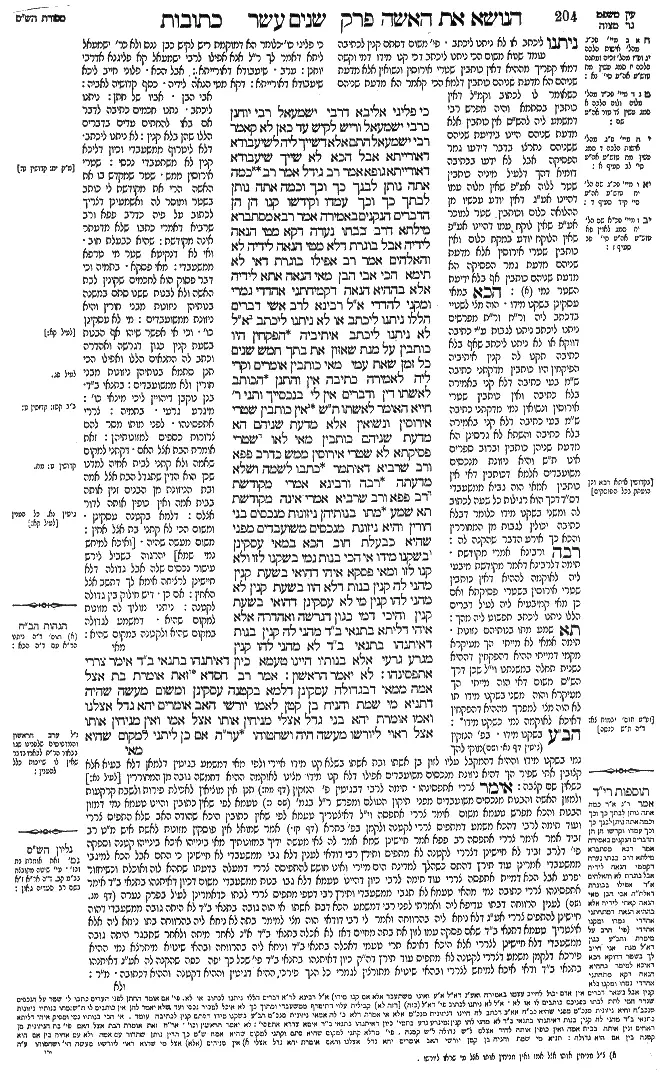
Ketubot 102b - Guemara
כי פליגי אליבא דרבי ישמעאל רבי יוחנן כרבי ישמעאל וריש לקיש עד כאן לא קאמר רבי ישמעאל התם אלא דשייך ליה לשיעבודא דאורייתא אבל הכא לא שייך שיעבודא דאורייתא גופא אמר רב גידל אמר רב כמה אתה נותן לבנך כך וכך וכמה אתה נותן לבתך כך וכך עמדו וקידשו קנו הן הן הדברים הנקנים באמירה אמר רבא מסתברא מילתא דרב בבתו נערה דקא מטי הנאה לידיה אבל בוגרת דלא מטי הנאה לידיה לא והאלהים אמר רב אפילו בוגרת דאי לא תימא הכי אבי הבן מאי הנאה אתא לידיה אלא בההיא הנאה דקמיחתני אהדדי גמרי ומקני להדדי א"ל רבינא לרב אשי דברים הללו ניתנו ליכתב או לא ניתנו ליכתב א"ל לא ניתנו ליכתב איתיביה הפקחין היו כותבין על מנת שאזון את בתך חמש שנים כל זמן שאת עמי מאי כותבין אומרים וקרי ליה לאמירה כתיבה אין והתנן הכותב לאשתו דין ודברים אין לי בנכסייך ותני ר' חייא האומר לאשתו ת"ש אין כותבין שטרי אירוסין ונשואין אלא מדעת שניהם הא מדעת שניהם כותבין מאי לאו שטרי פסיקתא לא שטרי אירוסין ממש כדרב פפא ורב שרביא דאיתמר כתבו לשמה ושלא מדעתה רבה ורבינא אמרי מקודשת רב פפא ורב שרביא אמרי אינה מקודשת תא שמע מתו בנותיהן ניזונות מנכסים בני חורין והיא ניזונת מנכסים משועבדים מפני שהיא כבעלת חוב הכא במאי עסקינן בשקנו מידו אי הכי בנות נמי בשקנו לזו ולא קנו לזו ומאי פסקא איהי דהואי בשעת קנין מהני לה קנין בנות דלא הוו בשעת קנין לא מהני להו קנין מי לא עסקינן דהואי בשעת קנין והיכי דמי כגון דגרשה ואהדרה אלא איהי דליתא בתנאי ב"ד מהני לה קנין בנות דאיתנהו בתנאי ב"ד לא מהני להו קנין מגרע גרעי אלא בנותיו היינו טעמא כיון דאיתנהו בתנאי ב"ד אימר צררי אתפסינהו:
לא יאמר הראשון:
אמר רב חסדא זאת אומרת בת אצל אמה ממאי דבגדולה עסקינן דלמא בקטנה עסקינן ומשום מעשה שהיה דתניא מי שמת והניח בן קטן לאמו יורשי האב אומרים יהא גדל אצלנו ואמו אומרת יהא בני גדל אצלי מניחין אותו אצל אמו ואין מניחין אותו אצל ראוי ליורשו מעשה היה ושחטוהו ער"ה אם כן ליתני למקום שהיא
Comments from Rashi on Masechet Ketubot Page 102b
כי פליגי כו' . כלומר הא דמוקמת ריש לקיש כבן ננס ולא כר' ישמעאל ליתא דאמר לך ר"ל אנא אפילו לרבי ישמעאל קא פליגנא אדרבי יוחנן: ערב . שיעבודא דאורייתא: אבל הכא . פלוני חייב ליכא שיעבודא דאורייתא: דקא מטי הנאה לידיה . כסף קדושיה לאביה: אבי הבן . אביו של חתן: ניתנו ליכתב . נתנו חכמים כתיבה לדבר אם באו להחתים עדים בדברים הללו שהן בלא קנין: לא ניתנו ליכתב . דלא ליטרוף ממשעבדי וכיון דליכא קנין לא משתעבדי נכסי: שטרי אירוסין ממש . שטר שמקדש בו את האשה הרי את מקודשת לי כותב בשטר ומוסר לה ואשמעינן דצריך לכתוב על פיה כדרב פפא ורב שרביא דאמרי כתבו שלא מדעתה אינה מקודשת: שהיא כבעלת חוב . ואי לא דנקיטא שטר מי טרפא ממשעבדי: מאי פסקא . בתמיה וכי דבר פסוק הוא לחכמים שקונין לבת האשה ולא לבנות ששנו סתם במשנה בנותיהן ניזונות מבני חורין והיא ניזונת ממשועבדים: מי לא עסקינן כו' . וכי אי אפשר שיהו אף הבנות בשעת קנין כגון דגרשה ואהדרה וכתב לה התנאים הללו ואפילו הכי תנן סתמא בנותיהן ניזונות מבני חורין ולא ממשועבדים: בתנאי ב"ד . בנן נוקבן דיהויין ליכי מינאי כו': מיגרע גרעי . בתמיה: צררי אתפסינהו . לפני מותו מסר להם צרורות כספים למזונותיהן: זאת אומרת הבת אצל האם . דקתני למקום שאמה ולא קתני לבית אחיה למדנו שכן הוא הדין שתגדל הבת אצל אמה ובת הניזונת מן הבנים זנין אותה בבית אמה ואין כופין אותה לדור אצלם: דלמא בקטנה עסקינן . ומשום הכי לא קתני בת אצל אחין: משום מעשה שהיה . [ואיכא למיחש נמי שמא] יהרגוה בשביל לירש עישור נכסים שלה אבל גדולה דלא חיישינן לרציחה אימא לך דתשב אצל האחין: אם כן . דיש חילוק בין גדולה לקטנה: ניתני מוליך לה מזונות למקום שהיא . דמשמע לגדולה במקום שהיא ולקטנה במקום שהיא:
Comments from Tosafot - Ketubot 102b
ניתנו ליכתב או לא ניתנו ליכתב . פי' משום דסתם קנין לכתיבה עומד שמא משום הכי ניתנו ליכתב דכי קנו מידו דמי וקשה דמאי קפריך מההיא דאין כותבין שטרי אירוסין ונשואין אלא מדעת שניהם הא מדעת שניהם כותבין דלמא הכי קאמר הא מדעת שניהם כשאומר לו לכתוב וקמ"ל דאין כותבין בסתמא והיה מפרש רבי דמשמע ליה להש"ס אין כותבין אלא מדעת שניהם היינו בידיעת שניהם ששניהם נתרצו בדבר דידעו גמר הפסיקה אבל לא ידעו בכתיבה דומיא דהך דלעיל מיניה כותבין שטר ללוה אע"פ שאין מלוה עמו דהיינו אע"ג דאין יודע עכשיו מן ההלואה כלום וכותבין שטר למוכר אע"פ שאין לוקח עמו דהיינו אע"פ שאין הלוקח יודע במקח כלום ואין כותבין שטרי אירוסין אלא מדעת שניהם מדעת גמר הפסיקה הא מדעת שניהם כותבין אף בלא ידיעת השטר נמי: רבה ורבינא אמרי מקודשת . תימה דלרבינא דאמר מקודשת מיבעי ליה לאוקמה לההיא דאין כותבין שטרי אירוסין בשטרי פסיקתא ואם כן מאי קמיבעיא ליה לעיל דברים הללו ניתנו ליכתב תפשוט ליה מהך: תא שמע מתו בנותיהם נזונות . תימה אמאי לא מייתי הך מעיקרא מקמי דמייתי ההיא דהפקחין דההיא נשנית תחלה במשנתנו וי"ל שכן דרך הש"ס משום דאי הוה מייתי הך מעיקרא והוה משני בשקנו מידו תו לא הוה מצי למפרך מההיא דהפקחין דאיכא לאוקמה נמי כשקנו מידו: הכא במאי עסקינן בשקנו מידו . הוה מצי לשנויי בדכתב ליה ור"ח ור"ת מפרשים ניתנו ליכתב ניתנו לגבות ע"י כתיבה דווקא או לא ניתנו ליכתב שאף בלא כתיבה תקנו לה קנין איתיביה הפיקחין היו כותבין מדקתני כתיבה ש"מ בעי כתיבה דלא קני באמירה בלא כתיבה ואין כותבין שטרי אירוסין ונשואין נמי מדקתני כתיבה ש"מ בעי כתיבה דלא קני באמירה בלא כתיבה והשתא לא גרסינן הא מדעת שניהן כותבין וברוב ספרים אינו ת"ש והיא ניזונת מנכסים משועבדים אלמא דכותבין דאי אין כותבין אמאי הוה גביא ממשעבדי דס"ד דכך הוא רגילות כל שעה לכתוב לה ומשני בשקנו מידו כלומר דבלא כתיבה יכולין לגבות מן המחוררין והכא כך אירע הדבר שהקנה לה: הב"ע בשקנו מידו . בפ' הנזקין (גיטין דף נא. ושם) מוקי להך נמי בשקנו מידו וההיא דהמקבל עליו לזון בן אשתו ובת אשתו בשלא קנו מידו איירי ולפי מאי דמשמע בגיטין דלמאן דלא בעיא אלא קצובין אתי שפיר הך דהיא ניזונת מנכסים משועבדים אפילו דלא קנו מידו מצינו לאוקמה ההיא דחמשה גובה מן המחוררין [לעיל (כתובות נא:)] כשאין שם קצבה: אימר צררי אתפסינהו . תימה לרבי דבגיטין פ' הנזקין (דף מח:) תנן אין מוציאין לאכילת פירות ולשבח קרקעות ולמזון האשה והבנות מנכסים משועבדים מפני תיקון העולם ומפרש ר"ל בגמ' (שם נ:) טעמא לפי שאין כתובין והיינו טעמא נמי דמזון הבנות והכא מפרש טעמא משום אימר צררי אתפסה וי"ל דאיצטריך טעמא לפי שאין כתובין היכא שהודה האב שלא התפיס צררי ועוד תימה לרבי דהכא משמע דמתפיס צררי לקטנה ולקמן בפ' בתרא (כתובות דף קז.) אמר שמואל אין פוסקין מזונות לאשת איש מ"ט רב זביד אמר אימר צררי אתפסה רב פפא אמר חיישינן שמא אמר לה צאי מעשה ידיך במזונותיך מאי בינייהו איכא בינייהו קטנה וספקה פי' דלרב זביד לא חיישינן דצררי לקטנה לא מתפיס ותירץ רבי דודאי לענין דלא גבי ממשעבדי לא חיישינן כי התם אבל הכא למיגבי ממשעבדי אמרינן עוד תירץ דהתם כשהלך למדינת הים מיירי ואינו חושש להתפיסה צררי דמעלה בדעתו שתהא לוה ואוכלת וכשיחזור יפרע אבל הכא דמיית אתפסה צררי עוד תימה לרבי כיון דהיינו טעמא דלא גבו בנות ממשעבדי משום דכיון דאיתנהו בתנאי ב"ד אימר אתפסינהו צררי כתובה נמי מהאי טעמא לא תגבי ממשעבדי ותירץ רבי דטפי מתפיס צררי לבתו כדאמרינן לעיל בפרק נערה (כתובות דף מג. ושם) לענין הרווחה דבתו עדיפא ליה ואמרתי לפני רבי דמשמע הכא דבת אשתו אי הוה גובה בתנאי ב"ד לא היתה גובה ממשעבדי דהוה חיישינן להתפיס צררי אע"ג דלא ניחא ליה בהרווחה ואמר לי רבי דודאי הוה מצי למימר בתה לא ניחא ליה בהרווחה בתו ניחא ליה אלא איצטריך טעמא דתנאי ב"ד שאם פסקה עמו לזון את בתה מחיים דאז לא אכלה בתנאי ב"ד א"נ לאחר מיתה ולאחר שתבגר היתה גובה ממשעבדי דלא חיישינן לצררי אלא היכא דאיכא תרי טעמי דאכלה בתנאי ב"ד וניחא ליה בהרווחה ובהאי שינויא מיתרצא נמי ההיא פירכא דלקמן משמע דצררי לקטנה לא מתפיס עוד תירץ דה"ק כיון דאיתנהו בתנאי ב"ד פי' שכל כך יפה כסה שהקנה לה אע"ג דאיתנהו בתנאי ב"ד ודאי איכא למיחש לצררי ובהאי שינויא מתורצין לגמרי כל הנך פירכי ההיא דגיטין וההיא דקטנה וההיא דכתובה. מ"ר:
Ketubot 102b - Mishnah translated into english
When they disagree, it is in accordance with the opinion of Rabbi Yishmael. Rabbi Yoḥanan stated his ruling in accordance with the simple interpretation of the opinion of Rabbi Yishmael. And Reish Lakish holds that Rabbi Yishmael states his opinion only there, in the case of the guarantor, which relates to an obligation of Torah law, since a guarantor is obligated by Torah law to pay. But here, where the case does not relate to an obligation of Torah law, as the man did not owe any money until he accepted this obligation upon himself, even Rabbi Yishmael would exempt him from paying.
§ The Gemara continues to analyze the matter itself mentioned earlier: Rav Giddel said that Rav said: When two families negotiate the terms of marriage for their respective children and one side says to the other: How much do you give your son? And the second side answers: Such and such amount. How much do you give your daughter? And the first side responds: Such and such amount. Then, if the son and daughter arose and performed the betrothal, all of these obligations are acquired and therefore binding. These are among the things that are acquired through words alone, without the need for an additional act of acquisition. The mishna is referring to a document that records such an agreement.
Rava said: Rav’s statement is reasonable in a case of a father whose daughter is a young woman, since the father derives benefit from this betrothal. The money given by the groom for the betrothal, as well as the rights to the bride’s marriage contract, belong to the father of the bride. Consequently, he accepts through verbal agreement alone the obligation to pay the money he specified. However, in the case of a grown woman, where the father does not derive benefit from the betrothal because the rights to the betrothal money and marriage contract belong to the woman herself, no, the father does not become obligated to pay the money he specified through verbal agreement alone.
Rava continues: But by God! Rav said his ruling even with regard to a grown woman, as, if you do not say so, in the case of the father of the groom, what monetary benefit does he derive from the betrothal? Rather, it must be explained that in exchange for that benefit, i.e., that the groom and bride marry each other, the fathers fully transfer the rights to the respective payments to each other.
Ravina said to Rav Ashi: Are these matters, i.e., verbal agreements concerning an upcoming marriage, allowed to be written down afterward in a proper contract, or are they not allowed to be written down afterward in a proper contract? Rav Ashi said to him: They are not allowed to be written down.
Ravina raised an objection to this from the mishna: The perspicacious ones would write an explicit stipulation into the agreement: I agree on the condition that I will sustain your daughter for five years only as long as you are with me. This indicates that one may document these verbal agreements. Rav Ashi responded: What is the meaning of the term write in this case? It means say.
Ravina continued to ask: Does the tanna refer to saying as writing? Rav Ashi replied: Yes. And so we learned in the mishna (83a): One who writes to his wife: I have no legal dealings or involvement in your properties, and Rabbi Ḥiyya taught in explanation, that it means: One who says to his wife. This proves that verbal agreements are sometimes referred to in the Mishna as writing.
The Gemara suggests: Come and hear a proof from the following mishna (Bava Batra 167b): One writes documents of betrothal and marriage only with the consent of both of them. It may be derived from here that with the consent of both of them, one may write the documents. What, is it not that this mishna is discussing documents of stipulation that specify the agreements accepted by each side before the marriage?
The Gemara rejects this: No, the discussion concerns actual betrothal documents. In other words, in a case where a man betroths a woman by giving her a document that states: You are hereby betrothed to me, the document must be written with the consent of both the man and the woman, in accordance with the opinions of Rav Pappa and Rav Sherevya. As it was stated: If the husband wrote a betrothal document for the sake of a specific woman and gave it to her, but he wrote it without her consent, Rabba and Ravina say: She is betrothed to this man. Rav Pappa and Rav Sherevya say: She is not betrothed.
The Gemara suggests further: Come and hear another proof that verbal agreements may be written down, based upon the mishna: If the two husbands died, their daughters are sustained from unsold property, and she, their wife’s daughter, whom they agreed to sustain for five years, is sustained even from liened property that was sold. This is due to the fact that her legal status is like that of a creditor, given that they are contractually obligated to pay her. The fact that she is able to repossess liened property indicates that the agreement is recorded in a document.
The Gemara rejects this proof: Here, we are dealing with a case where the woman acquired from each husband the right to her daughter’s sustenance, i.e., they performed an act of acquisition and did not suffice with a mere verbal agreement. Consequently, the agreement may be recorded in a document.
The Gemara asks: If that is so, that a proper mode of acquisition was employed, then let the husbands’ own daughters also repossess liened properties that were sold. The Gemara answers: The case is such where they acquired the right to receive sustenance for this daughter of the wife, and they did not acquire this right for that daughter, i.e., they did not perform an act of acquisition confirming their obligations to provide sustenance for their own daughters.
The Gemara asks: What makes it necessary to say that the case is one in which an acquisition was made on behalf of the wife’s daughter and not on behalf of the husbands’ own daughters? The Gemara answers: She, the wife’s daughter from a previous marriage, was present at the time of the transaction when her mother was wed. Consequently, for her the transaction is effective. With regard to the daughters of the husbands, who were born after their parents’ marriage and were not present at the time of the transaction, for them the transaction is not effective.
The Gemara asks: Are we not also dealing with a situation where the husband’s daughters were present at the time of the transaction? And what are the circumstances that would allow for such a reality? This could occur in a situation such as where each one divorced his wife and then took her back, and they had a daughter from their first marriage.
Rather, the distinction is as follows: She, the wife’s daughter, is not included in the stipulation of the court requiring a husband to support his daughters. Consequently, for her the transaction is effective. However, with regard to the husband’s own daughters, who are included in the stipulation of the court, for them the transaction is not effective.
The Gemara wonders about this: Because they are included in the stipulation of the court they are worse off? On the contrary, since the stipulation of the court demands that they be supported, they should wield more power. Rather, this is the reason that his own daughters do not collect from liened property: Since they are included in the stipulation of the court, and it is therefore the norm for fathers to take care to provide their support, say that their father gave them bundles of money while he was still alive. Due to this concern, they cannot repossess liened property. However, in the case of the wife’s daughter, who is not included in the stipulation of the court, there is no concern that the husband gave her anything prior to his death.
§ We learned in the mishna that the first husband may not say that he will provide his wife’s daughter with support only when she is with him. Rather, he must bring the sustenance to her in the place where her mother lives. Rav Ḥisda said: That is to say that in a case of divorce, a daughter lives with her mother.
The Gemara asks: From where do we know that we are dealing with a case of an adult woman and there is a general guideline that in cases of divorce, a girl lives with her mother? Perhaps we are dealing with a case of a minor girl, and she lives with her mother because of concern for her safety, due to an incident that occurred.
As it is taught in a baraita: In the case of one who died and left a minor son to the care of his mother, and the heirs of the father say: The son should grow up with us, and his mother says: My son should grow up with me, the halakha is that one leaves the child with his mother, and one does not leave the child with one who is fit to inherit from him, i.e., the father’s heirs. An incident occurred, and the boy lived with his father’s heirs, and they slaughtered him on the eve of Passover. So too, a minor girl is not left in the care of those who are obligated to sustain her and who have a financial interest in her demise.
The Gemara answers: If that is so, let the mishna teach that the husband must bring the sustenance to the place where she, the daughter, is located.
Traduction : The William Davidson digital edition of the Koren Noé Talmud, with commentary by Rabbi Adin Even-Israel Steinsaltz.