 Talmud Bavli
The learning on the whole site is dedicated : L'ilui Nishmat Jamila bat Chlomo Abensour
The learning on the whole site is dedicated : L'ilui Nishmat Amram ben Itshak Loubaton
The learning on the whole site is dedicated : L'ilui Nishmat Yechayahou ben Moche
Ketubot 104b : Youtube
Daf TubeYoutube
1 video class :
Ketubot Page 104b
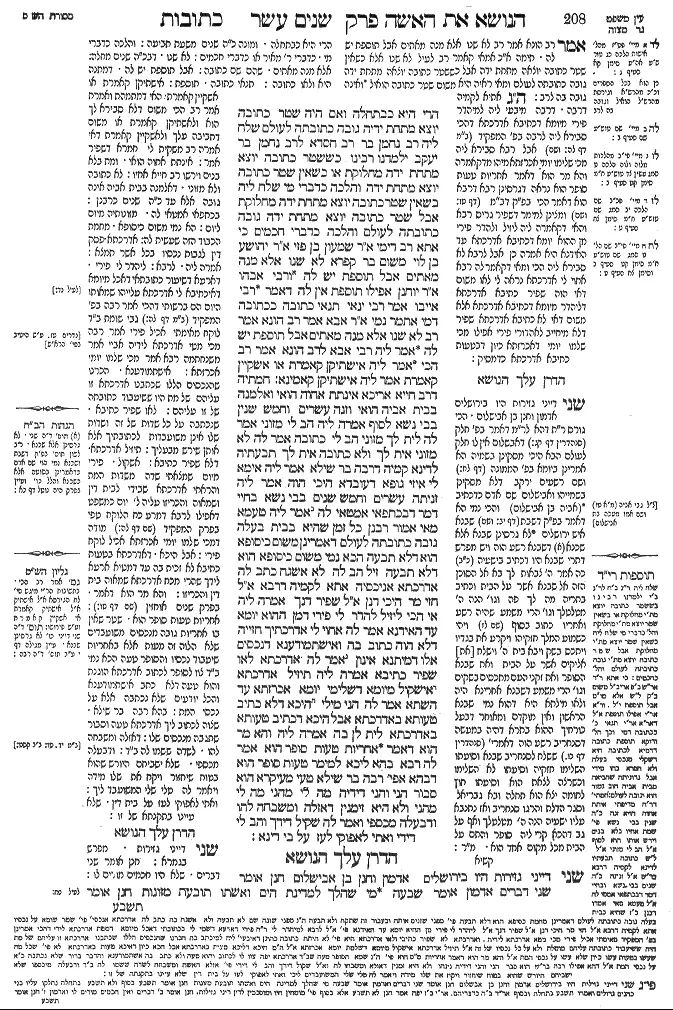
Ketubot 104b - Guemara
הרי היא כבתחלה ואם היה שטר כתובה יוצא מתחת ידיה גובה כתובתה לעולם שלח ליה רב נחמן בר רב חסדא לרב נחמן בר יעקב ילמדנו רבינו כששטר כתובה יוצא מתחת ידה מחלוקת או כשאין שטר כתובה יוצא מתחת ידה והלכה כדברי מי שלח ליה בשאין שטר כתובה יוצא מתחת ידה מחלוקת אבל שטר כתובה יוצא מתחת ידה גובה כתובתה לעולם והלכה כדברי חכמים כי אתא רב דימי א"ר שמעון בן פזי א"ר יהושע בן לוי משום בר קפרא לא שנו אלא מנה מאתים אבל תוספת יש לה ורבי אבהו א"ר יוחנן אפילו תוספת אין לה דאמר רבי אייבו אמר רבי ינאי תנאי כתובה ככתובה דמי אתמר נמי א"ר אבא אמר רב הונא אמר רב לא שנו אלא מנה מאתים אבל תוספת יש לה אמר ליה רבי אבא לרב הונא אמר רב הכי אמר ליה אישתיקן קאמרת או אשקיין קאמרת אמר ליה אישתיקן קאמינא:
חמתיה דרב חייא אריכא אינתת אחוה הואי ואלמנה בבית אביה הואי וזנה עשרים וחמש שנין בבי נשא לסוף אמרה ליה הב לי מזוני אמר לה לית לך מזוני הב לי כתובה אמר לה לא מזוני אית לך ולא כתובה אית לך תבעתיה לדינא קמיה דרבה בר שילא אמר ליה אימא לי איזי גופא דעובדא היכי הוה אמר ליה זניתה עשרים וחמש שנים בבי נשא בחיי דמר דבכתפאי אמטאי לה אמר ליה טעמא מאי אמור רבנן כל זמן שהיא בבית בעלה גובה כתובתה לעולם דאמרינן משום כיסופא הוא דלא תבעה הכא נמי משום כיסופא הוא דלא תבעה זיל הב לה לא אשגח כתב לה אדרכתא אניכסיה אתא לקמיה דרבא א"ל חזי מר היכי דנן א"ל שפיר דנך אמרה ליה אי הכי ליזיל להדר לי פירי דמן ההוא יומא עד האידנא אמר לה אחוי לי אדרכתיך חזייה דלא הוה כתוב בה ואישתמודענא דנכסים אלו דמיתנא אינון אמר לה אדרכתא לאו שפיר כתיבא אמרה ליה תיזיל אדרכתא אישקול מיומא דשלימי יומא אכרזתא עד השתא אמר לה הני מילי היכא דלא כתיב טעותא באדרכתא אבל היכא דכתיב טעותא באדרכתא לית לן בה אמרה ליה והא מר הוא דאמר אחריות טעות סופר הוא אמר לה רבא בהא ליכא למימר טעות סופר הוא דבהא אפי' רבה בר שילא טעי מעיקרא הוא סבור הני והני דידיה מה לי מהני מה לי מהני ולא היא זימנין דאזלה ומשבחה להו ודבעלה מכספי ואמר לה שקיל דידך והב לי דידי ואתי לאפוקי לעז על בי דינא:
הדרן עלך הנושא
מתני׳ שני דייני גזירות היו בירושלים אדמון וחנן בן אבישלום חנן אומר שני דברים אדמון אומר שבעה מי שהלך למדינת הים ואשתו תובעת מזונות חנן אומר
Comments from Rashi on Masechet Ketubot Page 104b
הרי היא כבתחלה . ומונה כ"ה שנים משעת תביעה: והלכה כדברי מי . כדברי ר' מאיר או כדברי חכמים: לא שנו . דבכ"ה שנים מחלה: אלא מנה מאתים . שהם שם כתובה: אבל תוספת יש לה . דמתנה היא ולאו כתובה: תנאי כתובה . תוספת: אישתיקן קאמרת או אשקיין קאמרת . האי דמתמהת ואמרת אמר רב הכי משום דלא סבירא לך הוא ולאשתיקן קאמרת או משום דחביבה עלך ולאשקיין קאמרת דאי אמרה רב משקית לי חמרא דשפיר אמר: אינתת אחוה הואי . ומת בלא בנים וירשו רב חייא אחיו: לא כתובה ולא מזוני . דאלמנה בבית אביה אינה גובה אלא עד כ"ה שנים כרבנן: בכתפאי אמטאי לה . מזונותיה מיום ליום: הא נמי משום כיסופא . מחמת הכבוד הזה שעשית לה: אדרכתא . פסק דין לגבות נכסיו בכל אשר תמצא: אמרה ליה . לרבא: ליהדר לי פירי . דארעא דשיעור כתובתאי דאכל מיומא דאיכתיבא לי אדרכתא עלייהו שמאותו היום הם ברשותי דהכי אמר רבה בפ' המפקיד (ב"מ דף לה:) גבי שומת ב"ד לוקח מאימתי אכיל פירי אמר רבה מכי מטי אדרכתא לידיה אביי אמר משנחתמה רבא אמר מכי שלמו יומי אכרזתא: אישתמודענא . הכרנו שהנכסים הללו שכתבנו אדרכתא זו עליהם של מת היו ששיעבוד כתובתה של זו עליהם: לאו שפיר כתיבא . שנכתבה על כל שדות של זה ושדות שלו אינן משועבדות לכתובתיך אלא אותן שירש מבעליך: תיזיל אדרכתא . דלא שפיר כתיבא: אשקול . פירי מיום שמצאתי שדה משדות המת והראתי אדרכתא שבידי לבית דין ושמאוה והכריזו עליה ל' יום כמשפט דאפילו לרבא דמרע כח הלוקח טפי בפרק המפקיד (שם דף לה:) מודה דמכי שלמו יומי אכרזתא אכיל לוקח פירי: אבל היכא . דאדרכתא בטעות כתיבא לא זכית בה עד דמטיא ארעא לידך שהרי מכח אדרכתא שמאוה בית דין והכריזו: והא מר הוא דאמר . בפרק שנים אוחזין (שם דף טו:): אחריות טעות סופר הוא . שטר שאין בו אחריות גובה מנכסים משועבדים שלא הלוה זה מעות אלא באחריות שיעבוד נכסיו והסופר טעה הכא נמי ב"ד צוו לסופר לכתוב אדרכתא הוגנת והוא טעה דלא כתב אישתמודענא והכל יודעים שלא נכתבה אלא על נכסי המת: בהא רבה בר שילא . שצוה לכתוב ליך אדרכתא טעה וסבור שתגבה מנכסים שלו: דאזלה ומשבחה להו . לשדה ששמו לה ב"ד: ודבעלה מכספי . שלא ישביחם היורש שהוא בטוח שיחזור ויקח את שלו מידה ויאמר לה טלי שלי המשועבד ליך: ואתי לאפוקי לעז על בית דין . שלא עיינו בתקנתא של זו: הדרן עלך הנושא מתני' שני דייני גזירות . מפרש בגמרא: חנן אומר שני דברים . שלא היו חכמים מודים לו:
Comments from Tosafot - Ketubot 104b
אמר רב הונא אמר רב לא שנו אלא מנה מאתים אבל תוספת יש לה . תימה א"כ אמאי קאמר רב לעיל לא שנו אלא כשאין שטר כתובה יוצאה מתחת ידה אבל כששטר כתובה יוצאה מתחת ידה גובה כתובתה לעולם ומאי ראיה היא משום שטר כתובה הואיל ואינה גובה בה לרב: ה"ג אתיא לקמיה דרבה. דרבה מיבעי ליה למיהדר פירי מיומא דכתיבא אדרכתא דהכי סבירא ליה לרבה בפ' המפקיד (ב"מ דף לה: ושם) אבל רבא סבירא ליה מכי שלימו יומי אכרזתא מיהו מדקאמרה והא מר הוא דאמר אחריות טעות סופר הוא נראה דגרסינן רבא דרבא הוא דאמר הכי בפ"ק דב"מ (דף טו: ושם) ומצינן למימר דשפיר גריס רבא והאי דקאמרה ליה ליזיל ולהדר פירי מן ההוא יומא דכתיבא אדרכתא עד האידנא היא אמרה כן אבל לרבא לא סבירא ליה הכי ומאי דקאמר לה רבא אחוי לי אדרכתא נראה לי לאו משום דאי הוה שפיר כתיבא אדרכתא דליהדר מיומא דכתיבא אדרכתא אלא משום דאי לא כתיבא אדרכתא שפיר דלא מיחייב לאהדורי פירי אפילו מכי שלמו יומי דאכרזתא כיון דבטעות כתיבא אדרכתא כדמסיק: ה"ג אתיא לקמיה דרבה . דרבה מיבעי ליה למיהדר פירי מיומא דכתיבא אדרכתא דהכי סבירא ליה לרבה בפ' המפקיד (ב"מ דף לה: ושם) אבל רבא סבירא ליה מכי שלימו יומי אכרזתא מיהו מדקאמרה והא מר הוא דאמר אחריות טעות סופר הוא נראה דגרסינן רבא דרבא הוא דאמר הכי בפ"ק דב"מ (דף טו: ושם) ומצינן למימר דשפיר גריס רבא והאי דקאמרה ליה ליזיל ולהדר פירי מן ההוא יומא דכתיבא אדרכתא עד האידנא היא אמרה כן אבל לרבא לא סבירא ליה הכי ומאי דקאמר לה רבא אחוי לי אדרכתא נראה לי לאו משום דאי הוה שפיר כתיבא אדרכתא דליהדר מיומא דכתיבא אדרכתא אלא משום דאי לא כתיבא אדרכתא שפיר דלא מיחייב לאהדורי פירי אפילו מכי שלמו יומי דאכרזתא כיון דבטעות כתיבא אדרכתא כדמסיק: הדרן עלך הנושא מתני' שני דייני גזירות היו בירושלים אדמון וחנן בן אבישלום . הכי גורס ר"ת דהא לר"מ דאמר בפ' חלק (סנהדרין דף קג:) דאבשלום אין לו חלק לעולם הבא היכי מסקינן בשמיה הא אמרינן ביומא בפ' הממונה (דף לח:) ושם רשעים ירקב דלא מסקינן בשמייהו ואבישלום שם אדם כדכתיב (אביה בן אבישלום) והכי נמי הא דאמר בפ"ק דשבת (דף יב: ושם) שבנא איש ירושלים לא גרסינן שבנא אלא שכנא דשבנא רשע הוה ויש מפרש דתרי שבנא היו דכתיב בישעיה (כ"ב) כה אמר ה' צבאות לך בא אל הסוכן הזה אל שבנא אשר על הבית וכתיב בתריה מה לך פה וגו' הנה ה' מטלטלך וגו' הרי משמע שהיה רשע ואחריו כתוב בסוף (שם לז) ויהי כשמוע המלך חזקיהו ויקרע את בגדיו ויתכס בשק ויבא בית ה' וישלח [את] אליקים אשר על הבית ואת שבנא הסופר ואת זקני העם מתכסים בשקים וגו' הרי משמע דשבנא אחרינא היה ולאו מילתא היא דהוא נמי שבנא הראשון ואין מוקדם ומאוחר דבעל כורחיך ההוא בתרא דהיה במעשה דסנחריב רשע הוה דאמרי' (סנהדרין דף כו.) ששלח לסנחריב שבנא וסיעתו השלימו חזקיה וסיעתו לא השלימו וכשרצה לצאת הוא וסיעתו חוץ לחומה יצא הוא תחלה ובא גבריאל וסגר הדלת והרגו סנחריב ואז נתנבא עליו ישעיה הנה ה' מטלטלך ואף על גב דהכא קרי ליה סופר והתם על הבית מכל מקום אחד הוא. מ"ר:
Ketubot 104b - Mishnah translated into english
it is as though she is at the beginning of her period of widowhood, and she has another twenty-five years from that point during which she may demand payment of her marriage contract. And if she has a marriage contract in her possession, she may collect payment of her marriage contract forever.
The Gemara relates that Rav Naḥman, son of Rav Ḥisda, sent the following message to Rav Naḥman bar Ya’akov: Our teacher, instruct us. Does the dispute between Rabbi Meir and the Rabbis apply in a case where she has a marriage contract in her possession, or does it apply only in a case where she does not have a marriage contract in her possession? And in accordance with the statement of whom is the halakha decided?
Rav Naḥman bar Ya’akov sent back this answer to him: When she does not have a marriage contract in her possession, there is a dispute, but in a case where she has a marriage contract in her possession, all agree that she may collect payment of her marriage contract forever. And in a case where there is a dispute, the halakha is in accordance with the statement of the Rabbis.
When Rav Dimi came from Eretz Yisrael to Babylonia, he cited a dispute: Rabbi Shimon ben Pazi said that Rabbi Yehoshua ben Levi said in the name of bar Kappara: They taught that a widow is presumed to have waived her rights to payment of her marriage contract after twenty-five years only with regard to one hundred dinars or two hundred dinars, which constitute the principal payment of the marriage contract. However, she still has the right to demand payment of the additional sum recorded in the marriage contract.
And Rabbi Abbahu said that Rabbi Yoḥanan said: She does not have the right to demand payment even of the additional sum recorded in the marriage contract, as Rabbi Aivu said that Rabbi Yannai said: The stipulation of an additional sum in the marriage contract is like the principal sum of the marriage contract. Consequently, if she waived her rights to the principal sum of the marriage contract, she has waived her rights to the additional sum as well.
It was also stated that other amora’im debated this matter: Rabbi Abba said that Rav Huna said that Rav said: They taught that she is considered as having waived her rights to payment of her marriage contract only with regard to the principal payment of one hundred or two hundred dinars, but she still has the right to demand payment of the additional sum recorded in the marriage contract.
Rabbi Abba said to Rav Huna: Did Rav really say so? Rav Huna said to Rabbi Abba: Did you say that in order to silence me, because you disagree with this ruling? Or did you say that because you are so satisfied with this ruling that you would like to give me wine to drink? Rabbi Abba said to him: I said that in order to silence you. This indicates that Rabbi Abba disagrees with Rav and accepts the opinion of Rabbi Yoḥanan on this issue.
§ The Gemara relates that the mother-in-law of Rav Ḥiyya Arikha, so named because of his height, as the word arikha literally means long, was also the wife of his brother, and she was a widow who resided in the house of her father, and Rav Ḥiyya sustained her for twenty-five years in the house of her father, from his brother’s estate.
At the end of the twenty-five years, she said to him: Give me my sustenance. He said to her: You do not have the right to continue to demand sustenance. She said to him: In that case, give me the payment of my marriage contract. He said to her: After twenty-five years, you have no right to demand sustenance and you have no right to demand payment of your marriage contract.
She summoned him for judgment before Rabba bar Sheila. He said to Rav Ḥiyya Arikha: Tell me, then, what was the essence of the case? Rav Ḥiyya Arikha said to him: I sustained her for twenty-five years in the house of her father, and I swear by the life of the Master, i.e., by your life, that I delivered her sustenance to her regularly on my own shoulders.
Rabba bar Sheila said to him: What is the reason that the Sages said that as long as the widow is in the house of her husband, she may always collect payment of her marriage contract? It is because we say that it is due to embarrassment that she did not demand payment of her marriage contract, because she is in her husband’s house and his heirs are treating her well. Here too, in this case, it is due to embarrassment that she did not demand payment of her marriage contract, as you treated her with great respect despite the fact that she was living in her father’s house. Therefore, go and give her the payment of her marriage contract.
Rav Ḥiyya Arikha did not heed the ruling of Rabba bar Sheila and did not give her the payment of her marriage contract. Rabba bar Sheila wrote an authorization for her to seize his property in payment of the debt. Rav Ḥiyya Arikha came before Rava, and he said to him: Let the Master see how Rabba bar Sheila has judged me. Rava said to him: He has judged you well.
The woman said to Rava: If so, he should go and return to me the produce that has grown on the property that I have a right to receive as payment, from that day that I received authorization to seize his property until today. He said to her: Show me your document of authorization. He saw that it was not written in it: And it is known to us that these properties are from the estate of the deceased. Rava said to her: The authorization is not written well. Consequently, the property is not considered as though it were yours from the time that the authorization was written, and you do not have a right to the produce.
She said to him: Let the authorization go, i.e., even if I have no right to the produce that grew from the time the authorization was written, I should have the right to take the produce that grew from the time when the days of announcement were completed, after the court assessed the value of the property, until now. He said to her: This applies only in a case where there was no error written into the authorization, but where there was an error written into the authorization, we have no right to collect the debt with it. You therefore have no rights to any of the produce.
She said to him: But wasn’t it you, Master, who said that omission of the guarantee of the sale from the document is a scribal error, and it is considered as though the guarantee were written in the document? Here too, say that the omission of the above clause is regarded as a scribal error and is considered as though it were written in the authorization.
Rava said to her: In this case, it cannot be said that the clause was meant to be included in the document and it was left out due to a scribal error, because in this case even Rabba bar Sheila erred and thought that the clause should not be included. Initially, Rabba bar Sheila thought as follows: Since these properties that always belonged to Rav Ḥiyya Arikha and those properties that had belonged to his deceased brother are all his, i.e., Rav Ḥiyya Arikha’s, as he inherited his brother’s property, what difference does it make to me if she collects from these properties, and what difference does it make to me if she collects from those properties? Although only the property of her deceased husband is liened for the payment of her marriage contract, it should not really matter whether she collects from this property or from other property belonging to the heir.
Rava continues: But that is not so. Sometimes the widow will go and improve the property of the heir, thinking that she will receive her payment from it, and the property of her deceased husband will depreciate due to neglect on the part of the heir, who knows that it is this property that is liened to ensure payment of the widow’s marriage contract. And eventually, the heir will say to her: Take your property, i.e., the property that belonged to your husband, and give me my property. And people will come to cast aspersion on the court as not being concerned for the welfare of the woman, who will be left with the depreciated property. Consequently, the document of authorization to seize property must specify exactly which property belonged to the widow’s deceased husband, which she is entitled to collect. Since Rabba bar Sheila erred and did not write this specification, the document of authorization he wrote was useless.
May we return to you chapter “Hanose.”
MISHNA: There were two prominent judges who issued decrees in Jerusalem, Admon and Ḥanan ben Avishalom. Ḥanan states two matters about which the Sages disagreed; Admon states seven. The mishna elaborates: With regard to the case of one who went overseas and his wife is demanding sustenance, claiming that her husband left her without funds and she is seeking a ruling that would provide for her from her husband’s property, Ḥanan says:
Traduction : The William Davidson digital edition of the Koren Noé Talmud, with commentary by Rabbi Adin Even-Israel Steinsaltz.