 Talmud Bavli
The learning on the whole site is dedicated : L'ilui Nishmat Reuven ben Rivka SEBBAG
The learning on the whole site is dedicated : L'ilui Nishmat Avraham Ben Simha
The learning on the whole site is dedicated : L'ilui Nishmat Jacques Isaac Ben Amram Loubaton
Ketubot 100b : Youtube
Daf TubeYoutube
1 video class :
Ketubot Page 100b
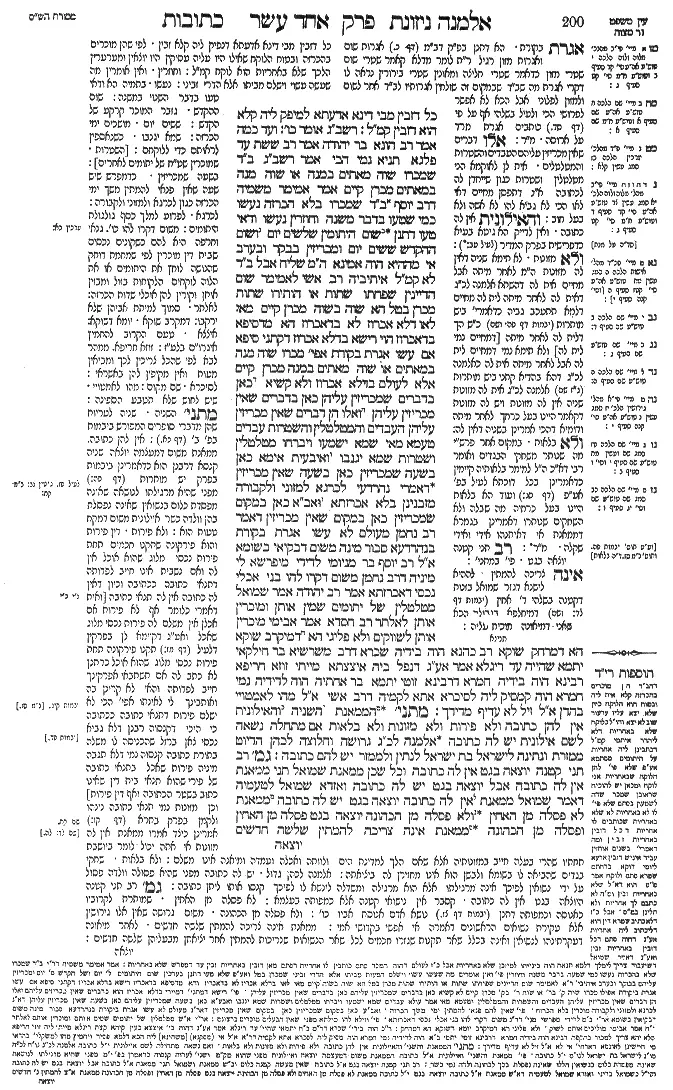
Ketubot 100b - Guemara
כל דזבין מבי דינא אדעתא למיפק ליה קלא הוא דזבין קמ"ל:
רשב"ג אומר כו':
ועד כמה אמר רב הונא בר יהודה אמר רב ששת עד פלגא תניא נמי הכי אמר רשב"ג ב"ד שמכרו שוה מאתים במנה או שוה מנה במאתים מכרן קיים אמר אמימר משמיה דרב יוסף ב"ד שמכרו בלא הכרזה נעשו כמי שטעו בדבר משנה וחוזרין נעשו ודאי טעו דתנן שום היתומין שלשים יום ושום ההקדש ששים יום ומכריזין בבקר ובערב אי מההיא הוה אמינא ה"מ שליח אבל ב"ד לא קמ"ל איתיביה רב אשי לאמימר שום הדיינין שפחתו שתות או הותירו שתות מכרן בטל הא שוה בשוה מכרן קיים מאי לאו דלא אכרוז לא בדאכרוז הא מדסיפא בדאכרוז הוי רישא בדלא אכרוז דקתני סיפא אם עשו אגרת בקורת אפי' מכרו שוה מנה במאתים או שוה מאתים במנה מכרן קיים אלא לעולם בדלא אכרוז ולא קשיא כאן בדברים שמכריזין עליהן כאן בדברים שאין מכריזין עליהן ואלו הן דברים שאין מכריזין עליהן העבדים והמטלטלין והשטרות עבדים טעמא מאי שמא ישמעו ויברחו מטלטלין ושטרות שמא יגנבו ואיבעית אימא כאן בשעה שמכריזין כאן בשעה שאין מכריזין דאמרי נהרדעי לכרגא למזוני ולקבורה מזבנינן בלא אכרזתא ואב"א כאן במקום שמכריזין כאן במקום שאין מכריזין דאמר רב נחמן מעולם לא עשו אגרת בקורת בנהרדעא סבור מינה משום דבקיאי בשומא א"ל רב יוסף בר מניומי לדידי מיפרשא לי מיניה דרב נחמן משום דקרו להו בני אכלי נכסי דאכרזתא אמר רב יהודה אמר שמואל מטלטלין של יתומים שמין אותן ומוכרין אותן לאלתר רב חסדא אמר אבימי מוכרין אותן לשווקים ולא פליגי הא דמיקרב שוקא הא דמרחק שוקא רב כהנא הוה בידיה שכרא דרב משרשיא בר חילקאי יתמא שהייה עד ריגלא אמר אע"ג דנפל ביה איצצתא מייתי זוזא חריפא רבינא הוה בידיה חמרא דרבינא זוטי יתמא בר אחתיה הוה לדידיה נמי חמרא הוה קמסיק ליה לסיכרא אתא לקמיה דרב אשי א"ל מהו לאמטויי בהדן א"ל זיל לא עדיף מדידך:
מתני׳ הממאנת השניה והאילונית אין להן כתובה ולא פירות ולא מזונות ולא בלאות אם מתחלה נשאה לשם אילונית יש לה כתובה אלמנה לכ"ג גרושה וחלוצה לכהן הדיוט ממזרת ונתינה לישראל בת ישראל לנתין ולממזר יש להם כתובה:
גמ׳ רב תני קטנה יוצאה בגט אין לה כתובה וכל שכן ממאנת שמואל תני ממאנת אין לה כתובה אבל יוצאה בגט יש לה כתובה ואזדא שמואל לטעמיה דאמר שמואל ממאנת אין לה כתובה יוצאה בגט יש לה כתובה ממאנת לא פסלה מן האחין ולא פסלה מן הכהונה יוצאה בגט פסלה מן האחין ופסלה מן הכהונה ממאנת אינה צריכה להמתין שלשה חדשים
Comments from Rashi on Masechet Ketubot Page 100b
כל דזבין מבי דינא אדעתא דנפיק ליה קלא זבין . לפי שהן מוכרים בהכרזה ובטוח הלוקח שאילו היו עליה עסיקין היו יוצאין ומערערין הלכך שלא באחריות הוא לוקח קמ"ל: וחוזרין . ואין אומרין מה שעשה עשוי וישלם מביתו אלא הדרי זביני: נעשו . בתמיה הא ודאי טעו בדבר השנוי במשנה: שום ההקדש . גזבר המוכר קרקע של הקדש: ששים יום . מושכים ימי הכרזה: [השטרות . שמוכרין שט"ח של יתומים לאחרים]: שמא יגנבו . כשנאספין לראותם כדי ללוקחם: בשעה שמכריזין . כדמפרש שיש שעה שאין פנאי להמתין משך ימי הכרזה כגון לכרגא ולמזוני ולקבורה: לכרגא . לפרוע למלך כסף גולגולת היתומים: משום דקרו להו כו' . גנאי וחרפה היא להם כשקונים נכסים שבית דין מוכרין לפי שמחמת דוחק שהנושה לוחץ את היתומים או את הלוה לוקחים הלקוחות בזול ומבזין אותן וקורין להן אוכלי שדות הכרזה: לאלתר . סמוך למיתת אביהן שלא ירקבו: דמקרב שוקא . יומא דשוקא: איצצא . טעם הקרוב להחמיץ איגרו"ם בלע"ז: זוזא חריפא . ממהר לבא לפי שהכל צריכין לכך ומביאין מעות ואין מקיפין להן באשראי: לסיכרא . שם מקום: מהו לאמטויי . שיש לחוש שלא תטבע הספינה: מתני' השניה . שניה לעריות שהן מדברי סופרים המפורש ביבמות בפ' ב' (דף כא.): אין להן כתובה . ממאנת משום דמעצמה יוצאה שניה קנסא דרבנן הוא כדאמרינן ביבמות בפרק יש מותרות (דף פה:) מפני שהיא מרגילתו לנושאה שאינה מפסדת כלום בנשואין שאינה נפסלת בהן וולדה כשר איילונית משום דמקח טעות הוא: ולא פירות . דין פירות והוא פירקונה שתקנו חכמים תחת פירות נכסי מלוג שהוא אוכל אין לה ואם נשבית אינו חייב לפדותה דתנאי כתובה ככתובה וכיון דאין לה כתובה אין לה תנאי כתובה [ואית דאמרי כלומר אף לא פירות אם אכלן אין משלם לה פירות נכסי מלוג שאכל ואע"ג דקיימא לן בפרקין דלעיל (כתובות דף מז:) תקנו פירקונה תחת פירות נכסי מלוג שהוא אוכל כדתנן לא כתב לה אם תשתבאי אפרקינך חייב לפדותה והאי לא קרינן בה ואותבינך לי לאינתו אפי' הכי לא ישלם פירות דתנאי כתובה ככתובה כי היכי דקנסוה רבנן דלא גביא נכסי צאן ברזל שהכניסה לו משלה בתורת כתובה קנסוה נמי דלא תגבה מיניה פירות שאכל בתנאי כתובה של פירי שהוא תנאי בית דין שאינו כתוב בשטר הכתובה ואף דין פירות] וכן מזונות נמי תנאי כתובה נינהו ולקמן בפרק בתרא (כתובות דף קז:) אמרינן כיצד אמרו ממאנת אין לה מזונות אי אתה יכול לומר ביושבת תחתיו שהרי בעלה חייב במזונותיה אלא שאם הלך למדינת הים ולוותה ואכלה ועמדה ומיאנה אינו משלם: ולא בלאות . שחקי בגדים שהביאה לו בשומא ולבשן הוא אינו מחזירן לה ביציאתה: אלמנה לכהן גדול . יש לה כתובה מפני שהיא פסולה וולדה פסול על ידי נשואין לפיכך אינה מרגילתו אלא הוא מרגילה ומשדלה לינשא לו לפיכך קנסו אותו ליתן כתובה: גמ' רב תני קטנה היוצאה בגט אין לה כתובה . קסבר אין נישואי קטנה אלא כמפותה בעלמא: לא פסלה מן האחין . שמותרת לקרוביו כאנוסה וכמפותה דתנן (יבמות דף צז.) נושא אדם אנוסת אביו כו': ולא פסלה מן הכהונה . משום גרושה שאין אלו גירושין אלא עקירת נשואים הראשונים דאמרה אי אפשי בקדושי אמי: ממאנת אינה צריכה להמתין שלשה חדשים . לאחר מיאונה דעקרתינהו לנשואין ואינה בכלל שאר תקנות שגזרו חכמים לכל שאר הנשואות שצריכות להמתין אחר יציאתן מבעליהן שלשה חדשים:
Comments from Tosafot - Ketubot 100b
אגרת בקורת . הא דתנן בפ"ק דב"מ (דף כ.) אגרות שום ואגרות מזון רגיל ר"ת לומר מדלא קאמר שטרי שום שטרי מזון כדאמר שטרי חליצה ומאונין שטרי בירורין נראה לו דקרי אגרת מה שב"ד שבמקום זה שולחין אגרותיו לב"ד אחר לשום ולמזון לפלוני אבל הכא לא אפשר לפרושי הכי ולעיל בשלהי אף על פי (כתובות דף סד.) כותבים אגרת מרד על ארוסה. מ"ר: אלו דברים שאין מכריזין עליהם העבדים והשטרות והמטלטלים . אית לן לאוקמא הני מטלטלין ושטרות כגון שייחדן לה לכתובה א"נ דתפסן מחיים דאי לאו הכי לא גביא להו לא אשה ולא בעל חוב: והאילונית אין לה כתובה . ואין לדייק הא גיטא בעיא כדפרישית בפרק המדיר (לעיל כתובות עב:): ולא מזונות . לא תימא שניה דאין לה מזונות ה"מ לאחר מיתה אבל מחיים אית לה דהשתא אלמנה לכ"ג דאית לה לאחר מיתה לית לה מחיים דלמא תתעכב גביה כדאמרי' ביש מותרות (יבמות דף פה. ושם) כ"ש הך דלית לה לאחר מיתה [דמחיים נמי לית לה] ולא תימא נמי דמחיים לית לה אבל לאחר מיתה אית לה כאלמנה לכ"ג דהא בהדיא קתני ביש מותרות (ג"ז שם) אלמנה לכ"ג אית לה מזונות שניה אין לה מזונות ויש לה מזונות דקאמר היינו בעל כרחך לאחר מיתה ודומיא דהכי אמרינן בשניה דאין לה: ולא בלאות . במקום אחר פרש"י מה שנותר משחקי הבגדים ואומר רבי דא"כ ה"ל למימר בלאותיה קיימין כדאמרינן בכל דוכתא לעיל בפ' אע"פ (כתובות דף סג:) ועוד הא בלאות היינו בעל כרחיה מה שבלה ולא השחקים שנותרו דאמרינן בגמרא דממאנת אי דאיתנהו אידי ואידי שקלה. מ"ר: רב תני קטנה יוצאה בגט . פי' במתני': רב תני קטנה יוצאה בגט. פי' במתני': אינה צריכה להמתין . לההיא לישנא דגזר שמואל בזנות דקטנה בשלהי ד' אחין (יבמות דף לד: ושם) דמיחלפא בגדולה הכא שאני דמיאונה מוכיח עליה:
Ketubot 100b - Mishnah translated into english
Everyone who buys from the court buys with the implicit understanding that the sale generates publicity, as a court sale is conducted in public with notices. The buyer could therefore think to himself that if no claimants came forward until the time of the actual purchase, then it is certain that there can be no problem with his purchase and he forgoes his property guarantee. Lest you say this, Rav Yosef teaches us that there is nevertheless a guarantee on the property, and it rests upon the orphans and not on the court.
§ The mishna teaches: Rabban Shimon ben Gamliel says that even if the judges err, the transaction is not void because of the prerogative of the court. The Gemara asks: And to what extent can they err without causing the deal to be reversed? Rav Huna bar Yehuda said that Rav Sheshet said: Until half of the value.
That is also taught in a baraita: Rabban Shimon ben Gamliel said: A court that sold property worth one hundred dinars for two hundred dinars, or property worth two hundred dinars for one hundred dinars, their sale is valid. Since he doesn’t give as an example a larger gap between the market value and the sale price, this must be the most extreme case in which the transaction is not reversed.
Ameimar said in the name of Rav Yosef: With regard to a court that sold without an announcement, it is considered as if they erred in a matter that appears in the Mishna and their decision is reversed.
The Gemara asks: Why does Rav Yosef say that it is considered as if the court erred in a matter that appears in the Mishna, when it certainly erred in this manner? As we learned in a mishna (Arakhin 21b): The assessment of the orphans is for thirty days, and the assessment for consecrated property is for sixty days, and they make announcements during the thirty and the sixty days respectively both in the morning and in the evening. The mishna states explicitly that announcements must be made. If the court did not make the announcements, it clearly erred in a matter that appears in the Mishna.
The Gemara answers: If all the information that I had were from that mishna, I would say that this applies to an agent but not to a court. Therefore, Rav Yosef teaches us that even a court that sold property without making announcements has erred.
Rav Ashi raised an objection to the statement of Ameimar: The mishna teaches that the halakha with regard to the assessment of the value of a piece of property in order to sell it through the judges is as follows: In a case where they decreased the price by one-sixth of its market value or added one-sixth to its market value, their sale is void. One can see from here that if the judges sold the property for its value, their sale is valid. What, is the mishna not discussing a case where no announcement was made? Ameimar replied: No, the case under discussion is one where they did make an announcement.
The Gemara asks: Since the last clause is referring to a case where the court made an announcement, the first clause must be referring to a case where they did not make announcements, as it teaches in the final clause: If they made a document of inspection and announced the sale publicly, then even if they sold property worth one hundred dinars for two hundred dinars or property worth two hundred dinars for one hundred dinars, their sale is valid.
Rather, this should be understood differently. Actually, the first clause of the mishna is referring to a case where they did not make an announcement, and this is not difficult. Here, Ameimar is referring to items for which one makes an announcement, and if this was not done then the sale is void. There, the mishna is speaking of items for which one does not make announcements.
And these are the items for which one does not make an announcement: Slaves, movable property, and contracts. The Gemara explains: What is the reason that slaves are sold without an announcement? Slaves are sold without an announcement lest they hear that they are about to be sold and escape. Why is the sale of movable property and contracts also not announced? Lest they be stolen.
And if you wish, say instead that here Ameimar is referring to a time when one makes an announcement, while there the mishna is referring to a time when one does not make an announcement.
When does one not make an announcement? As the Sages of Neharde’a say: For the purpose of paying head tax, and for payment to provide for children’s sustenance, and for burial, the court sells property inherited by orphans without an announcement because these are pressing needs. There is no time to wait for an announcement.
And if you wish, say instead that here, Ameimar is referring to a locale where one makes an announcement, while there, the mishna is referring to a locale where one does not make an announcement, as Rav Naḥman said: They never made a document of inspection in Neharde’a.
Some of the students understood from Rav Naḥman’s statement that no announcements were made in Neharde’a because the Sages there were all expert in the appraisal of an article’s value. Rav Yosef bar Minyumi said to them: This was explained to me personally by Rav Naḥman himself: It was because those who purchase the property are called: People who consume property that was publicly announced. This disparaging nickname was given because the purchasers were perceived as taking advantage of the distress of others by running to buy the property of someone in trouble. Since decent, honest people did not wish to buy property whose sale had been announced, they stopped making announcements.
Rav Yehuda said that Shmuel said: Movable property that belongs to orphans is appraised and sold immediately so that it not deteriorate over time. Rav Ḥisda said that Avimi said: The movable property is sold on a market day, when there are many potential buyers and the items will sell for a proper price.
The Gemara notes: And they do not disagree with each other. Rather, this opinion, that the items are sold on a market day, applies when the market day is approaching, so the property is not sold immediately. That opinion, that the items are sold immediately, applies when the market day is far off.
Rav Kahana was in possession of beer that belonged to Rav Mesharshiyya bar Ḥilkai, who was an orphan. He delayed selling it until the Festival. He explained the rationale for his actions and said: Although it is possible that it may deteriorate [itzatzta] and sour a little, it nevertheless brings in money at the time of the Festival, as it will sell for a higher price and for money, not credit. Consequently, it is in the best interests of Rav Mesharshiyya bar Ḥilkai to hold off and sell the beer at the next Festival.
It is also related that Ravina was in possession of wine belonging to the orphan Ravina the younger, who was his sister’s son. He also had wine of his own, which he was taking to Sikhra to sell.
He came before Rav Ashi and said to him: What is the halakha here, am I able to bring his wine along with my wine, or must I wait for a more opportune time to sell it? He said to him: Go to Sikhra and take his wine along as well, as his is no better than yours, and if you sell your own wine in this manner, it is clear that you think this is the best way to sell, and it is permitted for you to sell his wine in this manner.
MISHNA: An orphan girl who was married off by her mother or brother before reaching the age of majority may refuse to continue living with her husband upon reaching the age of majority, thereby retroactively annulling their marriage. In the case of one who refuses to continue living with her husband in this manner; and in the case of a woman who is a secondary forbidden relative by rabbinic law; and in the case of a sexually underdeveloped woman [ailonit], who is incapable of bearing children, each of these women is not entitled to payment of a marriage contract; and they are not entitled to remuneration for the produce that the husband consumed; and they are not entitled to sustenance; and they are not entitled to their worn clothes that were brought in to the marriage as part of their dowry and became worn out during the marriage.
If, from the start, he married her with the understanding that she is an ailonit, then she is entitled to payment of a marriage contract.
In the case of a widow who married a High Priest; or a divorcée or a yevama who performed ḥalitza and later married a common priest; or a daughter born from an incestuous or adulterous relationship [mamzeret] who married an Israelite; or a Gibeonite woman who married an Israelite; or a Jewish woman who married a Gibeonite or a mamzer, although each of these unions is prohibited by Torah law, the woman is still entitled to payment of a marriage contract.
GEMARA: Rav taught that a minor girl who was married off by her mother or by her brother and who is divorced with a bill of divorce is not entitled to her marriage contract. According to Torah law, this marriage never took effect, and it was never established that in this situation she would receive a marriage contract. And all the more so, one who refuses to continue living with her husband and annuls the marriage herself is not entitled to payment of a marriage contract.
Shmuel taught that one who refuses to continue living with her husband is not entitled to her marriage contract, but one who is divorced with a bill of divorce is entitled to her marriage contract.
The Gemara notes: And Shmuel follows his line of reasoning, as Shmuel said: One who refuses to continue living with her husband is not entitled to her marriage contract, but one who is divorced with a bill of divorce is entitled to her marriage contract.
Shmuel also said: One who refuses to continue living with her husband is not disqualified from marrying one of the brothers of her husband. Her refusal annuls the marriage, and it is as if it never happened. And for the same reason, unlike a divorcée, this girl is not disqualified from marrying a member of the priesthood. However, one who is divorced with a bill of divorce is disqualified from marrying one of the brothers and is also disqualified from marrying a member of the priesthood.
Another difference between a woman who refuses to continue living with her husband and a woman who was divorced normally is the following: One who refuses to continue living with her husband does not need to wait three months before remarrying, as other women who separate from their husbands must.
Traduction : The William Davidson digital edition of the Koren Noé Talmud, with commentary by Rabbi Adin Even-Israel Steinsaltz.