 Talmud Bavli
Ketubot 71b : Youtube
Daf TubeYoutube
1 video class :
Ketubot Page 71b
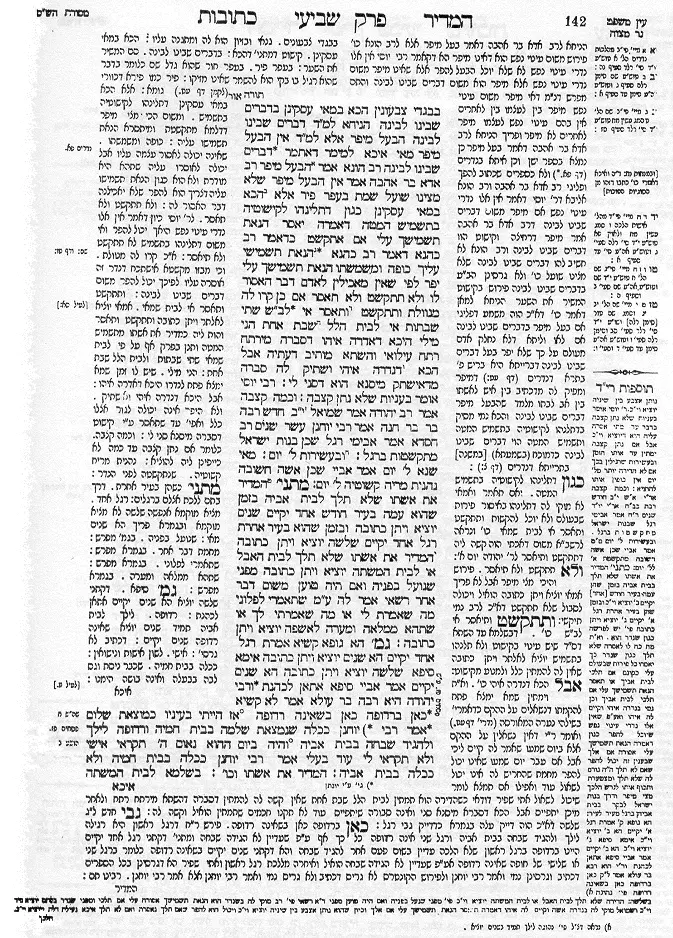
Ketubot 71b - Guemara
בבגדי צבעונין הכא במאי עסקינן בדברים שבינו לבינה הניחא למ"ד דברים שבינו לבינה הבעל מיפר אלא למ"ד אין הבעל מיפר מאי איכא למימר דאתמר דברים שבינו לבינה רב הונא אמר הבעל מיפר רב אדא בר אהבה אמר אין הבעל מיפר שלא מצינו שועל שמת בעפר פיר אלא הכא במאי עסקינן כגון דתלינהו לקישוטיה בתשמיש המטה דאמרה יאסר הנאת תשמישך עלי אם אתקשט כדאמר רב כהנא דאמר רב כהנא הנאת תשמישי עליך כופה ומשמשתו הנאת תשמישך עלי יפר לפי שאין מאכילין לאדם דבר האסור לו ולא תתקשט ולא תאסר אם כן קרו לה מנוולת ותתקשט ותאסר אי לב"ש שתי שבתות אי לבית הלל שבת אחת הני מילי היכא דאדרה איהו דסברה מירתח רתח עילואי והשתא מותיב דעתיה אבל הכא דנדרה איהי ושתיק לה סברה מדאישתק מיסנא הוא דסני לי:
רבי יוסי אומר בעניות שלא נתן קצבה:
וכמה קצבה אמר רב יהודה אמר שמואל י"ב חדש רבה בר בר חנה אמר רבי יוחנן עשר שנים רב חסדא אמר אבימי רגל שכן בנות ישראל מתקשטות ברגל:
ובעשירות ל' יום:
מאי שנא ל' יום אמר אביי שכן אשה חשובה נהנית מריח קשוטיה ל' יום:
מתני׳ המדיר את אשתו שלא תלך לבית אביה בזמן שהוא עמה בעיר חודש אחד יקיים שנים יוציא ויתן כתובה ובזמן שהוא בעיר אחרת רגל אחד יקיים שלשה יוציא ויתן כתובה המדיר את אשתו שלא תלך לבית האבל או לבית המשתה יוציא ויתן כתובה מפני שנועל בפניה ואם היה טוען משום דבר אחר רשאי אמר לה ע"מ שתאמרי לפלוני מה שאמרת לי או מה שאמרתי לך או שתהא ממלאה ומערה לאשפה יוציא ויתן כתובה:
גמ׳ הא גופא קשיא אמרת רגל אחד יקיים הא שנים יוציא ויתן כתובה אימא סיפא שלשה יוציא ויתן כתובה הא שנים יקיים אמר אביי סיפא אתאן לכהנת ורבי יהודה היא רבה בר עולא אמר לא קשיא כאן ברדופה כאן בשאינה רדופה (שיר השירים ח, י) אז הייתי בעיניו כמוצאת שלום אמר רבי יוחנן ככלה שנמצאת שלמה בבית חמיה ורדופה לילך ולהגיד שבחה בבית אביה (הושע ב, יח) והיה ביום ההוא נאום ה' תקראי אישי ולא תקראי לי עוד בעלי אמר רבי יוחנן ככלה בבית חמיה ולא ככלה בבית אביה:
המדיר את אשתו וכו':
בשלמא לבית המשתה
Comments from Rashi on Masechet Ketubot Page 71b
בבגדי צבעונים . גנאי ובזיון הוא לה ומתגנה עליו: הכא במאי עסקינן . קישוט דמתני' דהכא: בדברים שבינו לבינה . סם המשיר את השער: בעפר פיר . בעפר חור שהוא גדל שם כלומר בדבר שהוא רגיל בו בקי הוא להשמר שאינו מזיקו: פיר . כמו פירא דכוורי (לקמן כתובות דף עט.) גומא: אלא הכא במאי עסקינן דתלינהו לקישוטיה בתשמיש . ומשום הכי מצי מיפר דדלמא מתקשטת ומיתסרא הנאת תשמישו עליה: כופה ומשמשתו . שאינה יכולה לאסור עצמה עליו אבל יכולה לאוסרו עליה שתהא היא מודרת ולא הוא כגון הנאת תשמישו עליה דצריך הוא להפר שלא יאכילנה דבר האסור לה: ולא תתקשט ולא תאסר . לר' יוסי כיון דאמר אין אלו נדרי עינוי נפש היאך יכול להפר ואי משום דתלינהו בתשמיש לא תתקשט ולא תיאסר: א"כ קרו לה מנוולת . וכי מבזו מקשטא אישתכח דנדר זה אוסרה עליו לפיכך יכול להפר משום דברים שבינו לבינה: ותתקשט ותאסר אי לבית שמאי . אמאי יוציא לאלתר ויתן כתובה ותתקשט ותאסר והות ליה כמדיר את אשתו מתשמיש המטה ותנן בפרק אף על פי לבית שמאי שתי שבתות ולבית הלל שבת אחת: הני מילי . שיש לו זמן שמא ימצא פתח לנדרו היכא דאדרה איהו: אבל היכא דנדרה איהי ואישתיק . ולא היפר אינה יכולה לגור אצלו כלל ואפי' עד שתאסר ע"י קישוט דסברה מיסנא סני לי: וכמה קצבה . כלומר אם נתן קצבה עד כמה לא כייפינן ליה להוציא: משום דאיכא צערא דתרווייהו לא גרסינן: נהנית מריח קשוטיה . שנתקשטה לפני הנדר: מתני' כשהן בעיר אחרת . דרך בתם ללכת אצלם ברגלים: רגל אחד . מציא מוקמא אנפשה שלשה לא מציא מוקמא ובגמרא פריך הא שנים מאי: שנועל בפניה . בגמ' מפרש: מחמת דבר אחר . בגמרא מפרש: שתאמרי לפלוני . בגמרא מפרש: שתהא ממלאה ומערה . בגמרא מפרש: גמ' סיפא . דקתני שלשה יוציא הא שנים יקיים אתאן לכהנת: גמ' סיפא . דקתני שלשה יוציא הא שנים יקיים אתאן לכהנת: רדופה . לילך לבית אביה תמיד שנים יוציא שאינה רדופה שנים יקיים: דכתיב לא גרסי': אישי . לשון אישות ונישואין: ככלה בבית חמיה . שכבר ניסת וגס לבה בבעלה ואינה בושה הימנו:
Comments from Tosafot - Ketubot 71b
כגון דתלינהו לקישוטיה בתשמיש המטה . ואם תאמר ואמאי לא מוקי לה דתלינהו באיסור פירות שבעולם ולא יוכל להקשות ותתקשט ותאסר אי לבית שמאי כו' ונראה לרשב"א משום דאכתי הוה קשה ליה דתתקשט ותיאסר לר' יהודה יום א': ולא תתקשט ולא תיאסר . פירוש והיכי מצי מיפר אבל לא פריך אמאי יוציא ויתן כתובה הואיל ויכולה לסבול שלא תתקשט דא"כ לרב נמי תיקשי: ותתקשט ותיאסר אי לב"ש כו' . דבשלמא עד השתא דס"ד שיש עינוי בקישוט ולא תלנהו בתשמיש יוציא לאלתר ויתן כתובה שאין לה להמתין כלל ולמנוע מקישוט: אבל הכא דנדרה איהי כו' . וא"ת וימתין שמא ימצא פתח להקמתו דנשאלים על ההקם כדאמרי' בשילהי נערה המאורסה (נדרי' דף עט.) ואומר ר"י דאין נשאלין על ההקם אלא ביום שמעו שאמר לה קיים ליכי אבל אם עבר יום שמעו שאינו יכול להפר מחמת שהחריש לה אינו יכול לשאול עוד ואפילו אם תמצא לומר שיכול לשאול אתי שפיר דודאי כשהדירה הוא תמתין לבית הלל שבת אחת שאין קשה לה להמתין דסברה דהשתא מירתח רתח ולאחר מיכן יתפייס אבל הכא דסברא מיסנא סני ואינה סבורה שיתפייס עוד לא תקנו חכמים שתמתין הואיל וקשה לה: גבי חדש ל"ג שלשה דא"כ הוה דייק עלה בגמרא כדדייק גבי רגל: כאן ברדופה כאן בשאינה רדופה . פירש ר"ח דרגל ראשון היא רגילה לילך ולהגיד שבחה בבית אביה ורגל שני אינה רדופה כל כך אף ע"פ שעדיין לא הגידה שבחה ומתני' דקתני רגל אחד יקיים היינו ברדופה ברגל ראשון שלא הלכה עדיין בשום פעם אחר להגיד שבחה והא דקתני שנים יקיים בשאינה רדופה כלומר ברגל שני או שלישי של חופה שאינה רדופה אע"פ שעדיין לא הגידה שבחה הואיל ואיחרה מללכת רגל ראשון ואתי שפיר הא דגרסינן בכל הספרים דכתיב וגרסינן נמי ואמר רבי יוחנן ולפירוש הקונטרס לא גריס דכתיב ולא גריס נמי ואמר רבי יוחנן אלא אמר רבי יוחנן. רבינו תם:
Ketubot 71b - Mishnah translated into english
with colored garments, as not wearing colored garments can cause shame to her as well as to her husband. But vows that affect her alone are not considered vows of affliction. The Gemara answers: Here we are dealing with a case where she vowed not to adorn herself with regard to matters that are between him and her, meaning that she vowed not to use a substance that removes her pubic hair. This is considered a matter between him and her, since the hair could interfere with sexual intercourse.
The Gemara asks: This works out well according to the one who said the husband can nullify his wife’s vow if it relates to matters that are between him and her, i.e., that disrupt normal, intimate relations between them. But according to the one who said the husband cannot nullify such vows, what can be said? The amora’im had a dispute concerning this question, as it is stated: With regard to vows related to matters that are between him and her, such as the example above, Rav Huna said that the husband can nullify his wife’s vow, while Rav Adda bar Ahava said the husband cannot nullify his wife’s vow, since it does not interfere with sexual intercourse between them. Rav Adda bar Ahava explains his opinion with an analogy: Since we have not found a fox that died in the dirt of a hole where it lives, so too here, although she grows her pubic hair, he will not be harmed by it, since he is familiar with her body.
Rather, with what are we dealing here? With a case where through her vow she made sexual intercourse contingent upon her adornment, as she said: The pleasure of intercourse with you is forbidden to me if I adorn myself, as Rav Kahana said that such language qualifies as matters between him and her, and a husband can nullify such a vow.
As Rav Kahana said: If the woman says to her husband: The pleasure of intercourse with me is forbidden to you, he may nevertheless compel her through legal and financial measures to fulfill her marital obligations and have sexual intercourse with him, since she does not have the power to render herself forbidden to him by a vow, due to her prior marital obligations. But if she says: The pleasure of intercourse with you is forbidden to me, this vow is valid but he may nullify it. Although she is obligated by the terms of the marriage to cohabit with him, she does not directly contravene her obligation but rather prohibits herself from deriving pleasure from sexual intercourse. Therefore, her husband may not compel her to engage in intercourse in violation of her vow, since one cannot feed a person an object which is forbidden to him. Instead, he may nullify it if he wishes.
The Gemara asks: And even if she creates this contingency by vowing that the pleasure of sexual intercourse will be forbidden to her if she adorns herself, let her not adorn herself and she will not be forbidden. Since the prohibition against intercourse created through her vow may never go into effect, the husband should not be able to nullify the vow, because a vow against adornment alone is not subject to the husband’s nullification. The Gemara answers: If so, they will call her repulsive when she does not adorn herself, and she cannot endure the embarrassment of such a situation. Therefore, it is assumed that she will eventually adorn herself at some point.
The Gemara asks: And let her adorn herself and be prohibited from engaging in sexual intercourse, and he can still maintain her. As was stated concerning one who prohibits himself from cohabiting with his wife, if according to the opinion of Beit Shammai, he may maintain her for two weeks; if according to the opinion of Beit Hillel, for one week. Why then did they require him to divorce her immediately? The Gemara answers: This applies only where he took a vow to render intercourse with her prohibited, as she thinks: He vowed because he is angry with me, but now he will calm down and dissolve the vow. But here, as the mishna is explained as a case where she vows and he is silent and does not nullify it, she thinks: Since he is silent, this means he despises me, and consequently she desires a divorce.
§ The mishna states that Rabbi Yosei says: For poor women, he must divorce her when he did not establish a set amount of time for the vow to remain in effect. The Gemara asks: And how long is this set amount of time? He is allowed to maintain her as a wife if he did set a time, but certainly there is a limit. This halakha would not apply in a case of a long period of time. Rav Yehuda said that Shmuel said: Twelve months. Rabba bar bar Ḥanna said that Rabbi Yoḥanan said: Ten years. Rav Ḥisda said that Avimi said: A pilgrim Festival, meaning until the next one of the three Festivals, since Jewish women adorn themselves on the pilgrim Festival. If his vow remains in effect beyond the Festival, it is considered as if he did not set a time limit, and he must divorce her.
And for wealthy women, Rabbi Yosei said the limit is thirty days. The Gemara asks: What is different about thirty days specifically? Abaye said: Because an important and wealthy woman enjoys the scent of her adornments that she put on previously for up to thirty days, and after that time she feels that she is repulsive.
MISHNA: With regard to one who vows and obligates his wife not to go to her father’s house, when her father is with her in the same city, if the vow is to be in effect up to one month, he may maintain her as his wife. If the vow is for two months, he must divorce her and give her the payment of her marriage contract. And when her father is in a different city, if the vow is to be in effect until at most one pilgrim Festival, i.e., until the next pilgrim Festival, he may maintain her as his wife. Although the wife often visits her parents during the Festival, she is capable of refraining one time. For three Festivals, however, he must divorce her and give her the payment of her marriage contract.
Additionally, one who vows and obligates his wife not to go to a house of mourning to console the mourners, or to a house of feasting for a wedding, must divorce her and give her the payment of her marriage contract. Why is this so? Because it is as if he were locking a door in front of her. And if he claimed he did so due to something else, meaning he is concerned about inappropriate conduct there, he is permitted to do so.
If he said to her: The vow will be void on condition that you tell so-and-so what you told me, or what I told you, or on condition that she fill something up and pour it into the refuse, he must divorce her and give her the payment of her marriage contract. The Gemara will explain all of these cases thoroughly.
GEMARA: Concerning the first clause in the mishna, the Gemara asks: This mishna itself is difficult: You said on one hand that if the vow will be in effect for one pilgrim Festival he may maintain her as his wife, from which it may be deduced that if he forbade her from going to her father’s house for two Festivals, he must divorce her and give her the payment of her marriage contract. But say the latter clause: For three Festivals he must divorce her and give her the payment of her marriage contract, from which it may be deduced that if the vow will be in effect for two Festivals, he may maintain her as his wife. Thus, the inferences from the first and latter clauses are contradictory.
Abaye said: In the latter clause, we have come to a case concerning the wife of a priest, with regard to whom more time is allowed before a divorce is required, since her husband may not remarry her afterward. And this is the opinion of Rabbi Yehuda, who distinguished in the previous mishna between the wives of an Israelite and those of a priest. Rabba bar Ulla said: It is not difficult, and can be explained in a different way: Here, in the first clause, it is referring to a woman who is eager and enthusiastic to return regularly to her father’s home, and if her husband prohibits her from doing so for more than one Festival it will cause her significant distress; while there, in the latter clause, it is referring to a woman who is not eager. Consequently, he must divorce her only if the vow will last for three Festivals.
Once the Gemara has mentioned the idea of a woman who is eager to return to her father’s house, it discusses another context where a similar idea is mentioned. Concerning the verse “Then I was in his eyes as one that found peace” (Song of Songs 8:10), Rabbi Yoḥanan said: The meaning is: Like a bride who is considered perfect in her father-in-law’s house, and is eager to go and relate her praise in her father’s house, to tell how many complimentary things were said about her by her husband’s family.
Similarly, concerning the verse “And it shall be on that day, says the Lord, that you will call Me: My Husband [Ishi], and you will no longer call Me: My Master [Ba’ali]” (Hosea 2:18), Rabbi Yoḥanan said: The meaning is: Like a bride in her father-in-law’s house after she has already lived with her husband, whom she is consequently not ashamed to call her marriage partner, and not like a betrothed bride still in her father’s house, who simply refers to her groom as: My master.
§ The mishna states: One who vows and obligates his wife not to go to a house of mourning or to a house of feasting for a wedding, must divorce her and give her the payment of her marriage contract, because it is as if he were locking a door in front of her. The Gemara asks: Granted, when he forbids her from going to a house of feasting,
Traduction : The William Davidson digital edition of the Koren Noé Talmud, with commentary by Rabbi Adin Even-Israel Steinsaltz.