 Talmud Bavli
Ketubot 107b : Youtube
Daf TubeYoutube
1 video class :
Ketubot Page 107b
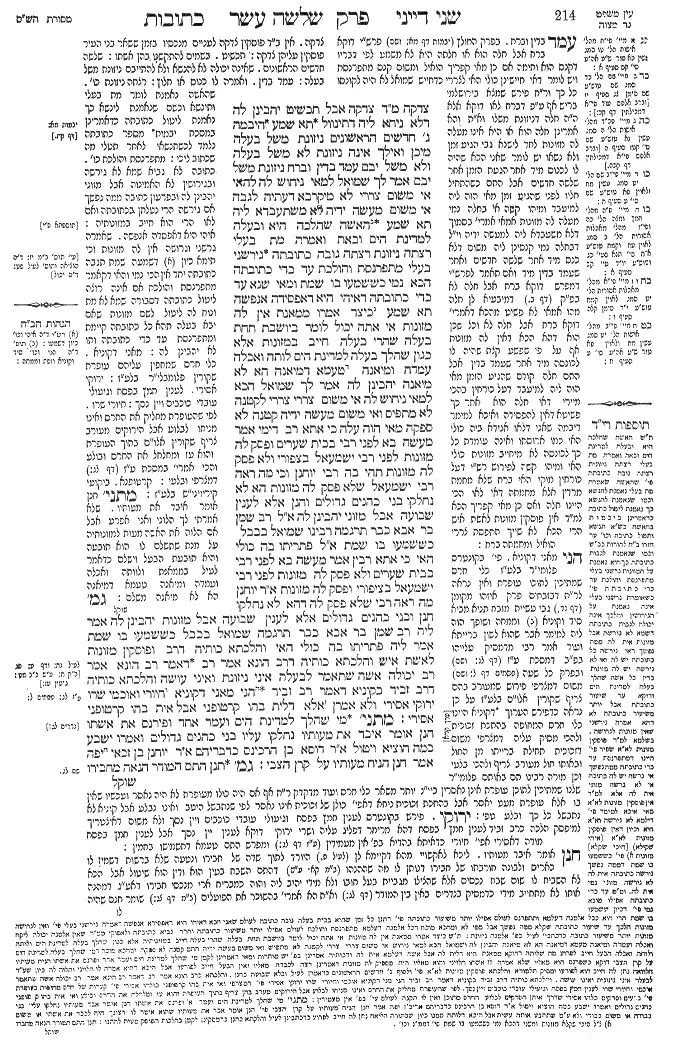
Ketubot 107b - Guemara
צדקה מ"ד צדקה אבל תכשיט יהבינן לה דלא ניחא ליה דתינוול תא שמע היבמה ג' חדשים הראשונים ניזונת משל בעלה מיכן ואילך אינה ניזונת לא משל בעלה ולא משל יבם עמד בדין וברח ניזונת משל יבם אמר לך שמואל למאי ניחוש לה להאי אי משום צררי לא מיקרבא דעתיה לגבה אי משום מעשה ידיה לא משתעבדא ליה תא שמע האשה שהלכה היא ובעלה למדינת הים ובאת ואמרה מת בעלי רצתה ניזונת רצתה גובה כתובתה גירשני בעלי מתפרנסת והולכת עד כדי כתובתה הכא נמי כששמעו בו שמת ומאי שנא עד כדי כתובתה דאיהי היא דאפסידה אנפשה תא שמע כיצד אמרו ממאנת אין לה מזונות אי אתה יכול לומר ביושבת תחת בעלה שהרי בעלה חייב במזונות אלא כגון שהלך בעלה למדינת הים לותה ואכלה עמדה ומיאנה טעמא דמיאנה הא לא מיאנה יהבינן לה אמר לך שמואל הכא למאי ניחוש לה אי משום צררי צררי לקטנה לא מתפיס ואי משום מעשה ידיה קטנה לא ספקה מאי הוה עלה כי אתא רב דימי אמר מעשה בא לפני רבי בבית שערים ופסק לה מזונות לפני רבי ישמעאל בצפורי ולא פסק לה מזונות תהי בה רבי יוחנן וכי מה ראה רבי ישמעאל שלא פסק לה מזונות הא לא נחלקו בני כהנים גדולים וחנן אלא לענין שבועה אבל מזוני יהבינן לה א"ל רב שמן בר אבא כבר תרגמה רבינו שמואל בבבל כששמעו בו שמת א"ל פתריתו בה כולי האי כי אתא רבין אמר מעשה בא לפני רבי בבית שערים ולא פסק לה מזונות לפני רבי ישמעאל בציפורי ופסק לה מזונות א"ר יוחנן מה ראה רבי שלא פסק לה דהא לא נחלקו חנן ובני כהנים גדולים אלא לענין שבועה אבל מזונות יהבינן לה אמר ליה רב שמן בר אבא כבר תרגמה שמואל בבבל כששמעו בו שמת אמר ליה פתריתו בה כולי האי והלכתא כותיה דרב ופוסקין מזונות לאשת איש והלכתא כותיה דרב הונא אמר רב דאמר רב הונא אמר רב יכולה אשה שתאמר לבעלה איני ניזונת ואיני עושה והלכתא כותיה דרב זביד בקוניא דאמר רב זביד הני מאני דקוניא חיורי ואוכמי שרו ירוקי אסירי ולא אמרן אלא דלית בהו קרטופני אבל אית בהו קרטופני אסירי:
מתני׳ מי שהלך למדינת הים ועמד אחד ופירנס את אשתו חנן אומר איבד את מעותיו נחלקו עליו בני כהנים גדולים ואמרו ישבע כמה הוציא ויטול א"ר דוסא בן הרכינס כדבריהם א"ר יוחנן בן זכאי יפה אמר חנן הניח מעותיו על קרן הצבי:
גמ׳ תנן התם המודר הנאה מחבירו
Comments from Rashi on Masechet Ketubot Page 107b
צדקה . אין ב"ד פוסקין צדקה לעניים מנכסיו בזמן ששאר בני העיר פוסקין עליהן צדקה: תכשיט . בשמים להתקשט בהן אשתו: שלשה חדשים הראשונים . שאינה יכולה לא להנשא ולא להתייבם ניזונת משל בעלה: עמד בדין . ואמרה לו כנוס או חלוץ: רצתה ניזונת כו' . שהאשה נאמנת לומר מת בעלי ותינשא וכשם שנאמנת לינשא כך נאמנת ליטול כתובתה כדאמרינן במסכת יבמות מספר כתובתה נלמד לכשתנשאי לאחר תטלי מה שכתוב ליכי: מתפרנסת והולכת כו' . כתובה לא גביא שמא לא גירשה ובגירושין לא האמינוה אבל מזוני יהבינן לה ובפרעון כתובה ממה נפשך אם גירשה הרי נטלתן בכתובתה ואם לאו הרי הוא חייב במזונותיה: איהי היא דאפסדה אנפשה . שאמרה גרשני וגרושה אין לה מזונות וכי תימא כיון דשמעה שמת תגבה כתובתה יחד אין הכי נמי והאי דקאמר מתפרנסת והולכת אם אינה רוצה ליטול כתובתה דסבורה שמא לא מת ונוח לה ליטול לשם מזונות שאם יבא בעלה תהא כל כתובתה קיימת ומתפרנסת עד כדי כתובתה ותו לא יהבינן לה: מאני דקוניא . כלי חרס שמחפין עליהם עופרת שקורין פלומבלי"ר בלע"ז: חיורי שרו . לפי שהעופרת מחליק את החרס ואינו מניחו לבלוע אבל הירוקים מעורב צריף שקורין אלו"ם בתוך העופרת והוא עז ומחלחל את החרס ובולע והכי אמרי' במסכת ע"ז (דף לג:) דמצרפי ובלעי: ירוקי אסירי . לענין חמץ בפסח וגיעולי עובדי כוכבים ויין נסך: קרטופנא . ביקועי קיריויני"ש בלע"ז: מתני' חנן אומר איבד את מעותיו . שלא אמרתי לך הלוני ואני אפרע אבל אם הלוה את האשה מעות למזונותיה על מנת שתשלם לו הוא תובעה והיא תובעת הבעל וישלם כדאמר לעיל בממאנת ולוותה ואכלה ועמדה ומיאנה טעמא דמיאנה הא לא מיאנה משלם: גמ'
Comments from Tosafot - Ketubot 107b
עמד בדין וברח . בפרק החולץ (יבמות דף מא: ושם) פרש"י דוקא ברח אבל חלה הוא או חלתה היא לא משמע לפי דבריו דקנס הוא ותימה אם כן מאי קפריך הואיל ומשום קנס מתפרנסת ויש לומר דאי חיישינן כולי האי לצררי כדחייש שמואל לא היה לקונסו כל כך ור"ח פירש שמצא בירושלמי בריש אף ע"פ דברח לאו דוקא אלא ה"ה חלה דניזונת משלו וא"ת והא אמרינן חלה הוא או היא אינו מעלה לה מזונות לחד לישנא גבי הגיע זמן ולא נשאו יש לומר שאני הכא שהיה לו לכנוס מיד אחר הגעת הזמן אחר שלשה חדשים אבל התם כשהתחיל חליו לפני שהגיע זמן מאי הוה ליה למיעבד ומיהו קשה אי בחלה נמי מעלה לה מזונות אמאי אמרי' בסמוך דלא משעבדא ליה למעשה ידיה וי"ל דבחלה נמי קנסינן ליה משום דלא כנס מיד אחר שלשה חדשים ואחר שעמד בדין מיד ואם תאמר לפרש"י דמפרש דוקא ברח אבל חלה לא בפ"ק (דף ב.) דמיבעיא לן חלה מהו אמאי לא פשיט מהכא דאמרי' דוקא ברח אבל חלה לא וכל שכן הוא דהא הכא דאין לה מזונות אף על פי שפשע קצת שהיה לו לכונסה מיד אחר שעמד בדין אבל התם חלה קודם שהגיע הזמן מאי הוה ליה למיעבד דעל כורחין בהכי מיירי דאי חלה הוא אחר כך פשיטא דאין להפסידה ואיכא למימר דיבמה שאני דלאו אגידא ביה כולי האי כמו ארוסתו ואינה עומדת כל כך לכונסה לא מיחייב מזונות כולי האי ומיהו קשה לפירוש רש"י דעל כורחין מוקי האי ברח שלא מחמת מרדין אלא מחמתה דאי לאו הכי היינו חלה ואם כן מאי קפריך הכא למ"ד אין פוסקין מזונות לאשת איש הרי הכא לא שייך התפסת צררי הואיל ומחמתה ברח: הני מאני דקוניא . פי' בקונטרס פלומי"ר בלע"ז כלי חרס שמתיכין לתוכו עופרת ואין נראה לר"ת דבזבחים פרק איזהו מקומן (דף נד) גבי עשיית מזבח תניא מביא סיד וקוניא וממחה ושופך הוה ליה למימר אבר שהוא לשון ברייתא ועוד אמר רבי מדמסיק עלייהו בפ"ב דמסכת ע"ז (דף לג: ושם) ובפרק כל שעה (פסחים דף ל: ושם) משום דמצרפי פירוש שמעורב בהם צריף שקורין אלו"ם בלע"ז על כן נראה כדפירש הערוך דקוניא היינו כלי חרס המחופה בהתכת זכוכית ולהכי מסיק עליה דמצרפי משום דזכוכית תחילת ברייתו מן החול ובאותו חול מעורב צריף ולהכי בלעי וכן מורה רבינו תם באותם פלומי"ר שלנו שמתיכין לתוכן עופרת אינן נאסרין ביי"נ יותר משאר כלי חרס ועוד מדקדק ר"ת אף אם היה כולו מעופרת לא היה נאסר ועכשיו שאין בו אלא עופרת מעט יאסר אבל בהתכת זכוכית ניחא דאפי' כולן של זכוכית אינו נאסר לפי שנתבשל היטב ואינו נבלע אבל קוניא לא נתבשל כל כך ובלע טפי: ירוקי . פירש בקונטרס לענין חמץ בפסח וגיעולי עובדי כוכבים ויין נסך ולא משום דאיצטריך למיפסק הלכה כרב זביד לענין חמץ בפסח דהא מרימר דפליג עליה ושרי ירוקי דוקא לענין יין נסך אבל לענין חמץ בפסח מודה דאסירי אפי' חיורי כדאיתא בהדיא בפ' אין מעמידין (ע"ז דף לג:) ומפרש התם טעמא דתשמישו בחמין: חנן אומר איבד מעותיו . ליכא לאקשויי מהא דקיימא לן (לעיל כתובות פ.) היורד לתוך שדה של חבירו ונטעה שלא ברשות דשמין לו כאריס ולבונה חורבתו של חבירו דנותן לו מה שההנהו (ב"מ קא. ע"ש) דהתם השבח בעין הוא ודין הוא שיטול אבל הכא לא השביח לו שום שבח נכסים אלא שהצילו מגביית בעל חובו ולא מידי יהיב ליה והוה כמבריח ארי מנכסי חבירו דאע"ג דמהנה אותו לא מתחייב מידי כדמסיק בנדרים באין בין המודר (דף לג:) וא"ת הא אמרי' בהשוכר את הפועלים (ב"מ דף צג:) שומר חנם שהיה לו לקדם ברועים ובמקלות ולא קידם חייב ומפרש שומר חנם בחנם שומר שכר בשכר ומסיק דחוזר ונוטל מבעל הבית משמע דשומר חנם נמי אם קדם ברועים ובמקלות בשכר חוזר ונוטל מבעל הבית ואמאי אברוחי אריא בעלמא הוא וכן הא דתנן בפ' אלו מציאות (ב"מ דף לא: ושם) היה בטל מסלע לא יאמר לו תן לי סלע אלא נותן לו שכרו כפועל בטל של אותה מלאכה דבטיל מינה ופירש בקונטרס שאם היה עוסק במלאכה חמורה ונוטל שכר מרובה כמה היה פוחת משכרו ויעסוק במלאכה קלה כמו השבת אבידה וכך יתנו לו ואמאי אברוחי אריא בעלמא הוא ולפי מה שפירש רבינו תם דדוקא במפרנס את אשתו קאמר חנן לפי שיכולה לצמצם ולהתפרנס בדוחק אבל שאר פורע לו חובו לא כמו שאמר לקמן לא קשיא מידי ואומר רבי כי מן הדין היה ודאי פטור כדמשמע הכא אלא תקנת חכמים התם שישלמו לו כדי שישיב אבידתו של חבירו וכן בקדם ברועים ובמקלות בשכר דחוזר ונוטל שכר מבעל הבית כדי שיעסוק להבריח את הארי ואפי' עולה השכר כדי דמיהן נפקא מינה לכושרא דחיותא אבל פורע חובו ועמד אחר ופרנס את אשתו למה לנו לעשות תקנה על זה ומהאי טעמא נמי הא דאמר בהנזקין (גיטין נח:) הבא מחמת חוב ומחמת אנפרות אין בו משום סיקריקון פירוש אם שהתה בידו י"ב חדש אין נותן רביע לבעלים ויחזיק בקרקעות אלא מחזיר לו הקרקע נראה לרבי דלא בחנם מחזיר אלא משלם לו מה שהוציא להוציאה מיד העובד כוכבים ורבינו גרשון פי' בתשובותיו כמו כן דאע"ג דלא הוי אלא כמבריח ארי בעלמא יש לו לשלם מידי דהוה אקדם ברועים ובמקלות בשכר וגבי משיב אבידה דאל"כ אין לך אדם מציל של חבירו מיד העובדי כוכבים ולא כפי' הקונטרס שפירש בגיטין שמחזיר לו בחנם וא"ת והא דתנן בהגוזל בתרא (ב"ק דף קטו:) שטף נהר חמורו וחמור חבירו שלו יפה מנה ושל חבירו מאתים והניח זה את שלו והציל את של חבירו אין לו אלא שכרו ואמאי דמי חמורו היה לו לשלם והיה רבי רוצה לומר דמשום הכי אין לו אלא שכרו דמיירי כגון שבעל החמור בפניו וכי עשו חכמים תקנה ה"מ שלא בפניו אבל בפניו לא וקשה א"כ אפי' שכרו לא יהא לו דהא תנן בפ' הכונס (שם דף נח. ושם) נפלה לגינה ונהנית משלמת מה שנהנית ומפרש רב בגמרא אפי' נחבטה דס"ד מבריח ארי מנכסי חבירו ומה שנהנית נמי לא משלם קמ"ל ופריך אימא ה"נ ומשני מבריח ארי מנכסי חבירו מדעתו והאי שלא מדעתו א"נ מבריח ארי לית ליה פסידא האי אית ליה פסידא ומשמע לישנא קמא מדעתו אע"ג דאית ליה פסידא פטור ועל כורחין לא אפשר לפרש כן מההיא דאלו מציאות (ב"מ דף לא:) ודהשוכר את הפועלים (שם דף צג:) אלא הכי פירושו מבריח ארי מדעתו היכא דלית ליה פסידא האי שלא מדעתו לאו משום דאי לא הוי פסידא יהא חייב דפשיטא אם נחבטה ולא נתקלקלו הפירות למה יהא חייב אלא כלומר האי שלא מדעתו שעל כרחו הוא מבריח ארי ואם דוחקים את האדם על כרחו להבריח את הארי ממצרו של חבירו אע"ג דלית ליה פסידא חייב לשלם לו שכר טורחו והשתא בההיא דהגוזל בתרא אם נפרש דדמי חמורו אינו חייב לשלם לפי שהוא בפניו אלמא חשבינן כאילו לית ליה פסידא א"כ לא יהא לו אפי' שכרו כיון דמדעתו הוא ולית ליה פסידא על כן נראה לרבי דהיינו טעמא דאינו משלם דמי חמורו שלא תקנו חכמים שיהא חייב לשלם אלא מה שהוא מהנה אותו ואינו מהנה אותו אלא כדי שכרו שהרי גם הוא היה מוצא להציל בכדי שכרו דעל כרחך מיירי שיכול להציל שלא יזכה אותו מן ההפקר:
Ketubot 107b - Mishnah translated into english
he maintains that she does not receive money from his property for charity, as the court does not take donations of charity from one’s property without his knowledge. Conversely, the one who said that the court does not give money for charity would argue: However, they do give her ornaments, as it is assumed that it is not satisfactory for him for his wife to be degraded by a lack of jewelry.
The Gemara further suggests: Come and hear: With regard to a yevama, a woman whose husband died childless and he has a brother [yavam], and who is waiting either to enter into levirate marriage with the yavam or perform ḥalitza, for the first three months after her husband’s death she is sustained from the property of her husband.
From then on, as long as she has not entered into levirate marriage, she is not sustained, neither from the property of her husband nor from that of the yavam. If the yavam stood in judgment and the court ruled that he should enter into levirate marriage, and he fled, she is sustained from the property of the yavam. This apparently contradicts Shmuel’s ruling, as here the woman is provided with sustenance from the estate of the yavam in his absence, despite the fact that his obligation toward her is less than that of a husband.
The Gemara answers that Shmuel could have said to you: With regard to what need we be concerned in this case? If the concern is due to the possibility that he gave her a bundle of money before his departure, the mind of the yavam is not that close to this woman that he would leave money with her; if the concern is due to her earnings, i.e., that he said to her: Spend your earnings to sustain yourself, she is not yet obligated to give him her earnings.
Come and hear: With regard to a wife who went with her husband overseas, and she came back and said: My husband died, if she wishes she is sustained from his property, and if she wishes she collects payment of her marriage contract. If she said: My husband divorced me, but she does not present a bill of divorce, she is continually sustained from his property up to the amount of her marriage contract. The reason is that she may collect this money whether or not her claim is believed: If she is still married, she is entitled to her sustenance, and if she is divorced she receives the marriage contract. This once again presents a difficulty for the opinion of Shmuel, as she collects money from her husband’s estate in his absence.
The Gemara answers: Here, too, it is referring to a case where they heard concerning the husband that he died. The Gemara asks: And what is different about the sum up to the amount of her marriage contract; why is she given no more than this? If he is dead, she should be allowed to sustain herself from all his property until she weds another. The Gemara answers: The reason is that she is the one who caused the loss to herself. By claiming that she was divorced, she forfeits her right to more sustenance.
The Gemara further suggests: Come and hear: How, i.e., in what case, did the Sages say that a minor who refuses her husband does not receive sustenance? You cannot say that this halakha applies to a young girl who is living under the authority of her husband, as her husband is obligated in her sustenance. Rather, it applies to a case where her husband went overseas, and she borrowed money and sustained herself for a while, and subsequently she arose and refused him. The Gemara infers: The reason is that she refused him, which indicates that if she did not refuse her husband, the court gives her sustenance. This apparently shows that a woman is sustained from her husband’s property when he goes overseas.
The Gemara answers that Shmuel could have said to you: With regard to what need we be concerned here? If the concern is due to the possibility that he left her a bundle of money before his departure, one does not give a bundle of money to a minor. If the concern is due to the possibility that he instructed her to subsist on her earnings, the earnings of a minor are not enough to cover the expenses of her sustenance. In summary, no resolution has been found for the dispute between Rav and Shmuel, notwithstanding the numerous sources cited by the Gemara.
The Gemara asks: What is the conclusion that was reached about this dispute? How should this case be treated in practice? When Rav Dimi came from Eretz Yisrael, he said: An incident of this kind came before Rabbi Yehuda HaNasi in Beit She’arim, and he apportioned sustenance for her. However, a similar incident came before Rabbi Yishmael in Tzippori, and he did not apportion sustenance for her. Rabbi Yoḥanan wondered about this ruling: And what did Rabbi Yishmael see such that he did not apportion sustenance for her? After all, the sons of High Priests and Ḥanan disagreed in the mishna only with regard to whether she is obligated to swear an oath, but as far as sustenance is concerned, they concur that the court gives it to her.
Rav Shemen bar Abba said to Rabbi Yoḥanan: Our Rabbi in Babylonia, Shmuel, already interpreted it as referring to a case where they heard concerning the husband that he died. Rabbi Yoḥanan said to him in astonishment: Have you gone that far in your analysis of this case that you were able to resolve this problem?
When Ravin came from Eretz Yisrael, he said a different version of this discussion: An incident came before Rabbi Yehuda HaNasi in Beit She’arim, and he did not apportion sustenance for her; an incident came before Rabbi Yishmael in Tzippori, and he apportioned sustenance for her. Rabbi Yoḥanan said: And what did Rabbi Yehuda HaNasi see such that he did not apportion sustenance for her? As, the sons of High Priests and Ḥanan disagreed only with regard to an oath, but when it comes to sustenance, the court gives it to her. Rav Shemen bar Abba said to Rabbi Yoḥanan: Shmuel in Babylonia already interpreted it as referring to a case where they heard concerning him that he died. Rabbi Yoḥanan said to him in astonishment: Have you gone that far in your analysis of this case?
The Gemara concludes: And the halakha is in accordance with the opinion of Rav, and therefore one apportions sustenance for a married woman whose husband went overseas. In passing, the Gemara mentions other rulings of halakha. And the halakha is in accordance with that which Rav Huna said that Rav said. As Rav Huna said that Rav said: A woman can say to her husband: I will not be sustained by you and in turn I will not work, i.e., you will not keep my earnings. The reason is that this arrangement was enacted by the Sages for the wife’s benefit. Consequently, she can relinquish her rights to her sustenance in this manner.
And the halakha is in accordance with the opinion of Rav Zevid with regard to glazed [kunya] vessels. As Rav Zevid said: With regard to these glazed vessels [manei dekunya], i.e., earthenware vessels that are glazed over, the white and black ones are permitted after they have been washed, as the glazing prevents the vessels from absorbing the foods placed inside them. Some earthenware vessels absorb the food and drink that is cooked in them and are therefore rendered forbidden if at any time they contained forbidden food, e.g., wine poured as a libation or leaven on Passover. The white and black vessels are not considered like regular earthenware vessels, which are rendered permanently forbidden.
Conversely, green ones are forbidden, as they absorb from the substances placed inside them. And we said that white and black ones are permitted only if they do not have cracks; however, if they have cracks they are forbidden, as the forbidden food is absorbed by the earthenware through the cracks.
MISHNA: In the case of a husband who went overseas, and someone arose and sustained his wife in his absence, and upon the husband’s return the provider demands from him the money he spent on his wife, Ḥanan says: He has lost his money, i.e., the husband is not obligated to repay him, as the provider acted of his own free will and was not instructed to do so by the husband.
The sons of High Priests disagreed with Ḥanan’s opinion and said: The man swears how much he spent on behalf of the woman, and he takes that sum from the husband. Rabbi Dosa ben Harkinas said that the halakha is in accordance with their statement. Rabbi Yoḥanan ben Zakkai said: Ḥanan spoke well in this case, as this man is like one who placed his money on the horn of a deer in midflight, i.e., he has no reasonable expectation of reimbursement.
GEMARA: We learned in a mishna there (Nedarim 33a): With regard to one who is prohibited by a vow from deriving benefit from another,
Traduction : The William Davidson digital edition of the Koren Noé Talmud, with commentary by Rabbi Adin Even-Israel Steinsaltz.