 Talmud Bavli
The learning on the whole site is dedicated : L'ilui Nishmat Yaakov ben Myriam
The learning on the whole site is dedicated : L'ilui Nishmat Chemouel Eliezer ben Batcheva
The learning on the whole site is dedicated : L'ilui Nishmat Jamila bat Chlomo Abensour
Ketubot 91b : Youtube
Daf TubeYoutube
1 video class :
Ketubot Page 91b
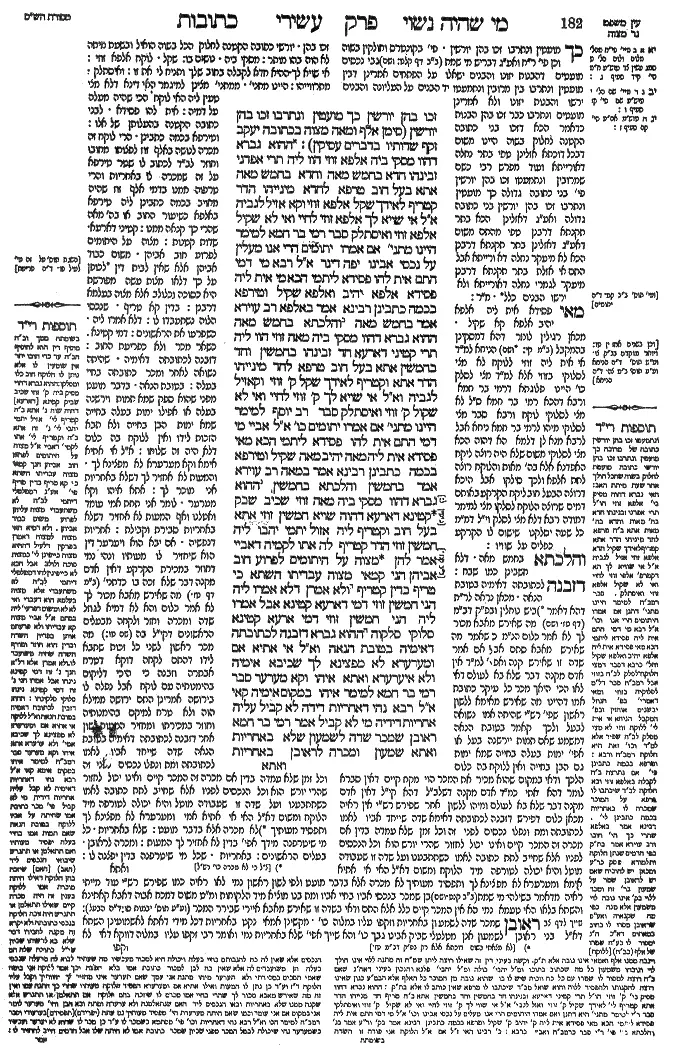
Ketubot 91b - Guemara
זכו בהן יורשין כך מועטין ונתרבו זכו בהן יורשין (סימן אלף ומאה מצוה בכתובה יעקב זקף שדותיו בדברים עסיקין):
ההוא גברא דהוו מסקי ביה אלפא זוזי הוו ליה תרי אפדני זבינהו חדא בחמש מאה וחדא בחמש מאה אתא בעל חוב טרפא לחדא מינייהו הדר קטריף לאידך שקל אלפא זוזי וקא אזיל לגביה א"ל אי שויא לך אלפא זוזי לחיי ואי לא שקיל אלפא זוזי ואיסתלק סבר רמי בר חמא למימר היינו מתני' אם אמרו יתומים הרי אנו מעלין על נכסי אבינו יפה דינר א"ל רבא מי דמי התם אית להו פסידא ליתמי הכא מי אית ליה פסידא אלפא יהיב ואלפא שקיל וטירפא בכמה כתבינן רבינא אמר באלפא רב עוירא אמר בחמש מאה והלכתא בחמש מאה ההוא גברא דהוו מסקי ביה מאה זוזי הוו ליה תרי קטיני דארעא חד זבינהו בחמשין וחד בחמשין אתא בעל חוב טרפא לחד מינייהו הדר אתא וקטריף לאידך שקל ק' זוזי וקאזיל לגביה וא"ל אי שויא לך ק' זוזי לחיי ואי לא שקול ק' זוזי ואיסתלק סבר רב יוסף למימר היינו מתני' אם אמרו יתומים כו' א"ל אביי מי דמי התם אית להו פסידא ליתמי הכא מאי פסידא אית ליה מאה יהיב מאה שקיל וטירפא בכמה כתבינן רבינא אמר במאה רב עוירא אמר בחמשין והלכתא בחמשין ההוא גברא דהוו מסקי ביה מאה זוזי שכיב שבק קטינא דארעא דהוה שויא חמשין זוזי אתא בעל חוב וקטריף ליה אזול יתמי יהבו ליה חמשין זוזי הדר קטריף לה אתו לקמיה דאביי אמר להן מצוה על היתומים לפרוע חוב אביהן הני קמאי מצוה עבדיתו השתא כי טריף בדין קטריף ולא אמרן דלא אמרו ליה הני חמשין זוזי דמי דארעא קטינא אבל אמרו ליה הני חמשין זוזי דמי ארעא קטינא סלוקי סלקוה ההוא גברא דזבנה לכתובתה דאימיה בטובת הנאה וא"ל אי אתיא אם ומערערא לא מפצינא לך שכיבא אימיה ולא איערערא ואתא איהו וקא מערער סבר רמי בר חמא למימר איהו במקום אימיה קאי א"ל רבא נהי דאחריות דידה לא קביל עליה אחריות דידיה מי לא קביל אמר רמי בר חמא ראובן שמכר שדה לשמעון שלא באחריות ואתא שמעון ומכרה לראובן באחריות
Comments from Rashi on Masechet Ketubot Page 91b
זכו בהן . יורשי כתובה הקטנה לחלוק הכל בשוה הואיל ובשעת מיתה לא הוה בהו מותר: מסקי ביה . נושים בו: שקל . לוקח אלפא זוזי: אי שויא לך . ההיא חדא לקבלה בחוב שלך ותניח לי את זו: ואיסתלק . מתרוייהו: היינו מתני' . ממתני' מצינן למיגמר האי דינא דלא מצי טעין ליה האי לוקח הכי שהיה מעלה על דמיה: אית להו פסידא . לבני כתובה הקטנה בהעלותן של אלו: וטירפא בכמה כתבינן . הרי לוקח זה מכרה לנושה באלף זוז לפצותו מחובו וחוזר לב"ד לכתוב לו שטר טירפא על זה שמכרה לו באחריות והרי טרפוה ממנו בדמי אלף זוז שהיה מחויב בכמה כתבינן ליה טירפא באלפא כשיעור החוב או בה' מאה שהרי כך קנאה ממנו: קטיני דארעא . שדות קטנות: א"ל אי אתיא אימא וקא מערערא לא מפצינא לך . והמעות לא אחזיר לך דשלא באחריות אני מוכר לך: מצוה על היתומים לפרוע חוב אביהן . משום כבוד אביהן אלא שאין לבית דין לכופן על כך דלאו מצות עשה מפורשת היא כסוכה וכלולב אלא מצוה בעלמא דרבנן: בדין קא טריף . שנכסי הלוה נשתעבדו לו: דלא אמרו ליה . כשפרעו את הראשונים: דמי קטינא . כשאר מכר ולא כפריעת החוב: דזבנה לכתובתה דאימיה . שהיתה נשואה לאחר ומכר כתובתה בחיי בעלה: בטובת הנאה . בדבר מועט מפני שהוא ספק שמא תמות וירשנה בעלה או אפילו ימות בעלה בחייה שמא ימות הבן בחייה ולא תבא הזכות לידו ואין ללוקח בה כלום דלא היה זה שלוחו: א"ל אי אתיא אימא וקא מערערא לא מפצינא לך . והמעות לא אחזיר לך דשלא באחריות אני מוכר לך: אתא איהו וקא מערער . לומר אני תחת אמי עומד ואטלנו ואף המעות לא אחזיר דשלא באחריות סבירת וקבילת: אחריות דנפשיה . אם יבא הוא ויערער דין הוא שיחזיר לו מעותיו ונהי נמי דחוזר במכירת הקרקע דאין אדם מקנה דבר שלא זכה בו כדתני' (ב"מ דף טז.) מה שאירש מאבא מכור לך לא אמר כלום והא לא דמיא לגוזל שדה ומכרה וחזר ולקחה מבעלים הראשונים דקי"ל בה (שם טו:) מה מכר ראשון לשני כל זכות שתבא לידו דהתם לקחה דוקא דטרח אבתרה וזבנה כי היכי דליקום בהימנותיה עם לוקח אבל נפלה זו בירושה אמרינן התם ירושה ממילא הוה ולא טרח למיקם בהימנותיה וחוזר במכירתו ומחזיר המעות לשון אחר דזבנה לכתובתה דאימיה בטובת הנאה שדה שייחד אביו לאמו לכתובתה ומת ונפלו נכסים לפני זה וכל זמן שלא עמדה בדין אם מכרה זה המכר קיים ואינו יכול לחזור שהרי יורש הוא וכל הנכסים לפניו אלא שחייב לתת כתובה לאמו כשתתבענו ועל שדה זו שעבודה מוטל והיא יכולה לטורפה מיד הלוקח ומשום דא"ל האי אי אתיא אמי ומערערא לא מפצינא לך ותפסיד מעותיך לא מכרה אלא בדבר מועט: שלא באחריות . כל מי שיטרפנה מידך אפי' בדין לא אחזיר לך המעות: ומכרה לראובן . בעלים הראשונים: באחריות . שכל מי שיטרפנה בדין יפצנה לו:
Comments from Tosafot - Ketubot 91b
כך מועטין ונתרבו זכו בהן יורשין . פי' בקונטרס וחולקין בשוה וכן פי' ר"ח ואע"ג דבריש מי שמת (ב"ב דף קלט: ושם) גבי נכסים מועטים דהבנות יזונו והבנים ישאלו על הפתחים אמרינן דבין מועטין ונתרבו בין מרובין ונתמעטו יד הבנים על העליונה והבנים ירשו והבנות יזונו ולא אמרינן מועטים ונתרבו כבר זכו בהן הבנות כדאמר הכא דזכו בני כתובה הקטנה לחלוק בשוה היינו משום דבכל דוכתא אזלינן טפי בתר נחלה דאורייתא ועוד מפרש רבי כשם שמרובין ונתמעטו זכו בהן יורשין פי' בני כתובה גדולה כך מועטין ונתרבו זכו בהן יורשין בני כתובה גדולה ואע"ג דאזלינן הכא בתר תקנתא דרבנן טפי מהתם משום דאע"ג דאזלינן בתר תקנתא דרבנן הכא לא מיעקר נחלה דאורייתא אבל התם אי אזלת בתר תקנתא דרבנן מיעקר לגמרי נחלה דאורייתא ולא ירשו הבנים כלל. מ"ר: מאי פסידא אית ליה אלפא יהיב אלפא קא שקיל . מכאן רגילין לומר דהא דמסקינן בהמקבל (ב"מ קי: ושם) הניחא למ"ד אי אית ליה זוזי ללוקח לא מצי לסלוקי בזוזי אלא למ"ד מצי לסלק כו' היינו פלוגתא דרמי בר חמא ורבא דהכא רמי בר חמא ס"ל לא מצי לסלוקי לוקח ורבא סבר מצי לסלוקי מיהו לרמי בר חמא ניחא אבל לרבא מנא לן דלמא הא דהוה הכא מצי לסלוקי משום שלא היה רוצה ליקח האפדנא אלא בה' מאות והלוקח רוצה לתת אלפא ולכך סילקו אבל היכא דרוצה הבעל חוב ליקח הקרקע באותם דמים שרוצה הלוקח לסלקו מצי למימר דמודה רבא דלא מצי לסלק וי"ל דמ"מ כל שעה יסלקנו שישום לו הקרקע כפלים על שוויו: והלכתא בחמש מאה . דלא חשבינן כמו שבח: דזבנה לכתובתה דאימיה בטובת הנאה . מכאן נראה לר"ת דהא דאמר ביש נוחלין ובפ"ק דב"מ (דף טז. ושם) מה שאירש מאבא מכור לך לא אמר כלום הנ"מ כשאמר מה שאירש מאבא סתם אבל אם אמר שדה זו שאירש קנה ואפי' למ"ד אין אדם מקנה דבר שלא בא לעולם דאי לאו הכי היאך מכר כל עיקר כתובת אמו דהיינו מה שאירש מאימא ללשון ראשון שפי' רש"י שהיתה אמו נשואה לבעל ולכך קאמר בטובת הנאה דמשמע שאם תמות יירשנה בעל או אפי' ימות בעלה בחייה שמא ימות גם הבן בחייה ואין ללוקח בה כלום הלכך ודאי במקום שהוא מכיר את המכר הוי מקח קיים דאין סברא לומר דהא אתי כמ"ד אדם מקנה דשלב"ל דהא קי"ל דאין אדם מקנה דבר שלא בא לעולם ומיהו ללשון אחר שפירש רש"י אין ראיה מכאן כלום דפירש דזבנה לכתובתה דאימא שדה שייחד אביו לאמו לכתובתה ומת ונפלו נכסים לפני זה וכל זמן שלא עמדה בדין אם מכרה זה המכר קיים ואינו יכול לחזור שהרי יורש הוא וכל הנכסים לפניו אלא שחייב לתת כתובה לאמו כשתתבענו ועל שדה זו שעבודה מוטל והיא יכולה לטורפה מיד הלוקח ומשום דא"ל האי אי אתיא אימא ומערערא לא מפצינא לך ותפסיד מעותיך לא מכרה אלא בדבר מועט ולפי לשון ראשון נמי לאו ראיה כמו שפירש רש"י עוד מייתי ראיה מדאמר בשילהי מי שמת (ב"ב קנט. ושם) בן שמכר בנכסי אביו בחיי אביו ומת בנו מוציא מיד הלקוחות ומ"ט משום דמכח אבוה דאבא קאתינא והשתא בלאו האי טעמא נמי הא אין המכר קיים כלל אלא התם ודאי בשדה זו שאירש מאבא איירי שבירר המכר (וע"ע תוס' יבמות סו: ד"ה הבעל):
Ketubot 91b - Mishnah translated into english
the heirs acquired rights to the mothers’ marriage contracts due to the value of the estate when their father died, so too, in a case where the properties were few and the value subsequently appreciated, the heirs have acquired rights to divide the entire estate equally, due to the value of the estate when their father died.
§ This is a mnemonic device for the following halakhot, which are connected in one way or another to the problem being dealt with in the mishna: One thousand, and one hundred, mitzva, in the marriage contract, Ya’akov, set up, his fields, with words, disputants.
There was a certain man who had a creditor with a claim of one thousand dinars against him. He had two mansions [appedanei]. He sold them, one for five hundred and the other one also for five hundred. The creditor came and repossessed one of them from the purchaser, as the repayment of part of his debt. He subsequently sought to repossess the other mansion as well, in payment for the remainder of his debt.
The purchaser took one thousand dinars and went to the creditor. He said to him: If the first mansion that you repossessed is worth one thousand dinars to you, very well, let it be yours in exchange for the entire sum that is owed to you, and if not, take these one thousand dinars and abrogate your rights to both of the mansions, leaving them both in my possession.
Rami bar Ḥama thought to say that this case is identical to that which is taught in the mishna: If the orphans say: We inflate the value of our father’s property by a dinar, the court does not listen to them. This appears to be the case here as well, and the value of the mansion should not be assessed at higher than its market value.
Rava said to him: Are the two cases comparable? There, in the mishna, the other orphans whose mother’s marriage contract was of lesser value will suffer a financial loss if the property is assessed at a value greater than it is actually worth. Here, in the case of the creditor, does he incur a loss? He lent one thousand dinars and took one thousand dinars; consequently, it would be cruel on his part to refuse to take the money and to insist on taking the second mansion from the purchaser.
The Gemara asks: If the creditor decided to hold on to the first mansion and to forgive the remainder of the debt, what amount is written in the document of authorization to repossess liened property, through which the purchaser will claim compensation from the seller? The purchaser had paid only five hundred dinars for the mansion that was repossessed, but the repossession of that mansion earned the seller one thousand dinars, as his entire debt was paid off.
Ravina said: It is written for one thousand dinars. Rav Avira said: It is written for five hundred dinars; the fact that the creditor forgave the full amount of the debt in exchange for this house was his own personal decision and does not reflect an increase in the property value of the house. The Gemara concludes: The halakha is that it is written for five hundred dinars.
It is also related that there was a certain man who had a creditor with a claim of one hundred dinars against him. He had two small tracts of land. He sold one for fifty and he also sold the other one for fifty. The creditor came and repossessed one of them from the purchaser as the collection of part of his debt. He subsequently came, seeking to repossess the other tract of land as well, as payment for the rest of the debt owed to him.
The purchaser took one hundred dinars and went to the creditor. He said to him: If this tract is worth one hundred dinars to you, very well, and if not, take one hundred dinars and abrogate your rights to both of the tracts, leaving them both in my possession.
Rav Yosef thought to say that this case is identical to that which is taught in the mishna, whereby if the orphans say: We inflate the value of our father’s property by a dinar, the court does not listen to them. Abaye said to him: Are the two cases comparable? There, in the mishna, the other orphans suffer a financial loss if the property is assessed at a value greater than it is actually worth; here, what loss does the creditor incur? He lent one hundred dinars and took one hundred dinars. It would be cruel on his part to refuse to take the money and to insist on taking the land from the purchaser.
The Gemara asks: If the creditor decided to hold on to the first tract of land and to forgive the remainder of the debt, what amount is written in the document of authorization to repossess liened property, through which the purchaser will claim compensation from the seller? Ravina said that it is written for one hundred. Rav Avira said it is written for fifty. The Gemara concludes: The halakha is that it is written for fifty dinars.
The Gemara relates that there was a certain man who had a creditor with a claim of one hundred dinars against him. He died and left a small tract of land worth fifty dinars. The creditor came and repossessed it. The orphans came and gave him fifty dinars and redeemed the property from him. He returned and repossessed it again in order to collect the remainder of the debt.
They came before Abaye to complain. He said to them: It is a mitzva for orphans to settle their father’s debt. Consequently, with the money you paid the creditor initially, you performed a mitzva, as you partially settled a debt your father owed. However, this payment did not cancel the lien on the property, and so now, when he repossesses the land, he is repossesses it lawfully.
The Gemara notes: And we said this ruling only in a case where the orphans did not say to the creditor: These fifty dinars are payment for the small tract of land. However, if they said to him: These fifty dinars are payment for the small tract of land, they have successfully removed him from the land and he has no further claim to it.
§ The Gemara relates that there was a certain man who sold the rights to his mother’s marriage contract for a certain financial advantage, i.e., he received a certain sum on the condition that if he would inherit his mother’s marriage contract, which would occur if his mother’s husband would die prior to his mother, the purchaser would obtain the right to collect the money. And he told the purchaser: If my mother comes and objects to the sale, I will not reimburse you for your purchase.
His mother died after her husband died, and had not objected to the sale. He, however, came and contested the sale. Rami bar Ḥama thought to say that he stands in his mother’s place and since he is her proxy, he has the right to object to the sale. Rava said to him: Granted that he did not take upon himself to guarantee the sale against his mother’s objections, but did he not take upon himself to guarantee it against his own objections? When he sold the right to collect the marriage contract, he most certainly guaranteed that he would not renege on the sale.
The Gemara relates a similar discussion. Rami bar Ḥama said: If Reuven sold a field to Shimon without a guarantee, and Shimon came and sold the field back to Reuven, but he sold it with a guarantee that if the field is repossessed, he will compensate the buyer for his loss,
Traduction : The William Davidson digital edition of the Koren Noé Talmud, with commentary by Rabbi Adin Even-Israel Steinsaltz.