 Talmud Bavli
Ketubot 82b : Youtube
Daf TubeYoutube
1 video class :
Ketubot Page 82b
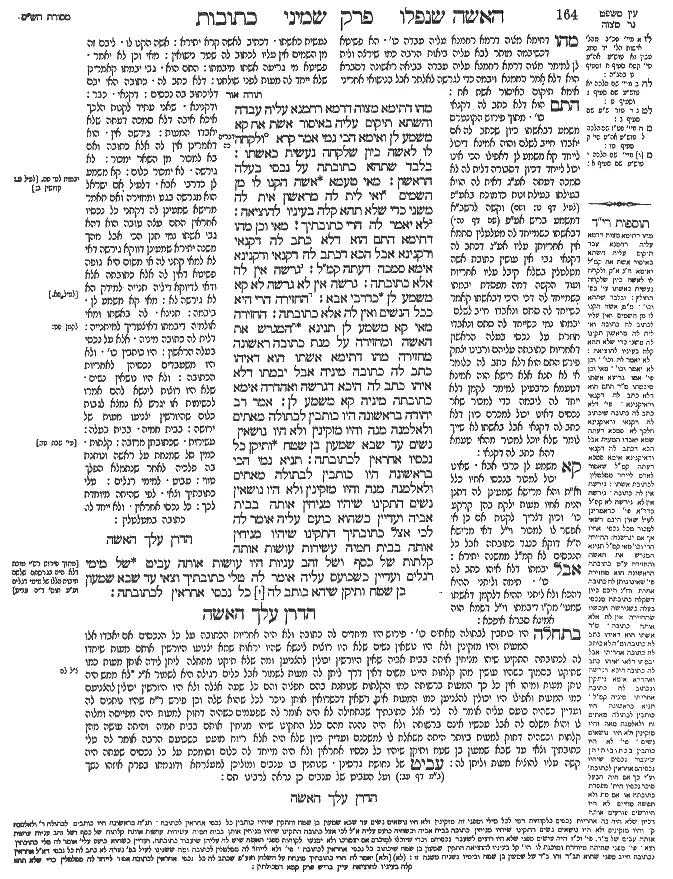
Ketubot 82b - Guemara
מהו דתימא מצוה דרמא רחמנא עליה עבדה והשתא תיקום עליה באיסור אשת אח קא משמע לן ואימא הכי נמי אמר קרא (דברים כה, ה) ולקחה לו לאשה כיון שלקחה נעשית כאשתו:
בלבד שתהא כתובתה על נכסי בעלה הראשון:
מאי טעמא אשה הקנו לו מן השמים ואי לית לה מראשון אית לה משני כדי שלא תהא קלה בעיניו להוציאה:
לא יאמר לה הרי כתובתיך:
מאי וכן מהו דתימא התם הוא דלא כתב לה דקנאי ודקנינא אבל הכא דכתב לה דקנאי ודקנינא אימא סמכה דעתה קמ"ל:
גרשה אין לה אלא כתובתה:
גרשה אין לא גרשה לא קא משמע לן כדרבי אבא:
החזירה הרי היא ככל הנשים ואין לה אלא כתובתה:
החזירה מאי קא משמע לן תנינא המגרש את האשה ומחזירה על מנת כתובה ראשונה מחזירה מהו דתימא אשתו הוא דאיהו כתב לה כתובה מיניה אבל יבמתו דלא איהו כתב לה היכא דגרשה ואהדרה אימא כתובתה מיניה קא משמע לן:
אמר רב יהודה בראשונה היו כותבין לבתולה מאתים ולאלמנה מנה והיו מזקינין ולא היו נושאין נשים עד שבא שמעון בן שטח ותיקן כל נכסיו אחראין לכתובתה:
תניא נמי הכי בראשונה היו כותבין לבתולה מאתים ולאלמנה מנה והיו מזקינין ולא היו נושאין נשים התקינו שיהיו מניחין אותה בבית אביה ועדיין כשהוא כועס עליה אומר לה לכי אצל כתובתיך התקינו שיהיו מניחין אותה בבית חמיה עשירות עושות אותה קלתות של כסף ושל זהב עניות היו עושות אותה עביט של מימי רגלים ועדיין כשכועס עליה אומר לה טלי כתובתיך וצאי עד שבא שמעון בן שטח ותיקן שיהא כותב לה כל נכסי אחראין לכתובתה:
הדרן עלך האשה
Comments from Rashi on Masechet Ketubot Page 82b
נעשית כאשתו . דכתיב לאשה קרא יתירא: אשה הקנו לו . ליבם זה מן השמים אין עליו לכתוב לה שטר נישואין: מאי וכן לא יאמר . פשיטא מי גריעה אשתו מיבמתו: התם הוא . גבי יבמתו קאמרינן שלא ייחד לה מעות לפני שולחנו: דלא כתב לה . כתובה האי יבם דליכתוב בה נכסים: דקנאי . כבר: ודקנינא . שאני עתיד לקנות הלכך איכא איבה דלא סמכה דעתה שלא יאבדו המעות: גירשה אין . הוא דאמרינן אין לה אלא כתובה ואם בא למכור מן השאר ימכור: לא גירשה . לא ימכור כלום: גירשה אין . הוא דאמרינן אין לה אלא כתובה ואם בא למכור מן השאר ימכור: לא גירשה . לא ימכור כלום: קא משמע לן כדרבי אבא . דלעיל אם ישראל הוא מגרשה בגט ומחזירה ואם תאמר מרישא שמעינן לה דקתני כל נכסיו אחראין התם עצה טובה הוא דהא גבי אשתו נמי תנן הכי אבל מהך משנה יתירא שמעינן דווקא גירשה דאי לא למאי קתני לה אי משום היא גופה פשיטא דאין לה אלא כתובתה אלא ודאי לדיוקא דיליה תנייה למידק הא לא גירשה לא: מאי קא משמע לן . ביבמה: תנינא . לה באשתו ומאי אולמיה דיבמתו דאיצטריך למיתנייה: דלית לה כתובה מיניה . אלא על נכסי בעלה הראשון: היו כותבין כו' . ולא היו משעבדים נכסיהן לאחריות הכתובה: ולא היו נושאין נשים . שלא היו רוצות לינשא להם אמרו לכשימות או יגרש לא נמצא לגבות כלום שהיורשין יצניעו מעות של ירושה: בבית חמיה . בבית בעלה: עשירות . שכתובתן מרובה: קלתות . כמין סל שמנחת על ראשה ונותנת בה פלכיה לאחר שנתמלא הפלך טווי: עביט . למימי רגלים: טלי כתובתיך וצאי . לפי שהיתה מיוחדת לכך: כל נכסי אחראין . ולא ייחד לה כתובה במטלטלין: הדרן עלך האשה
Comments from Tosafot - Ketubot 82b
מהו דתימא מצוה דרמא רחמנא עליה עבדה כו' . הא פשיטא דכשיבמה מותר לבא עליה ביאות הרבה כמו שירצה ולית לן למימר מצוה דרמא רחמנא עליה עבדה בביאה ראשונה דסברא הוא דלא אמר רחמנא ויבמה כדי לגרשה לאלתר אבל בנישואי אחריני אימא תיקום באיסור אשת אח: התם הוא דלא כתב לה דקנאי כו' . מתוך פירוש הקונטרס משמע דבאשתו כיון שכתב לה אם יאבדו חייב לשלם והוה אמינא דיכול לייחד קא משמע לן דאפילו הכי אינו יכול לייחד דכיון דסבורה דלית לה לא סמכה דעתה אע"ג דאית לה הויא בעילתו בעילת זנות כדמוכח באע"פ (לעיל כתובות דף נו: ושם) וקשה לרשב"א דמשמע בריש אע"פ (שם דף נה.) דבאשתו כשמייחד לה מטלטלין סתמא אין אחריותן עליו אע"ג דכתב לה דקנאי גבי אין עושין כתובת אשה מטלטלין בשלא קיבל עליו אחריות ועוד הקשה דמה מפסדת יבמתו כשמייחד לה דכי היכי דבאשתו קאמר כשייחד לה סתם ונאבדו חייב לשלם יבמתו נמי כשייחד לה סתם ונאבדו חוזרת על נכסי בעלה הראשון דאחריות כתובתה עליהם ורבינו יצחק פירש התם הוא דלא כתב לה כלומר אי לא תנא אלא רישא הוה אמינא דטעמא כדבעינן למימר לקמן דלא ייחד לה ליבמה כדי למכור שאר נכסים דאינו יכול למכרם כיון דלא כתב לה דקנאי אבל באשתו לא שייך לומר שלא יוכל למכור מהאי טעמא דהא כתב לה דקנאי: קא משמע לן כרבי אבא . שאינו יכול למכור בנכסי אחיו כלל וא"ת והא מרישא שמעינן לה דתנן הניח אחיו מעות ילקח בהן קרקע כו' וכיון דצריך לקנות אם כן אי אפשר לו למכור וי"ל דאי מרישא ה"א דוקא כנגד כתובתה אבל כל הנכסים לא קמ"ל ממשנה יתירא: אבל יבמתו דלא איהו כתב לה כו' . תימה וליתני ההיא דהכא ולא ליתני ההיא דלקמן דאשתו שמעי' מק"ו דיבמתו וי"ל דשמא הוה אמינא סברא איפכא: בתחלה היו כותבין לבתולה מאתים כו' . פירוש היו מיחדים לה כתובה ולא היה אחריות הכתובה על כל הנכסים אם יאבדו אלו המעות והיו מזקינין ולא היו נושאין נשים שלא היו רוצות לינשא שהיו יראות שמא יצניעו היורשין אותם מעות שיחדו לה לכתובתה התקינו שיהו מניחין אותה בבית אביה שאין היורשין יכולין להצניען ומה שלא תיקנו מתחלה ליתן לידה אותן מעות כמו שתיקנו בסמוך כשהיו עושין מהן קלתות היינו משום דאין דרך ליתן לה מעות לשמור אבל כלים רגילה היא לשמור א"נ לא ממש היה נותן מעות ומיהו אין כל כך המעות ברשותה כמו הקלתות שנותנת בהם חפציה והם כל שעה אצלה ולא היו היורשין יכולין להצניעם כמו המעות ואפילו היו יכולין להצניען כמו המעות אינן רשאין דכשרואין אותן ניכר לכל שהוא שלה וכן פירש ר"ח שהיו נותנים לה ועדיין כשהיה כועס עליה אומר לה לכי אצל כתובתיך שבתחילה לא היה אומר לה שפעמים כשהיה דחוק למעות היה מפייסה ומלוה לו והוא משלם לה אבל עכשיו אינם ברשותה ולא היה נהנה מהם כלל התקינו שיהו מניחין אותם בבית חמיה והיתה עושה מהן קלתות וכשהיה דחוק למעות ביותר היתה משאלת לו למשכנם ועדיין כיון שלא היה אלא ריוח מועט כשכועס הרבה אומר לה טלי כתובתיך וצאי עד שבא שמעון בן שטח ותיקן שיהיו כל נכסיו אחראין ולא היה מייחד לה כלום וסומכת על כל נכסים שעתה היה קשה עליו להוציא מעות וליתן לה: עביט של נחושת גרסינן . שנותנין בו ענבים ומוליכן למעצרתא ודוגמתו בפרק איזהו נשך (ב"מ דף עב:) ועל העביט של ענבים כן נראה לרבינו תם:
Ketubot 82b - Mishnah translated into english
The Gemara explains: It is necessary lest you say that he has performed the mitzva the Merciful One placed upon him by means of levirate marriage, and now that he has divorced her she should once again stand in relation to him with the prohibition proscribing a brother’s wife, which was her status before the mitzva of levirate marriage came into effect. The tanna therefore teaches us that since he performed levirate marriage with her, the prohibition proscribing a brother’s wife no longer applies at all.
The Gemara asks: And say that indeed, the prohibition proscribing a brother’s wife should be in force once again. The Gemara explains: The verse states: “And he will take her to him to be his wife” (Deuteronomy 25:5), which indicates that once he has taken her, she has become like his regular wife in all respects.
§ The mishna taught: She has the status of his wife in all respects after levirate marriage, except that the responsibility for her marriage contract is upon the property of her first husband. The Gemara inquires: What is the reason for this? It is that from Heaven they acquired a wife for him. Since he did not choose her but married her by force of a Torah commandment, he is not obligated to set aside for her a marriage contract of his own. Rather, he relies upon his brother’s marriage contract.
The Gemara adds: And if she does not have anything from the first husband, e.g., if he owned no property, she nevertheless has a marriage contract from the second one, for the same reason that any wife is entitled to a marriage contract in the first place: So that she will not be demeaned in his eyes such that he will easily divorce her.
The mishna further stated that the yavam may not say to her: Here is your marriage contract, and similarly, a man may not make such a statement to his wife. Rather, all of his property is mortgaged for her marriage contract. The Gemara asks: What is the relevance of the phrase: And similarly, here? The halakha in both cases appears to be identical.
The Gemara explains: It is necessary lest you say that this is the halakha only there, with regard to a yevama, where the yavam did not write a marriage contract for her and therefore never wrote: All property that I have bought and that I will buy is mortgaged to the marriage contract. But here, with regard to a regular wife, where he did write a marriage contract for her that included the clause: That I have bought and that I will buy, say that she relies upon that which he has set aside, and therefore there is no need for a full lien on all his property. The tanna therefore teaches us that this is not the case.
§ The mishna states that if he divorced her she has only her marriage contract. There is no lien upon the property, and he may therefore sell it. The Gemara infers: If he divorced her, yes, that is the case, but if he did not divorce her, no, it is not. The tanna here teaches us indirectly that the halakha is in accordance with Rabbi Abba, who claims that the only way he can gain full control of all the property is by divorcing her.
It was further taught in the mishna that if he remarried her, she is like all women, and she has nothing other than her marriage contract. The Gemara asks: What is the tanna teaching us by mentioning the possibility that he remarried her? We already learned this: With regard to one who divorces a woman and remarries her, he remarries her on the basis of her first marriage contract, and he need not write her a new one. Why is it necessary to emphasize this halakha in the case of a yevama?
The Gemara answers: It is necessary lest you say that it is the halakha in the case of a wife, since he writes for her a marriage contract from him, and therefore when he remarries her he does so on the basis of the first marriage contract. But as for his yevama, where he did not write for her the marriage contract but it was written by his brother, in a case where he divorced her and remarried her, say that her marriage contract should be from him and he should write a new one using his own property. Therefore, the tanna teaches us that this is not required.
§ The Gemara discusses the background for the rule that the husband’s property is mortgaged for the marriage contract. Rav Yehuda said: At first they would write for a virgin two hundred dinars and for a widow one hundred dinars. They would then demand that this amount be available in cash, and then the men would grow old and would not marry women, as they did not all possess such large sums of money, until Shimon ben Shataḥ came and instituted an ordinance that a man need not place the money aside in practice. Rather, all of his property is guaranteed for her marriage contract.
The Gemara comments: That opinion is also taught in a baraita: At first they would write for a virgin two hundred and for a widow one hundred dinars, and they would grow old and would not marry women, since the women were concerned that their marriage contract money would be wasted or lost, and they had no guarantee that it would be collected. The Sages therefore instituted an ordinance that they should place it, the sum of the marriage contract, in her father’s house, thereby ensuring its safekeeping. And still problems arose, as when he was angry at his wife, he would say to her: Go to your marriage contract, as it was too easy for them to divorce.
Therefore, the Sages instituted an ordinance that they would place it in her father-in-law’s house, i.e., in her husband’s house. And wealthy women would craft their marriage contract money into baskets of silver and of gold, while poor ones would craft it into a large vessel for the collection of urine, as their marriage contract was large enough only for a small vessel.
And still, when he was angry at her he would say to her: Take your marriage contract and leave, until Shimon ben Shataḥ came and instituted an ordinance that he does not actually give her the money for her marriage contract. Rather, he should write to her: All my property is guaranteed for her marriage contract, and it is not localized to a particular place or object. Consequently, he would need to sell some of his property if he wished to divorce her, and would therefore think carefully before undertaking such a drastic course of action.
May we return to you, chapter “Ha’Ishah”
Traduction : The William Davidson digital edition of the Koren Noé Talmud, with commentary by Rabbi Adin Even-Israel Steinsaltz.