 Talmud Bavli
The learning on the whole site is dedicated : L'ilui Nishmat יוסף בן מושה
The learning on the whole site is dedicated : L'ilui Nishmat Rav Chlomo Ben Jamilla
The learning on the whole site is dedicated : L'ilui Nishmat Jamila bat Chlomo Abensour
Ketubot 86b : Youtube
Daf TubeYoutube
1 video class :
Ketubot Page 86b
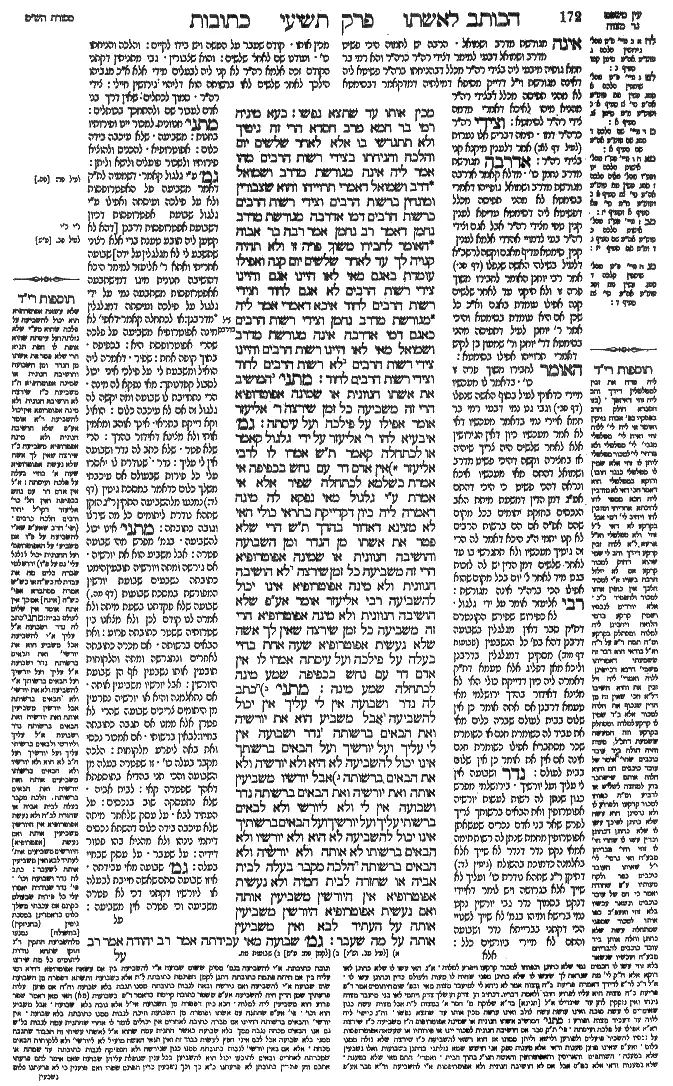
Ketubot 86b - Guemara
מכין אותו עד שתצא נפשו:
בעא מיניה רמי בר חמא מרב חסדא הרי זה גיטיך ולא תתגרשי בו אלא לאחר שלשים יום והלכה והניחתו בצידי רשות הרבים מהו אמר ליה אינה מגורשת מדרב ושמואל דרב ושמואל דאמרי תרוייהו והוא שצבורין ומונחין ברשות הרבים וצידי רשות הרבים כרשות הרבים דמו אדרבה מגורשת מדרב נחמן דאמר רב נחמן אמר רבה בר אבוה האומר לחבירו משוך פרה זו ולא תהיה קנויה לך עד לאחר שלשים יום קנה ואפילו עומדת באגם מאי לאו היינו אגם והיינו צידי רשות הרבים לא אגם לחוד וצידי רשות הרבים לחוד איכא דאמרי אמר ליה מגורשת מדרב נחמן וצידי רשות הרבים כאגם דמי אדרבה אינה מגורשת מדרב ושמואל מאי לאו היינו רשות הרבים והיינו צידי רשות הרבים לא רשות הרבים לחוד וצידי רשות הרבים לחוד:
מתני׳ המושיב את אשתו חנוונית או שמינה אפוטרופיא הרי זה משביעה כל זמן שירצה ר' אליעזר אומר אפילו על פילכה ועל עיסתה:
גמ׳ איבעיא להו ר' אליעזר על ידי גלגול קאמר או לכתחלה קאמר ת"ש אמרו לו לרבי אליעזר אין אדם דר עם נחש בכפיפה אי אמרת בשלמא לכתחלה שפיר אלא אי אמרת ע"י גלגול מאי נפקא לה מינה דאמרה ליה כיון דקדייקת בתראי כולי האי לא מצינא דאדור בהדך ת"ש הרי שלא פטר את אשתו מן הנדר ומן השבועה והושיבה חנוונית או שמינה אפוטרופיא הרי זה משביעה כל זמן שירצה לא הושיבה חנוונית ולא מינה אפוטרופיא אינו יכול להשביעה רבי אליעזר אומר אע"פ שלא הושיבה חנוונית ולא מינה אפוטרופיא הרי זה משביעה כל זמן שירצה שאין לך אשה שלא נעשית אפוטרופיא שעה אחת בחיי בעלה על פילכה ועל עיסתה אמרו לו אין אדם דר עם נחש בכפיפה שמע מינה לכתחלה שמע מינה:
מתני׳ כתב לה נדר ושבועה אין לי עליך אין יכול להשביעה אבל משביע הוא את יורשיה ואת הבאים ברשותה נדר ושבועה אין לי עליך ועל יורשיך ועל הבאים ברשותך אינו יכול להשביעה לא היא ולא יורשיה ולא את הבאים ברשותה אבל יורשיו משביעין אותה ואת יורשיה ואת הבאים ברשותה נדר ושבועה אין לי ולא ליורשי ולא לבאים ברשותי עליך ועל יורשיך ועל הבאים ברשותיך אינו יכול להשביעה לא הוא ולא יורשיו ולא הבאים ברשותו לא אותה ולא יורשיה ולא הבאים ברשותה הלכה מקבר בעלה לבית אביה או שחזרה לבית חמיה ולא נעשית אפוטרופיא אין היורשין משביעין אותה ואם נעשית אפוטרופיא היורשין משביעין אותה על העתיד לבא ואין משביעין אותה על מה שעבר:
גמ׳ שבועה מאי עבידתה אמר רב יהודה אמר רב
Comments from Rashi on Masechet Ketubot Page 86b
מכין אותו . קודם שעבר על העשה ויש בידו לקיים: והלכה והניחתו כו' . ועודנו שם לאחר שלשים: והוא שצבורין . גבי מתניתין דקתני הקודם זכה אלמא רה"ר לא קני ליה לבעלים מידי אלא א"כ מגביהו הילכך לאחר שלשים לאו ברשותה הוא דליהוי גירושין חיילי: צידי רה"ר . סמוך לכתלים שאין דרך בני אדם לעבור שם ולהתחכך בכותלים: מתני' חנוונית . למכור יינו ופירותיו בחנות: משביעה . שלא עיכבה בידה כלום: אפוטרופיא . להכניס ולהוציא פירותיו ולשכור פועלים ולישא וליתן: גמ' ע"י גלגול קאמר . דשמעיה לת"ק דאמר משביעה על האפטרופסות ולא על פילכה ועיסתה ואפילו ע"י גלגול שבועת אפטרופסות דכיון דשבועת אפטרופסות דרבנן [דהא לא קטען ליה תובע טענת ברי אלא רצוני שתשבע לי לא מגלגלין על ידה] שבועה אחריתי ואתא ר' אליעזר למימר היכא דהושיבה חנונית מיגו דמישתבעה אאפטרופסות משתבעה נמי על ידי גלגול על פילכה ועיסתה דמגלגלין מדרבנן: או לכתחלה קאמר . דאפי' לא מינה אפוטרופיא משביעה על פלכה שהרי אפוטרופסת היא: בכפיפה . בתוך קופה אחת: שפיר . דאמרה ליה הואיל ומשבעת לי על פילכי איני יכול לסבול קפדנותך: מאי נפקא לה מינה . הרי נתחייבת לו שבועה ומה יקשה לה גלגול זה אם לא עיכבה כלום: הואיל וקא דייקת בתראי . אינך אוהב ומאמין אותי ולא מצינא דאידור בהדך: הרי שלא פטר . שלא כתב לה נדר ושבועה אין לי עליך: נדר . שנודרת לו יאסרו עלי כל פירות שבעולם אם עיכבתי משלך כלום כדאמר במסכת גיטין (דף לד:) נמנעו מלהשביעה התקין ר"ג הזקן שתהא נודרת ליתומים כל מה שירצו וגובה כתובתה: מתני' אינו יכול להשביעה . בגמ' מפרש מהי שבועה פטרה: אבל משביע הוא את יורשיה . אם גירשה ומתה ויורשיה תובעין הימנו כתובתה נשבעים שבועת יורשין המפורשת במסכת שבועות (דף מה.) שבועה שלא פקדתנו בשעת מיתה ולא אמרה לנו קודם לכן ולא מצאנו בין שטרותיה ששטר כתובתה פרוע: ואת הבאים ברשותה . אם מכרה כתובתה לאחרים ונתגרשה ומתה והלקוחות תובעין אותו נשבעין אף הן שבועת היורשין: אבל יורשיו משביעין אותה . אם נתאלמנה והיא או יורשיה נפרעין מן היתומים צריכים שבועה שהרי לא פטרן אלא ממנו אם תגבה כתובתה בחייו: לבאין ברשותי . אם אמכור נכסי ואת באה ליפרע מלקוחות: הלכה מקבר בעלה כו' . זו שפטרה בעלה מן השבועה והכי תני בהדיא בתוספתא דאהך שפטרה קאי: לבית אביה . שלא נתעסקה שוב בנכסים: על העתיד לבא . על עסק שלאחר מיתה שלא עיכבה בידה כלום דהשתא נכסים דיתמי נינהו ולא מהניא בהו פטור דידיה: על שעבר . על עסק שבחיי בעלה: גמ' שבועה מאי עבידתה . איזו שבועה סתם שאשה חייבת לבעלה או ליורשיו דקתני דכי לא פטרה משביעה וכי פטרה אין משביעה:
Comments from Tosafot - Ketubot 86b
אינה מגורשת מדרב ושמואל . הרבה יש לתמוה היכי פשיט מדרב ושמואל דבעי למימר דצידי רה"ר כרה"ר והא רמי בר חמא גופיה מיבעי ליה בצידי רה"ר מכלל דבהניחתו ברה"ר פשיטא ליה דאינה מגורשת וי"ל דדייק מסיפא דמילתיה דמדקאמר דבסימטא לא מהני תפיסה מכלל דבצידי רה"ר מהניא מיהו לאיכא דאמרי מדמה צידי רה"ר לסימטא: וצידי רה"ר כרה"ר דמו . תימה דבריש אלו נערות (לעיל כתובות דף לא:) אמר דלענין מיקנא קני בצידי רה"ר: אדרבה מגורשת מדרב נחמן כו' .מדלא קאמר אדרבה מגורשת מדרב ושמואל גופייהו דאמרי בסימטא לא מהני תפיסה מכלל דפשיטא ליה דסימטא עדיפא לענין קנין טפי מצידי רה"ר אבל אגם וצידי רה"ר בעי לדמויי אהדדי אלמא לענין קנין סימטא עדיף מאגם וקשה לרשב"א דלעיל בשילהי האשה שנפלו (כתובות דף פב.) אמר רבי יוחנן האומר לחבירו משוך פרה זו ולא תיקני עד לאחר שלשים קנה אפילו עומדת באגם וא"כ כל שכן אם היא עומדת בסימטא והיכי אמר ר' יוחנן לעיל דתפיסה מהני בסימטא דר' יוחנן ור' שמעון בן לקיש דאמרי תרוייהו אפילו בסימטא: האומר לחבירו משוך פרה זו כו' . בדאמר לו מעכשיו מיירי כדאוקי לעיל בסוף האשה שנפלו (כתובות דף פב.) וגבי גט נמי דבעי רמי בר חמא איירי נמי בדאמר מעכשיו דאי לא אמר מעכשיו כיון דאין הגירושין אלא לאחר שלשים היה צריך שיהיה אז בחצירה וקשה דהיכי פשיט מדרב ושמואל דהתם מאי מעכשיו איכא ונראה דהכי פשיט כי היכי דהתם אע"ג דמן הדין דמשעת מיתת האב הנכסים בחזקת יתומים בכל מקום שהם אפ"ה אם הם ברשות הרבים לא קנו יתמי ה"נ היכא דאמר לה הרי זה גיטיך מעכשיו ולא תתגרשי בו עד לאחר שלשים דמן הדין יש לה לזכות בגט מיד לאחר ל' יום בכל מקום שהוא אפילו הכי ברה"ר אינה מגורשת: רבי אליעזר אומר על ידי גלגול . לא כפירוש שפירש הקונטרס דת"ק סבר דאין מגלגלין בשבועה דרבנן דהא בפ' כל הנשבעין (שבועות דף מח:) מסקינן דמגלגלין בדרבנן וליכא מאן דפליג אלא טעמא דת"ק דאמרה ליה כיון דדייקת כולי האי לא מצינא דאידור בהדך ירושלמי מאי טעמא דרבנן אם אתה אומר כן אין שלום בבית לעולם שברה כלים מאי את עביד לה כשומרת חנם או כשומרת שכר מסתברא אפילו כשומרת חנם אינה אם אין את אומר כן אין שלום בבית לעולם: נדר ושבועה אין לי עליך ועל יורשיך . בירושלמי מפרש כגון שנתן לה רשות לעשות יורשיה אפוטרופין ואת הבאים ברשותך צריך לפרש שאר בני אדם נכרים שעשאתן אפוטרופין מחמת שנתן לה רשות תימה אמאי נקט נדר דנדר לא שייך אלא באלמנה כדמוכח בהשולח (גיטין לד:) דתיקן ר"ג שתהא נודרת כו' ועליך לא שייך אלא בגרושה ויש לומר דאיידי דנקט בסמוך נדר גבי יורשין נקט נמי ברישא ומיהו בגמ' לא שייך לשנויי הכי דקתני בברייתא נדר ושבועה והתם לא מיירי ביורשים כלל:
Ketubot 86b - Mishnah translated into english
the court strikes him an unlimited number of times, even until his soul departs, in order to force him to perform the mitzva. The payment of a debt is a positive mitzva, and one who refuses to pay a debt can be compelled to do so in this manner.
§ Rami bar Ḥama inquired of Rav Ḥisda: If a man said to his wife: This is your bill of divorce but you are divorced with it only after thirty days, and she took the bill of divorce and went and placed it in the sides of the public domain, i.e., in a place that was open to the public domain but not an actual part of it, and the bill of divorce was still there after thirty days, what is the halakha? Is she divorced?
Rav Ḥisda said to him: She is not divorced. This halakha is learned from the opinion of Rav and Shmuel, as it is Rav and Shmuel who both say with regard to the mishna: Any of the creditors of a deceased person can seize items of his movable property provided that they are arranged in piles and placed in the public domain, as in that case the heirs of the deceased do not receive it as part of their inheritance. Similarly, the woman will not acquire the bill of divorce after thirty days if it is in that location. Rav Ḥisda adds: And the sides of the public domain are considered like the public domain.
Rami bar Ḥama responded: On the contrary, she is divorced, in accordance with the opinion of Rav Naḥman, as Rav Naḥman said that Rabba bar Avuh said: With regard to one who says to his friend: Go and pull this cow now and it will be acquired by you only after thirty days, he has acquired the cow. And this is true even if the cow was standing after those thirty days in an ownerless meadow [agam]. Since the acquisition began properly at the start of the thirty-day period, it applies even after the thirty-day period. What, is it not the case that this is the halakha of a meadow and this is also the halakha of the sides of the public domain, as the two places have a similar status? Rav Ḥisda rejects this argument: No, the case of a meadow is discrete, and the case of the sides of the public domain is discrete, as the latter is considered an actual part of the public domain, and an ownerless meadow is not.
Some say a different version of the dispute between Rami bar Ḥama and Rav Ḥisda, in which Rav Ḥisda said to Rami bar Ḥama: She is divorced, based on the ruling of Rav Naḥman pertaining to acquiring a cow, and the sides of the public domain are considered like a meadow. In this version, it was Rami bar Ḥama who replied: On the contrary, she is not divorced, as can be learned from the opinion of Rav and Shmuel pertaining to seizing objects in the public domain. What, is it not the case that this is the halakha of the public domain and this is similarly the halakha of the sides of the public domain? Rav Ḥisda responded: No, the public domain is discrete and the sides of the public domain are discrete.
MISHNA: If there is one who establishes his wife as a storekeeper in his store, or if he appointed her as a steward to handle his property and workers, this one, i.e., the husband, can administer an oath to her, having her state that she did not appropriate any of his possessions, whenever he wants. Rabbi Eliezer says: He can administer an oath even with regard to the products of her spindle and for her dough, which are matters related to the household, and not her function as a storekeeper.
GEMARA: A dilemma was raised before the Sages: When Rabbi Eliezer says that a husband can administer an oath to her with regard to any item, is he saying that this is by means of extension of an oath, i.e., once he administers an oath to her in her capacity as his storekeeper he can extend the oath to cover other matters, or, is he saying that he can administer an oath to her ab initio?
The Gemara suggests: Come and hear a solution from a baraita: The Rabbis said to Rabbi Eliezer: A person does not reside in a basket with a snake. A woman is not expected to live with a husband who constantly suspects her of stealing. The Gemara explains: Granted, if you say that Rabbi Eliezer is referring to an oath administered ab initio, the Rabbis spoke well. However, if you say that the husband can administer an oath only by means of an extension of an oath, what difference does it make to her? As she must take an oath with regard to matters that concern the store, it does not cause any greater difficulty for her to take an oath with regard to the household matters.
The Gemara refutes this argument, as it is possible that she says to him: Since you are so exacting with me, I cannot live with you. Even if there is no additional oath, the sentiment engendered by his demand is grounds for dissatisfaction, and there is no proof that Rabbi Eliezer holds that he can administer an oath to her ab initio.
The Gemara suggests another proof. Come and hear a proof from a baraita: With regard to one who did not exempt his wife in the marriage contract from a vow and from an oath, and he established her as his storekeeper or appointed her as his steward, he can administer an oath to her whenever he wants. If he did not establish her as his storekeeper or appoint her as his steward, he cannot administer an oath to her.
The baraita continues: Rabbi Eliezer says: Although he did not establish her as his storekeeper or appoint her as his steward, he can administer an oath to her whenever he wants, as you have no wife who did not become a steward for one hour in her husband’s lifetime at least for her spindle and for her dough. The Rabbis said to him: A person does not reside in a basket with a snake. One can conclude from this that according to Rabbi Eliezer a husband can administer an oath to his wife with regard to her conduct, even ab initio. The Gemara concludes: Conclude from it that it is so.
MISHNA: If one wrote to his wife in the marriage contract: I do not have the right to administer a vow or an oath upon you, he cannot administer an oath to her. However, he can administer an oath to her heirs, and to those who come on her authority, either as her representatives or because they purchased her marriage contract.
If the husband wrote: I do not have the right to administer a vow or an oath upon you, or upon your heirs, or upon those who come on your authority, he cannot administer an oath to her; not to her, nor her heirs, nor those who come on her authority. But the husband’s heirs can administer an oath to her, and to her heirs, and to those who come on her authority.
If he wrote: Neither I, nor my heirs, nor those who come on my authority have the right to administer a vow or an oath upon you, or upon your heirs, or upon those who come on your authority, he cannot administer an oath to her or to them; not he, nor his heirs, nor those who come on his authority may administer an oath, not to her, nor to her heirs, nor to those who come on her authority.
If a woman who was exempted from an oath by her husband went from her husband’s grave, immediately after her husband’s death, to her father’s house, without handling her late husband’s property, or in a case where she returned to her father-in-law’s house and did not become a steward over the property at all throughout this period, then the heirs cannot administer an oath to her with regard to her actions in their father’s lifetime, as the husband exempted her from an oath to the heirs. And if she became a steward, the heirs may administer an oath to her about the future, i.e., anything she did with the property after the death of her husband, but they cannot administer an oath to her with regard to what took place in the past, during her husband’s lifetime.
GEMARA: The Gemara asks: What is the purpose of an oath? What oath can he administer to her that caused him to add this condition to her marriage contract? Rav Yehuda said that Rav said:
Traduction : The William Davidson digital edition of the Koren Noé Talmud, with commentary by Rabbi Adin Even-Israel Steinsaltz.