 Talmud Bavli
Ketubot 40b : Youtube
Daf TubeYoutube
1 video class :
Ketubot Page 40b
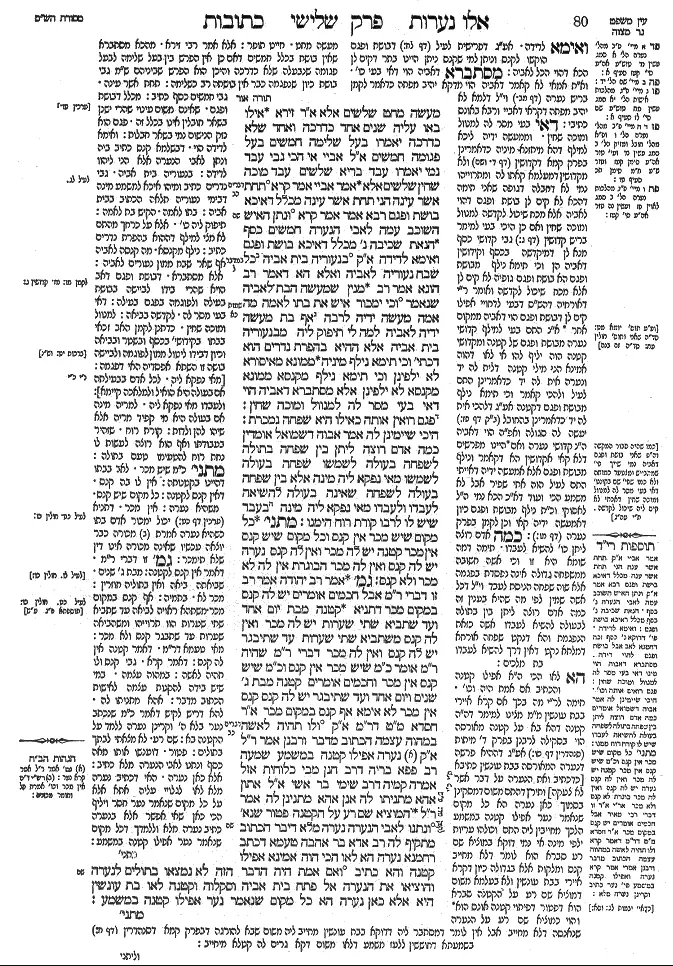
Ketubot 40b - Guemara
מעשה מחט שלשים אלא א"ר זירא אילו באו עליה שנים אחד כדרכה ואחד שלא כדרכה יאמרו בעל שלימה חמשים בעל פגומה חמשים א"ל אביי אי הכי גבי עבד נמי יאמרו עבד בריא שלשים עבד מוכה שחין שלשים אלא אמר אביי אמר קרא (דברים כב, כט) תחת אשר עינה הני תחת אשר עינה מכלל דאיכא בושת ופגם רבא אמר אמר קרא (דברים כב, כט) ונתן האיש השוכב עמה לאבי הנערה חמשים כסף הנאת שכיבה נ' מכלל דאיכא בושת ופגם ואימא לדידה א"ק (במדבר ל, יז) בנעוריה בית אביה כל שבח נעוריה לאביה ואלא הא דאמר רב הונא אמר רב מנין שמעשה הבת לאביה שנאמר (שמות כא, ז) וכי ימכור איש את בתו לאמה מה אמה מעשה ידיה לרבה אף בת מעשה ידיה לאביה למה לי תיפוק ליה מבנעוריה בית אביה אלא ההיא בהפרת נדרים הוא דכתי' וכי תימא נילף מיניה ממונא מאיסורא לא ילפינן וכי תימא נילף מקנסא ממונא מקנסא לא ילפינן אלא מסתברא דאביה הוי דאי בעי מסר לה למנוול ומוכה שחין:
פגם רואין אותה כאילו היא שפחה נמכרת:
היכי שיימינן לה אמר אבוה דשמואל אומדין כמה אדם רוצה ליתן בין שפחה בתולה לשפחה בעולה לשמשו שפחה בעולה לשמשו מאי נפקא ליה מינה אלא בין שפחה בעולה לשפחה שאינה בעולה להשיאה לעבדו ולעבדו מאי נפקא ליה מינה בעבד שיש לו לרבו קורת רוח הימנו:
מתני׳ כל מקום שיש מכר אין קנס וכל מקום שיש קנס אין מכר קטנה יש לה מכר ואין לה קנס נערה יש לה קנס ואין לה מכר הבוגרת אין לה לא מכר ולא קנס:
גמ׳ אמר רב יהודה אמר רב זו דברי ר"מ אבל חכמים אומרים יש לה קנס במקום מכר דתניא קטנה מבת יום אחד ועד שתביא שתי שערות יש לה מכר ואין לה קנס משתביא שתי שערות עד שתיבגר יש לה קנס ואין לה מכר דברי ר"מ שהיה ר"מ אומר כ"מ שיש מכר אין קנס וכ"מ שיש קנס אין מכר וחכמים אומרים קטנה מבת ג' שנים ויום אחד ועד שתיבגר יש לה קנס קנס אין מכר לא אימא אף קנס במקום מכר א"ר חסדא מ"ט דר"מ א"ק (דברים כב, יט) ולו תהיה לאשה במהוה עצמה הכתוב מדבר ורבנן אמר ר"ל א"ק נערה אפילו קטנה במשמע שמעה רב פפא בריה דרב חנן מבי כלוחית אזל אמרה קמיה דרב שימי בר אשי א"ל אתון אהא מתניתו לה אנן אהא מתנינן לה אמר ר"ל המוציא שם רע על הקטנה פטור שנא' (דברים כב, יט) ונתנו לאבי הנערה נערה מלא דיבר הכתוב מתקיף לה רב אדא בר אהבה טעמא דכתב רחמנא נערה הא לאו הכי הוה אמינא אפילו קטנה והא כתיב (דברים כב, כ) ואם אמת היה הדבר הזה לא נמצאו בתולים לנערה והוציאו את הנערה אל פתח בית אביה וסקלוה וקטנה לאו בת עונשין היא אלא כאן נערה הא כל מקום שנאמר נער אפילו קטנה במשמע:
Comments from Rashi on Masechet Ketubot Page 40b
מעשה מחט . חייט תופר: אלא אמר רבי זירא . מהכא מסתברא שאין בושת בכלל חמשים דאם כן אין הפרש בין בעל שלימה לבעל פגומה שנבעלה שלא כדרכה והיכן הוא הפרש שביניהם ש"מ גבי בושת כיון שנפגמה כבר אין בושתה רב כשלימה: תחת אשר עינה . גבי חמשים כסף כתיב: מכלל דבושת ופגם . שאינם משום עינוי שהרי ישנן בשאר חובלין אינו בכלל זה. פגם הוא נזק הנישום נמי בשאר חבלות: ואימא לדידה הוי . דבשלמא קנס כתיב ביה ונתן לאבי הנערה אלא הני ליהוו לדידה: בנעוריה בית אביה . גבי נדרים כתיב ומיהו איכא למשמע מינה דבימי נעוריה תלאה הכתוב בבית אביה: בתו לאמה . הקיש בת לאמה: תיפוק ליה כו' . אלא על כרחך מהתם לא מצי למילף דההוא בהפרת נדרים כתיב: נילף מקנסא . מה קנסה לאביה אף שאר שבח ממון נעורים לאביה: אלא מסתברא . דבושת ופגם דאב הויא שהרי בידו לביישה בבושת בעילה ולפוגמה בפגם בעילה: דאי בעי מסר לה . לקדשה בביאה: למנוול ומוכה שחין . כדתנן לקמן האב זכאי בבתו בקידושי' בכסף ובשטר ובביאה וכיון דבידו ליטול ממון לפוגמה ולביישה בושה זו השתא אפסדיה האי דפגמה: [מאי נפקא ליה . לכל אדם בבעילתה אם בעולה היא הואיל ולמלאכה קיימא]: ולעבדו מאי נפקא ליה . למריה מינה אם בעולה היא מי קפיד מריה אלא שיהו להן ולדות: קורת רוח . שזהיר בעבודתו ואף הוא רוצה לעשות לו נחת רוח להטעימו טעם בתולה: מתני' כ"מ שיש מכר . לאב בבתו דהיינו בקטנותה: אין לו בה קנס . דאין קנס לקטנה: כל מקום שיש קנס . משהיא נערה: אין מכר . דתניא (ערכין דף כט:) יכול ימכור אדם בתו כשהיא נערה אמרת מכורה כבר יוצאה עכשיו שאינה מכורה אינו דין שלא תימכר: גמ' זו דברי ר"מ . דאמר אין קנס לקטנה: מבת ג' שנים . שביאתה ביאה ואין בתוליה חוזרין: מכר לא . בתמיה: אף קנס במקום מכר . משתהא ראויה לביאה עד שתביא שתי שערות הוו תרוייהו ומשהביאה שערות עד שתבגר קנס ולא מכר: מאי טעמא דר"מ . דאמר קטנה אין לה קנס: דאמר קרא . גבי קנס ולו תהיה לאשה: במהוה עצמה . במי שיש בידה להקנות עצמה לאישות הכתוב מדבר: אהא מתניתו לה . להא דריש לקיש דאמר כ"מ שנכתב נער בלא ה' וקרינן נערה ללמד על הקטנה בא: שם רע . לא מצאתי לבתך בתולים: פטור . דוענשו אותו מאה כסף ונתנו לאבי הנערה מלא כתיב: אלא כאן נערה . האי דכתיב נערה מלא לאו לגלויי עליה אתא אלא על כל מקום שנאמר נער חסר ויליף הכי כאן שאי אפשר אלא בנערה כתיב נערה מלא וללמדך דכל מקום שנאמר נער אפילו קטנה במשמע:
Comments from Tosafot - Ketubot 40b
אחד כדרכה ואחד שלא כדרכה . שלא כדרכה ה"ל למינקט ברישא אלא כן דרך הש"ס שאינו חושש כדנקט לעיל (כתובות דף לה.) בתנא דבי חזקיה בין מתכוין לשאין מתכוין דה"ל למינקט שאין מתכוין ברישא כדקתני בין שוגג למזיד אלא כן דרך הש"ס במקום שצריך לשנות הן ולאו: יאמרו בעל שלימה חמשים . פירוש הראשון שבא עליה שלא כדרכה דמחייב קנס אפילו שלא כדרכה כדאמרינן בפ"ק דקידושין (דף ט:) באו עליה י' ועדיין היא בתולה כו' פירוש שלא כדרכה וקאמר מודה רבי לענין קנס דכולהו משלמי ובפרק הבא על יבמתו (יבמות דף נט. ושם) גבי ולו תהיה לאשה באשה הראויה לו פרט לאלמנה לכ"ג כו' ופריך היכי דמי אילימא כדרכה תיפוק ליה דהויא לה בעולה אלא לאו שלא כדרכה והכא הוה מצי למינקט שבאו עליה ב' שלא כדרכה וכן בפרק בן סורר (סנהדרין עג:) דמוקי ההיא דאלו נערות שיש להן קנס כגון שבא עליה שלא כדרכה וחזר ובא עליה כדרכה הוה מצי למינקט וחזר ובא עליה שלא כדרכה ומה שקשה על פירוש הקונטרס דהתם פירשנו בהבא על יבמתו (יבמות דף נט.) ובפרק קמא דקידושין (דף ט:): ואימא לדידה . אע"ג דפרישית לעיל (כתובות דף לח:) דבושת ופגם הוקשו לקנס וניתן למי שקנס ניתן היינו בתר דקים לן הכא דהוי הכל לאביה: מסתברא דאביה הוי דאי בעי כו' . וא"ת אמאי לא קאמר דאביה הוי מדקא יהיב מפתה כדאמר לקמן בריש נערה (כתובות דף מב.) וי"ל דלמא לא יהיב מפתה דקראי דאביי ורבא באונס כתיבי: דאי בעי מסר לה למנוול ומוכה שחין . וממעשה ידיה ליכא למילף דהא מיתזנא מיניה כדאמרינן בפרק קמא דקדושין (דף ד. ושם) ולא מקדושין דמעלמא קאתו לה ומתרוייהו נמי לא דחבלה דגופה שאני תימה דהכא לא קים לן בושת ופגם דהוי לאביה אלא מכח שיכול לקדשה למנוול ומוכה שחין ואם כן היכי בעי למימר בריש קדושין (דף ג:) גבי קדושי כסף מנא לן דמיקדשה בכסף וקידושין דאביה הן וכי תימא נילף מבושת ופגם הא בושת ופגם גופיה לא קים לן אלא מכח שיכול לקדשה ואומר ר"י דאורחיה דהש"ס דבעי לדחויי אפילו קים לן דבושת ופגם הוי דאביה ממקום אחר א"נ התם בעי למילף קדושי נערה מבושת ופגם של קטנה ומקדושי קטנה הוה יליף להו אי לאו דהוה אמינא הני מילי קטנה דלית לה יד ונערה אית לה יד כדאמרינן התם לעיל ולהכי קאמר וכי תימא נילף מבושת ופגם דקטנה אע"ג דלהכי אית לה יד כדאמרינן בהחובל (ב"ק דף פז:) יעשה לה סגולה ואפ"ה הוי דאביה ה"נ קדושי נערה ואם היינו מפרשים דלא קאי אקדושין הא דקאמר ונילף מבושת ופגם אלא אמעשה ידיה דאייתי התם לעיל הוה אתי שפיר אבל לא משמע הכי ועוד דא"כ הכא נמי ה"ל לאסוקי וכ"ת נילף מבושת ופגם כיון דאמעשה ידיה קאי וכן לקמן בפרק נערה (כתובות דף מו:): כמה אדם רוצה ליתן כו' להשיא לעבדו . תימה דמה שומא היא זו וכי אשה חשובה ממשפחה גדולה אינה נפסדת בפגמה אלא שוה שפחה הניסת לעבד וי"ל דכל אשה שמין לפי מה שהיא בענין זה כמה אדם רוצה ליתן בין בתולה לבעולה להשיא לעבדו אשה כזאת הנפגמת והא דנקט שפחה אורחא דמלתא נקט דאין דרך להשיא לעבדו בת מלכים: הא לאו הכי ה"א אפילו קטנה והכתיב אם אמת היה וכו' . תימה לר"י מה בכך אם קרא איירי בבת עונשין מ"מ מצינו למימר דה"ה קטנה דהא בא על קטנה מאורסה הוי בסקילה לרבנן בפרק ד' מיתות (סנהדרין דף סו:) אע"ג דההיא פרשה דנערה המאורסה בבת עונשין כתיבא [כדכתיב ואת הנערה על דבר אשר לא צעקה] ותירץ דהתם משום דמסקינן בסמוך כאן נערה הא כל מקום שנאמר נער אפילו קטנה במשמע הלכך מחייבין ליה התם וכולהו עריות ילפי מינה אי נמי דוקא במוציא שם רע סברא הוא לומר דלא מחייב קנס ומלקות אלא בגדולה כיון דקרא איירי בבת עונשין ולא בעלמא משום דמוציא שם רע על הקטנה סברא הוא דפטור דפיתוי קטנה אונס הוא והוי כמוציא שם רע על הנערה שנאנסה דלא מחייב אבל אין לומר דמסתבר ליה דדוקא בבת עונשין מחייב ליה משום שבא להורגה דבפרק קמא דסנהדרין (דף ח:) בשמעתא דחוששין ללעז משמע דלאו משום דקא גריס לה קטלא מיחייב:
Ketubot 40b - Mishnah translated into english
the needlecraft of a tailor, a common, less valuable skill, is the fine also thirty sela? Rather, just as with regard to the slaves, the sum is not dependent on the standing of the victim, so too with regard to a woman who was raped.
Rather, Rabbi Zeira said a different proof: Had two men engaged in forced intercourse with her, one vaginal intercourse, and one anal intercourse, they will say: If one who engaged in forced intercourse with an untainted virgin pays fifty sela, does one who engaged in forced intercourse with her when she is tainted, i.e., after she has engaged in anal intercourse, also pay fifty sela? Apparently, the fifty sela is the fixed sum of the fine, while the rest of the payment varies on a case-by-case basis. Abaye said to him: This too is no proof, as if so, with regard to a slave as well, they will say if one whose ox gored a healthy slave pays thirty sela, does one whose ox gored a slave afflicted with boils also pay thirty sela?
Rather, Abaye said a different proof. The verse says: “Fifty shekels of silver…because he tormented her” (Deuteronomy 22:29); these fifty sela are the fine paid because he tormented her. From which it may be inferred that there are the additional payments of humiliation and degradation beyond that sum mentioned in the verse. Rava said an alternative proof. The verse says: “And the man who lay with her shall give to the father of the young woman fifty shekels of silver” (Deuteronomy 22:29). For the pleasure of lying with her he pays fifty sela; from which it may be inferred that there are the additional payments of humiliation and degradation, beyond payment of the fine.
The Gemara asks: And say that these additional payments are paid to her? The Gemara answers that the verse says: “Between a father and his daughter, being in her young womanhood, in her father’s house” (Numbers 30:17), from which it is derived that all profits of her young womanhood go to her father.
The Gemara asks: However, with regard to that which Rav Huna said that Rav said: From where is it derived that the handiwork of the daughter goes to her father? It is as it is stated: “And if a man sells his daughter as a maidservant” (Exodus 21:7), juxtaposing his daughter to a maidservant: Just as a maidservant, her handiwork belongs to her master, as she was sold for that purpose; so too a daughter, her handiwork goes to her father. Why do I need this complicated proof? Let him derive it directly from the verse “Being in her young womanhood, in her father’s house.” Rather, this cannot be derived from that verse because that verse is written with regard to the nullification of vows. A young woman is subject to her father’s authority with regard to her vows, which he has the right to nullify. The matter of monetary rights is not addressed in that verse.
And if you say: Let us derive monetary matters from vows, i.e., just as she is subject to her father’s authority with regard to vows the same is true with regard to monetary matters, we do not derive monetary matters from ritual matters. And if you say: Let us derive that her father receives payment from the halakha of a fine, i.e., just as the fine is paid to her father, as explicitly stated in the Torah, so too, other payments are also paid to her father, we do not derive monetary matters from fines. The payment of a fine is a novel element decreed by the Torah and cannot serve as a paradigm for standard monetary matters. Rather, the Gemara explains that it is reasonable that the payments of humiliation and degradation are paid to her father, as if he wished to do so he could give her hand in marriage to a repulsive man or one afflicted with boils, thereby humiliating her. Since her humiliation is under his control, payment for her humiliation is similarly his.
The mishna continues: How is her degradation assessed? One considers her as though she were a maidservant sold in the marketplace, and assesses how much she would have been worth beforehand and how much she would be worth currently. The Gemara asks: How do we assess her value? Shmuel’s father said: One estimates the difference between how much a person is willing to give to purchase a virgin maidservant and how much he is willing to give to purchase a non-virgin maidservant to serve him.
The Gemara asks: With regard to a non-virgin maidservant to serve him; if he purchases her for service, what difference is there to him whether or not she is a virgin? Rather, the difference between a maidservant who engaged in intercourse and a maidservant who did not engage in intercourse is with regard to how much one is willing to marry her to his slave. The Gemara further asks: And with regard to marrying her to his slave, what difference is there to him whether or not she is a virgin? The Gemara answers: It is with regard to a slave from whom his master has a sense of satisfaction, and he seeks a virgin for the slave in order to reciprocate. The difference between the price that the master is willing to pay for each of the maidservants is the degradation that the offender pays the victim.
MISHNA: Any place where there is sale by a father of his minor daughter as a Hebrew maidservant, there is no fine if she is raped. And any place where there is a fine, when a young woman is raped; there is no sale by the father. The Gemara specifies: A minor is subject to sale by her father, and she is not entitled to a fine if she is raped. A young woman is entitled to a fine if she is raped and is not subject to sale. A grown woman is neither subject to sale nor entitled to a fine.
GEMARA: Rav Yehuda said that Rav said: This halakha in the mishna is the statement of Rabbi Meir, but the Rabbis say: She is entitled to a fine even where there is a sale, as it is taught in a baraita: A minor girl, from one day old until she grows two pubic hairs, is subject to sale and is not entitled to a fine. From when she grows two pubic hairs and becomes a young woman until she matures into a grown woman, she is entitled to a fine and she is not subject to sale; this is the statement of Rabbi Meir, as Rabbi Meir would state the principle: Any place where there is a sale there is no fine, and any place where there is a fine there is no sale. And the Rabbis say: A minor girl from the age of three years and one day until she matures into a grown woman is entitled to a fine.
The Gemara questions the statement of the Rabbis in the baraita with regard to a girl more than three years of age: A fine, yes, but sale, no? Do the Rabbis maintain that a father cannot sell his minor daughter as a Hebrew maidservant? Rather, emend the text and say: She is even entitled to a fine where she is subject to sale. Rav Ḥisda said: What is the rationale for the opinion of Rabbi Meir? It is as the verse says with regard to a rapist: “And the man who lay with her shall give to the father of the young woman fifty sela, and to him she shall be as a wife” (Deuteronomy 22:29). The verse is speaking with regard to one halakhically competent to marry by herself, which means she must be a young woman. The Gemara asks: And what is the rationale for the opinion of the Rabbis? Reish Lakish said that the verse says “young woman [na’ara]”; however, although the term is pronounced na’ara, it is written as na’ar, without the letter heh, and even a minor girl is indicated by that term.
The Gemara relates: Rav Pappa, son of Rav Ḥanan, from a place called Bei Keloḥit, heard this halakha and went and said it before Rav Shimi bar Ashi. Rav Shimi said to him: You teach this statement concerning that matter. We, based on our traditions, teach it concerning this matter, as Reish Lakish said: One who slanders a minor girl, falsely claiming that she was not a virgin on the wedding night, is exempt from paying the fine, as it is stated: “And they shall give them to the father of the young woman [na’ara]” (Deuteronomy 22:19). The verse spoke of na’ara, not only pronounced but written in full, indicating that this payment is in effect only with regard to a young woman, not a minor girl. However, in places where the term is written na’ar, even a minor girl would be included.
Rav Adda bar Ahava strongly objects to this: The reason is that the Merciful One writes “na’ara” with a heh. Is that to say that if that were not the case I would have said that this halakha applies even to a minor girl? How is that possible? But isn’t it written: “And if this matter was true, that the hymen of this young woman was not found intact; then they shall remove the young woman to the entrance of her father’s house and stone her” (Deuteronomy 22:20–21). And this verse clearly refers to a young woman old enough to be punished, as a minor is not subject to punishment. Rather, here, with regard to the payment of a slanderer, the verse speaks of a na’ara, written with a heh, and a minor is excluded. This is a paradigm from which it may be inferred that in any place that it is stated “na’ara” without a heh, even a minor girl is indicated.
Traduction : The William Davidson digital edition of the Koren Noé Talmud, with commentary by Rabbi Adin Even-Israel Steinsaltz.