 Talmud Bavli
The learning on the whole site is dedicated : L'ilui Nishmat Amram ben Itshak Loubaton
The learning on the whole site is dedicated : L'ilui Nishmat Yechayahou ben Moche
The learning on the whole site is dedicated : L'ilui Nishmat Ledicia bat David Banoun
Ketubot 23b : Youtube
Daf TubeYoutube
1 video class :
Ketubot Page 23b
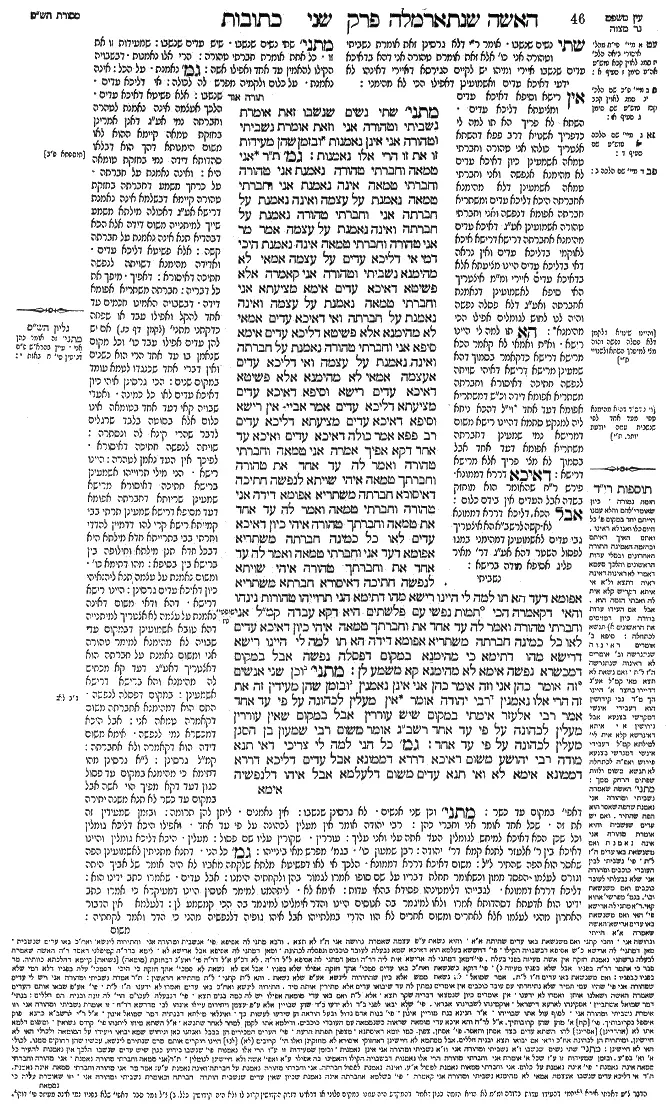
Ketubot 23b - Guemara
מתני׳ שתי נשים שנשבו זאת אומרת נשביתי וטהורה אני וזאת אומרת נשביתי וטהורה אני אינן נאמנות ובזמן שהן מעידות זו את זו הרי אלו נאמנות:
גמ׳ ת"ר אני טמאה וחברתי טהורה נאמנת אני טהורה וחברתי טמאה אינה נאמנת אני וחברתי טמאה נאמנת על עצמה ואינה נאמנת על חברתה אני וחברתי טהורה נאמנת על חברתה ואינה נאמנת על עצמה אמר מר אני טהורה וחברתי טמאה אינה נאמנת היכי דמי אי דליכא עדים על עצמה אמאי לא מהימנא נשביתי וטהורה אני קאמרה אלא פשיטא דאיכא עדים אימא מציעתא אני וחברתי טמאה נאמנת על עצמה ואינה נאמנת על חברתה ואי דאיכא עדים אמאי לא מהימנא אלא פשיטא דליכא עדים אימא סיפא אני וחברתי טהורה נאמנת על חברתה ואינה נאמנת על עצמה ואי דליכא עדים אעצמה אמאי לא מהימנא אלא פשיטא דאיכא עדים רישא וסיפא דאיכא עדים מציעתא דליכא עדים אמר אביי אין רישא וסיפא דאיכא עדים מציעתא דליכא עדים רב פפא אמר כולה דאיכא עדים ואיכא עד אחד דקא אפיך אמרה אני טמאה וחברתי טהורה ואמר לה עד אחד את טהורה וחברתך טמאה איהי שויתא לנפשה חתיכה דאיסורא חברתה משתריא אפומא דידה אני טהורה וחברתי טמאה ואמר לה עד אחד את טמאה וחברתך טהורה איהי כיון דאיכא עדים לאו כל כמינה חברתה משתריא אפומא דעד אני וחברתי טמאה ואמר לה עד אחד את וחברתך טהורה איהי שויתא לנפשה חתיכה דאיסורא חברתא משתריא אפומא דעד הא תו למה לי היינו רישא מהו דתימא הני תרוייהו טהורות נינהו והאי דקאמרה הכי (שופטים טז, ל) תמות נפשי עם פלשתים היא דקא עבדה קמ"ל אני וחברתי טהורה ואמר לה עד אחד את וחברתך טמאה איהי כיון דאיכא עדים לאו כל כמינה חברתה משתריא אפומא דידה הא תו למה לי היינו רישא דרישא מהו דתימא כי מהימנא במקום דפסלה נפשה אבל במקום דמכשרא נפשה אימא לא מהימנא קא משמע לן:
מתני׳ וכן שני אנשים זה אומר כהן אני וזה אומר כהן אני אינן נאמנין ובזמן שהן מעידין זה את זה הרי אלו נאמנין רבי יהודה אומר אין מעלין לכהונה על פי עד אחד אמר רבי אלעזר אימתי במקום שיש עוררין אבל במקום שאין עוררין מעלין לכהונה על פי עד אחד רשב"ג אומר משום רבי שמעון בן הסגן מעלין לכהונה על פי עד אחד:
גמ׳ כל הני למה לי צריכי דאי תנא מודה רבי יהושע משום דאיכא דררא דממונא אבל עדים דליכא דררא דממונא אימא לא ואי תנא עדים משום דלעלמא אבל איהו דלנפשיה
Comments from Rashi on Masechet Ketubot Page 23b
מתני' שתי נשים שנשבו . שיש עדים שנשבו: שמעידות זו את זו . כל אחת אומרת חברתי טהורה: הרי אלו נאמנות . דבשבויה הקילו להאמין עד אחד ואפילו אשה: גמ' נאמנת . על הכל: אינה נאמנת . על כלום ולקמיה מפרש לה לכולה: אי דליכא עדים . שנשבו: אלא פשיטא דאיכא עדים . הלכך אעצמה אינה נאמנת לטהרה וחברתה נמי אע"ג דאנן אמרינן בחזקת טמאה קיימא ההוא לאו משום הימנותא דהך הוא דבלאו סהדותא דידה נמי בחזקת טומאה היא: ואינה נאמנת על חברתה . על כרחך משמע דחברתה בחזקת טהורה קיימא דבשלמא אינה נאמנת דרישא אע"ג דאכולה מילתא משמע שייך למיתנייה משום דידה אלא הכא דבהדיא תנא אינה נאמנת על חברתה קשה: אלא פשיטא דליכא עדים . ואדידה מהימנא דשויתה לנפשה חתיכה דאיסורא: דאפיך . מיפך את כל דבריה: שויתה לנפשה חתיכה דאיסורא . לפיכך אין העד נאמן לטהרה: חברתה משתריא אפומא דידה . דבשבויה האמינו חכמים עד אחד להקל ואפילו עבד או שפחה כדקתני מתני' (לקמן כתובות דף כז.) אם יש להן עדים אפילו עבד כו' וכל מקום שנאמן בו עד אחד הרי הוא כשנים ואין דברי אחד שכנגדו לטמא עומד במקום שנים: הכי גרסינן איהי כיון דאיכא עדים לאו כל כמינה . ואעדי שבוייה קאי דעד אחד בטומאה אינו כלום אלא בסוטה בלבד שרגלים לדבר שהרי קינא לה ונסתרה: היינו רישא . הני מילי תרוייהו אשמעינן ברישא חתיכה דאיסורא מרישא שמעינן שריותא דחברתה אפומא דעד מסיפא דרישא שמעינן תרתי בבי קמייתא רישא קרי להו דדמיין להדדי ותרתי בבי בתרייתא חדא מילתא היא דבכל חדא תנן מילתא וחילופה בין ברישא בין בסיפא: היינו רישא דרישא . דהא ודאי משום דאינה נאמנת על עצמה לא אצטריך למיתנייה דהא טובא אשמועינן דבמקום עדי שבויה לא מהימנא למימר טהורה אני ומשום נאמנת על חברתה הוא דאצטריך דאע"ג דעד קא מכחיש לה מהימנא והא ברישא דרישא אשמעינן: מהו דתימא כו' . ומשום נאמנת על עצמה תנא ליה: איהי כיון דאיכא עדים גרסינן: היינו רישא דרישא . דהא ודאי משום דאינה נאמנת על עצמה לא אצטריך למיתנייה דהא טובא אשמועינן דבמקום עדי שבויה לא מהימנא למימר טהורה אני ומשום נאמנת על חברתה הוא דאצטריך דאע"ג דעד קא מכחיש לה מהימנא והא ברישא דרישא אשמעינן: במקום דפסלה לנפשה . התם הוא דמהימנא אחברתה משום דקאמרה טמאה אני: אבל היכא דמכשרא נמי לנפשה . אימא משום דידה הוא דקאמרה ולא אחברתה: קמ"ל גרסינן: ל"א גרסינן מהו דתימא כי מהימנא במקום עד פסול כגון דעד דקא מפיך הוי אשה אבל במקום עד כשר לא תנא משנה יתירה דאפי' במקום עד כשר: מתני' וכן שני אנשים . לא גרסינן שנשבו: אין נאמנים . ליתן להן תרומה: ובזמן שמעידין זה את זה . שכל אחד אומר אני וחברי כהן: רבי יהודה אומר אין מעלין לכהונה על פי עד אחד . ואפילו היכא דליכא גומלין וכל שכן הכא דאיכא למיחש לגומלין העד אתה עלי ואני עליך: עוררין . שקורין עליו שם פסול: מעלין . היכא דליכא גומלין והיינו דאיכא בין ר' אלעזר לתנא קמא דר' יהודה: רבן שמעון כו' . בגמ' מפרש מאי בינייהו: גמ' כל הני . דתנא מתניתין לאשמועינן הפה שאסר הוא הפה שהתיר ל"ל: משום דאיכא דררא דממונא . הלכך אי לאו דפשיטא מלתא שלקחה מאביו לא היה אומר של אביך היתה וגורם לעצמו הפסד ממון וכשאומר תחלת דבריו על שם סופו אמרו לגמור בהן ולקחתיה הימנו: אבל עדים . שאמרו כתב ידינו הוא: דליכא דררא דממונא . לגבייהו דלימטינהו פסידא בהאי עדות: אימא לא . ליתהמנו למימר אנוסין היינו דמעיקרא כי אמרו כתב ידינו הוא אדעתא דסהדותא אמרו ולאו למיגמר בה אנוסים היינו והדר אימליכו למיגמר בה הכי קמשמע לן: דלעלמא . אין הדבור האחרון מהני לעצמו אלא לאחרים ומשום אחרים לא הוו הדרי במלתייהו אבל איהו גופיה דלנפשיה מהני כי הדר ואמר לקחתיה:
Comments from Tosafot - Ketubot 23b
שתי נשים שנשבו . אומר ר"י דלא גרסינן זאת אומרת נשביתי וטהורה אני כו' אלא זאת אומרת טהורה אני דהא בדאיכא עדים שנשבו איירי ומיהו יש לקיים הגירסא דאיירי דאינהו לא ידעי דאיכא עדים ואשמועינן דאפילו הכי לא מהימני: אין רישא וסיפא דאיכא עדים ומציעתא דליכא עדים. השתא לא פריך הא תו למה לי כדפריך אשנויא דרב פפא דהשתא אצטריך כולהו אני טהורה וחברתי טמאה אשמעינן כיון דאיכא עדים לא מהימנא אנפשה ואני וחברתי טמאה אשמעינן דלא מהימנא אחברתה היכא דליכא עדים ומשתריא חברתה אפומא דנפשה ואני וחברתי טהורה אשמועינן אע"ג דאיכא עדים מהימנא אחברתה דרישא דרישא איכא לאוקמי בדליכא עדים ואין נראה דאי בדליכא עדים היינו מציעתא אלא בדאיכא עדים איירי ומ"מ איצטריך האי סיפא לאשמועינן דנאמנת אחברתה ואע"ג דלא פסלה נפשה והיה לנו לחוש לגומלים אפילו הכי מהימנא.: אין רישא וסיפא דאיכא עדים ומציעתא דליכא עדים . השתא לא פריך הא תו למה לי כדפריך אשנויא דרב פפא דהשתא אצטריך כולהו אני טהורה וחברתי טמאה אשמעינן כיון דאיכא עדים לא מהימנא אנפשה ואני וחברתי טמאה אשמעינן דלא מהימנא אחברתה היכא דליכא עדים ומשתריא חברתה אפומא דנפשה ואני וחברתי טהורה אשמועינן אע"ג דאיכא עדים מהימנא אחברתה דרישא דרישא איכא לאוקמי בדליכא עדים ואין נראה דאי בדליכא עדים היינו מציעתא אלא בדאיכא עדים איירי ומ"מ איצטריך האי סיפא לאשמועינן דנאמנת אחברתה ואע"ג דלא פסלה נפשה והיה לנו לחוש לגומלים אפילו הכי מהימנא: הא תו למה לי היינו רישא . וא"ת ואמאי לא קאמר הכא מרישא דרישא כדקאמר בסמוך דהא שמעינן מרישא דרישא דאיהי שויתה לנפשה חתיכה דאיסורא וחברתה משתריא אפומא דידה וכ"ש דמשתריא אפומא דעד אחד וי"ל דהכא ניחא ליה למנקט סתמא דהיינו רישא משום דמרישא נמי שמעינן דחברתה משתריא אפומא דעד אחד אבל בסמוך לא מצי פריך אלא מרישא דרישא: דאיכא דררא דממונא . פירש ר"ח שהאומר הוא מוחזק בשדה אבל העדים אין בידם כלום: אבל הכא דליכא דררא דממונא לא . קשה לרשב"א הא איצטריך גבי עדים לאשמועינן דמהימני במגו לפסול השטר דהא אע"ג דר' מאיר פליג אסיפא מודה ברישא:
Ketubot 23b - Mishnah translated into english
MISHNA: In a case where witnesses testify that there are two women who were taken captive, and this woman says: I was taken captive but I am pure, and that woman says: I was taken captive but I am pure, they are not deemed credible. And when this woman testifies about that woman that she is pure and vice versa, they are deemed credible.
GEMARA: The Sages taught in the Tosefta (2:2): If one of the women says: I am tainted and my counterpart is pure, she is deemed credible on both counts. If she says: I am pure and my counterpart is tainted, she is not deemed credible with regard to herself nor with regard to her counterpart. If she says: I and my counterpart are both tainted, she is deemed credible with regard to herself but she is not deemed credible with regard to her counterpart. If she says: I and my counterpart are both pure, she is deemed credible with regard to her counterpart but she is not deemed credible with regard to herself.
The Master said in the baraita that if she says: I am pure and my counterpart is tainted, she is not deemed credible. The Gemara asks: What are the circumstances? If there are no witnesses that she was taken captive, why is she not deemed credible with regard to herself? If she is saying: I was taken captive and I am pure, she is deemed credible based on the principle that the mouth that prohibited is the mouth that permitted. Rather, it is obvious that there are witnesses that she was taken captive.
The Gemara asks: If so, say the middle clause of the baraita: If she says: I and my counterpart are both tainted, she is deemed credible with regard to herself but she is not deemed credible with regard to her counterpart. And if there are witnesses, why is she not deemed credible with regard to her counterpart? Once there is testimony that she was taken captive, she no longer has the presumptive status of purity. Rather, it is obvious that there are no witnesses that she was taken captive, and therefore her presumptive status of purity is intact.
The Gemara asks: If so, say the last clause of the baraita: If she says: I and my counterpart are both pure, she is deemed credible with regard to her counterpart but she is not deemed credible with regard to herself. And if there are no witnesses that they were taken captive, why is she not deemed credible with regard to herself? Rather, it is obvious that there are witnesses.
The Gemara asks: Is that to say that the baraita is formulated in an unusual fashion, with the first clause and the last clause pertaining to cases where there are witnesses, and the middle clause pertaining to a case where there are no witnesses? Abaye said: Yes, the first clause and the last clause pertain to cases where there are witnesses, and the middle clause pertains to a case where there are no witnesses.
Rav Pappa said: The baraita in its entirety can be explained in a case where there are witnesses, and there is one witness who is testifying to the reverse of the woman’s claim. If the woman said: I am tainted and my counterpart is pure, and one witness said to her: You are pure and your counterpart is tainted, although the witness testified that she was pure, because she admitted that she was tainted she rendered herself an entity of prohibition. Her counterpart is permitted on the basis of her claim, which is accepted despite being contradicted by the witness.
If the woman said: I am pure and my counterpart is tainted, and one witness said to her: You are tainted and your counterpart is pure, then with regard to her, since there are witnesses testifying that she was taken captive, it is not in her power to permit herself on the basis of her claim. However, her counterpart is permitted on the basis of the testimony of the witness.
If the woman said: I and my counterpart are both tainted, and one witness said to her: You and your friend are both pure, she rendered herself an entity of prohibition. However, her counterpart is permitted on the basis of the testimony of the witness. The Gemara asks: Why do I need this additional case? This is identical to that which was taught in the in the first clause. The principles governing the first two cases, i.e., she claims that she is tainted and thereby renders herself as an entity of prohibition, and her counterpart is permitted by the testimony of one witness even if that testimony is contradicted, also apply in this case.
The Gemara answers: Lest you say that in this case, both of them are deemed untainted in accordance with the testimony of the witness, and the fact that she said that they are both tainted was because she was acting with the intention termed: “Let me die with the Philistines” (Judges 16:30), i.e., she was willing to implicate herself in order to bolster her credibility so that her testimony against her counterpart would be accepted, the tanna therefore teaches us that this is not a consideration.
If the woman said: I and my counterpart are both pure, and one witness said to her: You and your counterpart are both tainted, with regard to her, since there are witnesses testifying that she was taken captive, it is not in her power to permit herself on the basis of her claim. However, her counterpart is permitted on the basis of her claim. The Gemara asks: Why do I need this additional case? This is identical to that which was taught in the first part of the first clause. The principles governing the first two cases, i.e., her claim that she is pure is not accepted when the fact that she was taken captive was established by witnesses, and her counterpart is permitted on the basis of her claim even if that claim is contradicted, also apply in this case.
The Gemara answers: Lest you say that when is she deemed credible to permit her counterpart, it is only in a case where she rendered herself unfit to marry a priest, but in a case where she rendered herself fit, say that she is not deemed credible with regard to her counterpart; the tanna therefore teaches us that each segment of the testimony is assessed independently, based on the criteria taught in the first clause.
MISHNA: And likewise, with regard to two men whose lineage is unknown, and this man says: I am a priest, and that man says: I am a priest, they are not deemed credible. And when this man testifies about that man that he is a priest and vice versa, they are deemed credible. Rabbi Yehuda says: One does not elevate a man to priesthood on the basis of one witness. Two witnesses are required for that purpose. Rabbi Elazar says: When is that the ruling? In a case where there are challengers to his claim that he is a priest. However, in a case where there are no challengers, one elevates a man to priesthood on the basis of one witness. Rabban Shimon ben Gamliel says in the name of Rabbi Shimon, son of the deputy High Priest: One elevates a man to priesthood on the basis of one witness.
GEMARA: The Gemara asks: Why do I need all these different cases cited in the mishnayot in this chapter? Aren’t they all based on the principle: The mouth that prohibited is the mouth that permitted? The Gemara answers: These cases are all necessary, as, if the tanna had taught only the case where Rabbi Yehoshua concedes, in a case where one says to another: This field, which is currently in my possession, belonged to your father, and I purchased it from him, then one might have thought that his claim is deemed credible due to the fact that there is financial significance [derara] in his contention that it belonged to the other’s father, and he would not have made that claim if it were not true. However, in the case of witnesses authenticating their signatures, where there is no financial significance for them in their testimony, say no, their claim is not accepted.
And if the tanna taught only the case of witnesses, one might have thought that their claim is deemed credible due to the fact that their testimony is relevant to others. However, with regard to him, whose testimony is relevant to himself, as he claims that he purchased the field from the other’s father,
Traduction : The William Davidson digital edition of the Koren Noé Talmud, with commentary by Rabbi Adin Even-Israel Steinsaltz.