 Talmud Bavli
The learning on the whole site is dedicated : L'ilui Nishmat Amram ben Itshak Loubaton
The learning on the whole site is dedicated : L'ilui Nishmat Chemouel Eliezer ben Batcheva
The learning on the whole site is dedicated : L'ilui Nishmat אסתר בת חיים
Nedarim 57b : Youtube
Daf TubeYoutube
2 video classes :
Nedarim Page 57b
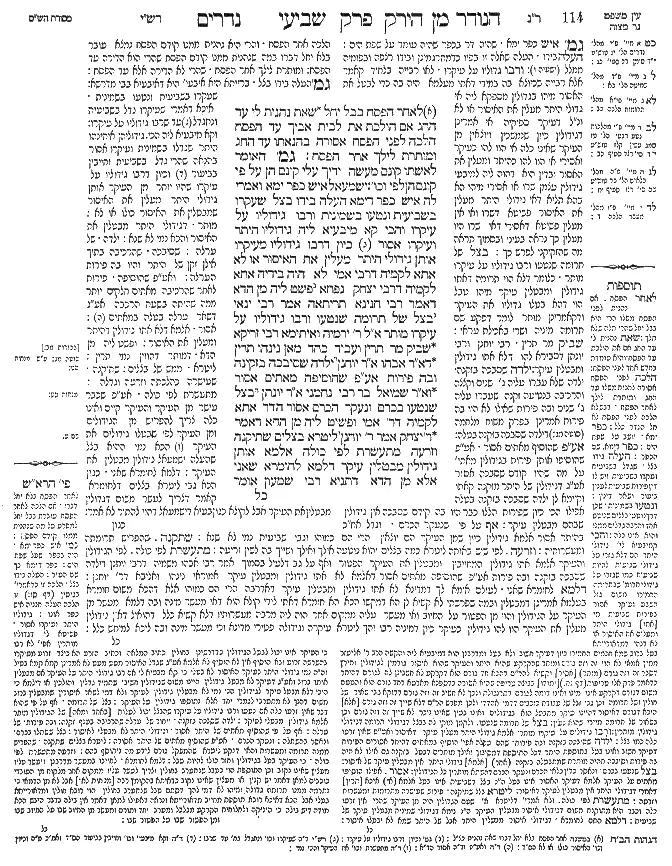
Nedarim 57b - Guemara
לאחר הפסח בבל יחל שאת נהנית לי עד החג אם הולכת את לבית אביך עד הפסח הלכה לפני הפסח אסורה בהנאתו עד החג ומותרת לילך אחר הפסח:
גמ׳ האומר לאשתו קונם מעשה ידיך עלי קונם הן על פי קונם הן לפי וכו':
ישמעאל איש כפר ימא ואמרי לה איש כפר דימא העלה בידו בצל שעקרו בשביעית ונטעו בשמינית ורבו גידוליו על עיקרו והכי קא מיבעיא ליה גידוליו היתר ועיקרו אסור כיון דרבו גידוליו מעיקרו אותן גידולי היתר מעלין את האיסור או לא אתא לקמיה דרבי אמי לא הוה בידיה אתא לקמיה דרבי יצחק נפחא פשט ליה מן הדא דאמר רבי חנינא תריתאה אמר רבי ינאי בצל של תרומה שנטעו ורבו גידוליו על עיקרו מותר א"ל ר' ירמיה ואיתימא רבי זריקא שביק מר תרין ועביד כחד מאן נינהו תרין דא"ר אבהו א"ר יוחנן ילדה שסיבכה בזקינה ובה פירות אע"פ שהוסיפה מאתים אסור וא"ר שמואל בר רבי נחמני א"ר יונתן בצל שנטעו בכרם ונעקר הכרם אסור הדר אתא לקמיה דר' אמי ופשיט ליה מן הדא דאמר ר' יצחק אמר ר' יוחנן ליטרא בצלים שתיקנה וזרעה מתעשרת לפי כולה אלמא אותן גידולין מבטלין עיקר דלמא לחומרא שאני אלא מן הדא דתניא רבי שמעון אומר
Comments from Rashi on Masechet Nedarim Page 57b
הלכה אחר הפסח . והרי היא נהנית ממנו קודם הפסח נמצא עובר בלא יחל דברו במה שנהנית ממנו קודם הפסח שהרי הוא הדירה עד הפסח: ומותרת לילך אחר הפסח . שהרי לא הדירה אלא עד הפסח: גמ' העלה בידו בצל . ברייתא היא איבעי' היא דאיבעיא בבי מדרשא: שעקרו בשביעית ונטעו בשמינית . איכא דאמרי שעיקרו גדל בשביעית ונתגדל עד שרבו גידוליו על עיקרו: וקא מיבעיא ליה הכי . גידוליהן איתינהו היתר שגדלו בשמינית ועיקרו אסור בהנאה שהרי גדל בשביעית וחייבין בביעור וכיון דרבו גידוליו על עיקרו שהיו יותר מן העיקר אותן גידולי היתר מעלין את האיסור שמבטלין את האיסור כולו או לא: מותר . דגידולי היתר מבטלין את האיסור והכא נמי לא שנא: ילדיה . של ערלה: שסיבכה . שהרכיבה בתוך אילן זקן של היתר והיו בה פירות הערלה: ואע"פ שהוסיפה . פירות לאחר שהרכיבה מאתים חלקים יותר ממה שהיתה בשעת הרכבה אע"ג דשאר ערלה בטלה במאתים: אסור . אלמא דלא אתו גידולין דהיתר ומעלין את האיסור: ופשט ליה מן הדא . דמותר דהווין נמי תרין: ליטרא . ממש של בצלים: שתיקנה . שעישרה כהלכתה וזרעה וגדלה: מתעשרת לפי כולה . אע"פ שכבר עישר מן העיקר והעיקר קיים ואינו כלה צריך להפריש מן הגידולים ומן העיקר לפי שבטלו גידולים את העיקר הכא נמי ההוא בצל שהעלה ישמעאל גידולין מבטלין את העיקר: דלמא לחומרא שאני . כגון הכא גבי ליטרא בצלים דלחומרא קאמר דצריך לעשר משום דגדולין מבטלין את העיקר אבל לקולא כגון בעיא דישמעאל דהוי להתיר לא אמר:
Comments from Tosafot - Nedarim 57b
לאחר הפסח . אם נהנית לפני הפסח משלו הרי היא בבל יחל שהרי תלה שלא תלך: שאת נהנית לי עד החג אם את הולכת עד הפסח . והיא עומדת בחדש אחד לפני הפסח: הלכה לפני הפסח אסורה להנות משלו עד החג ומותרת לילך לאחר הפסח . דבשלא הלכה לפני הפסח לא חל הנדר כלל: כפר ימא . יושב על שפת הים: כפר דימא . שם הכפר: העלה בידו בצל . שגדל בשביעית ועקרו בשביעית ויש לו דין פירות שביעית לענין ביעור ושאר דינין: ונטעו בשמינית . שכן דרך נוטעי בצלים שנוטע אחד והרבה גדלים ממנו והוא אינו כלה: והכי קמיבעיא לי' גידולי היתר הם דלא גזרו על גידולי שביעית להיות שביעית כמו שגזרו על גידולי תרומ' שבתרומה החמירו משום גזל השבט ועיקר אסור בפירות שביעית מי [אתו] גידולי היתר ומעלים את האיסור או לא דנהי דמדאורייתא בטל ברוב שמא חכמים החמירו כיון דעיקר חשוב ולא בטל ומדרבנן הוא דמיבעיא ליה והקשה הרב ר' אליעזר ממיץ אמאי לא הוי זה וזה גורם ומותר שהקרקע שהיא היתר והעיקר שהוא איסור גורמין לגידולין ותירץ דסבר זה וזה גורם (מותר) [אסור] וקשיא להר''ם דהכא חד גורם הוא דקרקע לא חשבינן לה לגורם דהיתר כדאמר פרק אלו טריפות (דף נח .) [ומודו] בביצה טריפה שהיא אסורה בדספנא מארעא דחד גורם הוא והטעם משום דגורם דקרקע אינו מינו ואינו דומה לגורם דתרנגולת ולכך לא חשיב זה וזה גורם דדוקא גבי שאור של חולין ושל תרומה וכן גבי זבל של עבודת כוכבים דדמי אהדדי ולכן מפרש הר''ם דלא שייך זה וזה גורם [אלא] היכא דגורם דאיסור דהיינו עיקר מתבטל הוא בגידולים ואינו בעין שאינו ניכר לא שייך זה וזה גורם וכן בשאור של תרומה מיירי שהוא בעין: בצל של תרומה שנטעו . ולקמן מוקי לה בבצל דגידולי תרומה דגידולי גידולין מותרין: ורבו גידולים על עיקרו מותר . אלמא גידולי היתר מעלין עיקר דאיסור ואע''פ שאין זרעו כלה כמו בצל: ילדה שסיבכה בזקנה ובה פירות . שהם ערלה אפי' הוסיף במאתים דהיתר אסורים הפירות דעיקר חשוב ואינו בטל בתוספת היתר דכל התוספת דמסיבוך ואילך מותרים דבטל בזקנה גם אילו לא היה . בה פירות וסיבכה תהיה מותרת שמתבטלה בזקנה (אחר) [אלמא] גידולי היתר אין מבטלין עיקר של איסור: בצל שנטעו בכרם . ונאסר כדין כלאי הכרם ונעקר הכרם דהשתא מותרין כל הגידולין: אסור . אפילו הוסיפו מאתים על העיקר אלמא דעיקר האסור אינו בטל ה''נ בצל דשביעית אינו בטל אלמא (אי איכא [תרין] דאמרי דגידולי היתר אין מבטלין לעיקר דאיסור: ליטרא בצל שתיקנה . פירוש שעישרה מתרומות ומעשרות וזרעה: מתעשרת לפי כולה . ולא אמרי' דליטרא א' שעם הגדולין היה מן העיקר שהרי אין זרעו כלה וכבר היא מתוקנת משום דגידולי איסור מבטלין העיקר ה''נ נימא דגידולי שמינית מבטלין עיקר של שביעית: דלמא התם לחומרא . דגידולי איסור מבטלין היתר אבל של היתר שמא לא יבטלו איסור:
Nedarim 57b - Mishnah translated into english
If she derived benefit from him before Passover and went to visit her father after Passover, she is liable for violating the prohibition of: He shall not profane his word (Numbers 30:3), as the condition was fulfilled and she violated the vow retroactively. If the husband vowed: Benefit from me is konam for you until the Festival if you go to your father’s house from now until Passover, then if she went to his house before Passover, it is prohibited for her to derive benefit from him until the Festival, and it is permitted for her to go to her father’s house after Passover, as that time period is not included in his stipulation.
GEMARA: We learned in the mishna: For one who says to his wife: Your handicraft is konam upon me, or it is konam upon my mouth, or it is konam to my mouth, it is prohibited to benefit from her handicraft. Yishmael, a man of Kefar Yamma, and some say, a man of Kefar Dima, raised a dilemma with regard to an onion that one uprooted during the Sabbatical Year, which was therefore sanctified with the sanctity of the Sabbatical Year, and he then planted it during the eighth year, and its growths that developed in the eighth year exceeded its principal original Sabbatical-Year onion. And this is the dilemma that he raised: Its eighth-year growth is permitted, and its Sabbatical-Year principal is prohibited. Since its growth exceeded its principal, do those permitted growths neutralize the prohibition of the onion, or do they not? Yishmael came and raised the dilemma before Rabbi Ami, and he did not have an answer readily available.
Yishmael came and raised the dilemma before Rabbi Yitzḥak Nappaḥa, who resolved it for him from that which Rabbi Ḥanina Terita’a said that Rabbi Yannai said: With regard to an onion of teruma that one planted, if its growths exceeded its principal, it is permitted. Here too, the eighth-year growth should neutralize the prohibition of the Sabbatical-Year onion. Rabbi Yirmeya said, and some say it was Rabbi Zerika who said to Rabbi Yitzḥak Nappaḥa: Did the Master abandon the opinion of two Sages and conduct himself in accordance with the opinion of one Sage?
The Gemara asks: Who are they, the two Sages who disagree with his opinion? The Gemara answers: It is as Rabbi Abbahu said that Rabbi Yoḥanan said: With regard to a young vine within three years of its planting, whose fruits are orla and forbidden, that one grafted onto an old, permitted vine, and there were fruits on the younger vine, even though the younger vine added two hundred times the number of fruits that were there when it was grafted, and those additional fruits are permitted because they draw their nourishment from the older vine, the fruit that was on the younger vine before it was grafted is forbidden. Although, in principle, when the permitted part of the mixture is two hundred times the forbidden orla, the prohibition is neutralized, in this case, the prohibition is not neutralized, as the forbidden fruit was there from the outset.
And Rabbi Shmuel bar Rabbi Naḥmani said that Rabbi Yonatan said: With regard to an onion that one planted in a vineyard, creating a forbidden mixture of food crops in a vineyard, and then the vineyard was uprooted, and most of the onion grew in a permitted manner, it is forbidden. Apparently, both Rabbi Yoḥanan and Rabbi Yonatan disagree with the opinion of Rabbi Yannai, and therefore, there is no clear resolution to the dilemma.
Yishmael then came and raised the dilemma before Rabbi Ami, who resolved it for him from that which Rabbi Yitzḥak said that Rabbi Yoḥanan said: With regard to a litra of onions that one tithed, and then he sowed a field with the entire litra of onions, when the field yields the crop, it is tithed according to the entire crop. Although some of the onions that he sowed were already tithed, he is obligated to tithe them because the volume of the growths exceeds the volume of the original onions and the entire crop has untithed status. Apparently, those growths neutralize the prohibition of the primary, original, tithed onions.
The Gemara rejects that resolution: There is no proof from the ruling in the case of the litra of onions, as perhaps it is different when the ruling is a stringency. Perhaps, due to the concern that the growths neutralize the prohibition of the original, the ruling is that he must tithe the entire crop. However, there is no proof that the same would be true in cases where the ruling is a leniency, e.g., to neutralize the prohibition of the Sabbatical Year or teruma.
Rather, proof may be cited from this source; as it is taught in a baraita that Rabbi Shimon says:
Traduction : The William Davidson digital edition of the Koren Noé Talmud, with commentary by Rabbi Adin Even-Israel Steinsaltz.