 Talmud Bavli
Nedarim 90a : Youtube
Daf TubeYoutube
2 video classes :
Nedarim Page 90a
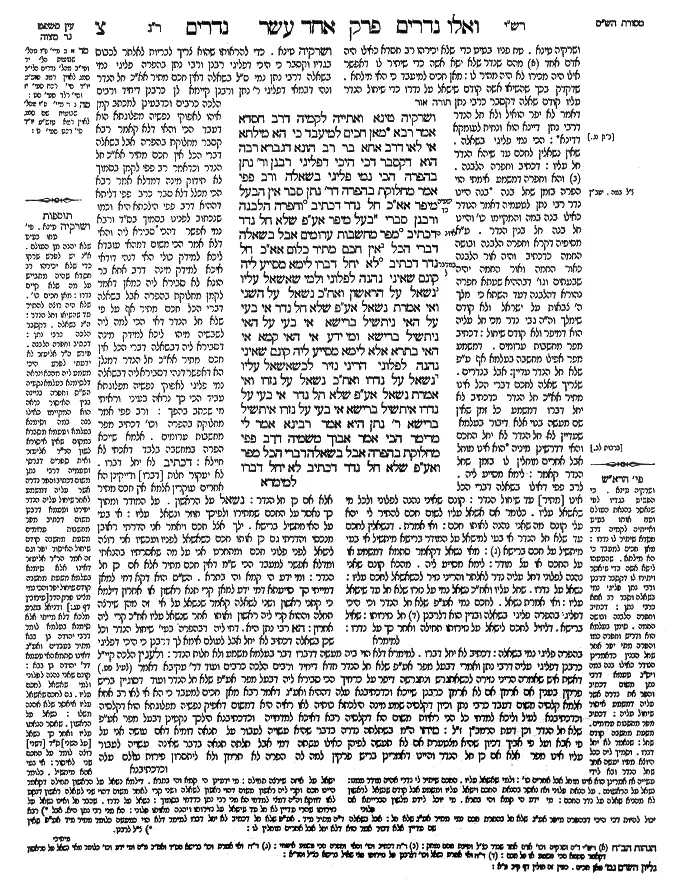
Nedarim 90a - Guemara
ושרקיה טינא ואתייה לקמיה דרב חסדא אמר רבא מאן חכים למיעבד כי הא מילתא אי לאו דרב אחא בר רב הונא דגברא רבה הוא דקסבר דכי היכי דפליגי רבנן ור' נתן בהפרה הכי נמי פליגי בשאלה ורב פפי אמר מחלוקת בהפרה דר' נתן סבר אין הבעל מיפר אא"כ חל נדר דכתיב (ישעיהו כד, כג) וחפרה הלבנה ורבנן סברי בעל מיפר אע"פ שלא חל נדר דכתיב (איוב ה, יב) מפר מחשבות ערומים אבל בשאלה דברי הכל אין חכם מתיר כלום אא"כ חל נדר דכתיב (במדבר ל, ג) לא יחל דברו לימא מסייע ליה קונם שאיני נהנה לפלוני ולמי שאשאל עליו נשאל על הראשון ואח"כ נשאל על השני ואי אמרת נשאל אע"פ שלא חל נדר אי בעי על האי ניתשיל ברישא אי בעי על האי ניתשיל ברישא ומי ידע אי האי קמא אי האי בתרא אלא לימא מסייע ליה קונם שאיני נהנה לפלוני הריני נזיר לכשאשאל עליו נשאל על נדרו ואח"כ נשאל על נזרו ואי אמרת נשאל אע"פ שלא חל נדר אי בעי על נדרו איתשיל ברישא אי בעי על נזרו איתשיל ברישא ר' נתן היא אמר רבינא אמר לי מרימר הכי אמר אבוך משמיה דרב פפי מחלוקת בהפרה אבל בשאלה דברי הכל מפר ואע"פ שלא חל נדר דכתיב לא יחל דברו
Comments from Rashi on Masechet Nedarim Page 90a
ושרקיה טינא . טח פניו בטיט כדי שלא יכירהו רב חסדא כאילו היה אדם אחד מהם שנדר שלא ישא אשה כדי שיתיר לו דאפשר אילו היה מכירו לא היה מתיר לו: מאן חכם למיעבד כי האי מילתא . שדקדק בכך שהשיאו אשה קודם שישאל על נדרו כדי שיחול הנדר עליו קודם שאלה דקסבר כרבי נתן דאמר לא יפר הואיל ולא חל הנדר דרבי נתן דיינא הוא ונחית לעומקא דדינא: הכי נמי פליגי בשאלה . שאין נשאלין לחכם עד שיהא הנדר חל עליו: דכתיב וחפרה הלבנה . והא וחפרה דמשמע אימתי הוי הפרה בזמן שחל בנה. בכה היינו נדר רבי נתן לטעמיה דאמר הנודר כאילו בנה במה והמקיימו כו' והיינו חל בנה חל בנין הנדר. ע"א מסיפיה דקרא וחפרה הלבנה ובושה החמה כדכתיב והיה אור הלבנה כאור החמה ואור החמה יהיה שבעתים וגו' דבההיא שעתא חפרה נהורא דהלבנה דעד השתא כי מלך ה' צבאות על ישראל ולא קודם שימלך וה"ה גבי נדר מכי חל עליה הוא דמיפר ולא קודם שיחול: דכתיב מפר מחשבות ערומים . דמשמע מפר אפילו מחשבה בעלמא אף ע"פ שלא חל הנדר עדיין: אבל . בנדרים שצריך שאלה לחכם דברי הכל אינו מתיר אא"כ חל הנדר כדכתיב לא יחל דברו דמשמע כל זמן שאין שם מעשה בנוי אלא דיבור בעלמא שעדיין לא חל הנדר לא יחל החכם והאי דדרשינן מיניה. הוא אינו מוחל אבל אחרים מוחלין לו בזמן שחל הנדר קאמר: לימא מסייע ליה . לרב פפי דאפילו בשאלה דברי הכל אינו [מתיר] עד שיחול הנדר: קונם שאיני גהנה לפלוני ולכל מי שאשאל עליו . כלומר אם אשאל עליו לשום חכם להתיר לי יהא עלי קונם מה שאני נהנה לאותו חכם: ואי אמרת . דנשאלין לחכם עד שלא חל הנדר אי בעי למישאל על המודר ברישא מיתשיל אי בעי מיתשיל על חכם ברישא: מאי נשאל דקאמר סתמא דמשמע או על החכם או על מודר: לימא מסייע ליה . מהכא קונם שאני נהנה לפלוני דחל עליה נדר לאלתר והריני נזיר לכשאשאל לחכם עליו: נשאל על נדרו . שחל עליו ואח"כ נשאל נמי על נזרו שלא חל עד שישאל עליו: ואי אמרת נשאל . לחכם נמי אע"פ שלא חל הנדר וכי היכי דפליגי בהפרה פליגי בשאלה ובדין הוא דלרבנן חל נזירותו: שאיל ברישא . דליזיל לחכם לישאל על נזירותו תחילה ואחר כך על נדרו:
Comments from Tosafot - Nedarim 90a
ושרקיה טינא . פי' טחו בטיט שלא יהנה מן העולם. א''נ יש לפרש שרקו כדי שלא יכירהו רב חסדא שהיה מתבייש על מה שלא קיים נדרו: מאן חכים כו' . שלא היה רוצה להתיר עד שהשיאו וחל הנדר: ה''נ בשאלה . דקסבר הלכה כרבי נתן: דכתיב וחפרה הלבנה . פירש ה''ר אליעזר לא ידעתי לפרש היכי משמע ליה מהכא ונראה דלסימנא בעלמא נקטיה הש''ס וחפרה בניינה בנין האיסור נראה הוא המקיימו כאילו בנה במה וסימנא בעלמא וטעמא מסברא במקום שאין איסורא לשון הר''ר אליעזר ואית ספרים דגרסי וטעמיה דרבי נתן משום דכתיב והפר נדרה אשר עליה דמשמע לאחר שיחול עליה הנדר יפירנו וטעמא דרבנן משום דכתיב מפר מחשבות ערומים משעת מחשבה קודם שיחול האיסור יפר וגם זה אמר הר''ר אליעזר דאינו אלא סימנא בעלמא משעת מחשבה קודם שיחול יפר והכי נמי מצינו פרק הדר [עירובין דף עג:] ודניאל בתרע מלכא דלא מייתי אלא סימנא בעלמא לומר דרבי יהודה בן בבא מתיר בעבדים ואע''ג דאינו סתמא האי טעמא דר' יהודה בן בבא: קונם שאני נהנה לפלוני ולמי שאשאל לחכם עליו . גם לחכם שאשאל עליו איאסר שלא אהנה משלו: נשאל על הראשון . שאסר הנאתו עליו ואחר כך נשאל [על השני] ס''ד [דשני] רוצה לומר על החכם שני לאיסור: אי בעי אהא מיתשיל . כלומר ישאל על איזה שירצה תחילה: מי ידעינן הי קמא והי בתרא . דילמא נשאל על הראשון תחילה דקאמר היינו חכם וקרי ליה ראשון משום דהוי ראשון לשאלה ושני קרי לאחר משום דהוי שני לשאלה ראשון דנקט לאו דווקא וה''ה דמצי למדחי הא מני רבי נתן כדדחי בסמוך: נשאל על נדרו . שכבר חל ואינו נשאל על נזירותו שהרי עדיין לא חל עד שישאל על נזירותו ויהנה מאותו פלוני: הא מני רבי נתן היא . אבל רבא יכול להיות דכי היכי דבהפרה מיפר אע''ג שלא חל בהתרת חכם נמי מתיר אע''ג שלא חל: אבל בשאלה ד''ה מתיר מיד . אע''פ שלא חל דכתיב לא יחל דברו למימר דלא הוי כמעשה כלומר מתיר מיד אע''פ שאין שם עדיין אלא דבור אמר הוא דלא יחל אבל אחרים מוחלין לו:
Nedarim 90a - Mishnah translated into english
And Rav Aḥa bar Rav Huna then smeared him with clay to protect him from the elements, as it was now prohibited for him to benefit from the world by wearing clothes. And he then brought him before Rav Ḥisda, to dissolve his vow. Rava said: Who is wise enough to act in this manner, if not Rav Aḥa bar Rav Huna, who is a great man? As he holds that just as the Rabbis and Rabbi Natan disagree with regard to nullification, whether it is possible to nullify a vow that has yet to take effect, so too, they disagree with regard to a request made to a halakhic authority to dissolve a vow, whether it is possible to request dissolution of such a vow. Rav Aḥa bar Rav Huna’s plan was to have the vow go into effect, so that the man could request that it be dissolved.
And Rav Pappi said with regard to this issue: The dispute between Rabbi Natan and the Rabbis is with regard to nullification only, as Rabbi Natan holds that a husband can nullify a vow only once the vow has taken effect, as it is written: “And the moon shall be confounded [ḥafera]” (Isaiah 24:23). He employs this phrase as an allusion, interpreting the word ḥafera as if it were hafara, nullification, and concludes from here that only a vow that already exists, like the moon, can be nullified. And the Rabbis hold that a husband can nullify a vow even though the vow has not yet taken effect, as it is written: “He nullifies the thoughts of the crafty” (Job 5:12), implying that nullification pertains even to thoughts, to prevent them from going into effect.
But with regard to a request made to a halakhic authority to dissolve a vow, everyone, both Rabbi Natan and the Rabbis, agrees that a halakhic authority cannot dissolve anything unless the vow has already taken effect, as it is written: “He shall not profane his word” (Numbers 30:3), which indicates that the person himself who took the vow cannot profane his words and dissolve his vow, but a halakhic authority may do so. This, however, applies only if the vow has already gone into effect, as it says: “His word.”
The Gemara suggests: Let us say that the following baraita supports Rav Pappi’s opinion: If one says: The property of so-and-so is konam for me, and for that reason I will not benefit from it, and deriving benefit from he who I will request dissolution for the vow is also konam for me, then, if he desires to dissolve the vows he must first request dissolution with regard to the first vow, and afterward he can request dissolution with regard to the second. And if you say that one can request dissolution of a vow even though the vow has not yet taken effect, why must he request dissolution of his two vows in the above order? If he so wishes, he can first request dissolution with regard to this vow, and if he wishes, he can first request dissolution with regard to that one.
The Gemara refutes this argument: And does he know if this vow is first or if that vow is last? The baraita does not specify which vow is first and which is last. Perhaps first and last is referring not to the order in which the two vows were taken, but rather to the order in which they are dissolved, so that if he so wishes, he can first request dissolution of the vow not to derive benefit from the halakhic authority from whom he will request dissolution of his vow.
Rather, let us say that a different baraita supports Rav Pappi’s opinion: If one says: The property of so-and-so is konam for me, and for that reason I will not benefit from it, and I am hereby a nazirite for when I will request dissolution of this vow, if he desires to dissolve the vows he must first request dissolution with regard to his vow not to derive benefit from a particular person, and afterward he can request dissolution with regard to his vow of naziriteship that he accepted upon himself should he request dissolution of his first vow.
And if you say that one can request dissolution of a vow even though the vow has not yet taken effect, why must the two vows be dissolved in that order? If he so wishes, he can first request dissolution with regard to his vow not to derive benefit from that other person, and if he wishes, he can first request dissolution with regard to his vow of naziriteship. The Gemara rejects this argument: This is no proof, as it is possible that the baraita is taught in accordance with the opinion of Rabbi Natan, who maintains that a vow can be nullified only after it has gone into effect. The Rabbis, however, dispute this view.
Ravina said: Mareimar said to me: This is what your father said in the name of Rav Pappi: The dispute between Rabbi Natan and the Rabbis is with regard to nullification only, as Rabbi Natan holds that a husband can nullify a vow only once the vow has taken effect, whereas the Rabbis hold that a husband can nullify a vow even though the vow has not yet taken effect. But with regard to a request made to a halakhic authority to dissolve a vow, everyone, both Rabbi Natan and the Rabbis, agrees, that he can dissolve the vow even though the vow has not yet taken effect. As it is written: “He shall not profane his word” (Numbers 30:3), which Ravina expounds as follows:
Traduction : The William Davidson digital edition of the Koren Noé Talmud, with commentary by Rabbi Adin Even-Israel Steinsaltz.