 Talmud Bavli
The learning on the whole site is dedicated : L'ilui Nishmat Margalit bat Ledicia
The learning on the whole site is dedicated : L'ilui Nishmat אסתר בת חיים
The learning on the whole site is dedicated : L'ilui Nishmat Jacques Isaac Ben Amram Loubaton
Nedarim 61b : Youtube
Daf TubeYoutube
2 video classes :
Nedarim Page 61b
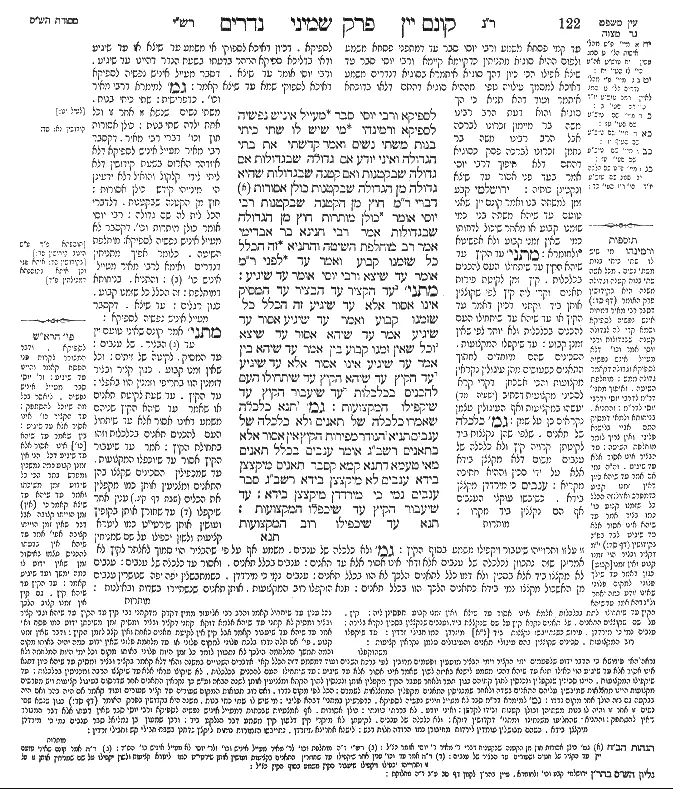
Nedarim 61b - Guemara
לספיקא ורבי יוסי סבר מעייל איניש נפשיה לספיקא ורמינהי מי שיש לו שתי כיתי בנות משתי נשים ואמר קדשתי את בתי הגדולה ואיני יודע אם גדולה שבגדולות אם גדולה שבקטנות ואם קטנה שבגדולות שהיא גדולה מן הגדולה שבקטנות כולן אסורות דברי ר"מ חוץ מן הקטנה שבקטנות רבי יוסי אומר כולן מותרות חוץ מן הגדולה שבגדולות אמר רבי חנינא בר אבדימי אמר רב מוחלפת השיטה והתניא זה הכלל כל שזמנו קבוע ואמר עד לפני ר"מ אומר עד שיצא ורבי יוסי אומר עד שיגיע:
מתני׳ עד הקציר עד הבציר עד המסיק אינו אסור אלא עד שיגיע זה הכלל כל שזמנו קבוע ואמר עד שיגיע אסור עד שיגיע אמר עד שיהא אסור עד שיצא וכל שאין זמנו קבוע בין אמר עד שיהא בין אמר עד שיגיע אינו אסור אלא עד שיגיע עד הקיץ עד שיהא הקיץ עד שיתחילו העם להכניס בכלכלות עד שיעבור הקיץ עד שיקפילו המקצועות:
גמ׳ תנא כלכלה שאמרו כלכלה של תאנים ולא כלכלה של ענבים תניא הנודר מפירות הקיץ אין אסור אלא בתאנים רשב"ג אומר ענבים בכלל תאנים מאי טעמא דתנא קמא קסבר תאנים מיקצצן בידא ענבים לא מיקצצן בידא רשב"ג סבר ענבים נמי כי מירדדן מיקצצן בידא:
עד שיעבור הקיץ עד שיכפלו המקצועות:
תנא עד שיכפילו רוב המקצועות
Comments from Rashi on Masechet Nedarim Page 61b
גמ' למימרא דרבי מאיר וכו' . כדפרישית: לספיקא דכיון דאיכא לספוקי אי משמע עד שיצא או עד שיגיע ודאי בדליכא ספיקא הרהר בדעתו בשעת הנדר דהיינו עד שיגיע. ורבי יוסי אומר עד שיצא. דסבר מעייל איניש נפשיה לספיקא דאיכא לספוקי שמא עד שיצא קאמר: שתי כיתי בנות . משתי נשים שנשא זו אחר זו וכל אחת ילדה שתי בנות: כולן אסורות חוץ וכו' דברי רבי מאיר . דקסבר רבי מאיר מעייל איניש לספיקא דלא איזדהר הארוס בשעת קידושין דלא ליתי לידי קלקול והואיל דלא ידעינן הי מינייהו קידש כולן אסורות: חוץ מן הקטנה שבקטנות . דלדברי הכל לית לה שם גדולה: רבי יוסי אומר כולן מותרות וכו' . דקסבר לא מעייל איניש נפשיה לספיקא: מוחלפת השיטה . כלומר אפיך מתניתין דנדרים ואימא לרבי מאיר מעייל איניש כו': והתניא . בניחותא דמוחלפת: זה הכלל כל שזמנו קבוע . כגון רגלים: עדי שיצא . דקסבר מעייל איניש נפשיה לספיקא: מתני' אמר קונם שאיני טועם יין עד הבציר . של ענבים: עד המסיק . לקיטה של זיתים: וכל שאין זמנו קבוע . כגון קציר ובציר דזמנין הוו בחריפי וזמנין הוו באפלי: עד הקיץ . עד שעת לקיטת תאנים או שאמר עד שיהא הקיץ שניהם משמע דאינו אסור אלא עד שיתחיל העם להכניס תאנים בכלכלות וזהו בתחילת הקיץ: אמר עד שיעבור הקיץ אסור עד שיוכפלו המקצועות . עד שמכפילין הסכינים שקצצו בהן התאנים ומצניעין אותן כמו מקפלין את הכלים (שבת דף קיג.) ענין אחר שיקפלו עד שחורץ אותן בקופיץ ועושין אותן שירטי"ט כמו ליטרא קציעות ולשון יכפילו על שם שמניחין זו על זו ותרוייהו שיעבור ויקפילו משמע בסוף הקיץ: מתני' אמר קונם יין שאיני טועם עד הפסח אסור עד שיגיע . לדברי הכל: עד שיהא אסור עד שיצא . דמשמע דאמר עד שיצא כל הפסח: עד פני פסח . משמע עד שיגיע ומשמע עד שיצא: עד שיגיע . דקסבר לא מעייל איניש נפשיה גמ' ולא כלכלה של ענבים . משמע אף על פי שהבציר הוי סמוך לאלתר לקיץ לא אמרינן שזה נתכוון לכלכלה של ענבים אלא ודאי אינו אסור אלא עד תאנים: עגבים בכלל תאנים . ואסור עד כלכלה של ענבים: ענבים לא מקצצו ביד אלא בסכין ולא דמו כלל לתאנים הלכך לא הוו בכלל תאנים: ענבים נמי כי מירדדן . כשמתבשלין יפה יפה שנושרין ענבים מן האשכול מקצצו נמי בידא כתאנים הלכך הוו בכלל תאנים: תנא הוקפלו רוב המקצועות . אותן תאנים שנשתיירו בשדות ובאילנות:
Comments from Tosafot - Nedarim 61b
ורמינהו מי שיש לו שתי כיתי בנות משתי נשים . מכל אשה שתי בנות קטנה וגדולה משנה היא בקידושין פרק האומר (דף סד:) דסבר רבי מאיר דמחית אינש נפשיה לספיקא ושמא קרי לה לגדולה קטנה שבגדולות ורבי יוסי אמר וכו' דלא מעייל אינש נפשיה לספיקא וגדולה דקאמר גדולה ממש: מוחלפת השיטה . ואיפוך מתני' דר''מ לדרבי יוסי ודרבי יוסי לדר''מ: והתניא . בניחותא ולמאי דמסיק התם אביי בלישנא פליגי ואין צריך לומר מוחלפת השיטה: עד הבציר אינו אסור אלא עד שיגיע . וה''ה נמי אם אמר עד שיהא כיון דאין זמנו קבוע כדמפרש ואזיל: זה הכלל כל שזמנו קבוע כו' כמו בציר אמר עד שיהא אינו אסור אלא עד שיגיע לבד בפ''ג בקידושין (דף סד:) י''מ דקציר ובציר הוי זמנו קבוע ואין זמנו [קבוע] כגון דאמר עד שילך פלוני למקום פלוני שאינו יודע כמה יאחר ול''נ דהא אמר עד שיהא הקיץ עד שיתחילו לתת בכלכלות אלמא אינו אסור עד שיצא ואין זמנו קבוע תפסינן ליה: קיץ . על שם שקוצצים התאנים. של תאנים נקרא קיץ על שם שנקצצת ביד. וענבים שנקצצין בסכין נקרא בצירה: ענבים נמי כי מירדדן . פירוש כשנתייבשו נקצצות ביד [ל''א] מיזרדן כמו חבילי זרדין: עד שיקפלו רוב המקצועות . סכינים שקוצצין בהם עיגולי תאנים והעיגולים עצמן נקראין קציעות:
Nedarim 61b - Mishnah translated into english
in a position of uncertainty, and Rabbi Yosei holds that a person does place himself in a position of uncertainty?
The Gemara raises a contradiction from the following mishna (Kiddushin 64b): In the case of one who has two groups of two daughters born to him from two women, e.g., he has two daughters from his first wife, and after his first wife died he remarried and had two daughters with his second wife, and he said: I betrothed my older daughter to someone, but I do not know if I meant the older of the older group of daughters; or if I meant the older daughter of the younger group; or if I meant the younger daughter of the older group, who is nevertheless older than the older daughter of the younger group, then all three of those daughters are prohibited to marry another man due to the uncertainty, as he failed to clarify which daughter was betrothed. This applies to all the daughters apart from the younger daughter of the younger group, who is certainly not betrothed. This is the statement of Rabbi Meir.
Rabbi Yosei says: They are all permitted to marry, apart from the older daughter of the older group. This demonstrates that according to Rabbi Meir, one must take into account any of the possible meanings of the imprecise expression: My older daughter, whereas Rabbi Yosei maintains that only the narrowest possible meaning of the phrase is taken into account. This contradicts the mishna here.
In response to this question, Rabbi Ḥanina bar Avdimi said that Rav said: The attribution of the opinions is reversed, i.e., the views stated in the mishna here must be reversed in order to reconcile them with the mishna in Kiddushin. And it is indeed taught in a baraita that this is the principle: With regard to any vow which specifies a fixed time, i.e., an event that occurs on a particular date, and one said that the vow applies until before that event, Rabbi Meir says the vow applies until the event ends, and Rabbi Yosei says that the vow is in effect only until the event arrives. This is another proof that the opinions in the mishna here must be reversed.
MISHNA: If one takes a vow that something is forbidden to him until the grain harvest, or until the grape harvest, or until the olive harvest, it is forbidden to him only until the arrival of that season. This is the principle: With regard to any occasion whose time is fixed, and one said: Until it arrives, it is forbidden to him until the specified occasion arrives. If he said: Until it will be, it is forbidden to him until the specified occasion ends. And with regard to any occasion whose time is not fixed, i.e., it does not fall on a precise date, whether he said: Until it will be, or: Until it arrives, it is forbidden to him only until the specified occasion arrives.
If he said: Until the summer [kayitz], or: Until it will be summer, the vow remains in effect until the people begin to bring fruit into their houses in baskets. If he said: Until the summer has passed, the vow remains in effect until the people set aside [yakpilu] the knives [hamaktzuot] with which the figs are cut after being harvested, and return them to their place of storage.
GEMARA: The Sage taught: The basket about which they spoke in the mishna is a basket of figs, and not a basket of grapes, which are gathered later than figs. It is taught in a baraita: One who vows that summer [kayitz] produce is forbidden to him is prohibited from partaking only of figs, as the fig harvest is called kayitz. Rabban Shimon ben Gamliel says: Grapes are included in the category of the summer produce, along with figs.
The Gemara asks: What is the reason of the first tanna? The Gemara answers: He holds that since figs are plucked [mikkatzetzan] by hand, while grapes are plucked not by hand but with tools, it is only figs that are considered summer [kayitz] produce. Conversely, Rabban Shimon ben Gamliel holds that grapes, too, when they are sufficiently ripe, are plucked by hand. Therefore, they can be considered summer produce as well.
§ The mishna states that if one said: Until the summer has passed, then the vow remains in effect until the people set aside the knives used to cut the figs. It was taught: This means until most people set aside their knives, even if there are still some individuals who have yet to do so.
Traduction : The William Davidson digital edition of the Koren Noé Talmud, with commentary by Rabbi Adin Even-Israel Steinsaltz.