 Talmud Bavli
Nedarim 41a : Youtube
Daf TubeYoutube
2 video classes :
Nedarim Page 41a
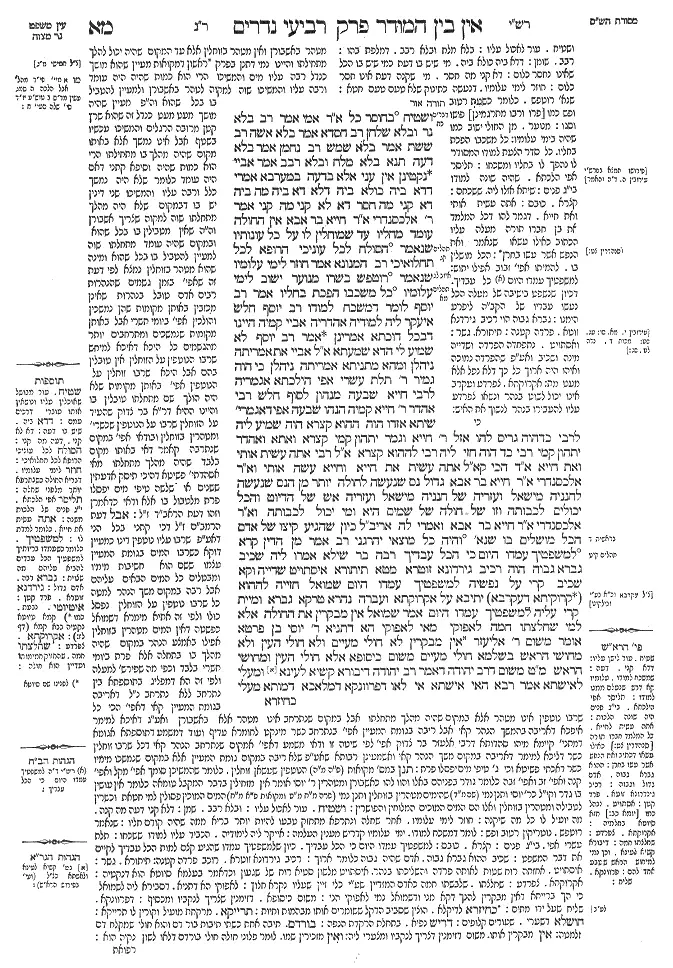
Nedarim 41a - Guemara
ושטיח בחוסר כל (דברים כח, מח) אמר ר' אמי אמר רב בלא נר ובלא שלחן רב חסדא אמר בלא אשה רב ששת אמר בלא שמש רב נחמן אמר בלא דעה תנא בלא מלח ובלא רבב אמר אביי נקטינן אין עני אלא בדעה במערבא אמרי דדא ביה כולא ביה דלא דא ביה מה ביה דא קני מה חסר דא לא קני מה קני אמר ר' אלכסנדרי אמר ר' חייא בר אבא אין החולה עומד מחליו עד שמוחלין לו על כל עונותיו שנאמר (תהלים קג, ג) הסולח לכל עוניכי הרופא לכל תחלואיכי רב המנונא אמר חוזר לימי עלומיו שנאמר (איוב לג, כה) רוטפש בשרו מנוער ישוב לימי עלומיו כל משכבו הפכת בחליו (תהלים מא, ד) אמר רב יוסף לומר דמשכח למודו רב יוסף חלש איעקר ליה למודיה אהדריה אביי קמיה היינו דבכל דוכתא אמרינן אמר רב יוסף לא שמיע לי הדא שמעתא אמר ליה אביי את אמריתה ניהלן ומהא מתניתא אמריתה ניהלן כי הוה גמיר רבי תלת עשרי אפי הילכתא אגמריה לרבי חייא שבעה מנהון לסוף חלש רבי אהדר ר' חייא קמיה הנהו שבעה אפי דאגמריה שיתא אזדו הוה ההוא קצרא הוה שמיע ליה לרבי כדהוה גריס להו אזל ר' חייא וגמר יתהון קמי קצרא ואתא ואהדר יתהון קמי רבי כד הוה חזי ליה רבי לההוא קצרא אמר ליה רבי אתה עשית אותי ואת חייא איכא דאמרי הכי קאמר ליה אתה עשית את חייא וחייא עשה אותי ואמר ר' אלכסנדרי אמר ר' חייא בר אבא גדול נס שנעשה לחולה יותר מן הנס שנעשה לחנניה מישאל ועזריה של חנניה מישאל ועזריה אש של הדיוט והכל יכולים לכבותה וזו של חולה של שמים היא ומי יכול לכבותה ואמר ר' אלכסנדרי אמר ר' חייא בר אבא ואמרי לה אמר ר' יהושע בן לוי כיון שהגיע קיצו של אדם הכל מושלים בו שנאמר (בראשית ד, יד) והיה כל מוצאי יהרגני רב אמר מן הדין קרא (תהלים קיט, צא) למשפטיך עמדו היום כי הכל עבדיך רבה בר שילא אמרו ליה שכיב גברא גבוה הוה רכיב גירדונא זוטרא מטא תיתורא איסתויט שדייה וקא שכיב קרי על נפשיה למשפטיך עמדו היום שמואל חזייה לההוא (קרוקיתא דעקרבא) יתיבא על אקרוקתא ועברה נהרא טרקא גברא ומיית קרי עליה למשפטיך עמדו היום אמר שמואל אין מבקרין את החולה אלא למי שחלצתו חמה לאפוקי מאי לאפוקי הא דתניא ר' יוסי בן פרטא אומר משום ר' אליעזר אין מבקרין לא חולי מעיים ולא חולי העין ולא מחושי הראש בשלמא חולי מעיים משום כיסופא אלא חולי העין ומחושי הראש מאי טעמא משום דרב יהודה דאמר רב יהודה דיבורא קשיא לעינא ומעלי לאישתא אמר רבא האי אישתא אי לאו דפרוונקא דמלאכא דמותא מעלי
Comments from Rashi on Masechet Nedarim Page 41a
ושטיח . עור לאכול עליו: בלא מלח ובלא רבב . דמלפת בהו: רבב . שומן: דדא ביה כולא ביה . מי שיש בו דעת כמי שיש בו הכל שאינו נחסר כלום: דא קני מה חסר . מי שקנה דעת אינו חסר כלום: חוזר לימי עלומיו . דנעשה כתינוק שלא טעם טעם חטא: שנא' רוטפש . כלומר כשעת רטוב ופש כמו [פרו ורבו מתרגמינן] פושו וסגו: מנוער . מן החולי ישוב כמו שהיה בימי עלומיו: כל משכבו הפכת בחליו . כל סדר הצעת למודו המסודר לו נהפך לו בחליו ומשכחו: תליסר אפי הלכתא . שהיה שונה למודו בי"ג פנים: שיתא אזלו ליה . ששכחם: קצרא . כובס: אתה עשית אותי ואת חייא . דגמר להו דכל המלמד את בן חברו תורה מעלה עליו הכתוב כאילו עשאו שנאמר ואת הנפש אשר עשו בחרן: הכל מושלין בו . להמיתו אפי' זבוב אפילו יתוש: למשפטיך עמדו היום כל עבדיך . דכיון שנשפט בישיבה של מעלה הכל נעשו עבדיו של הקב"ה ליפרע הימנו: גברא גבוה הוי רכיב גירדנא זוטא . פרדה קטנה: תיתורא . גשר: ואסתויט . נתפחדה הפרדה ושדייה מינה ושכיב ואע"פ שהפרדה נמוכה ואיהו היה ארוך כל כך דלא נפל אלא מעט מת: אקרוקתא . צפרדע ועקרב אינו יכול לשוט בנהר ונשאו צפרדע עליו להעבירו בנהר לנשוך את האיש:
Comments from Tosafot - Nedarim 41a
שטיח . עור מבושל שאוכלין עליו ונושאין אותו עוברי דרכים עמם: דדא ביה . שיש בו דעה: דא לא קני . דעה מה קני: הסולח לכל עוניכי הרופא לכל תחלואיכי: חוזר לימי עלומיו . דבריא החולה כשנתרפא יותר מלפני שחלה: תליסר אפי הלכתא . י''ג פנים של הלכות משנה: אתה עשית את חייא . כלומר למדת לו: למשפטיך . כלומר כשעמדו בריותיך למשפטיך הכל עבדים להביא עליהם מה שצוית: גברא רבה . אדם גדול: גירדגא זוטרא . פרד קטן: איטיוטי . נבעת. כמו קמא טיוטא נקטיה בבא קמא (דף לז:): אקרוקתא . צפרדע: שחלצתו חמה . שהחזיק חמימותו ועדיין הוא חולה:
Nedarim 41a - Mishnah translated into english
and a rug, as an exile needs those items and they are portable. The Sages interpreted the following verse describing the exile experience: “Therefore shall you serve your enemy whom the Lord shall send against you, in hunger, and in thirst, and in nakedness, and in want of all things; and he shall put a yoke of iron upon your neck, until he has destroyed you” (Deuteronomy 28:48). Rabbi Ami said that Rav said: “In want of all things” means without a lamp and without a table to eat upon. Rav Ḥisda said: Without a wife. Rav Sheshet said: Without an attendant to aid him. Rav Naḥman said: Without intelligence. One of the Sages teaches in a baraita: Without salt and without fat [revav] in which to dip his bread.
Abaye said that we have a tradition: A poor person is only one lacking in intelligence, in agreement with the opinion of Rav Naḥman. In the West, Eretz Yisrael, they say: One who has this attribute, intelligence, in him has everything in him. One who does not have this attribute in him, what is in him? If he acquired this, what else is lacking? If he has not acquired this, what has he acquired?
§ Rabbi Alexandri said that Rabbi Ḥiyya bar Abba said: The sick person recovers from his illness only when the heavenly court forgives him for all his sins, as it is stated: “Who forgives all your iniquity; Who heals all your diseases” (Psalms 103:3). Rav Hamnuna said: When he recovers, he returns to the days of his youth, as it is stated in a verse with regard to one recovering from illness: “His flesh is tenderer than a child’s; he returns to the days of his youth” (Job 33:25). Interpreting the verse: “The Lord will support him upon the bed of suffering; You overturned all his lying down in his illness” (Psalms 41:4), Rav Yosef said: That is to say that the sick person forgets his studies, as everything that is organized is overturned.
The Gemara relates: Rav Yosef himself fell ill and his studies were forgotten. Abaye restored his studies by reviewing what he had learned from Rav Yosef before him. This is the background for that which we say everywhere throughout the Talmud, that Rav Yosef said: I did not learn this halakha, and Abaye said to him in response: You said this to us and it was from this baraita that you said it to us.
The Gemara relates: When Rabbi Yehuda HaNasi would learn thirteen aspects of a halakha on a certain issue, he taught Rabbi Ḥiyya seven of them. Ultimately, Rabbi Yehuda HaNasi fell ill and forgot all thirteen aspects. Rabbi Ḥiyya restored those seven aspects that Rabbi Yehuda HaNasi taught him by reviewing them before Rabbi Yehuda HaNasi. However, six were gone and forgotten, as Rabbi Yehuda HaNasi had not taught them to anyone. There was a certain launderer who would hear Rabbi Yehuda HaNasi when he was studying those halakhot. Rabbi Ḥiyya went and learned those halakhot from the launderer and he came and restored them by reviewing them before Rabbi Yehuda HaNasi. When Rabbi Yehuda HaNasi saw that launderer, Rabbi Yehuda HaNasi said to him: You made me and Ḥiyya, as we were able to learn these halakhot that otherwise would have been forgotten. Some say that this is what he said to the launderer: You made Ḥiyya, and Ḥiyya made me.
And Rabbi Alexandri said that Rabbi Ḥiyya bar Abba said: Greater is the miracle performed for the sick person than the miracle that was performed for Hananiah, Mishael, and Azariah, who were rescued from the fiery furnace (see Daniel, chapter 3), as in the miracle of Hananiah, Mishael, and Azariah, they were rescued from the fire of a layman, and anyone is capable of extinguishing it. And that fire afflicting a sick person with a fever is the fire of Heaven, and who can extinguish it?
And Rabbi Alexandri said that Rabbi Ḥiyya bar Abba said, and some say Rabbi Yehoshua ben Levi said: Once the end of the time allotted for the life of a person arrived, everything has dominion over him, as it is stated that Cain said: “Whosoever finds me will slay me” (Genesis 4:14). Cain feared that since God sentenced him to death he would be susceptible to all threats and vulnerable to anyone seeking to murder him. Rav said that it is derived from this verse: “They stand this day according to Your judgments; for all are Your servants” (Psalms 119:91). When the decree emerges from Heaven that the time has arrived for a person to die, everyone is a servant of God, an agent to kill him.
The Gemara relates that people said to Rabba bar Sheila: A man died. This person was tall and was riding on a small mule [giredona]. When he reached a bridge [tittora], the mule was frightened [istavveit] and cast off the rider, and although the rider was tall and the mule was short and the rider did not fall far, he died. Rabba bar Sheila read the verse and applied it to the rider: “They stand this day according to Your judgments.”
Shmuel saw a certain frog [kerokita], and also noticed that a scorpion was sitting upon the frog and the frog crossed the river. The scorpion stung a man on the other side of the river and the man died. Shmuel read and applied the verse to the dead man: “They stand this day according to Your judgments.” Even the frog and scorpion are servants and agents of God. The only way the scorpion could reach the man and kill him was by means of the frog taking it across the river.
§ Shmuel said: One visits a sick person only if that person is one whom fever overcame. The Gemara asks: What illnesses does this statement come to exclude? The Gemara answers: It comes to exclude that which is taught in a baraita: Rabbi Yosei ben Perata says in the name of Rabbi Eliezer: One visits neither those with intestinal illness, nor those with eye illness, nor those suffering from headaches. The Gemara asks: Granted, one does not visit those with intestinal sickness, due to the sick person’s embarrassment, as he would need to frequently relieve himself and it would be awkward for him in the presence of the visitor. However, what is the reason that one does not visit those with eye illnesses and headaches?
The Gemara answers: It is due to that which Rav Yehuda said, as Rav Yehuda said: Speech is injurious for the eye and beneficial for curing a fever. Therefore, if one suffers from pain in his eye or his head it is better for him not to talk. If he has visitors, he will need to speak to them, which will cause him harm. Rava said: With regard to this fever [ishta], were it not the agent [parvanka] of the Angel of Death, i.e., the cause of serious, potentially deadly illnesses, it could be deemed beneficial,
Traduction : The William Davidson digital edition of the Koren Noé Talmud, with commentary by Rabbi Adin Even-Israel Steinsaltz.