 Talmud Bavli
Nedarim 31a : Youtube
Daf TubeYoutube
2 video classes :
Nedarim Page 31a
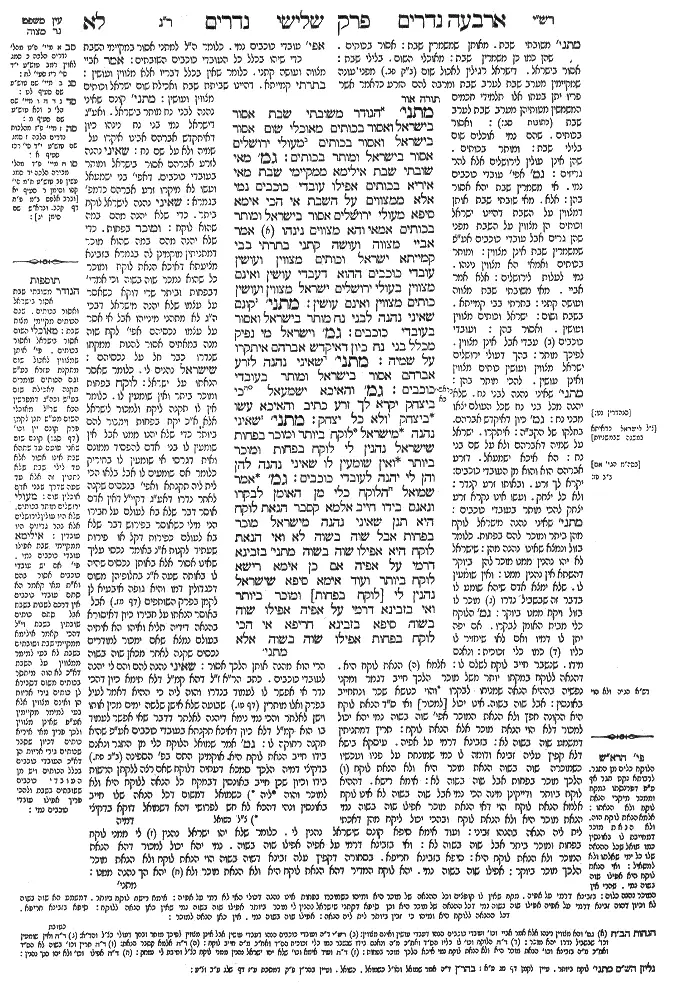
Nedarim 31a - Guemara
מתני׳ הנודר משובתי שַבָּת אסור בישראל ואסור בכותים מאוכלי שום אסור בישראל ואסור בכותים מעולי ירושלים אסור בישראל ומותר בכותים גמ׳ מאי שובתי שבת אילימא ממקיימי שבת מאי איריא בכותים אפילו נוכרים נמי אלא ממצווים על השבת אי הכי אימא סיפא מעולי ירושלים אסור בישראל ומותר בכותים אמאי והא מצווים נינהו אמר אביי מצווה ועושה קתני בתרתי בבי קמייתא ישראל וכותים מצווין ועושין נוכרים ההוא דעבדי עושין ואינם מצווין בעולי ירושלים ישראל מצווין ועושין כותים מצווין ואינם עושין מתני׳ קונם שאיני נהנה לבני נוח מותר בישראל ואסור בנוכרים גמ׳ וישראל מי נפיק מכלל בני נח כיוון דאיקדש אברהם איתקרו על שמיה מתני׳ שאיני נהנה לזרע אברהם אסור בישראל ומותר בנוכרים גמ׳ והאיכא ישמעאל כי ביצחק יקרא לך זרע (בראשית כא, יב) כתיב והאיכא עשו ביצחק ולא כל יצחק מתני׳ שאיני נהנה מישראל לוקח ביותר ומוכר בפחות שישראל נהנין לי לוקח בפחות ומוכר ביותר ואין שומעין לו שאיני נהנה להן והן לי יהנה לנוכרים גמ׳ אמר שמואל הלוקח כלי מן האומן לבקרו ונאנס בידו חייב אלמא קסבר הנאת לוקח היא תנן שאיני נהנה מישראל מוכר בפחות אבל שווה בשווה לא ואי הנאת לוקח היא אפילו שוה בשוה מתניתין בזבינא דרמי על אפיה אם כן אימא רישא לוקח ביותר ועוד אימא סיפא שישראל נהנין לי [לוקח בפחות] ומוכר ביותר ואי בזבינא דרמי על אפיה אפילו שוה בשוה סיפא בזבינא חריפא אי הכי לוקח בפחות אפילו שווה בשווה אלא
Comments from Rashi on Masechet Nedarim Page 31a
מתני' משובתי שבת . מאותן שמשמרין שבת: אסור בכותים . שהן כמו כן משמרין שבת: מאוכלי השום . בלילי שבת: אסור בישראל . דישראל רגילין לאכול שום (ב"ק פב.) מפני עונה שמקיימין מערב שבת לערב שבת ומרבה להם הזרע כדאמר אשר פריו יתן בעתו אלו תלמידי חכמים המשמשין מטותיהן מערב שבת לערב שבת (כתובות סב:): ואסור בכותים . שהם נמי אוכלים שום בלילי שבת: ומותר בכותים . שהן אינן עולין לירושלים אלא להר גריזים: גמ' אפי' עובדי כוכבים נמי . אי משמרין שבת יהא אסור בהן: אלא . מאי שובתי שבת אותן דמצווין על השבת דהיינו ישראל וכותים הן מצווין על השבת מפני שהן גרים אבל עובדי כוכבים אע"פ שמשמרין שבת אינן מצווין: ומותר בכותים ואמאי הא מצווין נינהו . נמי לעלות לירושלים: אלא אמר אביי . מאי משובתי שבת מצווה ועושה קתני: בתרתי בבי קמייתא . בשבת ושום: ישראל וכותים מצווין ועושין . ואסור בהן: ועובדי כוכבים עבדי אבל אינן מצווין . לפיכך מותר: בהך דעולי ירושלים ישראל מצווין ועושין כותים מצווין ואינן עושין . להכי מותר בהן: מתני' שאיני נהנה לבני נח . שלא יהנה מכל בני נח שכל העולם יצאו מבני נח: גמ' כיון דאיקדש אברהם . בחלקו של הקב"ה: איתקרו . ישראל על שמיה דאברהם ולא על שם בני נח: הא איכא ישמעאל . דזרע אברהם הוא והוא מן העובדי כוכבים: יקרא לך זרע . ובאותו זרע קנדר: ולא כל יצחק . ועשו אינו נקרא זרע יצחק להכי מותר בעובדי כוכבים: מתני' שאיני נהנה מישראל לוקח מהן ביתר ומוכר להם בפחות . כלומר בזול ונמצא שאינו נהנה מהן: שישראל . לא יהו נהנין ממנו מוכר להן ביוקר דהשתא אין נהנין ממנו: ואין שומעין לו . שלא ימצא אדם שיהא שומע לו בדבר זה שבשביל נדרו מוכר לו בזול ויקח ממנו ביוקר: גמ' הלוקח כלי מבית האומן לבקרו . אם יפה יתן לו דמיו ואם לאו שיחזיר לו כליו כמו כלי זכוכית: ונאנס מידו . שנשבר חייב לוקח לשלם לו: אלמא הנאת לוקח היא . דהנאה ללוקח במקחו יותר משל מוכר הלכך חייב דגמר ומקני נפשיה בההיא הנאה שמניחו לבקרו. והוי כנושא שכר ונתחייב באונסין: אבל שוה בשוה . איט יכול [למכור] ואי ס"ד הנאת לוקח היא הקונה חפץ ולא הנאת המוכר אפי' שוה בשוה נמי יהא יכול למכור דלא הוי הנאת מוכר אלא הנאת לוקח: תריץ דמתניתין דמשמע שוה בשוה לא: בזבינא דרמי על אפיה . עיסקא בישא דלא קפיץ עליה זבינא ודומה לו כמי שמונחת על פניו ועכשיו כשמוכרה שוה בשוה הנאת מוכר היא ולא הנאת לוקח הלכך מוכר בפחות אבל שוה בשוה לא: אימא רישא . דההיא לוקח ביותר ודייקינן מינה הכי נמי אבל שוה בשוה לא אינו לוקח אלמא הנאת לוקח הוי דאי הנאת מוכר אפילו שוה בשוה נמי הנאת מוכר היא ולא הנאת לוקח ובהכי יכול ליקח מהן דאכתי לית ליה הנאה בהנהו זביני: ועוד אימא סיפא קונם שישראל נהנין לי . כלומר שלא יהו ישראל נהנין לי ממני לוקח . בפחות ומוכר ביתר אבל שוה בשוה לא: ואי בזבינא דרמי על אפיה אפילו שוה בשוה . נמי יהא יכול למכור דהא הנאת המוכר ולא הנאת לוקח היא: סיפא בזבינא חריפא . בסחורה דקפיץ עלה זבינא דשוה בשוה הוי הנאת לוקח ולא הנאת מוכר הלכך מוכר ביוקר: אפילו שוה בשוה נמי . יהא לוקח המדיר דהא הנאת לוקח היא ולא הנאת מוכר ולא יהא הך נהנה ממנו:
Comments from Tosafot - Nedarim 31a
הנודר משובתי שבת אסור בישראל ואסור בכותים . שגם הכותים מקיימי מצות שבת: מאוכלי השום אסור בישראל ואסור בכותים . פי' אותן שמצווין לאכול שום מתקנת עזרא בע''ש וגם הכותים שומרים תקנה דאכילת שום בע''ש וכה''ג דמפרשין הכא שר''ל מאוכלי השום מע''ש תנן לקמן פרק קונם יין וכו' (נדרים דף סג:) קונם שום שאני טועם עד שתהא שבת אינו אסור אלא עד לילי שבת שלא נתכוין זה אלא עד שעה שדרך שבני אדם אוכלין שום: מעולי ירושלים מותר בכותים . שלא היו עולין לירושלים אלא בהר גריזים היו עובדין: אילימא ממקיימי שבת אפילו עובדי כוכבים נמי . פי' אם יש עובדי כוכבים אסור בהם וא''ת מאי קאמר הא סתם עובדי כוכבים אין דרכם לשבות בשבת אבל סתם כותים שובתין בשבת וי''ל דהכי קאמר אילימא ממקיימי שבת ושובתים בשבת לא בעי למימר ממצווין על השבת דא''כ לא הוה מיתסר בכותים משום דסבירא לן כותים גירי אריות הן ואינם מצווין אלא בעי למימר מקיימין אע''פ שאינן . מצווין ולכך פריך מאי איריא כותים דכיון שסבר . שכותים גירי אריות הן דא''כ העובדי כוכבים בכלל הכותים ויש מן העובדי כוכבים ששובתים בשבת ולהכי פריך אפילו עובדי כוכבים נמי:
Nedarim 31a - Mishnah translated into english
MISHNA: One who takes a vow that deriving benefit from those who rest on Shabbat is forbidden to him is prohibited from deriving benefit from a Jew, and he is also prohibited from deriving benefit from Samaritans [Kutim] because they are also Shabbat observers. One who takes a vow that deriving benefit from those who eat garlic on Shabbat night is forbidden to him is prohibited from deriving benefit from a Jew, and he is also prohibited from benefiting from Samaritans. However, if one takes a vow that deriving benefit from those who ascend to Jerusalem is forbidden to him, he is prohibited from deriving benefit from a Jew, but he is permitted to benefit from Samaritans because they do not ascend to Jerusalem, but rather, to Mount Gerizim.
GEMARA: The Gemara asks: What is the meaning of the expression in the mishna: Those who rest on Shabbat? If we say that the one who took the vow intended to render forbidden deriving benefit from those who uphold Shabbat, i.e., who actually observe it, why mention specifically that he is prohibited from deriving benefit from Samaritans; even benefit from other gentiles who are Shabbat observers should also be prohibited? Rather, the intention of the tanna was to refer to a case where one took a vow that deriving benefit from those who are commanded about observing Shabbat is forbidden, and this tanna holds that the Samaritans are considered true converts, commanded to observe Shabbat.
The Gemara asks: If that is so, say the latter clause of the mishna: If he takes a vow that deriving benefit from those who ascend to Jerusalem is forbidden to him, he is prohibited from deriving benefit from a Jew but permitted to derive benefit from Samaritans. Why? But aren’t Samaritans commanded to ascend just like other Jews?
Abaye said: It is teaching about those who are commanded and actually perform a mitzva, and the mishna is to be understood as follows: In the first two clauses of the mishna, which concern Shabbat observance and eating garlic, both Jews and Samaritans are included because they are commanded and actually perform the mitzva. However, with regard to gentiles, those who perform these mitzvot have the status of those who perform the mitzva but are not commanded to do so. Therefore, the one who took the vow is permitted to derive benefit from them. Concerning the case of those who ascend to Jerusalem, a Jew is commanded to keep this mitzva and performs it, while Samaritans are commanded but do not perform it, so he is permitted to derive benefit from them.
MISHNA: If one says: The property of the descendants of Noah is konam for me, and for that reason I will not benefit from it, he is permitted to derive benefit from a Jew but prohibited from deriving benefit from the nations of the world.
GEMARA: The Gemara asks: And is a Jew excluded from the category of the descendants of Noah? They are also descendants of Noah. The Gemara answers: Since Abraham was sanctified and designated to possess a unique role in the world, all his descendants are called by his name and are no longer termed the descendants of Noah.
MISHNA: If one says: The property of the offspring of Abraham is forbidden to me, and for that reason I will not benefit from it, he is prohibited from deriving benefit from a Jew but permitted to derive benefit from the nations of the world.
GEMARA: Concerning the mishna’s ruling that the one who takes such a vow is permitted to derive benefit from the nations of the world, the Gemara asks: But isn’t there Ishmael and his descendants, who are also Abraham’s offspring? Why isn’t deriving benefit from them forbidden as well? The Gemara answers: It is written with regard to Abraham: “For in Isaac shall seed be called to you” (Genesis 21:12), which demonstrates that the descendants of Ishmael are not termed the offspring of Abraham. The Gemara asks: But isn’t there Esau and his descendants; they are also offspring of Abraham, since they are descendants of Isaac? The Gemara answers that the words “in Isaac” mean that some of Isaac’s descendants, i.e., the children of Jacob, are included in the offspring of Abraham, but not all the descendants of Isaac.
MISHNA: If one says: The property of a Jew is forbidden to me, and for that reason I will not benefit from it, he may purchase items from a Jew for more than the market price and may sell items to a Jew for less than the market price, so that he does not derive benefit from the transactions. If one says: Benefit from me is forbidden to a Jew, he may purchase items from a Jew for less than the market price and may sell items to a Jew for more than the market price, so that he does not derive benefit from the transactions. But although this would be permitted, they do not listen to him, i.e., people will generally not agree to deal with him in a manner that causes them a loss in every transaction. If one says: The property of a Jew is forbidden to me, and for that reason I will not benefit from them, and my property is forbidden to a Jew and they will not benefit from me, in this case he may benefit from the nations of the world but not from a Jew, and a Jew may not benefit from him.
GEMARA: Shmuel said: In the case of one who takes a vessel from a craftsman to examine it, and an accident occurs to it while it is in his hand, e.g. it broke, the one who examined it is liable to pay for the damages. Since the one examining the item could have completed the sale at any time, he is treated like a borrower while he examines it, as all the benefit is his. The Gemara comments: Apparently, Shmuel holds that in every sale the primary benefit belongs to the buyer. The buyer benefits much more than the seller, and therefore he must pay for accidents.
The Gemara raises a difficulty with Shmuel’s statement: We learned in the mishna that if one says: The property of a Jew is forbidden to me, and for that reason I will not benefit from it, he may sell items to a Jew for less than the market price. The Gemara infers: He may sell at a lesser price, but selling the items at a price equal to the market price is not permitted. But if the primary benefit of the sale is to the buyer, then even selling the items at a price equal to the market price should be permitted. The Gemara answers: The mishna is referring to a sale that lies in his face, i.e., an item that arouses no interest among potential buyers. In that case, the seller benefits from the sale even if the item is sold at market value, and this is prohibited.
The Gemara asks: If so, say the first clause of that halakha: He may purchase items from a Jew for more than the market price. If the mishna deals with a case where the seller is glad to sell, why does the buyer need to pay more? He should be permitted to pay the market value. Furthermore, say the latter clause of the mishna: If one says: Benefit from me is forbidden to a Jew, he may purchase items from a Jew for less than the market price and may sell items to a Jew for more than the market price. But if it is referring to a sale that lies in his face, then even if he sells at the price equal to the purchase price he has more benefit than the buyer, and it should be permitted.
The Gemara answers: The latter clause is referring to the opposite case, in a keen [ḥarifa] sale, i.e., one in which the merchandise arouses keen interest among potential buyers. Therefore, the buyer benefits if he pays the market price. The Gemara asks: If that is so, that the latter clause is referring to such a case, why should the one who took the vow purchase it for less than the market price? Even at the price equal to the purchase price it should be permitted, since the merchandise is selling well and the seller derives no benefit from it. Rather,
Traduction : The William Davidson digital edition of the Koren Noé Talmud, with commentary by Rabbi Adin Even-Israel Steinsaltz.