 Talmud Bavli
Nedarim 13a : Youtube
Daf TubeYoutube
2 video classes :
Nedarim Page 13a
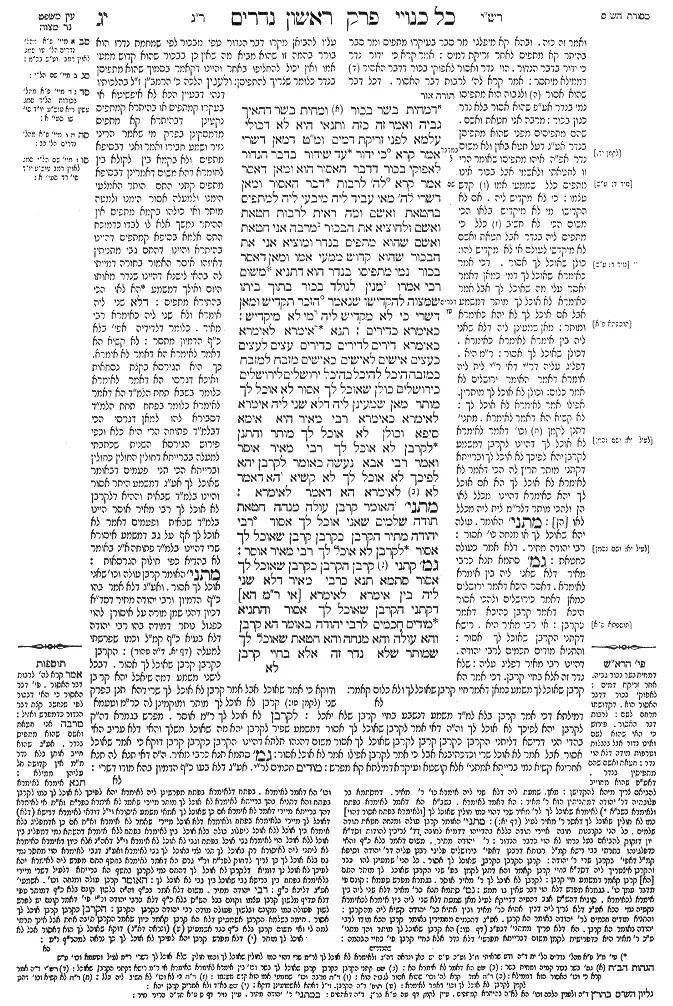
Nedarim 13a - Guemara
דמחית בשר בכור קמיה ומחית בשר דהאיך גביה ואמר זה כזה ותנאי היא לא דכולי עלמא לפני זריקת דמים ומאי טעמא דמאן דשרי אמר קרא כי ידור עד שידור בדבר הנדור לאפוקי בכור דדבר האסור הוא ומאן דאסר אמר קרא לה' לרבות דבר האסור ומאן שרי לה' מאי עביד ליה מיבעי ליה למתפיס בחטאת ואשם ומה ראית לרבות חטאת ואשם ולהוציא את הבכור מרבה אני חטאת ואשם שהוא מתפיס בנדר ומוציא אני את הבכור שהוא קדוש ממעי אמו ומאן דאסר בכור נמי מתפיסו בנדר הוא דתניא משום רבי אמרו מניין לנולד בכור בתוך ביתו שמצווה להקדישו שנאמר הזכר תקדיש ומאן דשרי כי לא מקדיש ליה מי לא מיקדיש כאימרא כדירים תנא אימרא לאימרא כאימרא דירים לדירים כדירים עצים לעצים כעצים אישים לאישים כאישים מזבח למזבח כמזבח היכל להיכל כהיכל ירושלים לירושלים כירושלים כולן שאוכל לך אסור לא אוכל לך מותר מאן שמעינן ליה דלא שני ליה אימרא לאימרא כאימרא רבי מאיר היא אימא סיפא וכולן לא אוכל לך מותר והתנן לקרבן לא אוכל לך רבי מאיר אוסר ואמר רבי אבא נעשה כאומר לקרבן יהא לפיכך לא אוכל לך לא קשיא הא דאמר לא אימרא הא דאמר לאימרא מתני׳ האומר קרבן עולה מנחה חטאת תודה שלמים שאני אוכל לך אסור רבי יהודה מתיר הקרבן כקרבן קרבן שאוכל לך אסור לקרבן לא אוכל לך רבי מאיר אוסר גמ׳ קתני קרבן הקרבן כקרבן שאוכל לך אסור סתמא תנא כרבי מאיר דלא שני ליה בין אימרא לאימרא [אי רבי מאיר הא] דקתני הקרבן שאוכל לך אסור והתניא מודים חכמים לרבי יהודה באומר הא קרבן והא עולה והא מנחה והא חטאת שאוכל לך שמותר שלא נדר זה אלא בחיי קרבן
Comments from Rashi on Masechet Nedarim Page 13a
ואמר זה כזה . ובהא קא מיפלגי מר סבר בעיקרו מתפיס ומר סבר בהיתר קא מתפיס לאחר זריקת דמים: אמר קרא כי ידור נדר כי ידור בדבר הנדור . הוי נדר ואסור לאפוקי בכור דדבר האסור דממילא מיתסר: אמר קרא לה' לרבות דבר האסור . דכל דבר שהוא אסור ולגבוה הוא מתפיסו נמי בנדר אע"פ שהוא אסור בלא נדר כגון בכור: מרבה אני חטאת ואשם . שהם מתפיסים מפני שהוא מתפיסן בנדר אע"ג דעל חטא באין ולא משום נדר אפ"ה איהו מתפיסו שאומר הרי זו לחטאתי ולאשמי אבל בכור אינו מתפיס כלל שממעי אמו קדש עצמו: כי לא מקדיש ליה . אם לא הקדישו מי לא מיקדיש בלאו הכי משום הכי לא חשיב כלל כי מתפיס ליה בנדר אבל חטאת ואשם לא מיקדשי לעולם אי לא מקדיש להו: כי לא מקדיש ליה . אם לא . הקדישו מי לא מיקדיש בלאו הכי משום הכי לא חשיב כלל כי מתפיס ליה בנדר אבל חטאת ואשם לא מיקדשי לעולם אי לא מקדיש להו: כולן שאוכל לך אסור . דכי אמר כאימרא שאוכל לך דמי כמאן דאמר יאסר עלי מה שאוכל לך אבל אמר כאימרא לא אוכל לך מותר דמשמע אבל אם אוכל לך לא יהא כאימרא ומותר: מאן שמעינן ליה דלא שאני ליה בין אימרא לאימרא כאימרא . דכולן שאוכל לך אסור: ר"מ היא . דפליג עליה דר"י דאי ר"י לית ליה אימרא דאמר האומר ירושלים לא אמר כלום: וכולן לא אוכל לך מותרין . אפילו אמר לאימרא לא אוכל לך: מאן שמעינן ליה דילא שאני ליה בין אימרא לאימרא כאימרא . דכולן שאוכל לך אסור: וכולן לא אוכל לך מותח . אפילו אמר לאימרא לא אוכל לך: אי רבי מאיר היא . רישא דקתני הקרבן שאוכל לך אסור: לא קשיא הא דאמר לאימרא . מתני' דתנן לקמן וכו' דאמר לאימרא לא אוכל לך דהיינו לקרבן דמשמע לקרבן יהא לפיכך לא אוכל לך וברייתא דקתני מותר תריץ לה הכי דאמר לא לאימרא לא אוכל לך הא אם אוכל לך יהא כאימרא דהיינו מכלל לאו הן ולהכי מותר דלר"מ לית ליה מכלל לאו [הן]: מתני' האומר עולה . יהא שאוכל לך או מנחה כו' אסור: רבי יהודיה מתיר . דלא אמר כעולה כחטאת: רבי יהודיה מתיר . דלא אמר כעולה כחטאת: גמ' סתמא תנא כרבי מאיר דלא שאני ליה בין אימרא לאימרא . דאסר היכא דאמר ירושלים כמאן דאמר כירושלים ולהכי אסור היכא דאמר קרבן כהיכא דאמר כקרבן: אי רבי מאיר היא . רישא דקתני הקרבן שאוכל לך אסור: והתניא מודים חכמים לרבי יהודה . דהיינו רבי מאיר דפליג עליה: שלא נדר זה אלא בחיי קרבן . דכי אמר הא קרבן שאוכל לך משמע כמאן דאמר חיי קרבן שאוכל לך ולא כלום קאמר:
Comments from Tosafot - Nedarim 13a
אמר קרא לה' לרבות דבר האסור . פי' דבר האסור כי האי דבכור לפי שנחשב קצת דבר הנדור כדמפרש ואזיל: מרבה אני חטאת ואשם שהוא מתפיס בנדר . אע''ג שהוא חייב אותן בלא נדר מ''מ אין קדושה חל עליהן ממילא: תנא אימרא לאימרא וכו' הא דאמר לאימרא . בפתח דלאימרא בפתח מפרשינן ליה לאימרא יהא לפיכך לא אוכל לך כמו לקרבן בפתח והא דתניא בהך ברייתא לאימרא לא אוכל לך מותר מיירי שאמר לא אימרא כפר''ת וא''ת אי לאימרא דהך ברייתא מיירי דאמר לא אימרא אם כן שאוכל לך אמאי משמע איסורא וי''ל דודאי לאימרא דרישא (דלא) דאוכל לך מיירי בלאימרא בפתח ולאימרא דלא אוכל מיירי שאמר לא אימרא וא''ת אם כן אדמפליג בלא אימרא בין אוכל ללא אוכל ליפלוג כולה בלא אוכל בין לאימרא בפתח ללא אימרא דהשתא נמי דמפליג בין אוכל ללא אוכל הוי לאימרא גבי אוכל בפתח וגבי לא אוכל לא אימרא וי''ל דאה''נ אלא כיון דאימרא כאימרא לא ליתני ליה לאיסורא רק באוכל לך תני נמי באוכל לך גבי לאימרא ואע''ג דגבי לאימרא הוי מתסר נמי גם בלא אוכל לך כך צריך לדחוק לפר''ת ור''י גרס הא דאמר לאימרא בחטף התם מפרש ליה לאימרא יהא לפיכך לא אוכל לך דומיא דלקרבן לא אוכל לך דהתם נמי לקרבן בחטף הא ברייתא דלעיל דשרי מיירי בלאימרא בפתח בין ברישא גבי שאוכל בין גבי לא אוכל לך: האומר קרבן עולה ומנחה וכו' . אשמעי' אע''ג דליכא כ''ף: רבי יהודה מתיר . משום דלא אמר בכ''ף וה''ה בלשון קונם בלא כ''ף דמותר טפי דלא עדיף מלשון קרבן עצמו וקונם בכל הש''ס בלא כ''ף דלא כרבי יהודה ור''י פי' דאמר קונם יש לפרש לשון פעולה כמו מקונם ובלשון פעולה מודה רבי יהודה כקרבן הקרבן: הקרבן כקרבן קרבן אוכל לך אסור . תימה בשלמא הקרבן אשמעינן דלא הא קרבן קאמר כיון שאמר הקרבן תיבה אחת אבל אינך תרתי למה לי ואי משום קרבן בלא כ''ף כבר אשמעינן (ונראה דא''ל) דוקא שאוכל לך הוא דאסור אבל לא אוכל לך מותר דלא מפרש קרבן יהא לפיכך לא אוכל לך כך נראה למהר''ף נ''ע:
Nedarim 13a - Mishnah translated into english
that he places the meat of a firstborn animal in one place and he places another piece of meat next to it, and he said: This second piece of meat is hereby like that meat of the firstborn animal, and it is a dispute between tanna’im about whether he is referring to the original forbidden status of the firstborn animal or its current permitted status?
The Gemara responds: No, everyone agrees that he is referring to the status of the animal before the sprinkling of the blood, and what is the reason of the one who renders it permitted? The verse states: “When a man takes a vow” (Numbers 30:3), which indicates that he has not done so until he takes a vow with an item forbidden by means of a vow, i.e., by extending the status of an item that itself was forbidden by a means of a vow. This comes to exclude a firstborn, which is an item that is forbidden by the Torah rather than by means of a vow; a firstborn animal is sacred simply because it is born first.
And the one who renders it forbidden holds that it is because the verse states: “To the Lord” (Numbers 30:3), which comes to include one who takes a vow by associating an object with an item that is forbidden by the Torah.
The Gemara asks: And the one who renders it permitted based on the principle that one cannot take a vow by associating the item with an item that is forbidden by the Torah, what does he do with the expression “to the Lord”? The Gemara answers: He requires this expression to include the case of one who associates the object of his vow with a sin-offering and a guilt-offering. Although these offerings are obligatory rather than voluntary, and in that regard they are dissimilar to items forbidden by means of a vow, one can render another item forbidden by associating it with these offerings.
The Gemara asks: And what did you see that led you to include a sin-offering and a guilt-offering and to exclude the firstborn? The Gemara answers: I include the sin-offering and guilt-offering due to the fact that he associates the object of his vow with an animal forbidden by means of a vow, as it is the individual who designates a particular animal for one of these offerings. And I remove the firstborn, because it is sacred from its mother’s womb.
And the one who renders it forbidden is of the opinion that one who says that a piece of meat shall be considered for him like the meat of a firstborn also associates the object of his vow with an item forbidden by a vow, as it is taught in a baraita: They said in the name of Rabbi Yehuda HaNasi: From where is it derived that if one has a firstborn animal born in his home it is still a mitzva to consecrate it? As it is stated: “The males you shall consecrate” (Deuteronomy 15:19). Although a firstborn animal is considered consecrated from birth, its owner is still commanded to declare it consecrated, and it is therefore considered an item forbidden by means of a vow.
And the one who renders it permitted in this case argues that although the owner is required to declare it consecrated, if he does not consecrate it, is it not consecrated? Since it is consecrated in any event, it is considered to have been rendered forbidden by the Torah rather than through a vow.
§ It is taught in the mishna that if one says that food shall be considered like the lamb [imra] of the daily offering, or like the animals designated as offerings and kept in special enclosures, the vow takes effect.
It was taught in a baraita: If one says that food shall be considered a lamb, for a lamb, like a lamb; enclosures, for enclosures, like enclosures; wood, for wood, like wood; fires, for fires, like fires; the altar, for the altar, like the altar; the Sanctuary, for the Sanctuary, like the Sanctuary; Jerusalem, for Jerusalem, like Jerusalem; with regard to all of them, if he adds: That which I will eat of yours, it is forbidden. This is because his intent is that whatever he eats that belongs to the other individual should be forbidden to him like one of these consecrated items. However, if he adds: That which I will not eat of yours, the food is permitted, since the only implication of his statement is that whatever he does not eat shall be forbidden.
The Gemara asks: Who is the Sage of whom we have heard, for whom there is no difference whether one said a lamb, for a lamb, or like a lamb, that I eat of yours? It is Rabbi Meir. Conversely, Rabbi Yehuda holds that the vow takes effect only if one says: Like a lamb.
However, say the latter clause of the baraita: With regard to all of them, if he adds: That which I will not eat of yours, the food remains permitted. But didn’t we learn in the next mishna that if one says: That which I will not eat of yours shall be for an offering [lekorban], Rabbi Meir prohibits him from eating food belonging to the other individual? And Rabbi Abba said in explanation of this ruling that it is as though he said: It shall be for an offering [lekorban], and therefore I will not eat that which is yours. Apparently, according to Rabbi Meir the food is forbidden even if he said: That which I will not eat of yours.
The Gemara responds: This is not difficult: This baraita is referring to a case where one said: That which I do not eat from you shall not [la] be for a lamb [le’imra]. Although this statement implies that what he does eat shall be considered like the lamb of the daily offering, Rabbi Meir holds that one cannot infer a positive statement from a negative statement. Conversely, that mishna is referring to a case where he said: For a lamb [le’imra]. In that case, his statement is interpreted as though he said: It shall be considered the lamb used for the daily offering, and therefore I will not eat it.
MISHNA: With regard to one who says: An offering, a burnt-offering, a meal-offering, a sin-offering, a thanks-offering, or a peace-offering, and adds: That which I eat of yours, the vow takes effect and the food is forbidden. Rabbi Yehuda renders the food permitted in all these cases. If one says: The offering, like an offering, or an offering, and adds: That which I will eat of yours, the food is forbidden. If he says: That which I will not eat of yours shall be for an offering, Rabbi Meir renders the food forbidden.
GEMARA: It teaches in the mishna that if one says: An offering, the offering, or like an offering, and then adds: That which I will eat of yours, it is forbidden. This indicates that this unattributed opinion in the mishna was taught in accordance with the opinion of Rabbi Meir, for whom there is no difference whether one says a lamb [imra] or as a lamb [le’imra].
The Gemara asks: However, if it is in accordance with the opinion of Rabbi Meir, that which it teaches is difficult. It teaches that if one says: The offering [hakorban], and adds: That which I will eat of yours, the food is forbidden. But isn’t it taught in a baraita that the Rabbis concede to Rabbi Yehuda that with regard to one who says: This offering [ha korban], or this burnt-offering [ha ola], or this meal-offering [ha minḥa], or this sin-offering [ha ḥatat], and then adds: That I will eat of yours, the vow does not take effect and the food is permitted? The reason for this is that the individual did not take a vow that the item should be associated with an offering; rather, he took a vow by the life of the offering, which is not a valid expression of a vow.
Traduction : The William Davidson digital edition of the Koren Noé Talmud, with commentary by Rabbi Adin Even-Israel Steinsaltz.