 Talmud Bavli
Nedarim 7a : Youtube
Daf TubeYoutube
2 video classes :
Nedarim Page 7a
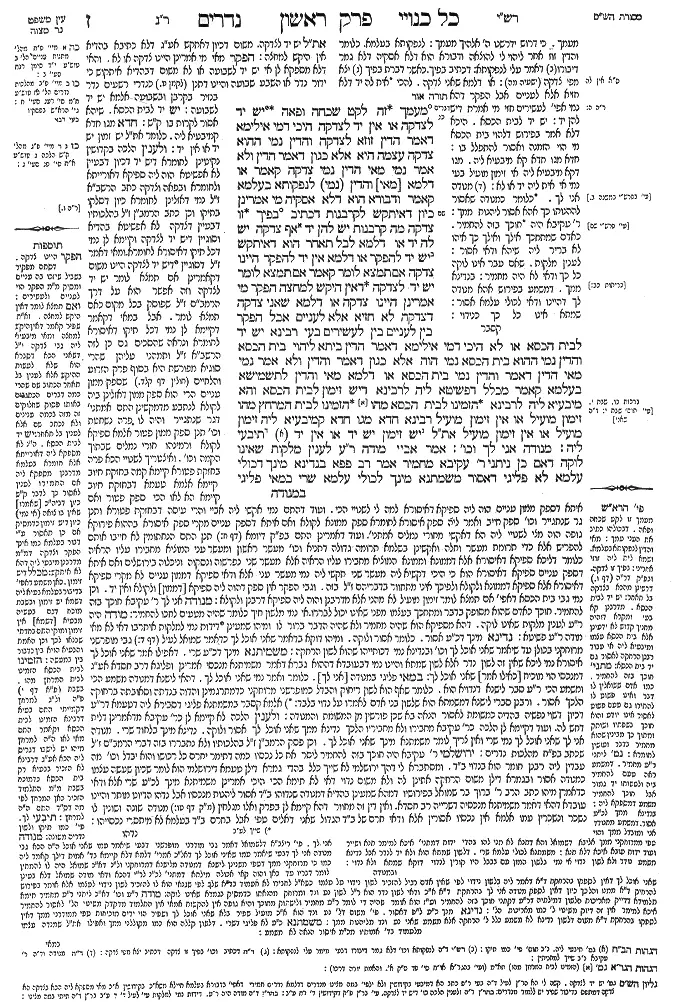
Nedarim 7a - Guemara
(דברים כג כב) מעמך זה לקט שכחה ופאה יש יד לצדקה או אין יד לצדקה היכי דמי אילימא דאמר הדין זוזא לצדקה והדין נמי ההוא צדקה עצמה היא אלא כגון דאמר הדין ולא אמר נמי מאי הדין נמי צדקה קאמר או דלמא [מאי] והדין (נמי) לנפקותא בעלמא קאמר ודבורא הוא דלא אסקיה מי אמרינן כיון דאיתקש לקרבנות דכתיב (דברים כג כד) בפיך זו צדקה מה קרבנות יש להן יד אף צדקה יש לה יד או דלמא לבל תאחר הוא דאיתקש יש יד להפקר או דלמא אין יד להפקר היינו צדקה אם תמצא לומר קאמר אם תמצא לומר יש יד לצדקה דאין היקש למחצה הפקר מי אמרינן היינו צדקה או דלמא שאני צדקה דצדקה לא חזיא אלא לעניים אבל הפקר בין לעניים בין לעשירים בעי רבינא יש יד לבית הכסא או לא היכי דמי אילימא דאמר הדין ביתא ליהוי בית הכסא והדין נמי ההוא בית הכסא נמי הוה אלא כגון דאמר והדין ולא אמר נמי מאי הדין דאמר והדין נמי בית הכסא או דלמא מאי והדין לתשמישא בעלמא קאמר מכלל דפשיטא ליה לרבינא דיש זימון לבית הכסא והא מיבעיא ליה לרבינא הזמינו לבית הכסא מהו הזמינו לבית המרחץ מהו זימון מועיל או אין זימון מועיל רבינא חדא מגו חדא קמיבעיא ליה זימון מועיל או אין זימון מועיל את''ל יש זימון יש יד או אין יד תיבעי ליה:
מנודה אני לך וכו':
אמר אביי מודה ר''ע לענין מלקות שאינו לוקה דאם כן ניתני ר' עקיבא מחמיר אמר רב פפא בנדינא מינך דכולי עלמא לא פליגי דאסור משמתנא מינך לכולי עלמא שרי במאי פליגי
Comments from Rashi on Masechet Nedarim Page 7a
מעמך . כי דרוש ידרשנו ה' אלהיך מעמך: לנפקותא בעלמא . כלומר והדין זוז אחר ליהוי לי להוצאה ודבורא הוא דלא אסקיה דלא גמר דיבורו דאמר עלי לנפקותא: דכתיב בפיך . כאשר דברת בפיך יצא מפי צדקה (ישעיה מה): או דלמא שאני צדקה . להכי אית לה יד דלא חזיא אלא לעניים אבל הפקר דהא נמי אפי' לעשירים חזי מי אמרת דיש להן יד: יש יד לבית הכסא . היכא דלא אמר בפירוש דלהוי בית הכסא מי הוי הזמנה ואסור להתפלל בו: חדא מגו חדא קא מיבעיא ליה . מגו דקא מיבעיא ליה אי זימון מועיל בעי נמי אי אית ליה יד או לא: מנודה אני לך: כלומר כמנודה שאסור לההנותו כך אהא אסור ליהנות ממך: חדא מגו חדא קא מיבעיא ליה . מגו דקא מיבעיא ליה אי זימון מועיל בעי נמי אי אית ליה יד או לא: מנודה אני לך . כלומר כמנודה שאסור לההנותו כך אהא אסור ליהנות ממך: ר׳ עקיבא היה חוכך בזה להחמיר . כאדם שמתחכך אילך ואילך כך איהו לא בריר ליה שיהא ודאי אסור: לענין מלקות . שאם עבר אינו לוקה כל כך ודאי לא היה מחמיר: ר' עקיבא היה . חוכך בזה להחמיר. כאדם שמתחכך אילך ואילך כך איהו לא בריר ליה שיהא ודאי אסור: בנדינא ממך . דמשמע בפירוש אהא מנודה לך דהיינו ודאי לכולי עלמא אסור: שמתא אינו כל כך כנידוי:
Comments from Tosafot - Nedarim 7a
הפקר היינו צדקה . דסתם מפקיר בשביל שיזכו בה עניים ומסיק מ''מ הפקר הוי לעניים ולעשירים: ואם תמצא לומר דאין היקש למחצה . וא''ת שפיר קאמר דאין היקש למחצה ומאי מיבעיא ליה גבי צדקה י''ל דשאני הכא דסברא הוא שלא לעשות ההיקש אלא לענין בל תאחר הכתוב שם שהרי כמה דברים הכתובים באותו פסוק שחלוקים זה מזה בכמה ענינים ולא נכתב שם אלא לענין בל תאחר: הפקר היינו צדקה . דסתם מפקיר בשביל שיזכו בה עניים ומסיק מ''מ הפקר הוי לעניים ולעשירים: יש יד לבית הכסא . ה''נ לא מספקא ליה דאורייתא אלא חומרא בעלמא מדרבנן מספקא ליה אם החמירו לענין לאסור כך לדבר ק''ש כיון דביה''כ [שאמרו] שאין בו צואה (אי נמי) כיון דיש זימון כדמסיק אם כן תאסור ע''י דבור בעלמא כמו אינך הפקר וצדקה דמ''מ מדרבנן מיבעי ליה דהא לא איתקש: מכלל דיש זימון . כאן משמע דאפי בדיבור בעלמא בעיא ליה דשמא יש זימון ובשבח מוכח דגם בעשיה מבעיא [דשמא] אין זימון ומוקי התם בחדתי שבנאו לכך וכן האמת והבעיא הויא בין בדבור בין במעשה: הזמינו לבית הכסא הזמינו לבית המרחץ מהו . בשבת (פ''א דף י) פ''ה ול''ג למרחץ דקמייתי התם בעיא דרבינא הזמינו לבית הכסא וקאמר התם מאי לאו ה''ה למרחץ מיהו יש לישבו דגריס ליה הכא אע''ג דרבינא לא הזכיר בבעיא רק בית הכסא כדמוכח בשבת מ''מ התלמוד הזכיר כאן המרחץ לפי מה דס''ד התם ה''ה למרחץ: חדא מגו חדא קא מיבעיא ליה . מגו דקא מיבעיא ליה אי זימון מועיל בעי נמי אי אית ליה יד או לא: תיבעי לך . פי' כמו תיקו ולשון נדרים משונה: מנודה אני לך . פי' ריצב''א דלשמואל דאמר גבי מודרני מופרשני דבעי שיאמר עמו שאני אוכל ה''ה הכא גבי מנודה אני לך דבעי שיאמר עמו שאיני אוכל לך דאל''כ אמרי' דלמא דלא קיימא בד' אמות דילך קאמר ליה כמו כי מרוחקני ממך דטפי משנינן לישנא דמנודה מלישנא דמרוחקני ול''נ דא''כ שמואל היה לו להמתין לומר דבריו עד כאן והוה קאי אכולה מילתא דמתני' לכ''נ לר''י דהכא ודאי מודה שמואל דלא בעינן שאני אוכל לך דאין לספקו בהרחקת ד''א דאמר ליה בלשון נידוי לפי שאין אדם רגיל להזכיר לשון נידוי על עצמו כשא''ל לחבירו לא אעמוד בד''א שלך לפי שגנאי הוא לו להזכיר לשון נידוי לעצמו אלא אומר בפירוש להרחיק ד''א ממנו והלכך כיון דאין לספק מנודה אני לך בהרחקת ד''א א''כ ודאי לשון נדר הוא ר''ל לשון נע ונד ומרוחק מהנאתו כדמסיק בגמרא שאינו לוקה: מודה ר''ע וכו' . דא''כ ליתני ר''ע מחמיר תימא תלמודא דדייק מאריכות הלשון דמילתיה דר''ע דקתני חוכך בזה להחמיר וע''ז הוא אומר שהיה די לומר ר''ע מחמיר ולישתוק מחוכך והיא גופה אין להקשות אמאי אין התלמוד מדקדק משינוי הל' לאסור להחמיר איכא למימר אין זה דיוק משינוי ל' כמו מאריכות הל': נדינא מנך כ''ע ל''פ דאסור . פי' משום דל' נע ונד הוא א''כ מועיל שפיר בלא שאני אוכל לך ושפיר הוי ידים מוכיחות טפי ממודרני ממך דאין לספקו בהרחקת ד''א משום דלשון נדינא לא משמע כלל ל' הרחקה אלא משמע שאני נע ונד מליהנות ממך: משמתנא כ''ע לא פליגי דשרי . דלשון קללה הוא כמו מקוללני ממך ואפילו את''ל שמנדה עצמו מלעמוד בד' אמותיו מכ''מ איסור הנאה לא משמע:
Nedarim 7a - Mishnah translated into english
The verse states with regard to offerings: “When you shall take a vow to the Lord your God, you shall not delay to pay it; for the Lord your God will surely require it of you” (Deuteronomy 23:22). With regard to the term “of you” the baraita states: This is a reference to gleanings, forgotten sheaves, and pe’a.
§ The Gemara asks: Is there intimation for charity or is there no intimation for charity? The Gemara clarifies the question: What are the circumstances of such a case? If we say that it is a case where one said: This dinar is for charity and this also, that itself is an explicit statement of donating to charity. Rather, it is a case where he said: This, and did not say: Also. What is his intention? Is he understood to be saying: This is also charity, or perhaps what is the meaning of: And this? He is saying that this coin is merely for general use, and he did not complete his statement.
The Gemara explains the two sides of this dilemma: Do we say that since charity is juxtaposed to offerings, as it is written in a verse following the prohibition against delaying an offering: “That you have spoken with your mouth” (Deuteronomy 23:24) and the Sages expounded that this is a reference to charity, therefore, just as there is intimation, i.e., intimation is effective, with regard to offerings, so too, there is intimation with regard to charity? Or perhaps it is only with regard to the prohibition: You shall not delay, that it is juxtaposed, but not with regard to other halakhot?
The Gemara asks further: Is there intimation for rendering one’s property ownerless, or perhaps there is no intimation for rendering one’s property ownerless. Does an incomplete expression employed by an owner to relinquish property take effect or not? The Gemara notes: This is the same as the previous question with regard to charity, which is comparable to rendering one’s property ownerless for the benefit of the poor.
The Gemara responds: This question is stated in the style of: If you say, as follows: If you say there is intimation for charity, as there is no partial analogy based on juxtaposition, do we say that rendering one’s property ownerless is the same as charity; or perhaps charity is different, as charity is suitable only for the poor, but ownerless property is suitable for both the poor and the wealthy, and therefore it cannot be derived from the halakha with regard to charity.
Ravina raised another dilemma: Is there intimation for designating a location as a bathroom or not? The Gemara asks: What are the circumstances of the case? If we say that it is a case where one said: Let this structure be a bathroom and this one also, that second structure is certainly also a bathroom. Rather, it is a case where he said: And this, and he did not say: Also. What is his intention? Is the expression: And this, that he said, understood to mean: And this shall also be a bathroom? Or perhaps what is the meaning of: And this? He is saying that it is designated for general use rather than as a bathroom.
The Gemara comments: Can it be derived by inference that it is obvious to Ravina that there is designation for a bathroom, i.e., that if one explicitly designates a location as a bathroom, it attains that status even before it is used for that purpose, so that one may not bring sacred items to that location? Didn’t Ravina raise this as a dilemma? He asked: If one designated a particular location as a bathroom, what is the halakha? If one designated it as a bathhouse, what is the halakha? In other words, is designation effective to grant the location a particular status, or is designation not effective?
The Gemara answers: Ravina raised one dilemma within another dilemma: Is designation effective or is designation not effective? And if you say there is designation, i.e., designation is effective, is there intimation or is there not intimation, i.e., is designation via intimation effective? The Gemara concludes: The dilemma remains unresolved.
§ It was taught in the mishna that if one said: I am ostracized from you, Rabbi Akiva was uncertain about the halakha but was inclined to rule stringently about this. Abaye said: Rabbi Akiva concedes with regard to flogging that one is not flogged if he violates a vow that was expressed in this way. As, if so, if Rabbi Akiva held that one is liable to be flogged, let the mishna teach: Rabbi Akiva is stringent. The fact that it states: Rabbi Akiva was uncertain but was inclined to rule stringently, indicates that although Rabbi Akiva holds that one may not violate this vow, he concedes that one is not liable to be flogged if he does violate the vow.
Rav Pappa said: With regard to a vow that one expressed with the phrase: I am distanced [nadeina] from you, everyone agrees that he is prohibited from deriving benefit from the other individual, as this is an intimation of a vow. If he employs the expression: I am excommunicated [meshamattena] from you everyone agrees that he is permitted to derive benefit from the other person, even though he meant to distance himself from the other individual, because this is not the terminology of a vow. With regard to what do they disagree?
Traduction : The William Davidson digital edition of the Koren Noé Talmud, with commentary by Rabbi Adin Even-Israel Steinsaltz.