 Talmud Bavli
Nedarim 37a : Youtube
Daf TubeYoutube
2 video classes :
Nedarim Page 37a
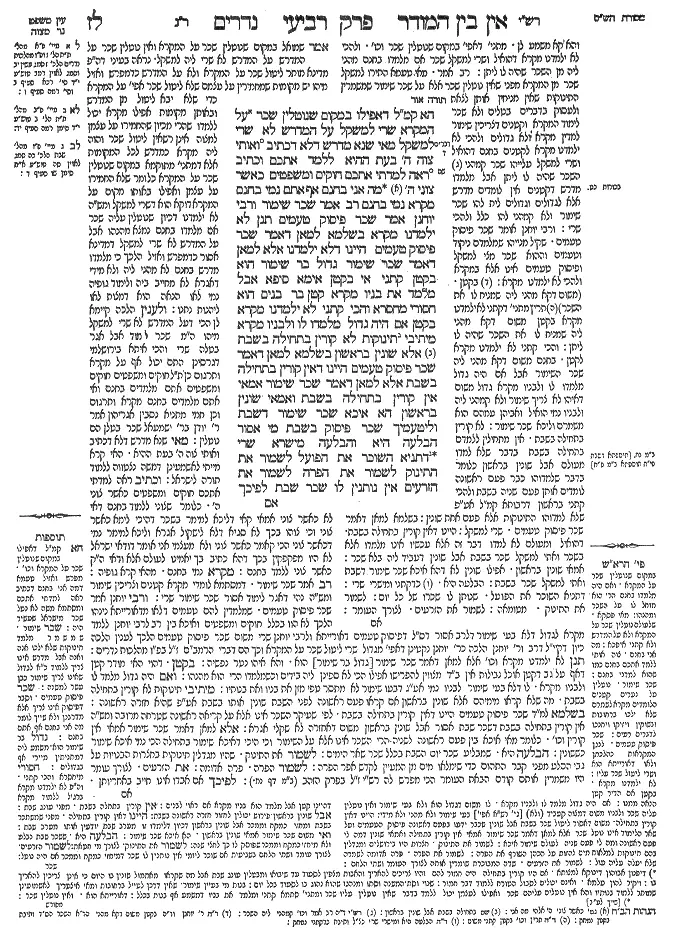
Nedarim 37a - Guemara
הא קא משמע לן דאפילו במקום שנוטלין שכר על המקרא שרי למשקל על המדרש לא שרי למשקל מאי שנא מדרש דלא דכתיב (דברים ד, יד) ואותי צוה ה' בעת ההיא ללמד אתכם וכתיב (דברים ד, ה) ראה למדתי אתכם חוקים ומשפטים כאשר צוני ה' מה אני בחנם אף אתם נמי בחנם מקרא נמי בחנם רב אמר שכר שימור ורבי יוחנן אמר שכר פיסוק טעמים תנן לא ילמדנו מקרא בשלמא למאן דאמר שכר פיסוק טעמים היינו דלא ילמדנו אלא למאן דאמר שכר שימור גדול בר שימור הוא בקטן קתני אי בקטן אימא סיפא אבל מלמד את בניו מקרא קטן בר בנים הוא חסורי מחסרא והכי קתני לא ילמדנו מקרא בקטן אם היה גדול מלמדו לו ולבניו מקרא מיתיבי תינוקות לא קורין בתחילה בשבת אלא שונין בראשון בשלמא למאן דאמר שכר פיסוק טעמים היינו דאין קורין בתחילה בשבת אלא למאן דאמר שכר שימור אמאי אין קורין בתחילה בשבת ואמאי שונין בראשון הא איכא שכר שימור דשבת וליטעמיך שכר פיסוק בשבת מי אסור הבלעה היא והבלעה מישרא שרי דתניא השוכר את הפועל לשמור את התינוק לשמור את הפרה לשמור את הזרעים אין נותנין לו שכר שבת לפיכך
Comments from Rashi on Masechet Nedarim Page 37a
והא קא משמע לן . מתני' דאפי' במקום שנוטלין שכר וכו'. ולהכי לא ילמדנו מקרא דהואיל ושרי למשקל שכר אם מלמדו בחנם מהני ליה מן השכר שהיה לו ליתן: רב אמר . מאי טעמא התירו למשקל שכר מן המקרא מפני שאין נוטלין שכר אלא על שכר שימור שמשמרין התינוקות שאין מניחין אותן לצאת ולעסוק בדברים בטלים ולא שכר לימוד המקרא וקטנים דצריכין שימור למדין מקרא ולא גדולים ולהכי לא ילמדנו מקרא לקטנים בחנם דהואיל ושרי למשקל עלייהו שכר קמהני השכר שהיה לו ליתן אבל מלמדו מדרש דקטנים אין לומדים מדרש אלא לגדולים וגדולים לית להו שכר שימור ולא קמהני להו כלל ולהכי שרי: ורבי יוחנן אומר שכר פיסוק טעמים . שקיל מנייהו שמלמדם ניקוד וטעמים וההוא שכר מצי למשקל ופיסוק טעמים אינו אלא במקרא ולהכי לא ילמדנו מקרא: בקטן . (משום דקא מהני ליה שמניח לו את השכר) תריץ מתני' דקתני לא ילמדנו מקרא בקטן משום דקא מהני ליה שמניח לו את השכר שהיה לו ליתן: והכי קתני לא ילמדנו מקרא לקטן . בחנם משום דקא מהני ליה שכר השימור אבל אם היה גדול מלמדו לו ולבניו מקרא גדול משום דאיהו לא צריך שימור ולא קמהני ליה ולבניו נמי הואיל ואביהן עמהם הוא משמרם וליכא שכר שימור: לא קורין בתחילה בשבת . אין מתחילין ללמדם בתחילה בשבת בדבר שלא למדו מעולם אבל שונין בראשון כלומר בדבר שלמדוהו כבר פעם ראשונה לומדים אותן פעם שניה בשבת ולהכי קתני בראשון דרבותא קמ"ל אע"פ שלא למדוהו התינוקות אלא פעם אחת שונין: בשלמא למאן דאמר שכר פיסוק טעמים . שרי למשקל: הייינו דאין קורן בתחילה בשבת . דהואיל ומעולם לא למדו דבר זה אלא עכשיו אינו מלמדו אלא בשכר ואתי למשקל שכר בשבת אבל שונין דעביד ליה בלא שכר: אמאי שונין בראשון . אפילו שונין לא דהא איכא שכר שימור דשבת ואתי למשקל שכר בשבת: הבלעה היא . כדקתני ומישרי שרי: דתניא השוכר את הפועל . שנותן לי שכרו של כל יום: לשמור את התינוק . מטומאה: לשמור את הזרעים . לצורך העומר:
Comments from Tosafot - Nedarim 37a
הא קמ''ל דאפילו במקום שנוטלין שכר על המקרא וכו' . מפרש ואזיל טעמא דמה אני בחנם דכתיב ראה למדתי אתכם ומסתמא משה לא נטל שכר מישראל שעשיר היה: שכר שימור . שמשמר מלמד תינוקות שלא ילכו אנה ואנה אבל מדרש אינו צריך ללמוד כ''א לגדול שאינו צריך שימור כבן עשר למשנה: שכר פיסוק טעמים . וסבר דפיסוק אינו צריך אלא מדרבנן ולא שייך לומר מה אני בחנם אף אתם בחנם: גדול בר שימור הוא . משמע ליה דמתניתין מיירי אף בגדולים: חסורי מיחסרא והכי קתני . וה''פ לא ילמדנו מקרא ברגיל ללמוד מקרא דהיינו קטן אבל מלמד הוא בניו מקרא אם ראוי לבנים: אין קורין בתחלה בשבת . מפני עונג שבת: אבל שונין בראשון . פירוש יכולין לחזור חזרה ראשונה בשבת: היינו דאין קורין בתחילה . מפני שמשתכר בשבת ומחזי כמקח וממכר אבל שונין בראשון דכיון דלימדו זו מערב שבת יודעין אותו מערב שבת: ואי משום שכר שימור אמאי שונין בראשון . הא איכא שכר שימור: הבלעה היא . ששכר שבת נבלע ולא מיחזי כמקח וממכר שפוסק לו כך לחצי שנה: לשמור את התינוק . לצורך מי חטאת: לשמור הזרעים . לצורך עומר ושתי הלחם בשביעית אם שוכר ליומי אין נותנין לו שכר דמיחזי כמקח וממכר אם היה נוטל:
Nedarim 37a - Mishnah translated into english
The Gemara answers: This teaches us that even in a place where one takes payment for teaching, for teaching Bible it is permitted to take payment, but for teaching midrash it is not permitted to take payment.
The Gemara asks: In what way is midrash different from Bible, that one may not take payment for teaching it? Based on that which is written, which Moses said to the people: “And the Lord commanded me at that time to teach you statutes and laws” (Deuteronomy 4:14), and also that which is written: “Behold, I have taught you statutes and laws, as the Lord my God commanded me, that you should do so in the midst of the land where you go in to possess it” (Deuteronomy 4:5), God said: Just as I teach you for free, without payment, so too you also shall teach for free. There should be no difference between Bible and midrash, and Bible too, like midrash, should be taught for free.
Rav said: As Bible is typically taught to children, one who teaches Bible takes payment for watching the children. And Rabbi Yoḥanan said: He takes payment for teaching punctuation of the text with cantillation notes.
We learned in the mishna that one for whom benefit from another is forbidden by a vow, that other person may not teach him Bible. Granted, according to the one who says that the payment is for teaching punctuation of the text with cantillation notes, this is the reason that he shall not teach him Bible, as teaching punctuation is a component of teaching the biblical text. However, according to the one who says it is payment for watching the students, is an adult one who requires watching, and would payment be taken for doing so? Since the teacher typically does not receive payment for teaching adults, there is no benefit when he teaches for free the one for whom benefit is forbidden; why, then, is it prohibited? The Gemara answers: The mishna is teaching about the case of a minor who requires watching and who is prohibited by a vow from deriving benefit from the teacher.
The Gemara asks: If it is the case of a minor, say the latter clause of the mishna: However, he may teach his sons Bible. Is a minor one who is capable of bearing sons? The Gemara answers: The mishna is incomplete, and this is what it is teaching: He may not teach him Bible, in the case of a minor. If the student is an adult, he may teach him and his sons Bible. He may teach him because he does not require watching, and he may teach his son because the payment is for watching his son.
The Gemara raises an objection from a baraita: Children may not read a passage in the Bible for the first time on Shabbat; however, they may review a passage that they already learned once. Granted, according to the one who says that payment for teaching Bible is for teaching punctuation of the text with cantillation notes, this is the reason that children may not read a passage in the Bible for the first time on Shabbat, as it would be necessary to pay the teacher. However, according to the one who says it is payment for watching the children, why may children not read a passage in the Bible for the first time on Shabbat? And why may children review a passage that they already learned once? Isn’t there payment for watching the children on Shabbat in both cases?
The Gemara responds: And according to your reasoning, is receiving payment for teaching punctuation prohibited on Shabbat? It is a case of incorporation of the payment for teaching on Shabbat into the teacher’s weekly salary, and incorporation is permitted, as it is taught in a baraita: One who hires a day laborer to watch a child, to watch a cow, or to guard seeds does not give him payment for Shabbat. Therefore,
Traduction : The William Davidson digital edition of the Koren Noé Talmud, with commentary by Rabbi Adin Even-Israel Steinsaltz.