 Talmud Bavli
Nedarim 53a : Youtube
Daf TubeYoutube
2 video classes :
Nedarim Page 53a
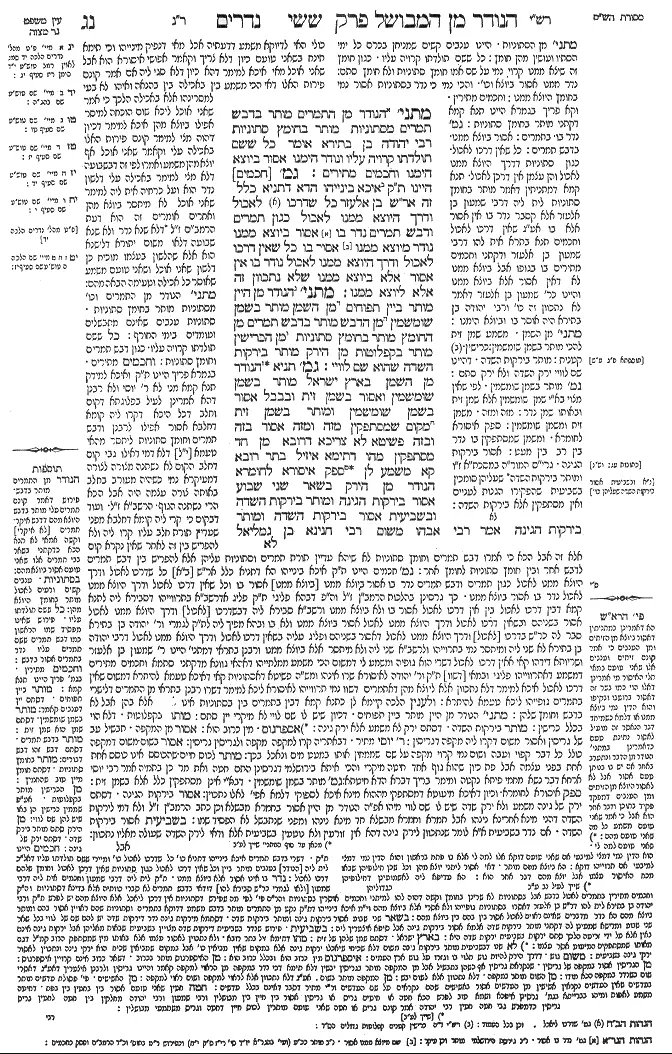
Nedarim 53a - Guemara
מתני׳ הנודר מן התמרים מותר בדבש תמרים מסתוניות מותר בחומץ סתוניות רבי יהודה בן בתירא אומר כל ששם תולדתו קרויה עליו ונודר הימנו אסור ביוצא הימנו וחכמים מתירים:
גמ׳ [חכמים] היינו ת"ק איכא בינייהו הדא דתניא כלל זה אר"ש בן אלעזר כל שדרכו לאכול ודרך היוצא ממנו לאכול כגון תמרים ודבש תמרים נדר בו אסור ביוצא ממנו נודר מיוצא ממנו אסור בו כל שאין דרכו לאכול ודרך היוצא ממנו לאכול נודר בו אין אסור אלא ביוצא ממנו שלא נתכוון זה אלא ליוצא ממנו:
מתני׳ הנודר מן היין מותר ביין תפוחים מן השמן מותר בשמן שומשמין מן הדבש מותר בדבש תמרים מן החומץ מותר בחומץ סתוניות מן הכרישין מותר בקפלוטות מן הירק מותר בירקות השדה שהוא שם לוויי:
גמ׳ תניא הנודר מן השמן בארץ ישראל מותר בשמן שומשמין ואסור בשמן זית ובבבל אסור בשמן שומשמין ומותר בשמן זית מקום שמסתפקין מזה ומזה אסור בזה ובזה פשיטא לא צריכא דרובא מן חד מסתפקין מהו דתימא איזיל בתר רובא קא משמע לן ספק איסורא לחומרא הנודר מן הירק בשאר שני שבוע אסור בירקות הגינה ומותר בירקות השדה ובשביעית אסור בירקות השדה ומותר בירקות הגינה אמר רבי אבהו משום רבי חנינא בן גמליאל
Comments from Rashi on Masechet Nedarim Page 53a
מתני' מן הסתוניות . היינו ענבים קשים שמניחן בכרם כל ימי הסתיו ועושין מהן חומץ: כל ששם תולדתו קרויה עליו . כגון חומץ זה שיצא ממנו קרוי נמי על שם אמו חומץ סתוניות ולא חומץ סתם: נדר ממנו אסור ביוצא וכו' . והכי נמי כי נדר בסתוניות אסור נמי בחומץ היוצא ממנו: וחכמים מתירין . וקא פריך בגמרא היינו תנא קמא דקתני מותר בחומץ סתוניות: גמ' נדר בו . בתמרים: אסור ביוצא ממנו . בדבש תמרים: כל שאין דרכו לאכול . כגון סתוניות דדרך היוצא ממנו לאכול והן עצמן אין דרכן לאכול. תנא קמא דמתניתין דאמר מותר בחומץ סתוניות לית ליה דרבי שמעון בן אלעזר אלא קסבר נדר בו אין אסור אלא בו אע"ג שאין דרכו לאכול וחכמים תנא בתרא אית להו דרבי שמעון בן אלעזר ודקתני וחכמים מתירים בו בגופו אבל ביוצא ממנו לא דאין אסור אלא ביוצא ממנו והיינו כר' שמעון בן אלעזר דאמר לא נתכוון זה כו' ורבי יהודה בן בתירא היה אוסר בו וביוצא הימנו: מתני' מן השמן . משמע שמן זית להכי מותר בשמן שומשמין: כרישין . קטנית: מותר בירקות השדה . דהיינו שם לוויי ירק השדה ולא ירק סתם: גמ' מותר בשמן שומשמין . לפי שאין מצוי בא"י שמן שומשמין אלא שמן זית ובאותו שמן נדר: מזה ומזה . משמן זית ומשמן שומשמין: ספק איסורא לחומרא . ומשמן שמסתפקין בו נדר בין רב בין מעט: אסור בירקות . הגינה. גרי"ס המור"ה במסכת"א ז"ו ומותר בירקות השדה. שעליהן סומכין בשביעית שהפקירו הגנות לעניים ואין מסתפקין אלא בירקות השדה:
Comments from Tosafot - Nedarim 53a
הנודר מן התמרים מותר בדבש . פירוש דאמר קונם תמרים עלי מותר בדבש היוצא מהם דדבש איקרי תמרים [לא איקרי] וקשה אמאי לא תנא הכא כדקתני בשאר בבי תמרים אלו שאני טועם אסור ביוצא מהם: בסתוניות . ענבים קשים ורעים לאכול מותר בחומץ היוצא מהן: כל ששם תולדתו עליו . פירוש שאינו מפסיד שמו הראשון כמו דבש תמרים ששם תמרים עליו נדר בתמרים אסור בדבש: וחכמים מתירין . בגמ' פריך היינו תנא קמא: חכמים היינו ת''ק . דשרי בדבש תמרים איכא בינייהו דתניא כו' כל שדרכו לאכול כו' ומיירי ששם תולדתו עליו דאל''כ לית ליה [הנודר] בענבים מותר ביין וכל שאין דרכו לאכול כגון סתוניות שאין דרכן לאכול וחומץ שלהם דרכו לאכול: נדר בו אינו אסור אלא ביוצא ממנו . ת''ק לית ליה דרבי שמעון וחכמים אית ליה דרבי שמעון [ולאו לגמרי כר''ש סבירא להו] דודאי בדבש תמרים לא סברי כוותיה אלא בדינא דסתוניות וה''ק וחכמים מתירים בתמרים לאכול בדבש אבל בסתוניות לא שרינן בחומץ וקשה דהוה להו למיתני וחכמים אוסרין בסתוניות והר''ם פי' לפי מה שפירש דסתוניות אין דרכן ליאכל אלא היוצא מהם יש לפרש ת''ק ורבי יהודה בן בתירא לית להו דר''ש בן אלעזר דאסרו בסתוניות גופייהו ולא אסרי אלא ביוצא מהם וי''מ איכא בינייהו דת''ק נקט מן התמרים מותר בדבש משמע דדוקא בתמרים וסתוניות שהם ראויין אסור בהם ומותר ביוצא מהם הא נדר מדברים שאינם ראוים לאכול אסור בין בהם בין ביוצא מהם: מותר ביין תפוחים . דסתם יין דענבים קאמר: מותר בשמן שומשמין . דסתם שמן הוא שמן זית: מותר בדבש תמרים . דסתם דבש זהו דבש דבורים: מותר בחומץ סתוניות . דסתם חומץ מיין טוב שהחמיץ: מן הכרישין מותר בקפלוטות . אע''פ שממין כרישין הן באו שיש להן שם לווי: מן הירק סתם מותר בירק שדה . דסתם ירק של גינה: בארץ ישראל . דסתם שמן שלהן של זית: מהו דתימא זיל בתר רובא . ולא נתכוין לאסור עצמו אלא באותו מין שמסתפק הרוב קמ''ל דגם מאותו שמסתפקים המיעוט אסר עצמו: בשאר שני שבוע אסור בירקות גינה ומותר בירקות שדה . דסתמא מירקות גינה נדר דירקות שדה יש להם שם של לווי בכל שאר שני שבוע ומרישא שמעינן לה דקתני מותר בירקות שדה אלמא אסור בירקות גינה אבל סיפא איצטריך ליה: בשביעית . פירוש שנדר בשביעית דירקות שדה מצויין בשביעית שבאות מאליהן אבל ירקות גינה אינם באין אלא על ידי זריעה הלכך סתם ירקות בשביעית ירקות שדה היא:
Nedarim 53a - Mishnah translated into english
MISHNA: One who vows that dates are forbidden to him is permitted to eat date honey. One who vows that late grapes are forbidden to him is permitted to eat vinegar of late grapes. Rabbi Yehuda ben Beteira says: In the case of any food that the name of its derivative is called after its name, i.e., the liquid that emerges from it bears its name, e.g., date honey or vinegar of late grapes, and one vows that the item itself, e.g., the grape, is forbidden to him, he is also prohibited from consuming the liquid that emerges from it. But the Rabbis permit this.
GEMARA: The statement of the Rabbis is identical to the statement of the first tanna of the mishna, who rules that one who vows that dates are forbidden to him is permitted to eat date honey. What is the difference between them?
The Gemara answers: There is a difference between them with regard to that which is taught in a baraita: Rabbi Shimon ben Elazar said this principle: With regard to anything that is commonly eaten in its existing form, and it is also common to eat the liquid that emerges from it, for example, dates and date honey, if one vowed that it is forbidden to him, he is also prohibited from consuming the liquid that emerges from it. Similarly, if one vows that the liquid that emerges from it is forbidden to him, he is also prohibited from partaking of it.
The baraita continues: Conversely, with regard to anything that is not commonly eaten as it is, and it is common to eat the liquid that emerges from it, if one vowed that he will not eat from it, he is prohibited from consuming only the liquid that emerges from it, as this person intended to prohibit himself from eating only from the liquid that emerges from it. The first tanna does not distinguish between dates, which are commonly eaten in their original state, and late grapes, which are not. In both cases, he rules that the produce itself is forbidden and the derivative is permitted. By contrast, the Rabbis agree with Rabbi Shimon ben Elazar’s ruling with regard to produce that is not commonly eaten in its original state. They permit the produce itself and prohibit that which has emerged from it. Therefore, in the last case of the mishna, they permit eating the late grapes and prohibit eating their vinegar, whereas in the first case they prohibit both dates and date honey.
MISHNA: One who vows that wine is forbidden to him is permitted to partake of apple wine, i.e., cider, as the unspecified term wine refers only to grape wine. One who vows that oil is forbidden to him is permitted to partake of sesame oil, as the unspecified term oil refers only to olive oil. One who vows that honey is forbidden to him is permitted to eat date honey, as the unspecified term honey refers only to bee honey.
One who vows that vinegar is forbidden to him is permitted to partake of vinegar of late grapes, as vinegar is typically made from wine. One who vows that leeks are forbidden to him is permitted to eat kaflutot, a type of leek. One who vows that vegetables are forbidden to him is permitted to eat wild field vegetables, as this type of vegetable has a modifier and is not referred to by the unspecified term vegetable.
GEMARA: It is taught in a baraita: With regard to one who vows that oil is forbidden to him, if he is in Eretz Yisrael he is permitted to eat sesame oil and is prohibited from eating olive oil, as in Eretz Yisrael the unspecified term oil refers to olive oil. And if he took the vow in Babylonia, sesame oil is forbidden to him, as oil in Babylonia was generally made from sesame seeds, and it is permitted for him to eat olive oil, which was rarely used there. If he takes the vow in a locale where people use both this type of oil and that type, he is prohibited from eating both this type and that.
The Gemara asks with regard to the last statement: Isn’t it obvious that he is prohibited from eating both types of oil? The statement seems superfluous. The Gemara answers: No, it is not superfluous. It is necessary only to teach that this is the halakha even where most people use only one type of oil. Lest you say: I should follow the majority and permit the other kind of oil, the baraita teaches us that an uncertain Torah prohibition is treated stringently. Therefore, the other type is forbidden as well, as it is possibly included in the meaning of the vow, although it is used only by a minority of the residents.
The baraita continues: With regard to one who vows that vegetables are forbidden to him, if he takes the vow during the first six years of the seven-year Sabbatical cycle, he is prohibited from eating garden vegetables and permitted to eat field vegetables. But if he takes the vow during the Sabbatical Year, he is prohibited from eating field vegetables, which are commonly eaten in the Sabbatical Year, and he is permitted to eat garden vegetables, which are rarely consumed during that period, as it is prohibited to work the land. Rabbi Abbahu said in the name of Rabbi Ḥanina ben Gamliel:
Traduction : The William Davidson digital edition of the Koren Noé Talmud, with commentary by Rabbi Adin Even-Israel Steinsaltz.