 Talmud Bavli
Nedarim 56b : Youtube
Daf TubeYoutube
2 video classes :
Nedarim Page 56b
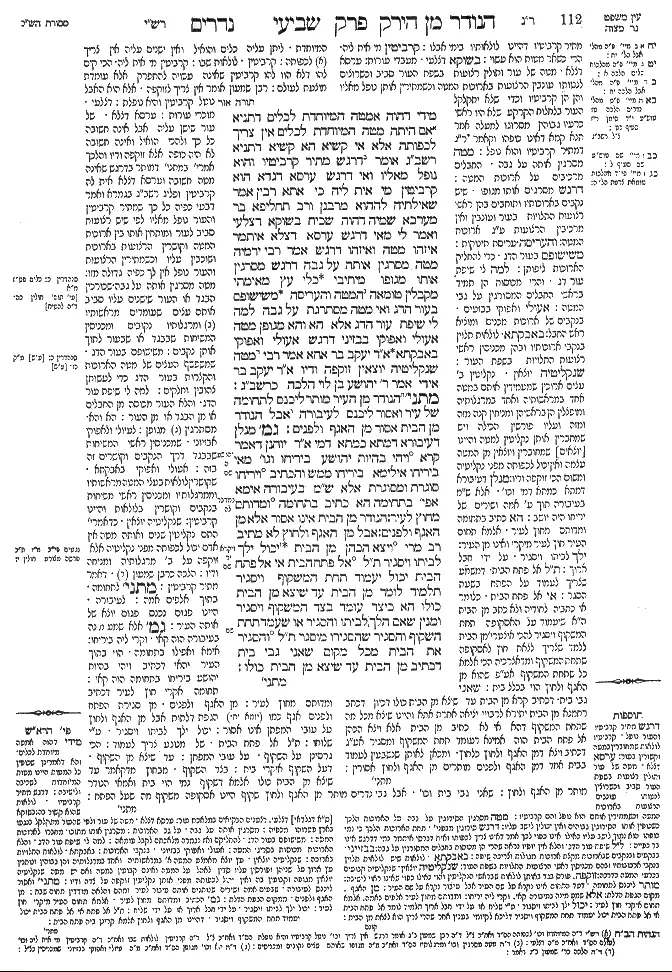
Nedarim 56b - Guemara
מידי דהוה אמטה המיוחדת לכלים דתניא אם היתה מטה המיוחדת לכלים אין צריך לכפותה אלא אי קשיא הא קשיא דתניא רשב"ג אומר דרגש מתיר קרביטיו והוא נופל מאליו ואי דרגש ערסא דגדא הוא קרביטין מי אית ליה כי אתא רבין אמר שאילתיה לההוא מרבנן ורב תחליפא בר מערבא שמיה דהוה שכיח בשוקא דצלעי ואמר לי מאי דרגש ערסא דצלא איתמר איזהו מטה ואיזהו דרגש אמר רבי ירמיה מטה מסרגין אותה על גבה דרגש מסרגין אותו מגופו מיתיבי כלי עץ מאימתי מקבלין טומאה המטה והעריסה משישופם בעור הדג ואי מטה מסתרגת על גבה למה לי שיפת עור הדג אלא הא והא מגופן מטה אעולי ואפוקי בבזיני דרגש אעולי ואפוקי באבקתא א"ר יעקב בר אחא אמר רבי מטה שנקליטיה יוצאין זוקפה ודיו א"ר יעקב בר אידי אמר ר' יהושע בן לוי הלכה כרשב"ג:
מתני׳ הנודר מן העיר מותר ליכנס לתחומה של עיר ואסור ליכנס לעיבורה אבל הנודר מן הבית אסור מן האגף ולפנים:
גמ׳ מנלן דעיבורא דמתא כמתא דמי א"ר יוחנן דאמר קרא (יהושע ה, יג) ויהי בהיות יהושע ביריחו וגו' מאי ביריחו אילימא ביריחו ממש והכתיב (יהושע ו, א) ויריחו סוגרת ומסוגרת אלא ש"מ בעיבורה אימא אפי' בתחומה הא כתיב בתחומה (במדבר לה, ה) ומדותם מחוץ לעיר:
הנודר מן הבית אינו אסור אלא מן האגף ולפנים:
אבל מן האגף ולחוץ לא מתיב רב מרי (ויקרא יד, לח) ויצא הכהן מן הבית יכול ילך לביתו ויסגיר ת"ל (ויקרא יד, לח) אל פתח הבית אי אל פתח הבית יכול יעמוד תחת המשקוף ויסגיר תלמוד לומר מן הבית עד שיצא מן הבית כולו הא כיצד עומד בצד המשקוף ויסגיר ומנין שאם הלך לביתו והסגיר או שעמד תחת השקוף והסגיר שהסגירו מוסגר ת"ל (ויקרא יד, לח) והסגיר את הבית מכל מקום שאני גבי בית דכתיב מן הבית עד שיצא מן הבית כולו:
Comments from Rashi on Masechet Nedarim Page 56b
המיוחדת . ליתן עליה כלים והואיל ואין ישנים עליה אין צריך לכפותה: רבן שמעון אומר אין צריך לזוקפה . אלא הוא האבל נוטל קרביטין והיא נופלת: קרביטין . לולאות שבו: קרביטין מי אית ליה . הכי קים להו דלא הוו להו קרביטין שאינה עשויה להתפרק אלא עומדת מוצעת לעולם: דצלעי . מוכרי עורות: ערסא דצלא . של עור שישן עליה אבל אינה חשובה כל כך ולהכי הואיל ואינה חשובה לא היה כופה אלא זוקפה ודיו והלכך אמרי' במתני' דמותר בדרגש שאינה מטה חשובה וערסא דצלא אית לה קרביטין ופליג רשב"ג בגמרא ואמר דבעי כפיה כל כך שמתיר קרביטין והעור נופל מאליו לפי שיש רצועות סביב לעור ומותחין אותו בין ארוכות המטה וקושרין הרצועות בארוכות ושוכבין עליו וכשמתירין הרצועות והעור נופל אין לך כפיה גדולה מזו: מטה מסרגין אותה על גבה . שכורכין הבגד או העור שישנים עליו סביב אותם עצים שעומדים מראשותיו ומרגלותיו נקובים ומכניסין המשיחות שבבגד או שבעור לתוך אותן נקבים: משישופם בעור הדג . שמשפשף העצים של מטה הארוכות והקצרות בעור הדג כדי לעשותן צהובין וחלקים: למה לי שיפת עור הדג . והלא העור מכוסה מן החבלים או מן הבגד או מן העור: הא והא . מסתרגין מגופן: לעיולי ולאפוקי אבזיוני . שמכניסין ראשי המשיחות שבבגד דרך הנקבים וקושרים זה בזה: אעולי ואפוקי באבקתא . שקושרין לו לאות בעצי המטה מראשותיו וממרגלותיו ומכניסין ראשי משיחות בנקבים וקושרין בלולאות והיינו קרביטין: שנקליטיה יוצאין . כדאמרי' התם נקליטין שנים ואותה מטה אין אדם יכול לכפותה מפני נקליטיה אלא זוקפה על ב' מרגלותיה ומניחה ודיו: הלכה כרבן שמעון . דאמר מתיר קרביטין: מתני' לתחומה . בתוך אלפים אמה: לעיבורה . היינו פגום נכנס פגום יוצא של אותה העיר: גמ' אלא שמע מינה בעיבורה הוה קאי . וקרי ליה ביריחו: אימא ואפילו בתחומה . הוי בתוך העיר והאי דכתיב ויהי בהיות יהושע ביריחו בתחומה הוה קאי: תחומה אקרי חוץ לעיר דכתיב ומדותם מחוץ לעיר: מן האגף ולפנים . מן סגירת הפתח ולפנים אגף כמו (יומא יח.) הגפת דלתות אבל מן האגף ולחוץ על עובי המפתן אינו אסור: יכול ילך לביתו ויסגיר . ע"י שלוחו: ת"ל אל פתח הבית . של מנוגע צריך לעמוד: הכי גרסינן על השקוף . על עובי המפתן: עד שיצא מן השקוף . דעל השקוף איקרי בית: בצדי השקוף . מבחוץ מדקאמר עד שיצא מן הבית כולו אלמא דשקוף נמי הוי בית ואמאי הנודר מותר מן האגף ולחוץ: שאני גבי בית וכו' . אבל גבי נדרים מותר מן האגף ולחוץ שקוף היינו אסקופה משקוף מה שעל הפתח:
Comments from Tosafot - Nedarim 56b
דרגש מתיר קרביטיו והעור נופל . קרביטיו לולאות שמחוברין במטה וקשורין בעור: ערסא דצלא . מטה של עור ותולין רצועות בשפת העור סביב וכשרוצין לנטותו עונבים הרצועות בארוכות המטה וכשמתירין אותם הוא נופל והם קרביטיו: מטה מסרגין הסירוגין על גבה על הארוכות הלכך כשכופין אותו הסירוגין גבוהים ואין יכולין לישב עליו: דרגש סירוגין מבפני' . תחת הארוכות הלכך כי נמי כופהו הוא נמוך לישב עליו כאילו אינו כפוי לכך אמר דאינו צריך לכפותו ואית דגרסי איתמר נמי דדרגש אינו בר כפייה: ל''ל שיפת עור הדג . והלא אין יופיו נראה שהרי הן מכוסות בחבלים המסורגין על גבה: בבזייני . בבקעים ובנקבים שבארוכות מקצת ארוכות מגולות וצריכה שיפה: באבקתא . לולאות שיש לולאות תלוין בנקבי ארכובותיו ובהם מכניסין ראשי הרצועות התלויות בשפת העור: שנקליטיה יוצאין . שנקליטיה קבועים בכרעי המטה כדרכה: זוקפה . פורס בגד באותן לולאות שבראשי הנקליטין והוי כאילו כפוי שאינו ראוי לישיבה: מותר ליכנס לתחומה . דעד התחום אינו נקרא על שם העיר אבל עיבור נקרא על שם העיר: מן האגף . מקום הגפת הדלת: אלא שמע מינה בעיבורה קאי . וקרי ליה יריחו: ומדותם מחוץ לעיר אלפים באמה . אלמא תחום איקרי חוץ לעיר: יכול ילך לביתו ויסגור . ע''י שליח או על ידי חבל ארוך תלמוד לומר אל פתח הבית אי אל פתח הבית יכול יעמוד תחת המשקוף ויסגיר דליכא לקיומי בענין אחר שהרי צריך הוא לצאת מן הבית:
Nedarim 56b - Mishnah translated into english
this is just as it is with regard to the case of a bed designated exclusively for vessels, as it is taught in a baraita: If the bed in a mourner’s house was a bed designated for vessels and not for sleeping, one need not overturn it. The same is true with regard to the bed of fortune. Since it is not for sleeping, one need not overturn it.
Rather, if defining a dargash as a bed of fortune is difficult, this is difficult, as it is taught in a baraita that Rabban Shimon ben Gamliel says: A mourner need not overturn a dargash; rather, he loosens the loops that connect the straps that support the bedding to the bedframe, and it collapses on its own. And if a dargash is a bed of fortune, does it have loops [karvitin]? When Ravin came from Eretz Yisrael to Babylonia, he said: I asked one of the Sages about the meaning of dargash, and Rav Taḥalifa, from the West, was his name, who frequented the tanners’ market. And he said to me: What is a dargash? It is a leather bed.
It was stated: Which is a bed and which is a dargash? Rabbi Yirmeya said: In a bed, one fastens the supporting straps over the bedframe; in a dargash, one fastens the straps through holes in the bedframe itself. The Gemara raises an objection from a mishna in tractate Kelim (16:1): With regard to wooden vessels, from when are they considered finished vessels and susceptible to ritual impurity? A bed and a crib are susceptible from when he smooths them with the skin of a fish. And the objection is: If in a bed the straps are fastened over the bedframe, why do I need smoothing with the skin of a fish? The wood of the bedframe is obscured from view.
Rather, with regard to both this, a bed, and that, a dargash, one fastens the straps through holes in the bedframes themselves, and the difference between them is: In a bed, the straps are inserted and extracted through holes in the bedframe; in a dargash, the straps are inserted and extracted through loops attached to the bedframe, as Rabban Shimon ben Gamliel said that one loosens the loops and the bedding falls on its own.
Rabbi Ya’akov bar Aḥa said that Rabbi Yehuda HaNasi said: With regard to a bed whose two posts [nakliteha] protrude, rendering its overturning impossible, he stands it on its side, and that is sufficient for him. Rabbi Ya’akov bar Idi said that Rabbi Yehoshua ben Levi said: The halakha is in accordance with the opinion of Rabban Shimon ben Gamliel with regard to the overturning of a dargash.
MISHNA: For one who vows that the city is forbidden to him, it is permitted to enter the Shabbat boundary of that city, the two-thousand-cubit area surrounding the city, and it is prohibited to enter its outskirts, the seventy-cubit area adjacent to the city. However, for one who vows that a house is forbidden to him, it is prohibited to enter only from the doorstop and inward.
GEMARA: The Gemara asks: From where do we derive that the legal status of the outskirts of a city are like that of the city itself? Rabbi Yoḥanan said that it is as the verse states: “And it came to pass when Joshua was in Jericho, that he lifted up his eyes and looked” (Joshua 5:13). What is the meaning of “in Jericho”? If we say that it means in Jericho proper, isn’t it written: “And Jericho was completely shut” (Joshua 6:1)? Rather, learn from here that Joshua was in the outskirts of the city. And although he was in the outskirts, the verse states that he was in Jericho.
The Gemara asks: Say that the legal status of one located even in the Shabbat boundary of a city is like that of one inside the town itself, and perhaps although Joshua was merely within the Shabbat boundary, the verse characterizes him as being in Jericho. The Gemara rejects this: Isn’t it written with regard to the boundary of a city: “And you shall measure outside the city…two thousand cubits” (Numbers 35:5)? This indicates that the boundary of a city is considered outside the town and not part of the city itself.
§ We learned in the mishna: For one who vows that a house is forbidden to him, it is prohibited to enter only from the doorstop and inward. The Gemara infers: However, from the doorstop outward, no, it is permitted to enter. Rav Mari raised an objection based on a verse written with regard to leprosy: “And the priest shall go out from the house to the entrance of the house, and he shall quarantine the house” (Leviticus 14:38). And the question was raised in the halakhic midrash: One might have thought that the priest may go to his house and quarantine the leprous house that he examined from there. Therefore, the verse states: “To the entrance of the house” (Leviticus 14:38). If he may go only to the entrance of the house, one might have thought that he may stand beneath the lintel and quarantine the house from there. Therefore, the verse states: “And the priest shall go out from the house,” indicating that he may not quarantine the house until he goes out from the entire house.
How so? Ab initio, the priest stands outside, alongside the door jamb, and quarantines the house. And from where is it derived that if he went to his house and quarantined the house, or stood beneath the lintel and quarantined the house, that his quarantine is an effective quarantine after the fact? The verse states: “And he shall quarantine the house” (Leviticus 14:38), which means in any case. Apparently, the legal status of the area beneath the lintel is identical to the status inside the house, even if it is beyond the doorstop. The Gemara answers: It is different with regard to a leprous house, as it is written: “And the priest shall go out from the house,” indicating that he cannot quarantine the house until he goes out from the entire house.
Traduction : The William Davidson digital edition of the Koren Noé Talmud, with commentary by Rabbi Adin Even-Israel Steinsaltz.