 Talmud Bavli
Nedarim 25a : Youtube
Daf TubeYoutube
2 video classes :
Nedarim Page 25a
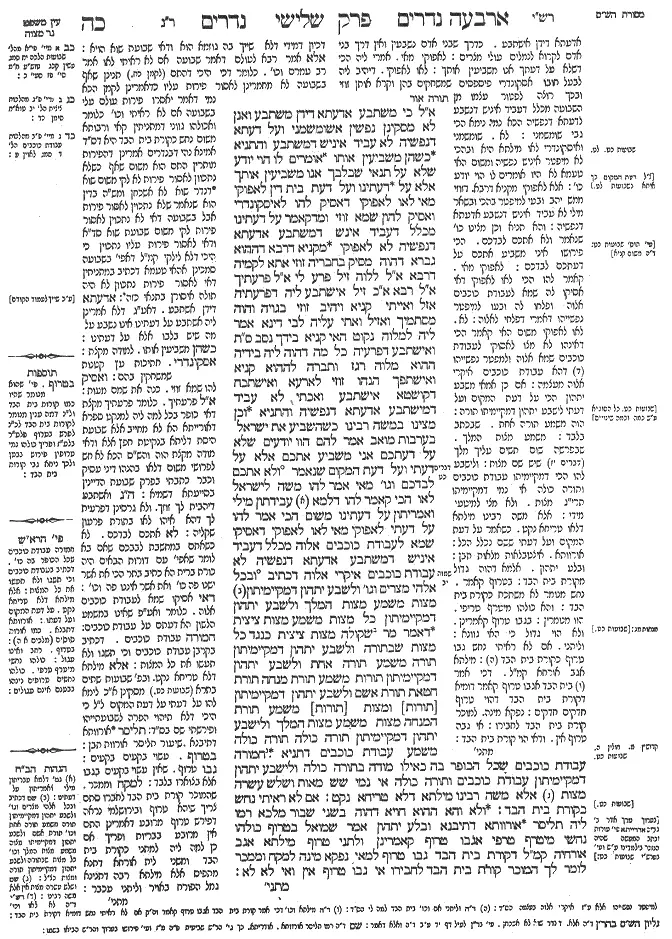
Nedarim 25a - Guemara
אמר ליה כי משתבע אדעתא דידן משתבע ואנן לא מסקינן נפשין אשומשמני ועל דעתא דנפשיה לא עביד איניש דמשתבע והתניא כשהן משביעין אותו אומרים לו הוי יודע שלא על תנאי שבלבך אנו משביעין אותך אלא על דעתינו ועל דעת בית דין לאפוקי מאי לאו לאפוקי דאסיק להו לאיסקונדרי ואסיק להון שמא זוזי ומדקאמר על דעתינו מכלל דעביד אינש דמשתבע אדעתא דנפשיה לא לאפוקי מקניא דרבא דההוא גברא דהוה מסיק בחבריה זוזי אתא לקמיה דרבא אמר ליה ללווה זיל פרע לי אמר ליה פרעתיך אמר ליה רבא אם כן זיל אישתבע ליה דפרעתיה אזל ואייתי קניא ויהיב זוזי בגויה והוה מסתמיך ואזיל ואתי עליה לבי דינא אמר ליה למלוה נקוט האי קניא בידך נסב ספר תורה ואישתבע דפרעיה כל מה דהוה ליה בידיה ההוא מלוה רגז ותברה לההוא קניא ואישתפך הנהו זוזי לארעא ואישתכח דקושטא אישתבע ואכתי לא עביד דמישתבע אדעתא דנפשיה והתניא וכן מצינו במשה רבינו כשהשביע את ישראל בערבות מואב אמר להם הוו יודעים שלא על דעתכם אני משביע אתכם אלא על דעתי ועל דעת המקום שנאמר ולא אתכם לבדכם וגו' (דברים כט יג) מאי אמר להו משה לישראל לאו הכי קאמר להו דלמא עבידתון מילי ואמריתון על דעתינו משום הכי אמר להו על דעתי לאפוקי מאי לאו לאפוקי דאסיקו שמא לעבודת כוכבים אלוה מכלל דעביד איניש דמשתבע אדעתא דנפשיה לא עבודת כוכבים איקרי אלוה דכתיב ובכל אלהי מצרים וגו' ולשבע יתהון דמקיימיתון מצוות משמע מצוַת המלך ולשבע יתהון דמקיימיתון כל מצוות משמע מצוַת ציצית דאמר מר שקולה מצוַת ציצית כנגד כל מצוות שבתורה ולשבע יתהון דמקיימיתון תורה משמע תורה אחת ולשבע יתהון דמקיימיתון תורות משמע תורת מנחה תורת חטאת תורת אשם ולשבע יתהון דמקיימיתון [תורות] ומצוות [תורות] משמע תורת המנחה מצוות משמע מצות המלך ולשבע יתהון דמקיימיתון תורה כולה תורה כולה משמע עבודת כוכבים דתניא חמורה עבודת כוכבים שכל הכופר בה כאילו מודה בתורה כולה ולשבע יתהון דמקיימיתון עבודת כוכבים ותורה כולה אי נמי שש מאות ושלוש עשרה מצוות אלא משה רבינו מילתא דלא טריחא נקט:
אם לא ראיתי נחש כקורת בית הבד:
ולא והא ההוא חויא דהוה בשני שבור מלכא רמו ליה תליסר אורוותא דתיבנא ובלע יתהון אמר שמואל בטרוף כולהו נחשי מיטרף טרפי אגבו טרוף קאמרינן ולתני טרוף מילתא אגב אורחיה קא משמע לן דקורת בית הבד גבו טרוף למאי נפקא מינה למקח וממכר לומר לך המוכר קורת בית הבד לחבירו אי גבו טרוף אין ואי לא לא:
Comments from Rashi on Masechet Nedarim Page 25a
אדעתא דידן אישתבע . כדרך שבני אדם נשבעין ואין דרך בני אדם לקרוא לנמלים עולי מצרים: לאפוקי מאי . אמרי ליה הכי דשלא על דעתך אנו משביעין אותך: לאו לאפוקי . דיהיב ליה לבעל חובו אסקונדרי פיספסים שמשחקים בהן וקרא אותן זוזי ובכך רוצה לפטור עצמו מן השבועה מכלל דעביד איניש דנשבע לדעתא דנפשיה הכא נמי נימא הכי גבי שומשמני: לא . שומשמני ואיסקונדרי לאו מילתא היא ובהכי לא מיפטר איניש נפשיה ומשום האי טעמא לא היו אומרים לו הוי יודע כו': אלא לאפוקי מקניא דרבא . דזוזי ממש יהב ובעי למיפטר בהכי ובשאר מילי לא עביד איניש דנשבע אדעתא דנפשיה: והא תניא וכן מצינו כו' שנאמר ולא אתכם לבדכם . הכי פירושו איני משביע אתכם על דעתכם לבדכם: לאפוקי מאי . קאמר להו הכי לאו לאפוקי דאי אסיקו לה שמא לעבודת כוכבים אלוה ופלחו לה ובעו למיפטר נפשייהו דאמרי דפלחי לאלוה: לא . לאו לאפוקי משום האי קאמר הכי דאינהו לא מצו לאסוקי לעבודת כוכבים שמא אלוה ולמפטר נפשייהו דהא עבודת כוכבים איקרי אלוה מעצמה: אם כן אמאי משבע יתהון הכי על דעת המקום ועל דעתי לישבע יתהון דמקיימיתו תורה: הוה משמע תורה אחת . שבכתב בלבד: משמע מצות המלך . שבפרשה שום תשים עליך מלך (דברים יז) שיש שם מצות: ולישבע להו הכי דמקיימיתו עבודת כובבים ותורה כולה אי נמי דמקיימיתו תרי"ג מצות . ולא מצי למיטעי מידי: אלא משה רבינו מילתא דלאו טירחא נקט . כשאמר על דעת המקום ועל דעתי ששם נכלל הכל: אורוותא . איצטבלאות מלאות תבן: ובלע יתהון . אלמא דהוה גדול מקורת בית הבד: בטרוף קאמר . נחש מנומר לא משתכח כקורת בית הבד: והא כולהו מיטרף טריפי . הוו מנומרין: בגבו טרוף קאמרינן . ולא הוי גדול כי האי גוונא: וליתני . אם לא ראיתי נחש גבו טרוף כקורת בית הבד: מילתא אגב אורחא קמ"ל . דכי אמר בית הבד אגבו טרוף קאמר דומיא דקורת בית הבד דהוי טרוף חדקים חדקים: נפקא מינה . למוכר קורת בית הבד לחבירו: אי גבה טרוף אין . ודאי הוי קורת בית הבד:
Comments from Tosafot - Nedarim 25a
בטרוף . פי' שהוא מנומר שהיו כמו קורות בית הבד ול''נ דמה ענין מנומר לקורות בית הבד לכ''נ לפרש בטרוף פלט''ר בלע''ז ופריך כולהו נמי טרופין פירוש בבטן ולכך ניחא גבי קורות בית הבד:
Nedarim 25a - Mishnah translated into english
Rav Ashi said to him: When he takes an oath, he takes an oath based on our understanding, which is that of an ordinary person, and we do not entertain the possibility in our mind that he is referring to ants [shumshemanei]. Therefore, if he took an oath in that manner, it is assumed that he referred to people, like those that left Egypt.
The Gemara asks: And does a person not take an oath according to his own understanding? There are times when one takes an oath with a particular stipulation in mind or intends a special meaning to his words. But isn’t it taught in a baraita: When the judges administer an oath to one who claims he paid a debt, they say to him: Know that we do not administer an oath to you based on a stipulation in your heart, i.e., you cannot claim that you are taking the oath based on a condition you have in mind. Rather, your oath is taken based on our understanding and on the understanding of the court. The Gemara clarifies: What does the phrase that they say to him: Based on our understanding, come to exclude? Does it not serve to exclude a case where one gave the debtor tokens [iskundarei] from a game, and in his mind he gives them the title of coins and takes an oath that he returned these coins, which is the truth based on his unspoken thoughts.
The Gemara clarifies its question: And since the baraita says that the oath taken in court is: According to our understanding, by inference it means that a person commonly takes an oath according to his own understanding and the oath would take effect according to his intent. Therefore, such a practice must be specifically excluded when taking an oath in a court.
The Gemara responds: No, this warning comes to exclude a case similar to that cane of Rava, in which a person attempts to deceive the court but does not necessarily utilize his own terminology, as there was a certain man who claimed money from another. He came before Rava to adjudicate the case. The creditor said to the borrower: Go repay me your debt. The borrower said to him: I already repaid you. Rava said to him: If so, go take an oath to him that you repaid him.
The borrower went and brought a hollow cane, and placed the money inside it, and was leaning upon it, and went leaning upon it to the court. He said to the lender: Hold this cane in your hand so that I can take an oath while holding a Torah scroll. The borrower took the Torah scroll and swore that he had repaid the entire sum that had been in his possession.
That creditor then became angry upon hearing the borrower taking a false oath and broke that cane, and all of those coins placed inside fell to the ground. And it turned out that he had taken the oath in truth, since he had returned all the money at the time of the oath by giving him the cane with the money inside. However, this was a deceitful tactic, as he intended that the creditor return the cane and the money in it to him after he had taken the oath. In order to prevent this kind of deception, the one taking the oath is warned that he must take the oath according to the understanding of the court.
The Gemara asks: And still, does a person not commonly take an oath according to his own understanding? But isn’t it taught in a baraita: And so we found with regard to Moses our teacher. When he administered an oath to the Jewish people in the plains of Moab, that they accept the Torah upon themselves, he said to them: Know that I do not administer an oath upon you according to your understanding and the stipulations in your hearts but according to my understanding and the understanding of the Omnipresent, as it is stated: “Neither with you only do I make this covenant” (Deuteronomy 29:13).
What did Moses say to Israel? Isn’t this what he said to them: Perhaps you will perform negative actions, i.e., transgressions, and say: The oath was taken according to our understanding. Due to that reason, he said to them: You take the oath according to my understanding. The Gemara clarifies: What did his warning come to exclude? Does it not serve to exclude the possibility that they give the title God, to an object of idol worship and say that this was their intention when they took an oath to worship God? The fact that Moses needed to preclude this claim indicates by inference that a person commonly takes an oath according to his own understanding.
The Gemara responds: No, idol worship is also called: God, in the Bible, as it is written: “And against all the gods of Egypt I will execute judgments” (Exodus 12:12). Therefore, this would not have been a special stipulation in their minds but a misguided intention within the oath itself. Moses suspected this and therefore issued the warning.
The Gemara asks: And why did Moses have to state the oath with this warning? Let him administer an oath to them with the words: That you will fulfill the mitzvot, which also includes the prohibition against idol worship. The Gemara answers: The word mitzvot, meaning commandments, could also indicate the commandments of the king, and this might be their intention if they were to take an oath in this manner.
The Gemara asks: And let him administer an oath to them with the words: That you will fulfill all the mitzvot. The Gemara answers: This too does not suffice, because this phrase could indicate specifically the mitzva of ritual fringes, as the Master said: The mitzva of ritual fringes is equivalent to all the mitzvot in the Torah. Consequently, if they would accept upon themselves: All the mitzvot, they may have intended to refer only to the mitzva of ritual fringes.
The Gemara asks: And let him administer an oath to them: That you fulfill the Torah. The Gemara answers: That phrase indicates only one Torah, the Written Torah and not the Oral Torah. The Gemara asks: And let him administer an oath: That you fulfill the Torahs, in the plural, to include both the Written Torah and Oral Torah. The Gemara answers: This too does not necessarily include the entire Torah, since it is possible that it indicates the Torah of the meal-offering, the Torah of the sin-offering, and the Torah of the guilt-offering. The Gemara asks: And let him administer an oath: That you fulfill the Torahs and mitzvot. The Gemara answers: This also does not include the entire Torah, because the word Torahs could indicate the Torah of the meal-offering, and mitzvot could indicate the commandments of the king.
The Gemara asks: And let him administer an oath: That you fulfill the entire Torah. The Gemara answers: Fulfilling the entire Torah could indicate specifically the denial of idol worship, which is also deemed fulfilling the entire Torah, as it is taught in a baraita: Idol worship is so severe a sin that anyone who denies it is considered as though he concedes to the truth of the entire Torah. The opposite is true for someone who worships idols. Therefore, the Jewish people could have claimed that fulfilling the entire Torah denotes nothing more than not practicing idol worship.
The Gemara asks: And let him administer an oath: That you fulfill the mitzva to distance oneself from idol worship and also fulfill the entire Torah. Or, alternatively, let Moses administer an oath that the Jewish people will fulfill six hundred thirteen mitzvot, so there will be no doubt as to their intention. Rather, Moses our teacher used an expression that was not troublesome for the Jews. Although he could have found another manner in which they could take an oath, and it would leave no doubt as to the correct intentions, he did not want to trouble them by employing a more complex method. Therefore, he administered the oath and stated that it was according to his understanding and the understanding of the Omnipresent.
§ It was taught in the mishna that if one prohibits an item with a konam vow: If I did not see a snake as large as the beam of an olive press, it is a vow of exaggeration. The Gemara asks: And is there not a snake like this? But a certain snake that lived in the days of King Shapur was so big that they threw thirteen bundles of straw and it swallowed them, so it was certainly bigger than the beam of an olive press. Shmuel said: It is speaking here of a snake that is notched, and the one who took the vow intended to say that the snake had notches in its back like the beam of an olive press. The Gemara asks: But all snakes have notches like this. The Gemara answers: We are saying that it is notched on its back, which is exceedingly rare.
The Gemara asks: And let the tanna teach explicitly that the snake was notched; why did he say: Like the beam of an olive press? The Gemara answers: He teaches us a matter in passing, which is that the back of the beam of an olive press must be notched. The Gemara asks: What is the difference whether there are notches in the beam of an olive press? The Gemara answers: For purposes of buying and selling, to tell you that one who sells the beam of an olive press to another, if its back is notched then yes, the sale is valid, and if its back is not notched and there are no slits, then it is not a valid sale, as a beam without notches is not called a beam of an olive press.
Traduction : The William Davidson digital edition of the Koren Noé Talmud, with commentary by Rabbi Adin Even-Israel Steinsaltz.