 Talmud Bavli
The learning on the whole site is dedicated : L'ilui Nishmat Nissim ben Barukh Malka
The learning on the whole site is dedicated : L'ilui Nishmat Reuven ben Rivka SEBBAG
The learning on the whole site is dedicated : For the success of Elyahou ben H'anna & family
Nedarim 33a : Youtube
Daf TubeYoutube
2 video classes :
Nedarim Page 33a
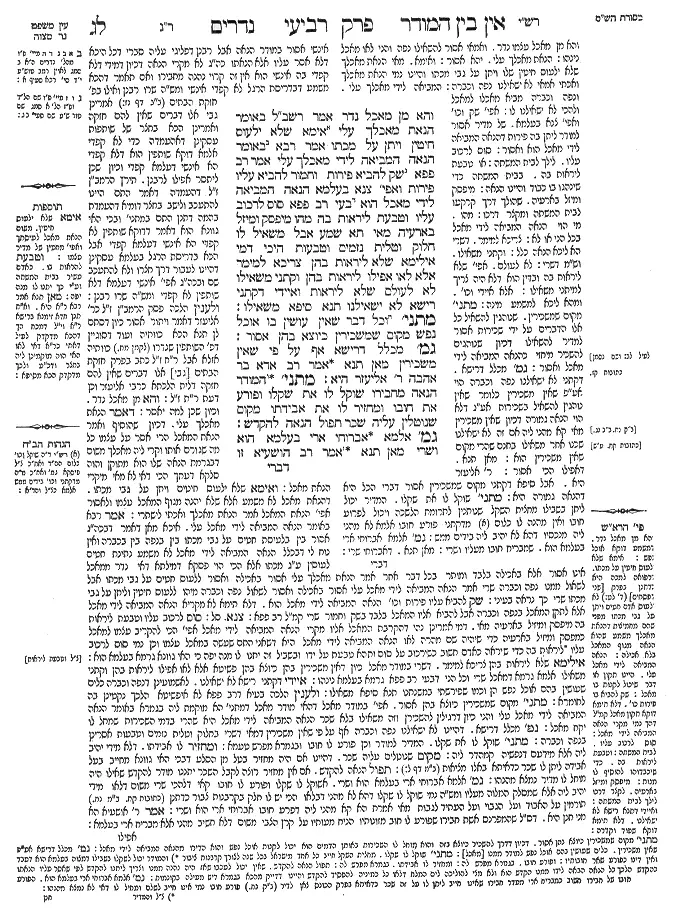
Nedarim 33a - Guemara
והא מן מאכל נדר אמר רבי שמעון בן לקיש באומר הנאת מאכלך עלי אימא שלא ילעוס חיטין ויתן על מכתו אמר רבא באומר הנאה המביאה לידי מאכלך עלי אמר רב פפא שק להביא פירות וחמור להביא עליו פירות ואפילו צנא בעלמא הנאה המביאה לידי מאכל הוא בעי רב פפא סוס לרכוב עליו וטבעת ליראות בה מהו מיפסק ומיזל בארעיה מאי תא שמע אבל משאיל לו חלוק וטלית נזמים וטבעות היכי דמי אילימא שלא ליראות בהן צריכא למימר אלא לאו אפילו ליראות בהן וקתני משאילו לא לעולם שלא ליראות ואיידי דקתני רישא לא ישאילנו תנא סיפא משאילו מתני׳ וכל דבר שאין עושין בו אוכל נפש מקום שמשכירין כיוצא בהן אסור גמ׳ מכלל דרישא אף על פי שאין משכירין מאן תנא אמר רב אדא בר אהבה רבי אליעזר היא מתני׳ המודר הנאה מחבירו שוקל לו את שקלו ופורע את חובו ומחזיר לו את אבידתו מקום שנוטלין עליה שכר תיפול הנאה להקדש גמ׳ אלמא אברוחי ארי בעלמא הוא ושרי מאן תנא אמר רב הושעיא זו
Comments from Rashi on Masechet Nedarim Page 33a
והא מן מאכל עצמו נדר . ואמאי אסור להשאילו נפה והני לאו מאכל נינהו: הנאת מאכלך עלי . יהא אסור: ואימא . מאי הנאת מאכלך שלא ילעוס חיטין שלו ויתן על גבי מכתו והיינו נמי הנאת מאכלך ואכתי אמאי לא ישאילנו נפה וכברה: המביאה לידי מאכלך עלי . ונפה וכברה מביא מאכלו למאכל ולהכי לא ישאילנו לו: אפי' שק וכו' ואפי' צנא בעלמא . של מדיר אסור למודר ליתן בה פירות דהנאה המביאה לידי מאכל הוא ואסור: סוס לרכוב עליו . לילך לבית המשתה: או טבעת ליראות בה . בבית המשתה כדי שינהגו בו כבוד והיינו הנאה: מיפסק ומיזל בארעיה . שהולך דרך קרקעו לבית המשתה ומקצר דרכו: מהו . מי הוי הנאה המביאה לידי מאכל בכל הני או לא: צריכא למימר . דשרי הא ליכא הנאה כלל: וקתני משאילו . וש"מ דשרי: לא לעולם . אפי' שלא ליראות בה ובדין הוא דלא היה צריך למיתני משאילו: אלא איידי וכו' . ומהא ליכא למשמע מינה: מתני' מקום שמשכירין . שנוהגין להשאיל כל אלו הדברים על ידי שכירות אסור למדיר להשאילו דכיון שנוהגים להשכיר מיחזי כהנאה המביאה לידי מאכל ואסור: גמ' מכלל דרישא . דקתני לא ישאילנו נפה וכברה הוי אע"פ שאין משכירין כלומר שאין נוהגין להשאיל בשכירות אע"ג דלא הוי הנאה גמורה דכיון שאין משכירין מאי קא מהני ליה אם זה לא ישאילנו שכנו אחר משאילו בחנם שהרי מקום שאין משכירין הוא: מאן תנא . דאפילו הכי אסור: ר' אליעזר היא . אבל סיפא דקתני מקום שמשכירין אסור דברי הכל היא דהנאה גמורה היא: מתני' שוקל לו את שקלו . המדיר יכול ליתן בשבילו מחצית השקל שנותנין לתרומת הלשכה ויכול לפרוע חובו ואין מהנה לו כלום מדקתני פורע חובו אלמא לא מהני ליה מנכסיו דהא לא יהיב ליה בידים ממש: גמ' אלמא אברוחי ארי בעלמא הוא . שמבריח חובו מעליו ושרי: מאן תנא . דאברוחי שרי:
Comments from Tosafot - Nedarim 33a
אימא שלא ילעוס חיטין . משום הנאת מאכל לעיסתך ואפי' מחטין של מדיר עצמו: וטבעת להראות בו . כאדם עשיר בבית המשתה וע''י כך יתנו לו מנה יפה: מאן תנא אמר רבא ר''א היא . וא''ת תנן חדא זימנא ברישא ר''א וי''ל דמכח הך דהכא מדקדק לעיל דאתי כר''א דאי לאו האי הוה מוקמינן ליה בחצר ודכ''ע ולכך מדקדק הכא מסיפא:
Nedarim 33a - Mishnah translated into english
The Gemara asks: But didn’t he vow that he is prohibited from partaking of food, and those items are not food items? Rabbi Shimon ben Lakish said: The mishna is referring to a case where he says: Benefit from your food is forbidden to me, which includes any benefit associated with food.
The Gemara asks: Say that the result of a vow formulated in that manner is that he may not chew wheat kernels belonging to the one from whose food benefit is forbidden and place them on his wound, as that is a benefit that results from food. However, that vow does not render items used in the preparation of food forbidden. Rava said that the mishna is referring to a case where he says: Benefit that leads to preparation of your food is forbidden to me.
Rav Pappa said: Borrowing from him a sack in which to bring produce, or a donkey upon which to bring produce, or even merely a basket, each renders benefit that leads to food, and this benefit is forbidden. Rav Pappa raised a dilemma: If he seeks to borrow a horse upon which to ride or a ring with which to be seen when attending a feast, to create the impression that he is wealthy, what is the ruling? Is it prohibited to borrow these items, since having them in one’s possession may indirectly result in his being served before others or being served higher-quality food; and therefore, borrowing those items provides benefit that leads to food? With regard to traversing and walking on his land that facilitates one’s quick return home, enabling him to eat sooner, what is the halakha?
The Gemara proposes: Come and hear a proof from the mishna: However, he may lend him a garment, and a cloak, and nose rings, and finger rings. The Gemara asks: What are the circumstances of that situation? If we say it is a case where it is not the borrower’s intent to be seen with them, and therefore there is no benefit that leads to food, does this need to be said? The vow rendered only food forbidden. Rather, isn’t this halakha stated even in a case where he borrowed those items to be seen with them, and it is taught in the mishna that he may lend it to him?
The Gemara refutes this. No, actually the mishna is referring to a case where he borrowed those items with the intention not to be seen with them. In response to the question: Is it necessary to say so, the Gemara answers that it is not necessary to teach this halakha. However, since it is taught in the first clause: He may not lend him, when listing the matters that may not be loaned, the tanna taught the latter clause of the mishna with a parallel formulation: He may lend him. Rav Pappa’s dilemma remains unresolved.
MISHNA: And with regard to any item that one does not use in the preparation of food, in a place where one rents items of that kind, that item is forbidden. Meaning, one for whom benefit from another is forbidden by vow is prohibited from borrowing this type of item from the one who vowed and imposed the prohibition. This is because one can use the money saved by borrowing the item rather than renting it to purchase food.
GEMARA: The Gemara states: By inference, one may conclude that the first clause of the mishna, which states that the one for whom benefit from another is forbidden by vow is prohibited from deriving benefit from utensils used in the preparation of food, e.g., a sieve or a strainer, applies even if they are in a place where one does not rent items of that kind but typically lends them at no cost. The Gemara asks: Who is the tanna who taught this mishna? Rav Adda bar Ahava said: It is Rabbi Eliezer, who maintains that overlooking is prohibited in the case of one for whom benefit from another is forbidden by vow.
MISHNA: With regard to one prohibited by vow from deriving benefit from another, if that other person chooses, he may contribute the half-shekel to the Temple on his behalf, and repay his debt, and return his lost item to him, and the one prohibited from benefiting is not considered to have benefited from him. In a place where one takes payment for returning a lost item, that benefit should fall into the category of consecrated Temple property.
GEMARA: The mishna allowed one who vowed and imposed the prohibition to pay the financial obligations of the one who is prohibited by vow to derive benefit from him. Based on this, the Gemara concludes: Apparently, repaying his debts is tantamount to merely driving away a lion from him, and it is permitted. He is not actually giving him anything. Rather, he is preventing potential future harm. That is not considered a benefit.
The Gemara asks: Who is the tanna who taught that in performing the actions listed in the mishna one is merely preventing harm? Rav Hoshaya said: This
Traduction : The William Davidson digital edition of the Koren Noé Talmud, with commentary by Rabbi Adin Even-Israel Steinsaltz.