 Talmud Bavli
Nedarim 3a : Youtube
Daf TubeYoutube
2 video classes :
Nedarim Page 3a
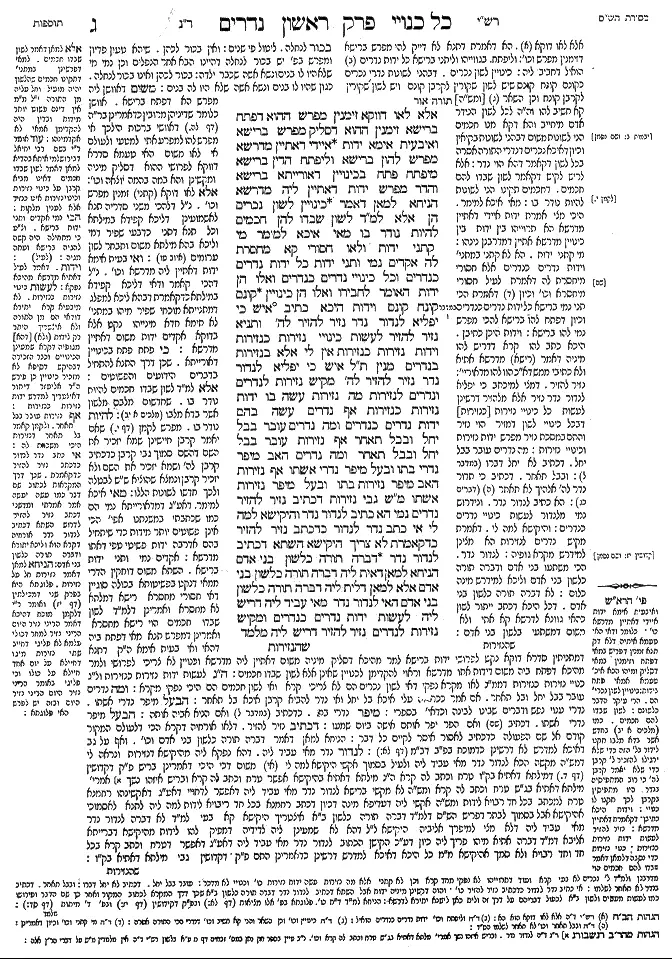
Nedarim 3a - Guemara
אלא לאו דווקא זימנין מפרש ההוא דפתח ברישא זימנין ההוא דסליק מפרש ברישא ואיבעית אימא ידות איידי דאתיין מדרשא מפרש להון ברישא וליפתח הדין ברישא מיפתח פתח בכינויין דאורייתא ברישא והדר מפרש ידות דאתיין ליה מדרשא הניחא למאן דאמר כינויין לשון נכרים הן אלא למ''ד לשון שבדו להן חכמים להיות נודר בו מאי איכא למימר מי קתני ידות ולאו חסורי קא מחסרת לה אקדים נמי ותני ידות כל ידות נדרים כנדרים וכל כינויי נדרים כנדרים ואלו הן ידות האומר לחבירו ואלו הן כינויין קונם קונח קונס וידות היכא כתיב (במדבר ו ב) איש כי יפליא לנדור נדר נזיר להזיר לה' ותניא נזיר להזיר לעשות כינויי נזירות כנזירות וידות נזירות כנזירות אין לי אלא בנזירות בנדרים מנין ת''ל איש כי יפליא לנדור נדר נזיר להזיר לה' מקיש נזירות לנדרים ונדרים לנזירות מה נזירות עשה בו ידות נזירות כנזירות אף נדרים עשה בהם ידות נדרים כנדרים ומה נדרים עובר בבל יחל ובבל תאחר אף נזירות עובר בבל יחל ובבל תאחר ומה נדרים האב מיפר נדרי בתו ובעל מיפר נדרי אשתו אף נזירות האב מיפר נזירות בתו ובעל מיפר נזירות אשתו מ''ש גבי נזירות דכתיב נזיר להזיר נדרים נמי הא כתיב לנדור נדר והיקישא למה לי אי כתב נדר לנדור כדכתב נזיר להזיר כדקאמרת לא צריך היקישא השתא דכתיב לנדור נדר דברה תורה כלשון בני אדם הניחא למאן דאית ליה דברה תורה כלשון בני אדם אלא למאן דלית ליה דברה תורה כלשון בני אדם האי לנדור נדר מאי עביד ליה דריש ליה לעשות ידות נדרים כנדרים ומקיש נזירות לנדרים נזיר להזיר דריש ליה מלמד
Comments from Rashi on Masechet Nedarim Page 3a
אלא לאו דוקא . הא דאמרת דתנא לא דייק להי מפרש ברישא דזימנין מפרש וכו': וליפתח . בגווייהו וליתני ברישא כל ידות נדרים הואיל דחביבי ליה: כינויין לשון נכרים . דבהני לשונות נדרי נכרים כקונם קונח קונס שיש לשון שקורין לקרבן קונם ויש לשון שקורין לקרבן קונח וכן השאר [ומש"ה] קא חשיב להו וה"ה לכל לשון הנודר אדם מיחייב והא דקא מנו חכמים הני לשונות משום דבהני לשונות בקיאין וכיון דאיכא נכרים דנדרי התורה אסרה בכל לשון דקאמר דהא הוי נדר: אלא לריש לקיש דקאמר לשון שבדו להם חכמים . דחכמים תקינו הני לשונות להיות נודר בו: מאי איכא למימר . היכי מצי אמרת ידות איידי דאתיין מדרשא הא תרוייהו בין ידות בין כינויין מדרשא אתיין דמדרבנן נינהו: מי קתני ידות . הא לא קתני במתני' וידות נדרים כנדרים אלא חסורי מיחסרת לה דאמרת לעיל חסורי מיחסרא וכו' וכיון דאמרת הכי תני נמי ברישא כל ידות נדרים כנדרים וכיון דפתח להו ברישא להכי מפרש נמי להו ברישא: וידות היכן כתיבן . היכא כתב להו קרא דדריש להו מיניה דאמר (רישא) מדרשא אתיא ולא כתיבי ממש דא"כ הוו להו מדאוריי': נזיר להזיר . דמצי למיכתב כי יפליא לנדור נדר נזיר אלא מלהזיר דרשינן לעשות כל כינויי נזירות [כנזירות] דבכל כינויי לשון דמזיר הוי נזיר. והתם במסכת נזיר מפרש ידות נזירות וכינויי נזירות: מה נדרים עובר בבל יחל . דכתיב לא יחל דברו (במדבר ל): ובבל תאחר . דכתיב כי תדור נדר לה' אלהיך לא תאחר (דברים כג): הא כתיב לנדור נדר . ונידרוש נמי מלנדור לעשות כינויי נדרים כנדרים: והיקישא למה לי . דאמרת מקיש נדרים לנזירות הא מצינן למידרש מקרא גופיה: לנדור נדר . הכי משתעו בני אדם ודברה תורה כלשון בני אדם וליכא למידרש מינה כלום: לא דברה תורה כלשון בני אדם . דכל היכא דכתב ייתור לשון כהאי גוונא לדרשא קא אתי ולא משום דמשתעי בלשון בני אדם:
Comments from Tosafot - Nedarim 3a
אלא למאן דאמר לשון שבדו חכמים . למא' דפרשינן במתני' דתקינו חכמים שהלשון יהיה מועיל וחל עליה מן התורה י''ל מ''מ אין דינם פשוט יותר מידות ובדין היה להקדימן אמאי לא אקדמינהו: עוד אומר ר''י בשם רבי יחיאל דבירושלמי איתא בהדיא למאן דאמר לשון שבדו חכמים דאינו מביא קרבן על כינוי נזירות וכינוי נזירות אינו כנזיר אלא לענין מלקות: הכי נמי אקדים ותני ידות ברישא. וצ''ע כי מתחילה היה קשה להגיה ברישא ועתה מגיה: הכי נמי אקדים ותני ידות ברישא . וצ''ע כי מתחילה היה קשה להגיה ברישא ועתה מגיה: (לעיל): וידות . דאמר לעיל דאתיא מדרשא מהיכא נפקא: לעשות כינוי נזירות כנזירות . לא מיבעיא קרא יתירא דודאי הם מן התורה ולא איצטריך היתר רק לידות (ולא) [דהא] מגופיה דקרא שמעינן הכינויים וכבר הזכירה דבהיקש דסיפא לא מזכיר כינויין כן פירש ה''ר אליעזר דיתור דאיצטריך למדרש ידות נזירות כנזירות: אף נזירות עובר בבל תאחר . ולקמן קאמר בל תאחר דנזירות היכי משכחת לה: אי כתב נדר לנדור כדכתב נזיר להזיר כדקאמרת . שכך דרך המקראות לכתוב שם דבר כמו עשה יעשה אמר אמרתי ומדשני דכתב נזיר להזיר לדרוש השתא דכתיב לנדור נדר אורחיה דקרא הוא וליכא יתורא ודברה תורה כלשון בני אדם: הניחא למאן דאמר נזירות חל על נזירות . פלוגתא היא בפרק שני דמכילתין (דף יז) ואומר ר''י דלקמן מוכח דהיכא דאמר הריני נזיר היום הריני נזיר למחר דכולי עלמא לא פליגי דחייב שתי נזירות מיגו דחיילא על יום אחד חיילא על כולו וכי פליגי באומר הריני נזיר היום הריני נזיר היום ובזה יש לפרש האי פלוגתא:
Nedarim 3a - Mishnah translated into english
Rather, the Mishna is not particular with regard to this matter, and there is no consistent pattern. Sometimes it explains first that subject with which it began, and sometimes it explains first that subject with which the introductory line in the mishna finished. And if you wish, say an alternate explanation of the order of the mishna here: With regard to intimations, since they are derived from the exposition of verses and are not explicitly mentioned in the Torah, the tanna cherishes them and explains them first.
The Gemara asks: If so, let him begin the mishna with that, i.e., intimations, first. The Gemara answers: The tanna begins with substitutes for the language of vows, which are written in the Torah, in the first clause, and then explains intimations, which are derived from the exposition of verses.
The Gemara asks: This works out well according to the one who said that substitutes for the language of vows are terms for vows in a foreign language. Consequently, they may be considered to have been written in the Torah, as vows are certainly valid regardless of the language in which they are expressed. However, according to the one who says that these substitute terms are simply language that the Sages invented for one to use in taking a vow so as to minimize using God’s name in expressing a vow, what can be said? These include novelties just as intimations do.
The Gemara responds: Does the mishna explicitly teach the halakha of intimations of vows? Do you not consider it incomplete, missing the phrase that mentions intimations? Once you are inserting this phrase into the mishna, you can also have it precede the clause about substitutes for the language of vows and teach the halakha of intimations at the beginning, so that the mishna reads as follows: All intimations of vows are like vows, and all substitutes for the language of vows are like vows. And these are intimations: One who says to his fellow: I am avowed from you, etc. And these are substitutes for the language of vows: Konam, konaḥ, konas.
§ Apropos the discussion of intimations of vows, the Gemara asks: And where are intimations of vows written, i.e., from where in the Torah is the halakha of intimations of vows derived? The Gemara explains that it is from the verse: “When a man or a woman shall clearly utter a vow, the vow of a nazirite [nazir], to consecrate [lehazir] himself to the Lord” (Numbers 6:2). And it was taught in a baraita that the doubled term “nazir lehazir” serves to render substitutes for the language of nazirite vows like nazirite vows, and intimations of nazirite vows like nazirite vows.
I have derived only intimations of nazirite vows; from where do I derive intimations of general vows? The verse states: “When a man or woman shall clearly utter a vow, the vow of a nazirite, to consecrate himself to the Lord.” This verse juxtaposes nazirite vows to other vows and other vows to nazirite vows: Just as with regard to nazirite vows, the verse rendered intimations of nazirite vows like nazirite vows, so too, with regard to vows, it rendered intimations of vows like vows.
And just as with regard to vows, one who breaks his vow transgresses the prohibition: He shall not profane (see Numbers 30:3), and if he does not fulfill his vow in time, he transgresses the prohibition: You shall not delay (see Deuteronomy 23:22), so too, with regard to nazirite vows, he transgresses the prohibition: He shall not profane, and the prohibition: You shall not delay. And furthermore, just as with regard to vows, a father may nullify the vows of his daughter and a husband may nullify the vows of his wife, as written explicitly in the passage concerning vows (Numbers, chapter 30), so too, with regard to nazirite vows, a father may nullify the nazirite vows of his daughter and a husband may nullify the nazirite vows of his wife.
The Gemara questions this explanation: What is different with regard to nazirite vows, with regard to which it is written “nazir lehazir,” using the doubled term, when with regard to all vows as well it is written: “To utter a vow [lindor neder],” also using a doubled term? Why do I need the juxtaposition of all other vows to nazirite vows in order to derive that intimations of vows are like vows, when this can be derived from the doubled term with regard to general vows?
The Gemara answers: If the Torah had written: A vow to utter [neder lindor], as it wrote with regard to a nazirite: “The vow of a nazirite, to consecrate himself [nazir lehazir],” it would be as you said, and there would be no need for the juxtaposition. Now that it is written: “To utter a vow [lindor neder],” it is possible to say that the Torah spoke in the language of men, and nothing can be derived from the phrase lindor neder, which is simply a common manner of speech.
The Gemara asks: This works out well according to the one who holds that the Torah spoke in the language of men, but according to the one who does not hold that the Torah spoke in the language of men, any doubled term comes to teach something. What does he do with this phrase: “To utter a vow [lindor neder]”? The Gemara answers: He expounds it to render intimations of vows like vows themselves. And the verse juxtaposes nazirite vows to other vows to teach that intimations of vows are like vows with regard to nazirite vows, and to teach the other halakhot mentioned above. With regard to the phrase: “The vow of a nazirite, to consecrate himself [nazir lehazir],” he expounds: This teaches
Traduction : The William Davidson digital edition of the Koren Noé Talmud, with commentary by Rabbi Adin Even-Israel Steinsaltz.
Nedarim 3a : Significance
Next step
Finished studying Nedarim 3a? Carry on with the rest of the tractate.
Study Nedarim 3bFrequently asked questions: Nedarim 3a
Where is Nedarim 3a in tractate Nedarim?
Nedarim 3a is page 3 of 180 in tractate Nedarim (Seder Nashim).
When is daf 3 of Nedarim studied in Daf Yomi?
Daf Yomi covers one daf a day, both sides. Daf 3 of Nedarim will be studied on March 31, 2030.
Is there a video class on Nedarim 3a?
Yes, by Daf Tube, Rabbi Dr. Moshe Weisblum. These classes were published on YouTube by their authors and are gathered on this site.
What is tractate Nedarim about?
The Masechet Nedarim is the third tractate of the Seder Nashim. The gemara Nedarim is the study of the laws relating to the neder, a kind of vow or oath in Judaism. The Nedarim tractate is a gemara which contains 11 chapters.
Your study is also dedicated to them
- L'ilui Nishmat רינה בת לדיסיה
- L'ilui Nishmat Jacques Isaac Ben Amram Loubaton
- L'ilui Nishmat Jamila bat Chlomo Abensour