 Talmud Bavli
Nedarim 18a : Youtube
Daf TubeYoutube
2 video classes :
Nedarim Page 18a
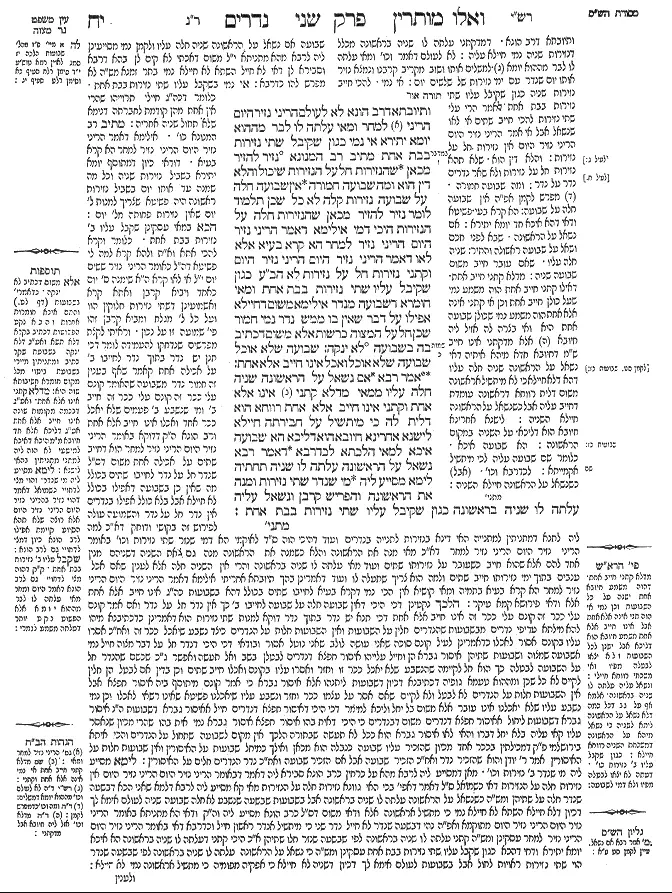
Nedarim 18a - Guemara
ותיובתא דרב הונא לא לעולם הריני נזיר היום הריני נזיר למחר ומאי עלתה לו לבר מההוא יומא יתירא אי נמי כגון שקיבל שתי נזירות בבת אחת מתיב רב המנונא נזיר להזיר מכאן שהנזירות חל על הנזירות שיכול והלא דין הוא ומה שבועה חמורה אין שבועה חלה על שבועה נזירות קלה לא כל שכן תלמוד לומר נזיר להזיר מכאן שהנזירות חלה על הנזירות היכי דמי אילימא דאמר הריני נזיר היום הריני נזיר למחר הא קרא בעיא אלא לאו דאמר הריני נזיר היום הריני נזיר היום וקתני נזירות חל על נזירות לא הכא במאי עסקינן כגון שקיבל עליו שתי נזירות בבת אחת ומאי חומרא דשבועה מנדר אילימא משום דחיילא אפילו על דבר שאין בו ממש נדר נמי חמור שכן חל על המצווה כרשות אלא משום דכתיב בה בשבועה לא ינקה שבועה שלא אוכל שבועה שלא אוכל ואכל אינו חייב אלא אחת אמר רבא אם נשאל על הראשונה שניה חלה עליו ממאי מדלא קתני אינו אלא אחת וקתני אינו חייב אלא אחת רווחא הוא דלית לה כי מיתשיל על חבירתה חיילא לישנא אחרינא חיובא הוא דליכא הא שבועה איכא למאי הלכתא לכדרבא דאמר רבא נשאל על הראשונה עלתה לו שניה תחתיה לימא מסייע ליה מי שנדר שתי נזירות ומנה את הראשונה והפריש קרבן ונשאל עליה עלתה לו שניה בראשונה כגון שקיבל עליו שתי נזירות בבת אחת
Comments from Rashi on Masechet Nedarim Page 18a
ותיובתא דרב הונא . דמדקתני עלתה לו שניה בראשונה מכלל דנזירות שניה נמי חיילא עליה: לא לעולם דאמר וכו' ומאי עלתה לו לבר מההוא יומא . למשלים אותו ושוב מקריב קרבנו ונמצא נזיר אותו יום שנדר עם ימי נזירות של שלשים יום: אי נמי . להכי חייב נזירות שניה כגון שקיבל עליו שתי נזירות בבת אחת דאמר הרי עלי שתי נזירות להכי חייב שתים אי לאו שנשאל אבל אי אמר הריני נזיר היום הריני נזיר היום אין נזירות חל על נזירות: והלא דין הוא . שלא תהא נזירות חל על נזירות ולא שאר נדרים נדר על נדר: ומה שבועה חמורה . מפרש לקמן אפ"ה אין שבועה חלה על שבועה: הא קרא בעי . פשיטא ודאי דהא איכא חד יומא יתירא: אם נשאל על הראשונה . שבא לפני חכם ושאל על שבועה ראשונה והתיר: שניה חלה עליו . שאם עובר חייב משום שבועה שניה: מדלא קתני חייב אחת . דאילו קתני חייב אחת הוה משמע נמי שעל כולן חייב אחת וכן אי קתני אינה אלא אחת הוה משמע נמי שכולן שבועה אחת היא ואי בצרה לה אזיל ליה חיובא אלא מדקתני אינו חייב ש"מ דחיובא חדא מיהא איתיה דאי נשאל על הראשונה שניה חלה עליו דהא דלא חיילא כי לא מיתשיל אראשונה משום דלית רווחא דראשונה עומדת דחייב עליה אבל כשנשאל על הראשונה חיילא השניה: לישנא אחרינא חיובא הוא דליכא . על השניה במקום הראשונה: הא שבועה איכא . כלומר שם שבועה עליה לכי מיתשיל אקמייתא: לכדרבא וכו' . (אבל) כשנשאל על הראשונה חיילא השניה:
Comments from Tosafot - Nedarim 18a
אלא משום דכתיב לא ינקה . כדאמרי' בשבועות (דף לט.) והתם איכא חומרות אחרות והכא נקט הפשוטות דכתיב בקרא דלא תשא ואע''ג דלא ינקה בשבועת שקר כתיב ומתניתין מיירי בשבועת ביטוי מכל מקום חומרא חשיבותא שוה היא: מדלא קתני אינו אלא אחת . ואע''ג דבכמה מקומות שונה אינו חייב אלא אחת אע''ג דליכא אלא חד חיובא מ''מ היכא דאיכא למיטעי לא הוה ליה למתני מתניתין בהאי לישנא: לימא מסייע ליה מי שנדר . והוי מצי לדחויי כשמואל דאמר דהוי נזיר בהריני נזיר היום הריני נזיר היום אלא רוצה שלא תהא הסיוע קיימת אפילו לרב הונא כיון דמצי לדחויי גם לרב הונא: שקבל עליו ב' נזירות בבת אחת . ק''ק דהוה מצי לדחויי גם לרב הונא דאמר היום ומחר מאי עלתה לו לבר מההוא יומא אלא הפשוט נקט יותר דעלתה משמע לגמרי:
Nedarim 18a - Mishnah translated into english
and this is a conclusive refutation of the statement of Rav Huna.
The Gemara answers: No, actually the case is where he said: I am hereby a nazirite today, I am hereby a nazirite tomorrow. And what is the meaning of the statement: The second term of naziriteship is counted for him instead of the first? It is counted except for that additional day, which he still must observe. Alternatively, it may be a case where he accepted upon himself two periods of naziriteship simultaneously, i.e., he said: I am hereby a nazirite twice. Therefore, when the vow with regard to the first term of naziriteship is dissolved, the days he observed count entirely for his second term.
Rav Hamnuna raised an additional objection against the opinion of Rav Huna from a baraita. It is stated in the verse: “A nazirite, to consecrate [nazir lehazzir]” (Numbers 6:2). From the use of similar, repetitive wording in the verse here it is derived that naziriteship takes effect upon a prior vow of naziriteship. As one might have thought that it could be derived through an a fortiori inference that naziriteship does not take effect, as follows: And just as with regard to an oath, which is more stringent, an oath does not take effect upon a prior oath, with regard to naziriteship, which is more lenient, all the more so is it not clear that it does not take effect where a vow of naziriteship was already in effect? Therefore, the verse states: “Nazir lehazzir.” From here it is derived that naziriteship takes effect upon a prior vow of naziriteship.
What are the circumstances? If we say it is a case where one said: I am hereby a nazirite today, I am hereby a nazirite tomorrow, does that case require proof from a verse that it takes effect? It is obvious that the second vow of naziriteship takes effect at least on the additional day. And as the minimum term of naziriteship is thirty days, an additional thirty days must be observed. Rather, is it not a case where one said: I am a nazirite today, I am a nazirite today? And the baraita teaches that in this case as well, naziriteship takes effect upon a prior vow of naziriteship, contrary to the opinion of Rav Huna.
The Gemara answers: That is not the case. Rather, with what are we dealing here? We are dealing with a case where he accepted upon himself two terms of naziriteship simultaneously. The baraita teaches that he must observe two terms of naziriteship and bring a separate offering for each.
The baraita stated that an oath is more stringent than a vow. The Gemara asks: And what is the stringency of an oath vis-à-vis a vow, such as a vow of naziriteship? If we say the baraita posits this because an oath, unlike a vow, takes effect even with regard to a matter that has no actual substance, there is a counterargument that a vow also has stringency vis-à-vis an oath, in that it, unlike an oath, takes effect with regard to a mitzva just as it does with regard to a matter that is permitted. Rather, oaths are more stringent because it is written with regard to an oath: “The Lord will not hold guiltless he who takes His name in vain” (Exodus 20:6).
§ It is taught in the mishna that if one said: I hereby take an oath that I will not eat, I hereby take an oath that I will not eat, and he then ate, he is liable to bring an offering for only one violation of an oath. Rava said: If he requested and received dissolution from a halakhic authority for the first oath, the second oath takes effect upon him. From where is this derived? From the fact that it is not taught in the mishna that there is only one, i.e., it is as though he took only one oath as the oaths are identical. Rather, it is taught that he is liable for only one. Evidently, he is not liable for the second oath only because it does not have a span of time in which to take effect, as he is already under oath not to eat. However, when he requests dissolution of the other oath, i.e. the first oath, the second oath has a span of time in which to take effect, and takes effect.
Another version of Rava’s proof from the mishna is that it may be inferred from the statement: He is liable for only one, that although there is no liability to bring an offering for violating the second oath, there is an effective oath. But if there is no liability, then with regard to what halakha is it effective? Certainly it is effective with regard to the statement of Rava, as Rava said: If he requested and received dissolution from a halakhic authority for the first oath, the second is counted for him in its place.
The Gemara proposes: Let us say that the following mishna (Shevuot 27b) supports his opinion: In the case of one who took two vows of naziriteship, and counted the first term, and set aside an offering, and requested and received dissolution from a halakhic authority for the first oath, the second term counts for him instead of the first. Evidently, although initially the second term of naziriteship did not have a span of time in which to take effect, it was not completely void. Therefore, when the first vow was dissolved, the second one immediately took its place. It may be proved from here that this is true with regard to oaths as well.
The Gemara refutes this proof: That mishna may be referring to a case where he accepted upon himself two terms of naziriteship simultaneously. Since two terms cannot be observed concurrently, when he accepts two terms simultaneously, the halakha is that the second term commences immediately following the close of the first, which immediately took effect upon sequential periods of time. However, when one takes an oath prohibiting himself from a matter that is already prohibited by an oath in the same period of time, the second oath may not take effect at all.
Traduction : The William Davidson digital edition of the Koren Noé Talmud, with commentary by Rabbi Adin Even-Israel Steinsaltz.