 Talmud Bavli
Nedarim 79a : Youtube
Daf TubeYoutube
2 video classes :
Nedarim Page 79a
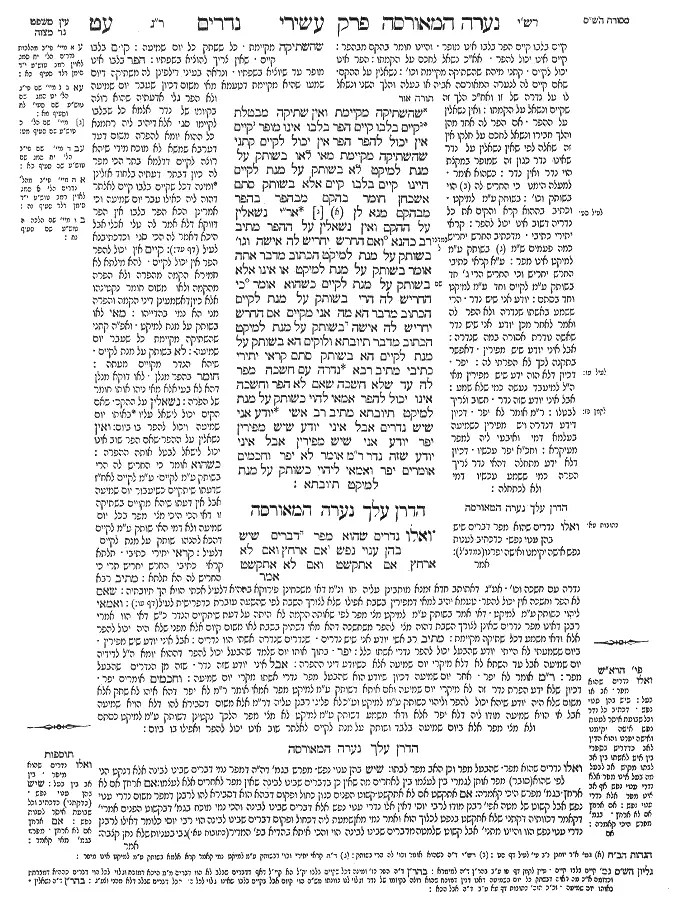
Nedarim 79a - Guemara
שהשתיקה מקיימת ואין שתיקה מבטלת קיים בלבו קיים הפר בלבו אינו מופר קיים אין יכול להפר הפר אין יכול לקיים קתני שהשתיקה מקיימת מאי לאו בשותק על מנת למיקט לא בשותק על מנת לקיים היינו קיים בלבו קיים אלא בשותק סתם אשכחן חומר בהקם מבהפר בהפר מבהקם מנא לן אר"י נשאלין על ההקם ואין נשאלין על ההפר מתיב רב כהנא (במדבר ל, טו) ואם החרש יחריש לה אישה וגו' בשותק על מנת למיקט הכתוב מדבר אתה אומר בשותק על מנת למיקט או אינו אלא בשותק על מנת לקיים כשהוא אומר (במדבר ל, טו) כי החריש לה הרי בשותק על מנת לקיים הכתוב מדבר הא מה אני מקיים אם החרש יחריש לה אישה בשותק על מנת למיקט הכתוב מדבר תיובתא ולוקים הא בשותק על מנת לקיים הא בשותק סתם קראי יתירי כתיבי מתיב רבא נדרה עם חשכה מפר לה עד שלא חשכה שאם לא הפר וחשכה אינו יכול להפר אמאי להוי כשותק על מנת למיקט תיובתא מתיב רב אשי יודע אני שיש נדרים אבל איני יודע שיש מפירין יפר יודע אני שיש מפירין אבל איני יודע שזה נדר ר"מ אומר לא יפר וחכמים אומרים יפר ואמאי ליהוי כשותק על מנת למיקט תיובתא
הדרן עלך נערה המאורסה
מתני׳ ואלו נדרים שהוא מפר דברים שיש בהן ענוי נפש אם ארחץ ואם לא ארחץ אם אתקשט ואם לא אתקשט
Comments from Rashi on Masechet Nedarim Page 79a
קיים בלבו קיים הפר בלבו אינו מופר . והיינו חומר בהקם מבהפר: קיים אינו יכול להפר . אא"כ נשאל לחכם על הקמתו: הפר אינו יכול לקיים . קתני מיהת שהשתיקה מקיימת וכו': נשאלין על ההקם . שאם קיים לה לנערה המאורסה אביה או בעלה והלך השני ונשאל לו על נדרה של זו ואח"כ הלך זה שקיים ונשאל על הקמתו: ואין נשאלין על ההפר . אם הפר לה אחד מהן והלך חבירו ונשאל לחכם על חלקו אין זה שאלה לפי שאין נשאלין על נדר שאינו נדר כגון זה שמופר במקצת הוי נדר ואין נדר: כשהוא אומר . למעלה הימנו כי החריש לה הוי בשותק וכו': בשותק ע"מ למיקט . וכתיב בההוא קרא והקים את כל נדריה דשוב אינו יכול להפר: קראי יתירי כתיבי . מדכתיב החרש יחריש כמה פעמים ש"מ בשותק ע"מ למיקט אינו מפר: ע"א קראי כתיבי החרש יחריש וכי החריש הרי ג' חד בשותק ע"מ לקיים וחד ע"מ למיקט וחד בסתם: יודיע אני שיש נדר . הרי ששמע באשתו שנדרה ולא הפר לה ואמר לאחר מכן יודע אני שיש נדר שאשה נודרת אסורה במה שנדרה: אבל איני יודע שיש מפירין . דאפשר בתקנה לכך לא הפרתי לה: יפר . דכיון דלא הוה ידע שיש מפירין מאי ה"ל למיעבד נעשה כמי שלא שמע: אבל איני יודע שזה נדיר . חשוב וצריך לבטלו: ר"מ אומר לא יפר .דכיון דידע דנדרה ויש מפירין כשימעה בעלמא דמי ואיבעי ליה למפר מעיקרא: וחכ"א יפר . עכשיו דכיון דלא ידע מתחלה דהאי נדר צריך הפרה כמי ששמע עכשיו דמי ולא לכתחלה: ואלו נדרים שהוא מפר דברים שיש בהן ענוי נפש . כדכתיב לענות נפש אישה יקימנו ואישה יפרנו (במדבר ל):
Comments from Tosafot - Nedarim 79a
מתני' ואלו נדרים שהוא מיפר . בין אב בין בעל: שיש בהן ענוי נפש . (כדקתני) כדכתיב וכל שבועת איסר לענות נפש: אם ארחץ אם לא ארחץ . מפרש בגמ' מאי קאמר:
Nedarim 79a - Mishnah translated into english
that silence ratifies a vow, but silence does not cancel, i.e., nullify, a vow. If the husband ratified a vow in his heart, it is ratified, but if he nullified it in his heart, it is not nullified. The baraita adds: If he ratified a vow he can no longer nullify it; and similarly, if he nullified a vow he can no longer ratify it. In any case, the baraita teaches that silence ratifies a vow. What, is it not referring even to one who is silent in order to annoy his wife?
The Gemara rejects this interpretation: No, it is referring to one who is silent in order to sustain the vow. The Gemara asks: If so, this is the same as: If the husband ratified a vow in his heart, it is ratified. Rather, the phrase in the baraita: Silence ratifies a vow, is referring to a case where the husband is silent without specifying his intent.
Relating to the baraita, the Gemara asks: We found how the halakha is more stringent in ratification of vows than in nullification of vows, but where do we find a case in which the halakha is more stringent in nullification than in ratification? Rabbi Yoḥanan says: One can request from a halakhic authority dissolution of the ratification of a vow his wife took, but one cannot request dissolution of the nullification of a vow.
Rav Kahana raised an objection to the opinion of Rabbi Ḥanina that a husband who is silent about his wife’s vow in order to annoy her can nullify it even several days later. A baraita teaches: “But if her husband altogether hold his peace at her from day to day, then he causes all her vows to be ratified” (Numbers 30:15). The verse is speaking of one who is silent in order to annoy his wife. Do you say that the verse is referring to one who is silent in order to annoy her, or it is referring only to one who is silent in order to ratify the vow?
The baraita continues: When it says, in the continuation of the same verse: “He has ratified them, because he held his peace at her on the day that he heard them” (Numbers 30:15), the verse is speaking of one who is silent in order to ratify the vow. How do I realize the meaning of: “If her husband altogether holds his peace at her”? It must be that the verse is speaking of one who is silent in order to annoy his wife, and that this is also considered an act of ratification. This baraita is a conclusive refutation [teyuveta] of Rabbi Ḥanina’s opinion.
The Gemara asks about this baraita: And let the tanna interpret this part of the verse as referring to one who is silent in order to ratify the vow, and that part of the same verse as referring to one who was silent without specifying his intent, as the Gemara suggests above in explanation of the baraita? The Gemara answers: Superfluous verses are written about silence, leading to the conclusion that whatever the reason for the husband’s silence, the vow is ratified.
Rava raised a further objection to the opinion of Rabbi Ḥanina, from a mishna (76b): If she took a vow on Friday with nightfall approaching, her father or husband can nullify the vow only until nightfall, since, if it became dark and he had not yet nullified her vow, he cannot nullify it anymore. Why should this be so? Let the fact that the husband refrained from nullifying the vow out of respect for Shabbat be regarded like one who is silent in order to annoy his wife, who, according to Rav Huna, can still nullify the vow later. The fact that this is not the case is a conclusive refutation of the opinion of Rabbi Ḥanina.
Rav Ashi also raised an objection to Rabbi Ḥanina’s opinion, from another mishna (87b): If a husband or father said, after failing to nullify a vow on the day he heard it: I know that there are vows, but I do not know that there are those who can nullify vows, i.e., he was unaware that he can nullify a vow, he can nullify it even after the day he heard it. However, if he said: I know there are those who nullify, but I refrained from nullifying the vow because I do not know that this is considered a vow that I could nullify, Rabbi Meir says: He cannot nullify at this point, but the Rabbis say: Even in this case he can nullify the vow when he discovers his error.
Rav Ashi asks rhetorically: But why may he not nullify according to Rabbi Meir’s opinion? Let his silence by mistake be like that of one who is silent in order to annoy, who, according to Rabbi Ḥanina, can nullify the vow at a later stage. This is a conclusive refutation of Rabbi Ḥanina’s opinion.
MISHNA: And these are the vows that he, the husband or father, can nullify: The first category consists of matters that involve affliction for the woman who took the vow. For example, if a woman vowed: If I bathe, or: If I do not bathe; if she vowed: If I adorn myself [etkashet], or: If I do not adorn myself.
Traduction : The William Davidson digital edition of the Koren Noé Talmud, with commentary by Rabbi Adin Even-Israel Steinsaltz.