 Talmud Bavli
The learning on the whole site is dedicated : L'ilui Nishmat רינה בת לדיסיה
The learning on the whole site is dedicated : L'ilui Nishmat Avraham Ben Simha
The learning on the whole site is dedicated : L'ilui Nishmat יוסף בן מושה
Nedarim 15a : Youtube
Daf TubeYoutube
2 video classes :
Nedarim Page 15a
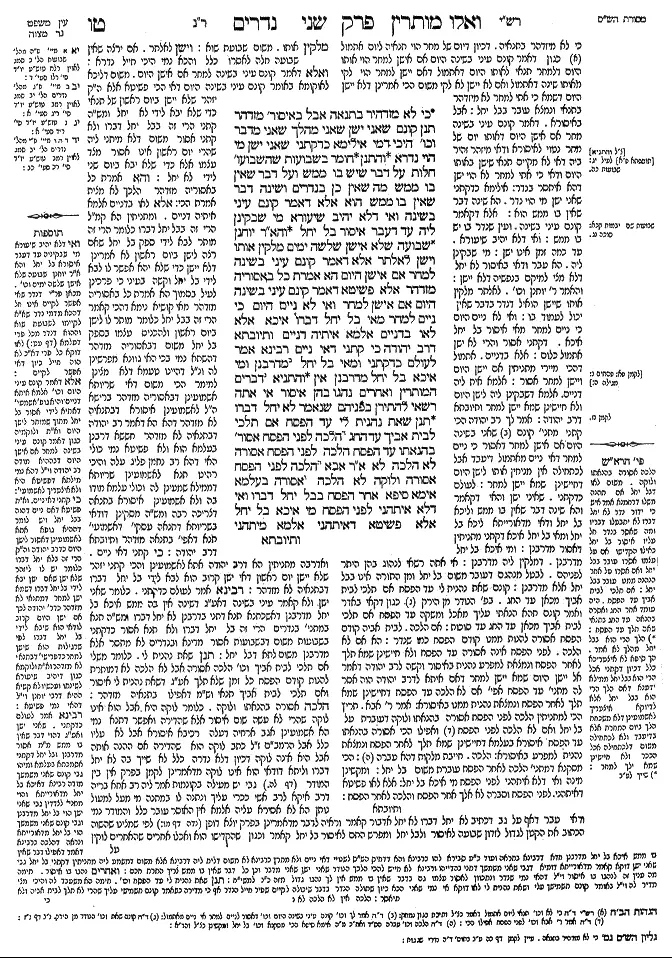
Nedarim 15a - Guemara
כי לא מזדהיר בתנאה אבל באיסוריה מזדהר תנן קונם שאני ישן שאני מהלך שאני מדבר וכו' היכי דמי אילימא כדקתני שאני ישן מי הוי נדרא והתנן חומר בשבועות שהשבועות חלות על דבר שיש בו ממש ועל דבר שאין בו ממש מה שאין כן בנדרים ושינה דבר שאין בו ממש הוא אלא דאמר קונם עיני בשינה ואי דלא יהיב שיעורא מי שבקינן ליה עד דעבר איסור בל יחל והאמר רבי יוחנן שבועה שלא אישן שלשה ימים מלקין אותו וישן לאלתר אלא דאמר קונם עיני בשינה למחר אם אישן היום הא אמרת כל באיסוריה מזדהר אלא פשיטא דאמר קונם עיני בשינה היום אם אישן למחר ואי לא ניים היום כי ניים למחר מאי בל יחל דברו איכא אלא לאו בדניים אלמא איתיה דניים ותיובתא דרב יהודה כי קתני דאי ניים רבינא אמר לעולם כדקתני ומאי בל יחל מדרבנן ומי איכא בל יחל מדרבנן אִין והתניא דברים המותרין ואחרים נהגו בהן איסור אי אתה רשאי להתירן בפניהם שנאמר לא יחל דברו תנן שאת נהנית לי עד הפסח אם תלכי לבית אביך עד החג הלכה לפני הפסח אסורה בהנאתו עד הפסח הלכה לפני הפסח אסורה לא הלכה לא אמר רבי אבא הלכה לפני הפסח אסורה ולוקה לא הלכה אסורה בעלמא אימא סיפא אחר הפסח בבל יחל דברו ואי דלא איתהני לפני הפסח מי איכא בל יחל אלא פשיטא דאיתהני אלמא מיתהני
Comments from Rashi on Masechet Nedarim Page 15a
כי לא מיזדהר בתנאיה . דכיון דיום של מחר הוי תנאיה ליום אתמול כגון דאמר קונם עיני בשינה היום אם אישן למחר הוי אותו היום דלמחר תנאי לאותו היום דאתמול דאם יישן למחר הוי לקי מאותו שינה דאתמול ואם לא יישן לא לקי משום הכי אמרינן דלא יישן היום דשמא כי אתי למחר לא מיזדהר בתנאי ונמצא עובר בבל יחל: אבל באיסורא . דאמר קונם עיני בשינה מחר אם אישן היום דאותו יום של מחר נטוי לאיסורא ודאי מיזהר זהיר ביה דאי לא מקיים תנאי שישן באותו היום ודאי כי אתי למחר לא הוי ישן דהא איתסר בנדר: ומי אכא בל יחל מדרבנן . דמלקין ליה מדרבנן: אילימא כדקתני שאני ישן מי הוי נדר . הא שינה דבר שאין בו ממש הוא: אלא דקאמר קונם עיני בשינה . ועין שנדר בו יש בו ממש: ואי דלא יהיב שיעורא . עד כמה זמן אינו ישן: מי שבקינן ליה . הא עבר ודאי באיסור לא יחל דלא מצי למיקם בנפשיה דלא יישן: והאמר ר' יוחנן וכו' . לאלתר מלקין אותו שיישן הואיל דנדר בדבר שאין יכול לעמוד בו: ואי לא ניים היום כי ניים למחר מאי איסור בל יחל איכא . דקתני אסור והרי לא ישן אתמול כלום: אלא בדניים . אתמול דהכי מיירי מתניתין אם יישן היום ויישן למחר אסור: אלמא אית ליה דניים . אלמא דשבקינן ליה לישן היום ולא חיישינן שמא יישן למחר ותיובתא דרב יהודה: אמר לך רב יהודה הכי קתני מתני' קונם שאני בשינה היום אם אישן למחר דאסור כי ניים למחר דאי ניים מאתמול דיעבד אבל לכתחילה אין מניחין אותו לישן היום דחיישינן שמא יישן למחר: לעולם כדקתני . שאיני ישן והאי דקאמר והא שינה דבר שאין בו ממש וליכא בל יחל ודאי מדאורייתא ליכא בל יחל ומאי בל יחל איכא דקתני מתניתין דאסור מדרבנן: ומי אכא בל יחל מדרבנן . דמלקין ליה מדרבנן: אי אתה רשאי לנהוג בהן היתר לפניהם . לבטל מנהגם דעובר משום בל יחל ומן התורה אינו בבל יחל אלא מדרבנן: קונם שאת נהנית לי עד הפסח אם תלכי לבית אביך מכאן עדי החג . בפ' הנודר מן הירק כגון דקאי באדר ואמר קונם תהא הנאתי עליך מאכל ומשקה עד הפסח אם תלכי לבית אביך מכאן עד החג עד סוכות: אם הלכה . לבית אביה קודם הפסח אסורה להנות ממנו קודם הפסח כמו שנדר: הא אם לא הלכה . לפני הפסח אינה אסורה עד הפסח ולא חיישינן שמא תלך לאחר הפסח ונמצאת למפרע נהנית באיסור וקשה לרב יהודה דאמר אל יישן היום שמא יישן למחר דאם איתא לדרב יהודה הוה אסר לה מתני' עד הפסח אפי' אם לא הלכה עד הפסח דחיישינן שמא תלך לאחר הפסח ונמצאת נהנית ממנו באיסורא: הא אם לא הלכה . לפני הפסח אינה אסורה עד הפסח ולא חיישינן שמא תלך לאחר הפסח ונמצאת למפרע נהנית באיסור וקשה לרב יהודה דאמר אל יישן היום שמא יישן למחר דאם איתא לדרב יהודה הוה אסר לה מתני' עד הפסח אפי' אם לא הלכה עד הפסח דחיישינן שמא תלך לאחר הפסח ונמצאת נהנית ממנו באיסורא: אמר ר' אבא . תריץ הכי למתניתין הלכה לפני הפסח אסורה בהנאתו ולוקה דעוברת על בל יחל ואם לא הלכה לפני הפסח ואפילו הכי אסורה בהנאתו עד הפסח איסורא בעלמא דחיישינן שמא תלך לאחר הפסח ונמצאת נהנית למפרע באיסורא: הלכה . חייבת מלקות דהא עברה: הכי מסקנא דמתני' הלכה לאחר הפסח עוברת משום בל יחל: ומקשינן מינה ואי דלא איתהני לפני הפסח מי איכא בל יחל: אלא לאו פשיטא דאיתהני . לפני הפסח וסברה לא אלך אחר הפסח והלכה לאחר הפסח:
Comments from Tosafot - Nedarim 15a
תנן שאת נהנית לי עד הפסח וכו' . תימה הא משעבד לה והיכי מצי מדיר לה וי''ל באומר קונם תשמישך עלי ושאת נהנית לי לאו דוקא אי נמי שאני הכא כיון שתולה הנדר בדבר שיכולה לקיים שפיר חייל הנדר אף כי מדירה כשאמר קונם תשמישי עליך שהרי לא תלך לבית אביה ולא תיאסר: הלכה אין לא הלכה לא: אלא דאמר קונם עיני היום וכו' אלמא איתא דניים . והיא גופ' אשמעי' דאתיא לידי אסור בל יחל מתוך שמותר לישן היום וא''ת ולוקמיה כגון דאמר קונם עיני בשינה למחר אם אישן . היום דבההיא מודה רב יהודה וי''ל דהא נמי מילתא דפשיטא היא ולא איצטריך לאשמוע': ואי דלא יהיב שיעורא מי שבקיניה עד דעבר איסורא בל יחל והא א''ר יוחנן שבועה שלא אישן שלשה ימים וכו' . מכאן פר''י דנדר שאי אפשר לקיים אינו חל דהכא מדמי נדר שא''א לקיימו לשבועת שוא וההוא דנדר מכל פרי דעלמא (דף עט:) לאו דוקא כל פרי דא''כ לא הוה חייל כיון דאי אפשר לקיים: אלא דאמר קונם עיני היום וכו' אלמא איתא דניים . והיא גופ' אשמעי' דאתיא לידי אסור בל יחל מתוך שמותר לישן היום וא''ת ולוקמיה כגון דאמר קונם עיני בשינה למחר אם אישן היום דבההיא מודה רב יהודה וי''ל דהא נמי מילתא דפשיטא היא ולא איצטריך לאשמועי': כי קתני דאי ניים . וא''ת פשיטא דאם ניים דהוה בבל יחל ויש לומר דההיא גופא אתא לאשמועינן דאסור לישן היום כדרב יהודה וה''ק הרי זה בלא יחל דברו כלומר יש לו ליזהר שלא ישן שאם ישן יבא לידי בל יחל דברו דשמא ישן למחר דמתנאי לא מזדהר כדר' יהודה לכך אם ישן היום קרוב לודאי הוא שיבא לידי בל יחל דברו לפי שרגילות הוא שישן למחר כדפרישי' דבתנאי לא מזדהר וא''ת ולוקמא כגון דיהיב שיעורא לשינתו ועכשיו לא קשיא ההיא דרבי יוחנן וי''ל דהאי נמי פשיטא: רבינא אמר לעולם כדקתני . שאני ישן ואע''ג דהוי דבר שאין בו ממש מ''מ אסור מדרבנן ובל יחל דקתני אסמכתא בעלמא ומיהו גבי קונם שאני משמשך מודה רבינא דאיכא בל יחל מדאורייתא והוי מתני' לצדדין גבי שאני ישן הוי בל יחל מדרבנן וגבי קונם שאני משמשך הוי בל יחל מדאורייתא ונראה דהלכה כרבינא דאמר דאפילו דבר שאין בו ממש איכא בל יחל מדרבנן חדא דרבינא בתראה ועוד כ''ע סבירא להו כרבינא והא דדחיק הש''ס לשנויי דאי ניים ולא מתרץ כרבינא לא משום דלית ליה דרבינא אלא משום דמשמע ליה מתניתין דקתני בל יחל גבי שאני ישן דוקא קאמר מדאורייתא דומיא דגבי שאני משמשך דתני בהדייהו ורבינא לא חייש להכי הלכך הנודר שאני ישן שאני מדבר וכן כל דבר שאין בו ממש צריך התרת חכם: ואחרים נהגו בו איסור . תימה מה ענין זה לנהגו בו איסור וי''ל דהאי נמי שנדר ונתכוון לאסור עצמו גם בדבר שאין בו ממש אין לך נהגו גדול מזה כ''נ למשי''ח: תנן שאת נהנית לי עד הפסח וכו' . תימה הא משעבד לה והיכי מצי מדיר לה וי''ל באומר קונם תשמישך עלי ושאת נהנית לי לאו דוקא אי נמי שאני הכא כיון שתולה הנדר בדבר שיכולה לקיים שפיר חייל הנדר אף כי מדירה כשאמר קונם תשמישי עליך שהרי לא תלך לבית אביה ולא תיאסר: הלכה אין לא הלכה לא:
Nedarim 15a - Mishnah translated into english
Sleeping today is not prohibited for him. Rather, it causes sleeping to be prohibited for him tomorrow, because when one is not careful, it is only with regard to a condition. In the former case, sleeping on the second day merely fulfills the condition on which the prohibition was based, causing it to take effect retroactively. Therefore, there is concern that he will not be careful and retroactively cause a violation. However, one is careful with regard to a prohibition. In the latter case, sleeping on the second day is directly prohibited. Therefore, there is no concern that he will violate the prohibition.
The Gemara raises a difficulty with regard to the opinion of Rav Yehuda: We learned in the mishna that one who says: Sleeping is konam for me, or: Walking is konam for me, or: Speaking is konam for me, may not violate his vow. What are the circumstances? If we say that the wording of the vow is precisely as the mishna teaches, is the vow: Sleeping is konam for me, a valid vow? But didn’t we learn in a baraita: There is stringency with regard to oaths vis-à-vis vows, in that oaths apply to something that has actual substance and to something that does not have actual substance, which is not the case with regard to vows. And sleep is something that does not have actual substance, so how can a vow apply to sleep? Rather, the mishna must be referring to a case where he said: Sleeping is konam for my eyes.
The Gemara questions this interpretation: And if he did not give a measurement to the prohibition created by the vow, but rather prohibited himself from sleeping for an unlimited period of time, do we let him be until he inevitably transgresses the prohibition: He shall not profane, by falling asleep? But didn’t Rabbi Yoḥanan say that if one says: I hereby take an oath that I will not sleep for three days, the court flogs him for taking an oath in vain, and he may sleep immediately, as he is incapable of fulfilling his oath? Here too, if the prohibition has no time frame, the vow should not take effect.
Rather, the mishna must be referring to a case where one said: Sleeping is konam to my eyes tomorrow if I sleep today. The mishna rules that he may not sleep today, lest he transgress the prohibition of: He shall not profane, by sleeping tomorrow. However, didn’t you say that with regard to this vow it is agreed that he may sleep today, as one is careful with regard to any direct prohibition and will not violate the vow tomorrow? If so, why is it prohibited for him to sleep today?
Rather, it is obvious that the mishna is referring to a case where one said: Sleeping is konam to my eyes today if I sleep tomorrow. The Gemara asks: And if he does not sleep today, when he sleeps tomorrow, what transgression of: He shall not profane his word, is there? Rather, is it not with regard to a case where he slept on the first day, and therefore the mishna warns him not to sleep on the second day lest he transgress the prohibition retroactively? Apparently, there is a situation in which he sleeps on the first day. And this is a refutation of the opinion of Rav Yehuda that he may not sleep today lest he sleep tomorrow as well, thereby violating the prohibition.
The Gemara answers: When the mishna teaches that he may not sleep tomorrow, it does not mean that today he may sleep ab initio. Rather, it means that if he did sleep today he must be careful not to sleep tomorrow.
Ravina said a different answer: Actually, the mishna may be interpreted as it teaches, i.e., sleeping is konam for me. The vow does not take effect, as sleep does not have actual substance. And if so, what is the reason the mishna states that if he sleeps he is in violation of the prohibition: He shall not profane? He transgresses the prohibition by rabbinic law. Although the vow does not take effect by Torah law, the Sages prohibited him from breaking his word.
The Gemara asks: But is there a prohibition of: He shall not profane, by rabbinic law? The Gemara answers: Yes, and it is taught in a baraita: With regard to matters that are permitted, but others are accustomed to observe a prohibition with regard to them, you may not permit these matters before those people, as it is stated: “He shall not profane his word” (Numbers 30:3). If they contravene their custom they are in violation of the prohibition: He shall not profane his word, by rabbinic law, as that is similar to violating a vow.
The Gemara attempts again to raise a difficulty with regard to Rav Yehuda’s opinion. We learned in a mishna (57a) that if a man said to his wife: Deriving benefit from me until Passover is konam for you if you go to your father’s house until the following festival of Sukkot, then, if she went to her father’s house before Passover, she is prohibited from deriving benefit from him until Passover, as she violated the condition, thereby enabling the vow to take effect.
The Gemara infers: Only if she went before Passover is it prohibited for her to derive benefit from him. However, if she did not go, she is not prohibited from deriving benefit from him. Apparently, even though she can transgress the condition retroactively until Sukkot by going to her father’s house, there is no concern that she will do so. This is difficult according to Rav Yehuda, who prohibits transgression of a conditional vow that may take effect retroactively.
Rabbi Abba said that the baraita can be interpreted as follows: If she went before Passover, she is prohibited from deriving benefit from him, and if she does so she is flogged. If she did not go before Passover, it is merely prohibited for her to derive benefit from him, lest she violate the condition and cause the vow to take effect retroactively. However, she is not liable to be flogged for it, as the vow has not yet taken effect.
The Gemara counters: Say the latter clause of that mishna, which states that if she goes to her father’s house after Passover she is in violation of: He shall not profane his word. And if the mishna is referring to a case where she did not derive benefit from him before Passover, is there a transgression of: He shall not profane? Clearly the vow was not violated. Rather, it is obvious that she derived benefit from him before Passover, and therefore if she goes to her father’s house between Passover and Sukkot she violates the vow retroactively. Apparently, she may derive benefit from him, even though she can subsequently violate the vow by transgressing the condition.
Traduction : The William Davidson digital edition of the Koren Noé Talmud, with commentary by Rabbi Adin Even-Israel Steinsaltz.