 Talmud Bavli
Nedarim 24a : Youtube
Daf TubeYoutube
2 video classes :
Nedarim Page 24a
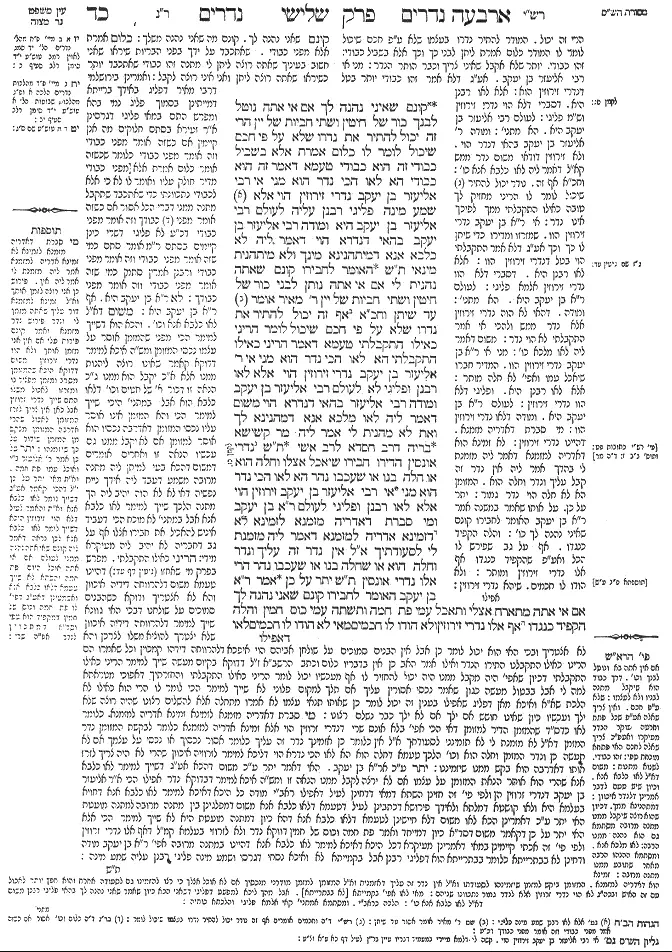
Nedarim 24a - Guemara
קונם שאיני נהנה לך אם אי אתה נוטל לבנך כור של חיטין ושתי חביות של יין הרי זה יכול להתיר את נדרו שלא על פי חכם שיכול לומר לו כלום אמרת אלא בשביל כבודי זה הוא כבודי טעמא דאמר זה הוא כבודי הא לאו הכי נדר הוא מני אי רבי אליעזר בן יעקב נדרי זירוזין הוי אלא שמע מינה פליגי רבנן עליה לעולם רבי אליעזר בן יעקב היא ומודה רבי אליעזר בן יעקב בהאי דנדרא הוי דאמר ליה לא כלבא אנא דמיתהנינא מינך ולא מיתהנית מינאי תא שמע האומר לחבירו קונם שאתה נהנית לי אם אי אתה נותן לבני כור של חיטין ושתי חביות של יין רבי מאיר אומר עד שיתן וחכמים אומרים אף זה יכול להתיר את נדרו שלא על פי חכם שיכול לומר הריני כאילו התקבלתי טעמא דאמר הריני כאילו התקבלתי הא לאו הכי נדר הוא מני אי רבי אליעזר בן יעקב נדרי זירוזין הוי אלא לאו רבנן ופליגי לא לעולם רבי אליעזר בן יעקב ומודה רבי אליעזר בהאי דנדרא הוי משום דאמר ליה לאו מלכא אנא דמהנינא לך ואת לא מהנית לי אמר ליה מר קשישא בריה דרב חסדא לרב אשי תא שמע נדרי אונסין הדירו חבירו שיאכל אצלו וחלה הוא או חלה בנו או שעכבו נהר הא לאו הכי נדר הוא מני אי רבי אליעזר בן יעקב זירוזין הוי אלא לאו רבנן ופליגי לעולם רבי אליעזר בן יעקב ומי סברת דאדריה מזמנא לזמינא לא דזמינא אדריה למזמנא דאמר ליה מזמנת לי לסעודתיך אמר ליה אין נדר זה עליך ונדר וחלה הוא או שחלה בנו או שעכבו נהר הרי אלו נדרי אונסין תא שמע יתר על כן אמר רבי אליעזר בן יעקב האומר לחבירו קונם שאני נהנה לך אם אי אתה מתארח אצלי ותאכל עמי פת חמה ותשתה עמי כוס חמין והלה הקפיד כנגדו אף אלו נדרי זירוזין ולא הודו לו חכמים מאי לא הודו לו חכמים לאו
Comments from Rashi on Masechet Nedarim Page 24a
הרי זה יכול . המודר להתיר נדרו בעצמו שלא ע"פ חכם שיכול לומר לו המודר כלום אמרת ליתן לבני כך וכך אלא בשביל כבודי: זהו כבודי . יותר שלא אקבל שאיני צריך וכבר הותר הנדר: מני אי רבי אליעזר בן יעקב . אע''ג דלא אמר זהו כבודי יותר בטל דנדרי זירוזין הוא: אלא לאו רבנן היא . דסברי דלא הוי נדרי זירוזין וש''מ פליגי: לעולם רבי אליעזר בן יעקב היא . הא מתני': ומודה ר' אליעזר בן יעקב בהאי דנדר הוי . ולא זירוזין דודאי משום נדר ממש קא"ל דאמר ליה לאו כלבא אנא כו': וחכ''א אף זה . נודר יכול להתיר שיכול לומר לו הריני מחזיק לך טובה כאילו התקבלתי ממך לפיכך אינו נדר: אי ר''א בן יעקב נדרי זירוזין הוו . שמזרזו ומדירו כדי שיתן לו כך וכך אע''ג דלא אמר התקבלתי הוי בטל דנדרי זירוזין הוו: אלא לאו רבנן היא . דסברי דלא הוו נדרי זירוזין אלמא פליגי: לעולם ר''א בן יעקב היא . הא מתני': ומודה . דהאי לא הוה נדרי זירוזין אלא נדר ממש ולהכי אי אמר התקבלתי לא הוי נדר: משום דאמר ליה לאו מלכא כו': מני אי ר''א בן יעקב נדרי זירוזין הוו . המדיר חברו שיאכל עמו ואפי' לא חלה מותר: אלא לאו רבנן היא . ופליגי דלא הוו נדרי זירוזין: לעולם ר''א בן יעקב היא . ומודה דלאו נדרי זירוזין הוו: מי סברת דאדריה מזמנא . דהיינו נדרי זירוזין: לא זמינא הוא דאדריה למזמנא דאמר ליה מזמנת לי בהדך אמר ליה אין נדר זה קבל עליך ונדר וחלה הוא . המזומן הא לא חלה הוי נדר גמור: יתר על כן . על אותו שאמר במשנה אמר ר"א בן יעקב האומר לחבירו קונם שאיני נהנה לך כו': והלה הקפיד כנגדו . אף על גב שפירש לו הכל ואע"פ שהקפיד כנגדו אף אלו נדרי זירוזין ומותר: ולא הודו לו חכמים . שיהא נדרי זירוזין:
Comments from Tosafot - Nedarim 24a
מי סברת דאדריה מזמנא לזמינא לא זמינא אדריה למזמנא אמר ליה מזמנת לי אמר ליה אין . פירוש כן אני רוצה לזמן אותך וא''ל זמינא למזמנא דור עליך שאתה מזמן לי ונדר פירוש נדר מזמנא ואמר קונם פירות עלי אם אין אני מזמן אותך ולא הוו נדרי זירוזין משום דדוקא היכא שהמזומן מסרב ומזמן מפציר בו ומזרזו לאכול משלו התם שייך נדרי זרוזין אבל כאן אין צריך לזרז המזומן לאכול שהרי אדרבה המזומן מבקש מן המזמן שידור על כך שיזמנהו: יתר על כן אמר ר' אליעזר ב''י ואוכל עמו פת חמה . וא''ת מאי יתר על כן י''ל דהכי קאמר אע''ג דשייך לומר לאו כלבא אנא וא''ת והאמר לעיל דלא הוי זירוזין היכא דשייך לומר לאו כלבא אנא לכן נראה דאמר ליה קונם שאי אתה נהנה ממני לעולם אם אי אתה אוכל היום פת חמה והשתא לא שייך טעמא דלאו כלבא אנא ואשמעינן דאע''ג דפי' לו פת חמה וכוס של חמין דמקפיד הוא טפי וסד''א דמתכוין לנדר אפ''ה שרי:
Nedarim 24a - Mishnah translated into english
Benefiting from you is konam for me if you do not take from me for your son a kor of wheat and two barrels of wine as a gift, this other individual can dissolve his vow without the involvement of a halakhic authority. This is because he can say to the one who vowed: Did you say your vow for any reason other than due to my honor, in order to convince me to accept a gift for my son? This is my honor, that I refrain from accepting the gift.
The Gemara infers: The reason that he may dissolve the vow without a halakhic authority is because the potential recipient said: This is my honor. But if he did not say so, then it is a vow. The Gemara clarifies: Whose opinion does this follow? If it is the opinion of Rabbi Eliezer ben Ya’akov, then it is included in the category of vows of exhortation and is not considered a vow, since the intention was solely to encourage the other individual to accept the gift. Rather, conclude from this mishna that the Rabbis disagree with him and hold that vows of exhortation are also vows.
The Gemara responds: Actually, it is in accordance with the opinion of Rabbi Eliezer ben Ya’akov, but Rabbi Eliezer ben Ya’akov concedes in this case that it is a vow and not just a means of encouragement because the one who took the vow said to him: I am not a dog, that I benefit from you and you do not benefit from me. Therefore, one truly wants the vow to be valid so that the other will accept the gift, and it was not intended merely as a means of encouragement.
The Gemara suggests another proof: Come and hear the continuation of that mishna: So too, in the case of one who says to another: Benefiting from me is konam for you if you do not give my son a kor of wheat and two barrels of wine, Rabbi Meir says: The vow is valid, and he may not benefit from the one who took the vow until he gives the gift. And the Rabbis say: Even this individual who took the vow can dissolve his own vow without the involvement of a halakhic authority, as he can say: I hereby consider it as though I received the gift from you.
The Gemara infers: The reason is because he said: I hereby consider it as though I received it from you. But if he did not say so, it would be a vow. The Gemara clarifies: Whose opinion does this statement reflect? If it reflects the opinion of Rabbi Eliezer ben Ya’akov, then it is included in the category of vows of exhortation. Rather, is it not the opinion of the Rabbis, and this demonstrates that the Rabbis disagree with him with regard to vows of exhortation?
The Gemara responds: No, actually it is possible that it is in accordance with the opinion of Rabbi Eliezer ben Ya’akov. And Rabbi Eliezer ben Ya’akov concedes in this case that it is considered a vow because the one that took the vow says to him: I am not a king that I provide benefit to you and you do not provide benefit to me. Consequently, the intent is not simply to encourage him but rather, to actually take a vow.
Mar Kashisha, son of Rav Ḥisda, said to Rav Ashi: Come and hear a proof from a mishna (27a): What are examples of vows impeded by circumstances beyond one’s control, which do not require dissolution? If one’s friend took a vow with regard to him that he should eat with him, and then he became sick, or his son became sick, or a river that he was unable to cross barred him from coming, these are vows impeded by circumstances beyond one’s control. The Gemara infers: Such a vow does not require dissolution in cases like these, but if not for this unavoidable element, it would be a vow. The Gemara clarifies: Whose opinion does this follow? If it follows the opinion of Rabbi Eliezer ben Ya’akov, then they are vows of exhortation that he did not intend to be treated as vows at all. Rather, is it not the opinion of the Rabbis, and it is therefore clear that the Rabbis disagree with him?
Rav Ashi responds: Actually, this follows the opinion of Rabbi Eliezer ben Ya’akov. But do you hold that in the case here the host took a vow with regard to the potential guest? No, the case here is where the potential guest caused a vow to be taken by the host and said to him: Do you invite me to your meal? The inviter said to him: Yes. The invitee then asked him: Is this vow upon you, i.e., do you vow to do so? The inviter agreed and he vowed, and then he became sick, or his son became sick, or a river barred him from coming; these are vows impeded by circumstances beyond one’s control. Because the vow was initiated by the potential guest rather than the host, it cannot qualify as a vow of exhortation. Consequently, dissolution is not allowed except when unavoidable situations like these occur.
Come and hear another proof: Further to the point of the mishna, Rabbi Eliezer ben Ya’akov said: In the case of one who says to his friend: Benefiting from you is konam for me if you do not lodge with me, and eat hot bread with me, and drink a cup of hot water with me, and the other becomes irritated at him because he was forcing him to do so, these are also vows of exhortation. But the Rabbis did not concede to him on this issue, because the friend’s opposition implies that the vow must be a valid vow and not a vow of exhortation. The Gemara clarifies: What is the meaning of: The Rabbis did not concede to him? Does it not
Traduction : The William Davidson digital edition of the Koren Noé Talmud, with commentary by Rabbi Adin Even-Israel Steinsaltz.