 Talmud Bavli
Nedarim 72a : Youtube
Daf TubeYoutube
2 video classes :
Nedarim Page 72a
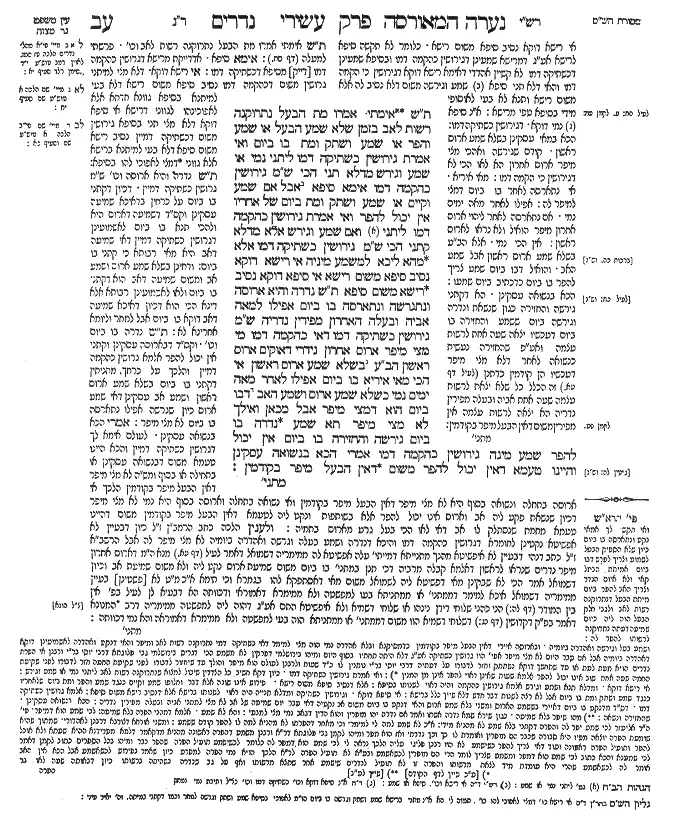
Nedarim 72a - Guemara
ת"ש אימתי אמרו מת הבעל נתרוקנה רשות לאב בזמן שלא שמע הבעל או שמע והפר או שמע ושתק ומת בו ביום ואי אמרת גירושין כשתיקה דמו ליתני נמי או שמע וגירש מדלא תני הכי ש"מ גירושין כהקמה דמו אימא סיפא אבל אם שמע וקיים או שמע ושתק ומת ביום של אחריו אין יכול להפר ואי אמרת גירושין כהקמה דמו ליתני ואם שמע וגירש אלא מדלא קתני הכי ש"מ גירושין כשתיקה דמו אלא מהא ליכא למשמע מיניה אי רישא דוקא נסיב סיפא משום רישא אי סיפא דוקא נסיב רישא משום סיפא ת"ש נדרה והיא ארוסה ונתגרשה ונתארסה בו ביום אפילו למאה אביה ובעלה האחרון מפירין נדריה ש"מ גירושין כשתיקה דמו דאי כהקמה דמו מי מצי מיפר ארוס אחרון נידרי דאוקים ארוס ראשון הב"ע בשלא שמע ארוס ראשון אי הכי מאי איריא בו ביום אפילו לאחר מאה ימים נמי כשלא שמע ארוס ושמע האב דבו ביום הוא דמצי מיפר אבל מכאן ואילך לא מצי מיפר תא שמע נדרה בו ביום גירשה והחזירה בו ביום אין יכול להפר שמע מינה גירושין כהקמה דמו אמרי הכא בנשואה עסקינן והיינו טעמא דאין יכול להפר משום דאין הבעל מיפר בקודמין:
Comments from Rashi on Masechet Nedarim Page 72a
אי רישא דוקא נסיב סיפא משום רישא . כלומר לא תקשה סיפא לרישא אע"ג דמרישא שמעינן דגירושין כהקמה דמו ובסיפא שמעינן דכשתיקה דמו לא קשיין אהדדי דאימא רישא דוקא דגירושין כי הקמה דמו והאי דלא תני סיפא שמע וגירשה משום דלא נסיב לה אלא משום רישא ותנא לא בעי לאוסופי מידי בסיפא טפי מרישא: א"נ סיפא נמי דוקא . דגירושין כשתיקה דמו: הכא במאי עסקינן בשלא שמע ארום ראשון . קודם שגירשה ואהכי מצי מיפר ארוס אחרון הא לאו הכי לא דגירושין כי הקמה דמו: מאי איריא . אי נתארסה לאחר בו ביום דמצי למיפר לה: אפילו לאחר מאה ימים נמי . אם נתארסה לאחר ליהוי ארוס אחרון מיפר הואיל ולא נראו לארוס ראשון: אין הבי נמי אלא הב"ע בשלא שמע ארוס ראשון אבל שמע האב . והואיל דבו ביום שמע צריך להפר בו ביום כדכתיב ביום שמעו: הכא בנשואה עסקינן . הא דקתני גירשה והחזירה כגון שנשאת ונדרה וגירשה ביום ששמע והחזירה בו ביום דעכשיו יצאה שעה אחת לרשות עצמה ואע"פ שהחזירה נעשית כנשואה לאחר דלא מצי מיפר דעכשיו הן קודמין כדתנן (לעיל נדרים דף ע ז.) זה הכלל כל שלא יצאת לרשות עצמה שעה אחת אביה ובעלה מפירין נדריה הא יצאה לרשות עצמה אין מפירין משום דאין הבעל מיפר בקודמין:
Comments from Tosafot - Nedarim 72a
ליתני שמע וגירש . ומת בו ביום מדלא תני הכי וכו': ליתני שמע וגירש . ומת ביום שלאחריו דאין אב מיפר מדלא תני הכי וכו': אלא מהא ליכ' למשמע . דשמא רישא דווקא ושמא סופא דווקא ולא קשי' רישא שסיפא דאי רישא דווקא דגירושי' כהקמ' ובדין הוא דליתני בסיפא שמע וגירשה נסיב סיפא משו' רישא דברישא לא מצי למיתני ליה וסיפא דדווקא לגירושי' עשתיקה ובדין הוא דברישא מצי למיתני שמע וגירש משום סיפא לא נסיב לה לא תני לה ברישא: ת"ש נדרה והיא ארוסה ונתקדשה בו ביום . וס"ד מדנקט בו ביום מיירי ששמכ בעל וכשגירה הרי קיים אי גירושי' כהקמה.
Nedarim 72a - Mishnah translated into english
Come and hear a resolution of the dilemma from the following baraita: When did they say that if the husband died the authority to nullify a young woman’s vows reverts to the father? When the husband did not hear the vow; or he heard the vow and nullified it; or heard it, and was silent, and died on that day. And if you say that divorce is like silence, let the tanna of the baraita also teach with regard to the husband: Or he heard the vow and divorced her. From the fact that he did not teach this case, learn from the baraita that divorce is like ratification.
The Gemara rejects the proof from the baraita: State the latter clause of the baraita: But if he heard it and ratified it; or he heard it, and was silent, and died on the following day, then the father cannot nullify the vow. But according to this clause, if you say that divorce is like ratification, let the tanna of the baraita also teach: And if he heard the vow and divorced her. Rather, from the fact that the baraita does not teach this, learn from the baraita that divorce is like silence.
Rather, one cannot learn anything from this baraita about the effect of divorce on her vows. The Gemara explains that the discrepancy between the two clauses is stylistic and can be explained either way: If the cases in the first clause are chosen precisely, allowing for the inference that divorce is like ratification, then one must say that the tanna formulates the last clause of the baraita as he does because of the first clause, i.e., in the same style, although it does not add anything. If the cases in the last clause are chosen precisely, allowing for the inference that divorce is like silence, then one must say that the tanna formulates the first clause of the baraita as he does because of the last clause, i.e., in the same style, although it does not add anything.
Come and hear a mishna (71a): If she took a vow while she was betrothed, and was divorced, and was betrothed again on the same day, even to one hundred men, her father and her final husband nullify her vows. Learn from this mishna that divorce is like silence, because if it were like ratification, could the final betrothed nullify vows that the first betrothed had already ratified?
The Gemara rejects this proof: With what are we dealing here? We are dealing with a case in which the first betrothed man did not hear the vow, and for that reason his divorcing her does not constitute ratification. The Gemara then asks: If so, why mention specifically that the divorce occurred on that day? The same would hold true even after one hundred days as well. Since the first husband never heard the vow, the final husband can nullify it on whichever day he hears it.
The Gemara answers: It is referring to a situation in which the betrothed man did not hear the vow but the father heard it. As in that case, it is only on the same day that he can nullify the vow, but he cannot nullify it from this point forward. Once her father has already heard the vow, her betrothed cannot nullify it on a different day. Therefore, one cannot infer from the mishna that divorce is like silence.
Come and hear a resolution of the dilemma from a mishna (89a): If she took a vow on that day, and he divorced her and remarried her on the same day, he cannot nullify her vow. Learn from the mishna that divorce is like ratification.
The Gemara rejects this proof: Say that here, i.e., in the mishna cited, we are dealing with a married woman, and that is the reason that he cannot nullify the vow. It is not because it has been ratified by divorce but because the husband cannot nullify his wife’s vows that precede their marriage. The dilemma remains unresolved.
Traduction : The William Davidson digital edition of the Koren Noé Talmud, with commentary by Rabbi Adin Even-Israel Steinsaltz.