 Talmud Bavli
Nedarim 76a : Youtube
Daf TubeYoutube
2 video classes :
Nedarim Page 76a
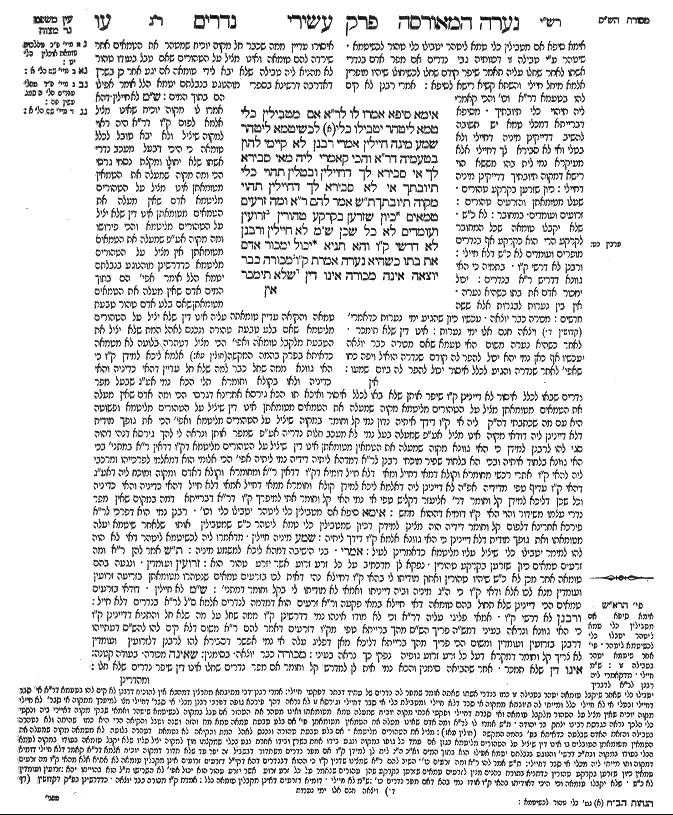
Nedarim 76a - Guemara
אימא סיפא אמרו לו לר"א אם מטבילין כלי טמא ליטהר יטבילו כלי לכשיטמא ליטהר שמע מינה חיילין אמרי רבנן לא קיימי להון בטעמיה דר"א והכי קאמרי ליה מאי סבירא לך אי סבירא לך דחיילין ובטלין תהוי כלי תיובתך אי לא סבירא לך דחיילין תהוי מקוה תיובתך ת"ש אמר להם ר"א ומה זרעים טמאים כיון שזרען בקרקע טהורין זרועין ועומדים לא כל שכן ש"מ לא חיילין ורבנן לא דרשי ק"ו והא תניא יכול ימכור אדם את בתו כשהיא נערה אמרת ק"ו מכורה כבר יוצאה אינה מכורה אינו דין שלא תימכר
Comments from Rashi on Masechet Nedarim Page 76a
אימא סיפא אם מטבילין כלי טמא ליטהר יטבילו כלי טהור לכשיטמא . שיטהר ע"י טבילה זו דכוותיה גבי נדרים אם מפר אדם בנדרי אשתו לאמר שחלו עליה תאמר שיפר קודם שחלו לכשיחולו שיהיו מופרין אלמא מיחל חיילי והשתא קשיא רישא לסיפא: אמרי רבנן לא קים להו בטעמא דר"א וכו' והכי קאמרי ליה תיהוי כלי תיובתיך . מסיפא דברייתא דמכלי טמא יש תשובה להשיב דדייקינן מיניה דחיילי ולא בטלי ואי לא סבירא לך דחיילי אלא מעיקרא נמי לית בהו מששא הוי רישא דמקום תיובתיך דדייקינן מיניה דחיילי: כיון שזרען בקרקע טהורים . שעלו מטומאתן והזרעים טהורים: זרועים ועומדים . במחובר: לא כ"ש . שלא יקבלו טומאה שכל המחובר לקרקע הר. הוא כקרקע אף בנדרים מופרים ועומדים לא כ"ש דלא חיילי: ורבנן לא דרשי ק"ו . בתמיה כי האי גוונא דדריש ר"א בנדרים: יכול ימכור אדם את בתו כשהיא נערה . אין בין נערות לבגרות אלא ששה חדשים: מכורה כבר יוצאה . עכשיו כיון שהגיע ימי נערות כדאמרי' (קדושין ד.) ויצאה חנם אלו ימי נערות: אינו דין שלא תימכר . לאחר כשהיא נערה משום האי טעמא שאם מכורה כבר יוצאה עכשיו אף כאן נמי יהא יכול להפר לה קודם שנדרה הואיל ויפה כחו שאפי' לאחר שנדרה והגיע לכלל איסור יכול להפר לה ביום שמעו:
Nedarim 76a - Mishnah translated into english
The Gemara rejects this conclusion and refers back to the baraita. Say the latter clause of that baraita: They said to Rabbi Eliezer: If one immerses an impure vessel to purify it, shall one immerse a vessel in advance so that when it will become impure it will then be purified? Learn from this clause of the baraita that according to Rabbi Eliezer, vows nullified preemptively take effect momentarily and are then immediately nullified. The Rabbis’ objection is that according to Rabbi Eliezer, prior immersion should purify an item that momentarily became impure.
The Gemara rejects this conclusion: One could say that the Rabbis could not determine the reasoning of Rabbi Eliezer, and this is what they said to him: What do you hold? If you hold that preemptively nullified vows take effect momentarily and are then nullified, then the example of a vessel will be your refutation, i.e., will serve to refute your opinion. If you do not hold that they take effect, but rather that they do not take effect at all, then the example of a ritual bath will be your refutation.
Come and hear: Rabbi Eliezer said to them: And just as ritually impure seeds, once one has sown them in the ground, become pure, then with regard to those which are already sown and then come into contact with impurity, should they not all the more so be pure? Similarly, vows that have been preemptively nullified should be nullified, since a husband can nullify vows after they have been taken. Learn from this baraita that according to Rabbi Eliezer preemptively nullified vows do not take effect at all, just as seeds that were already sown do not become impure at all.
The Gemara comments: And the Rabbis, do they not teach halakhot based upon an a fortiori inference of this sort? But isn’t it taught in a baraita: Can a person sell his daughter as a maidservant when she is a young woman? You can say an a fortiori inference to show that he cannot: A maidservant who was already sold goes free upon becoming a young woman; with regard to one who has not been sold, is it not logical that she cannot be sold once she already is a young woman? This baraita shows that the Rabbis do utilize similar a fortiori inferences.
Traduction : The William Davidson digital edition of the Koren Noé Talmud, with commentary by Rabbi Adin Even-Israel Steinsaltz.