 Talmud Bavli
Nedarim 59a : Youtube
Daf TubeYoutube
2 video classes :
Nedarim Page 59a
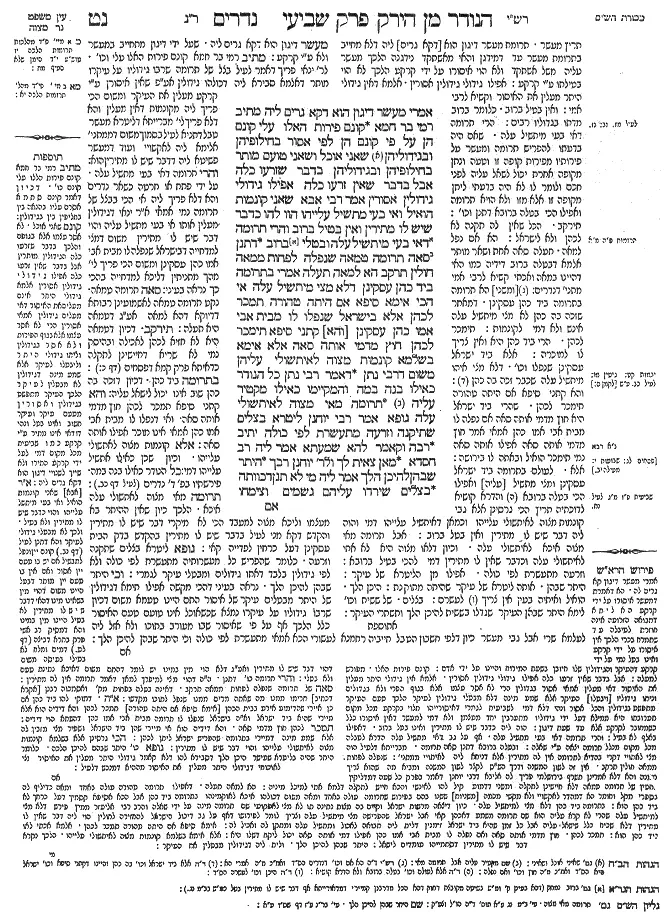
Nedarim 59a - Guemara
אמרי מעשר דיגון הוא דקא גרים ליה מתיב רמי בר חמא קונם פירות האלו עלי קונם הן על פי קונם הן לפי אסור בחילופיהן ובגידוליהן שאני אוכל ושאני טועם מותר בחילופיהן ובגידוליהן בדבר שזרעו כלה אבל בדבר שאין זרעו כלה אפילו גידולי גידולין אסורין אמר רבי אבא שאני קונמות הואיל ואי בעי מתשיל עלייהו הוו להו כדבר שיש לו מתירין ואין בטיל ברוב והרי תרומה דאי בעי מיתשיל עלה ובטלי ברוב דתנן סאה תרומה טמאה שנפלה לפחות ממאה חולין תרקב הא למאה תעלה אמרי בתרומה ביד כהן עסקינן דלא מצי מיתשיל עלה אי הכי אימא סיפא אם היתה טהורה תמכר לכהן אלא בישראל שנפלו לו מבית אבי אמו כהן עסקינן [והא] קתני סיפא תימכר לכהן חוץ מדמי אותה סאה אלא אימא בשלמא קונמות מצוה לאיתשולי עליהן משום דרבי נתן דאמר רבי נתן כל הנודר כאילו בנה במה והמקיימו כאילו מקטיר עליה תרומה מאי מצוה לאיתשולי עלה גופא אמר רבי יוחנן ליטרא בצלים שתיקנה וזרעה מתעשרת לפי כולה יתיב רבה וקאמר להא שמעתא אמר ליה רב חסדא מאן צאית לך ולר' יוחנן רבך היתר שבהן להיכן הלך אמר ליה מי לא תנן דכוותה בצלים שירדו עליהם גשמים וצימחו
Comments from Rashi on Masechet Nedarim Page 59a
תריץ מעשר . תרומת מעשר דיגון הוא [דקא גרים]. ליה דלא מחייב בתרומת מעשר עד דמידגן והאי מאשתקד נידגנה הלכך מעשר עליה משל אשתקד ולא הוי איסורו על ידי קרקע הלכך לא הוי בטילתו ע"י קרקע: אפילו גידולי גידולין אסורין . אלמא דאין גידולי היתר מעלין את האיסור וקשיא לרבי אמי: ואין בטיל ברוב . כלומר ברוב מדתו בגדוליו רבים: הרי תרומה דיאי בעי מיתשיל עלה . שאם היה בדעתו להפריש תרומה ומעשר על פירותיו מפירות קופה זו וטעה ונתן מקופה אחרת יכול לשאל עליה לפני חכם ולומר לו לא היה בדעתי ליתן מקופה זו אלא מזו ולא הויא תרומה ואפילו הכי בטלה ברובא דתנן וכו': תירקב . הכל שאין לה תקנה לא לכהן ולא לישראל: הא אם נפל למאה תעלה . סאה אחת ושאר מותר אלמא דבטלה ברוב דידיה כמו האי דהיינו במאה ואכתי קשיא לרבי אמי מתני' דנדרים: [ומשני] הא תרומה בתרומה ביד כהן עסקינן . דמאחר שזכה בה כהן לא מצי מיתשיל עלה אינש ולא דמי לקונמות: תימכר לכהן . הרי ביד כהן היא ואין צריך לו למוכרה: אלא ביד ישראל עסקינן שנפלו וכו' . דלא מצי איהו מיתשיל עלה שכבר זכה בה כהן: והא קתני סיפא אם היתה טהורה תימכר לכהן . שהרי ביד ישראל היא חוץ מדמי אותה סאה אם נפלה לו מבית אבי אמו כהן אמאי אמר חוץ מדמי אותה סאה אפילו אותה סאה נמי תימכר הואיל ובאתה לו בירושה: אלא . לעולם בתרומה ביד ישראל עסקינן ומצי מתשיל [עליה] ואפילו הכי בטלה ברובא והדרא קושיא לדוכתיה תריץ הכי גרסינן אלא גבי קונמות מצוה לאיתשולי עלייהו וכמאן דאיתשיל עלייהו דמי והוה ליה דבר שיש לו מתירין ואין בטל ברוב: אבל תרומה מאי מצוה איכא לאיתשולי עלה . וכיון דלאו מצוה היא לא אתי לאיתשולי עלה וכדבר שאין לו מתירין דמי להכי בטיל ברובא: וזרעה מתעשרת לפי כולה . אפילו מן הליטרא של עיקר: היתר שבהן . אותה ליטרא של עיקר שהיתה מתוקנת: היכן הלך . הואיל ואיתיה בעין אין צריך לעשרם: בצלים . של ששית וכו' לימא היתר שבהן העיקר שגדלו בששית להיכן הלך ותשתרי העיקר:
Comments from Tosafot - Nedarim 59a
מתיב רמי בר חמא קונם פירות הללו עלי קונם כו' . דכיון דאמר קונם סתמא אסרם עליו בהנאה בין בחליפין בין בגידולין: קונם שאני אוכל . לא אסר עצמו אלא בגופם והלכך בדבר שזרעו כלה הגידולין מותרין אבל בדבר שאין זרעו כלה אפילו גידולי גידולין אסורין אלמא גידולי היתר אינם מעלים את האיסור דאי מעלים גידולין אמאי אסורין הרי לא אסר עצמו אלא בגוף הפירות ולא אסר בגידולין וליתו גידולי היתר וליבטלו לעיקר אלא שמע מינה דגידולין לא מבטלין לעיקר הלכך העיקר מתפשט בגידולין ואסורין מטעם עיקר ועיקר חשוב ואינו בטל ונהי דודאי אינו מתיר ע''י קרקע כמו שביעית מכל מקום דמי לעל ידי קרקע התירו ולא שייך לשנויי דיגון הוא דקא גרים ליה: א''ר [אבא] שאני קונמות הואיל ואי בעי מיתשל עלייהו והוי כדבר שיש לו מתירין ולא בטיל . ולכך לא מבטלי גידולי לעיקר והא דתנן לעיל (נדרים דף נב .) קונם יין ונפל לתבשיל אם יש בו טעם יין אסור ואם אין בו טעם יין מותר דבטל היינו משום דהוי מין בשאינו מינו דהאי דדבר שיש לו מתירין לא בטיל היינו מין במינו והא דמסיק רב אשי פרק בתרא דביצה (דף לט .) דמים ומלח לא בטילי בעיסה משום דהוי דבר שיש לו מתירין ואע''ג דלא הוי מין במינו יש לומר דהתם משום דאיכא נתינת טעם ולא בטלי: והרי תרומה כו' דתנן . ה''ה דהוי מצי למיפרך למאן דאמר תרומה אין לה מתירין: סאה של תרומה שנפלה לפחות ממאה תרקב . דאינה בטלה בפחות מק' ואסמכוה רבנן [אקרא דכתיב] תרימו ממנו מה שאתה מרים ממנו שנפל לתוכו מקדשו: א''ה . דמוקי להו ביד כהן אם כן איירי שהדימוע אירע בבית הכהן [אימא סיפא אם היתה טהורה] תמכר לכהן והא דידיה הוא אלא מיירי שהיא ביד ישראל וא''ה בישראל שנפלו לו תרומה מבית אבי אמו כהן דהשתא הוי דידיה: תמכר לכהן חוץ מדמי סאה . והא דידיה הוא אי מיירי שהן ביד הישראל ושפיר מצי מזבין לה אלא שמע מינה דמיירי בתרומה שהפריש ישראל ליתן לכהן: הכי גרסינן אלא בשלמא קונמות מצוה לאיתשולי עלייהו והוי דבר שיש לו מתירין: גופא כו' היתר שבהם להיכן הלכה . כלומר היתר שהיה בליטרא שעישר היכן הלך דסבירא להו דלא קאמר גידולי היתר מעלין את האיסור מצי לאוכוחי דגידולי היתר מעלין את האיסור מההיא דמנכש דלעיל:
Nedarim 59a - Mishnah translated into english
The Sages of the Gemara say: With regard to tithe, the ground does not engender the obligation; placement of the produce in a pile engenders the obligation, as it is only at that point that one is obligated to tithe his produce. Therefore neutralization of the prohibition is not effected by planting it in the ground.
Rami bar Ḥama raised an objection to the opinion of Rabbi Yannai based on the mishna (57a): For one who says: This produce is konam upon me, or it is konam upon my mouth, or it is konam to my mouth, it is prohibited to partake of the produce, or of its replacements, or of anything that grows from it. If he says: This produce is konam for me, and for that reason I will not eat it, or for that reason I will not taste it, it is permitted for him to partake of its replacements or of anything that grows from it. This applies only with regard to an item whose seeds cease after it is sown. However, with regard to an item whose seeds do not cease after it is sown, it is prohibited for him to partake even of the growths of its growths. Apparently, permitted growths do not neutralize the prohibition.
Rabbi Abba said: Konamot are different; since if he wishes to do so he can request that a halakhic authority dissolve the vows and render the objects of the vows permitted, their legal status is like that of an item that can become permitted, and its prohibition is not nullified by a majority of permitted items.
The Gemara asks: And isn’t there the case of teruma, in which if he wishes he can request that a halakhic authority dissolve the designation of the produce as teruma and yet it is nullified by a majority of permitted items? As we learned in a mishna (Terumot 5:1): A se’a of ritually impure teruma that fell into less than one hundred se’a of non-sacred produce must be left to decay. The impure teruma, which is forbidden to all, renders the entire mixture forbidden. The Gemara infers: If it fell into one hundred se’a of non-sacred produce, its prohibition is neutralized. The Sages of the Gemara say in response: We are dealing with teruma that is in the possession of a priest, for which the owner can no longer request that a halakhic authority dissolve the designation. However, as long as the teruma is in the owner’s possession he can request that its designation be dissolved, and therefore its prohibition cannot be neutralized.
The Gemara asks: If so, say the latter clause of that mishna: If the teruma mixed with the non-sacred produce was ritually pure, it may be sold to a priest, who treats all the produce as though it were teruma. This indicates that the mishna is dealing with teruma in its owner’s possession that was not yet given to a priest. Rather, we are dealing with the case of an Israelite who inherited the produce from a member of the house of his mother’s father, who is a priest. The heir owns the teruma; however, since he was not the one who designated it as teruma, he may not request that the designation be dissolved.
The Gemara asks: But isn’t it taught in that latter clause of that mishna: It must be sold to a priest; however, the price must reflect the value of the entire mixture except for the value of that se’a of teruma that fell into the non-sacred produce, as the teruma belongs to the priest. If the mishna is referring to the case of an heir who owns the teruma, why can he not collect the value of that se’a as well, as it is his property?
Rather, say that there is another distinction between konamot and other cases where one may request dissolution by a halakhic authority. Granted, in the case of konamot, there is a mitzva to request that a halakhic authority dissolve them, due to the statement of Rabbi Natan, as Rabbi Natan said: Anyone who vows, it is as if he built a personal altar outside the Temple, and one who fulfills that vow, it is as though he burns an offering upon it. However, in the case of teruma, what mitzva is there to request that a halakhic authority dissolve its designation? Therefore, items forbidden by konamot are considered items that can become permitted, and teruma is not.
§ With regard to the matter itself, Rabbi Yoḥanan said: With regard to a litra of onions that one tithed, and then sowed, it is tithed according to the entire crop. Rabba sat and stated this halakha. Rav Ḥisda said to him: Who listens to you and Rabbi Yoḥanan, your teacher? The permitted part of the litra, to where did it go? The original litra that he sowed was permitted by virtue of the fact that he tithed it, but why is he obligated to tithe the entire crop? The original litra should be subtracted from the crop that must be tithed. Rabba said to Rav Ḥisda: Didn’t we learn a corresponding halakha in a mishna (Shevi’it 6:3): With regard to sixth-year onions upon which rain fell during the Sabbatical Year, and they sprouted,
Traduction : The William Davidson digital edition of the Koren Noé Talmud, with commentary by Rabbi Adin Even-Israel Steinsaltz.