 Talmud Bavli
Nedarim 77a : Youtube
Daf TubeYoutube
2 video classes :
Nedarim Page 77a
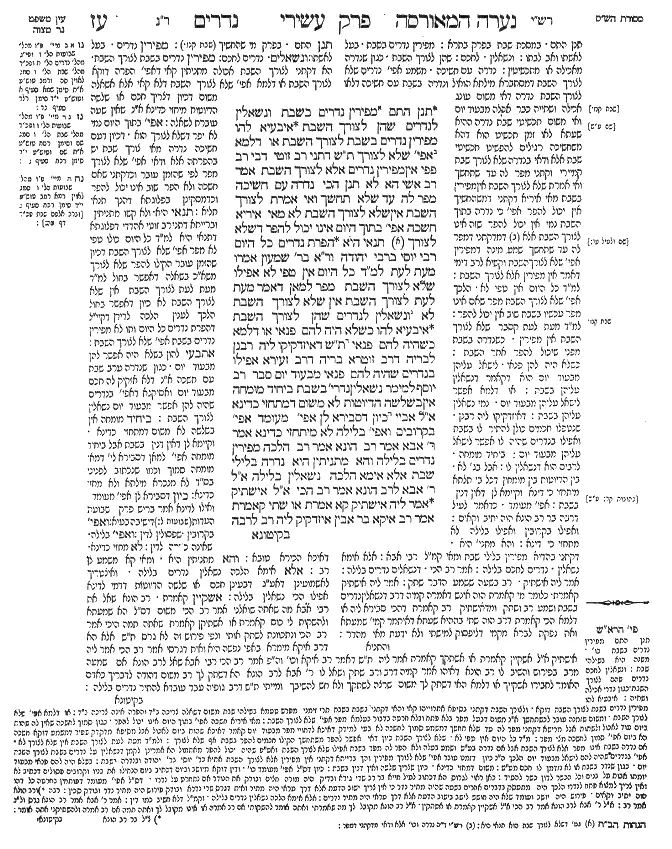
Nedarim 77a - Guemara
תנן התם מפירין נדרים בשבת ונשאלין לנדרים שהן לצורך השבת איבעיא להו מפירין נדרים בשבת לצורך השבת או דלמא אפי' שלא לצורך ת"ש דתני רב זוטי דבי רב פפי אין מפירין נדרים אלא לצורך השבת אמר רב אשי הא לא תנן הכי נדרה עם חשיכה מפר לה עד שלא תחשך ואי אמרת לצורך השבת אין שלא לצורך השבת לא מאי איריא חשכה אפי' בתוך היום אינו יכול להפר דשלא לצורך תנאי היא הפרת נדרים כל היום רבי יוסי ברבי יהודה ור"א בר' שמעון אמרו מעת לעת למ"ד כל היום אין טפי לא אפילו שלא לצורך השבת מפר למאן דאמר מעת לעת לצורך השבת אין שלא לצורך השבת לא ונשאלין לנדרים שהן לצורך השבת איבעיא להו כשלא היה להם פנאי או דלמא כשהיה להם פנאי ת"ש דאיזדקיקו ליה רבנן לבריה דרב זוטרא בריה דרב זעירא אפילו בנדרים שהיה להם פנאי מבעוד יום סבר רב יוסף למימר נשאלין נדרי' בשבת ביחיד מומחה אין בשלשה הדיוטות לא משום דמתחזי כדינא א"ל אביי כיון דסבירא לן אפי' מעומד אפי' בקרובים ואפי' בלילה לא מיתחזי כדינא אמר ר' אבא אמר רב הונא אמר רב הלכה מפירין נדרים בלילה והא מתניתין היא נדרה בלילי שבת אלא אימא הלכה נשאלין בלילה א"ל ר' אבא לרב הונא אמר רב הכי א"ל אישתיק אמר ליה אישתיק קא אמרת או שתי קאמרת אמר רב איקא בר אבין איזדקיק ליה רב לרבה
Comments from Rashi on Masechet Nedarim Page 77a
תנן התם . במסכת שבת בפרק בתרא: מפירין נדרים בשבת . בעל לאשתו ואב לבתו: ונשאלין . לחכם: שהן לצורך השבת . כגון שנדרה מאכילה או מתכשיטין: נדרה עם חשיכה . משמע אפי' נדרים שלא לצורך השבת דמסתברא מילתא הואיל ונדרה בשבת עם חשיכה דלאו לצורך השבת נדרה דאי משום עונג אכילה ושתייה כבר אכלה מבעוד יום ואי משום תכשיטי שבת נדרה ההיא שעתא לאו זמן תכשיט הוא דהא משחשיכה רגילים להפשיט תכשיטי שבת אלא ודאי בנדרה שלא לצורך שבת קמיירי וקתני מפר לה עד שתחשך ואי אמרת שלא לצורך השבת אין מפירין בשבת מאי איריא דקתני דמשהחשיך אין יכול להפר אפי' כי נדרה בתוך השבת נמי אין יכול להפר שזה אינו לצורך השבת אלא דמדקתני דמפר לה עד שתחשך שמע מינה דמפירין אפי' שלא לצורך השבת וקשיא לרב דימי דאמר אין מפירין אלא לצורך השבת: למ"ד כל היום אין טפי לא . הלכך אפי' שלא לצורך השבת מפר שאם אינו מפר עכשיו בשבת שוב אין יכול להפר: למ"ד מעת לעת קסבר שלא לצורך השבת אין מפירין . כשנדרה בשבת מפני שיכול להפר אחר השבת: כשלא היה להן פנאי . לישאל עליהן מבעוד יום הוא דקאמר דנשאלין עליהן בשבת: או דלמא אפשר לישאל עליהן מבעוד יום . נמי נשאלין עליהן בשבת: דאיזדקיקו ליה רבנן . שנטפלו חכמים כולן להתיר לו בשבת ואפילו בנדרים שהיה לו אפשר לישאל עליהן מבעוד יום: ביחיד מומחה . לרבים הוא דנשאלין לו: אבל בג' לא . בין הדיוטות בין מומחין דכל בי תלתא מיתחזי כי דינא וקיימא לן דאין דנין בשבת: אפי' מעומד . כדאמר לעיל דרבה בר רב הונא הוה יתיב וקאים: ואפילו בקרובין ואפילו בלילה לא מתחזי כי דינא: והא מתני' היא . דקתני בהדיא מפירין בלילי שבת ומאי קמ"ל רבי אבא: אלא אימא נשאלין . נדרים לחכם בלילה: אמר רב הכי . דנשאלים נדרים בלילה: אמר ליה אישתיק . רב בשעה ששמע הדבר שתק: אמר ליה אישתיק קאמרת . כלומר מי קאמרת הוה אינש דאמרה קמיה דרב דנשאלין נדרים בשבת ושמע רב ושתק ומדאישתיק רב קאמרת דהכי סבירא ליה או דלמא הכי קאמרת דרב הוה שתי בההיא שעתא דאיתמר קמי' שמעתא ואת נפקת לברא מקמי דליפסוק למישתי ולא ידעת מאי מהדר:
Nedarim 77a - Mishnah translated into english
§ We learned in a mishna elsewhere (Shabbat 157a): A father or husband may nullify his daughter’s or his wife’s vows on Shabbat and one may request from a halakhic authority to dissolve vows that are for the purpose of Shabbat. A dilemma was raised before the Sages: May one nullify vows on Shabbat only when they are for the purpose of Shabbat, or may one perhaps nullify vows on Shabbat even when they are not for the purpose of Shabbat?
Come and hear the baraita that Rav Zuti from the school of Rav Pappi taught: Vows may be nullified on Shabbat only for the purpose of Shabbat. Rav Ashi said: We did not learn that way in the mishna here. The mishna teaches: If she took a vow with nightfall approaching, her father or husband can nullify the vow for her only until nightfall. And if you say that with regard to nullification of vows that are for the purpose of Shabbat, yes, he may nullify those vows, but nullifications that are not for the purpose of Shabbat, no, he may not, why does the tanna specify nightfall? After all, even during the day he may not nullify that which is not for the purpose of Shabbat.
The Gemara rejects this conclusion: Nullification on Shabbat is subject to a dispute between tanna’im: Nullification of vows can be performed all day on the day that the vow was heard. And Rabbi Yosei, son of Rabbi Yehuda, and Rabbi Elazar, son of Rabbi Shimon, said: A vow can be nullified for a twenty-four-hour period from the time it was heard.
According to the one who says all day, yes, one can nullify vows all day, but not more than that; he may nullify on Shabbat even when it is not for the purpose of Shabbat, since otherwise, he could not nullify a vow taken on Shabbat at all. According to the one who says that one can nullify her vows for a twenty-four-hour period, that which is for the purpose of Shabbat, yes, he may nullify, but that which is not necessary for Shabbat, he may not nullify, as he can do so after Shabbat.
§ The mishna from tractate Shabbat teaches: And one may request from a halakhic authority to dissolve vows that are for the purpose of Shabbat. A dilemma was raised before the Sages: Is this specifically when those who took the vows did not have the opportunity to request dissolution of the vows before Shabbat, or perhaps it is the case even when they did have the opportunity? The Gemara responds: Come and hear: It happened that the Sages attended to the dissolution of the vows of the son of Rav Zutra, son of Rav Zeira, on Shabbat, even for vows that they had the opportunity to dissolve while it was still day, before Shabbat had begun.
Rav Yosef thought to say: With regard to requesting that a halakhic authority dissolve vows on Shabbat, yes, requesting of a single expert is permitted on Shabbat, but requesting of three laymen is not permitted on Shabbat, because it looks like a court judgment, which may not be performed on Shabbat.
Abaye said to him: Since we hold that vows may be dissolved even while the halakhic authority is standing, and even by relatives, and even at night, it does not look like a judgment. Since it is not regarded as an act of a court, vows may be dissolved on Shabbat even by three laymen.
Rabbi Abba said that Rav Huna said that Rav said: The halakha is that one can nullify vows at night. The Gemara asks: But this is already stated in the mishna: If a woman took a vow on Shabbat evening, her father or husband can nullify the vow on Shabbat evening; why would Rav Huna need to state his halakha? Rather, say that Rav’s ruling was as follows: The halakha is that one can request that a halakhic authority dissolve a vow at night.
Rabbi Abba said to Rav Huna: Did Rav say that? Rav Huna said to him: Rav was silent [ishtik] when this ruling was stated in his presence. Rabbi Abba said to him: Did you say: He was silent [ishtik], indicating that he accepted this ruling, or did you say: He was drinking [shatei], and was therefore preoccupied, so that his silence did not necessarily indicate agreement?
In order to clarify Rav’s opinion on the issue, the Gemara cites Rav Ika bar Avin who said: Rav attended to the dissolution of a vow made by Rabba,
Traduction : The William Davidson digital edition of the Koren Noé Talmud, with commentary by Rabbi Adin Even-Israel Steinsaltz.