 Talmud Bavli
Nedarim 75a : Youtube
Daf TubeYoutube
2 video classes :
Nedarim Page 75a
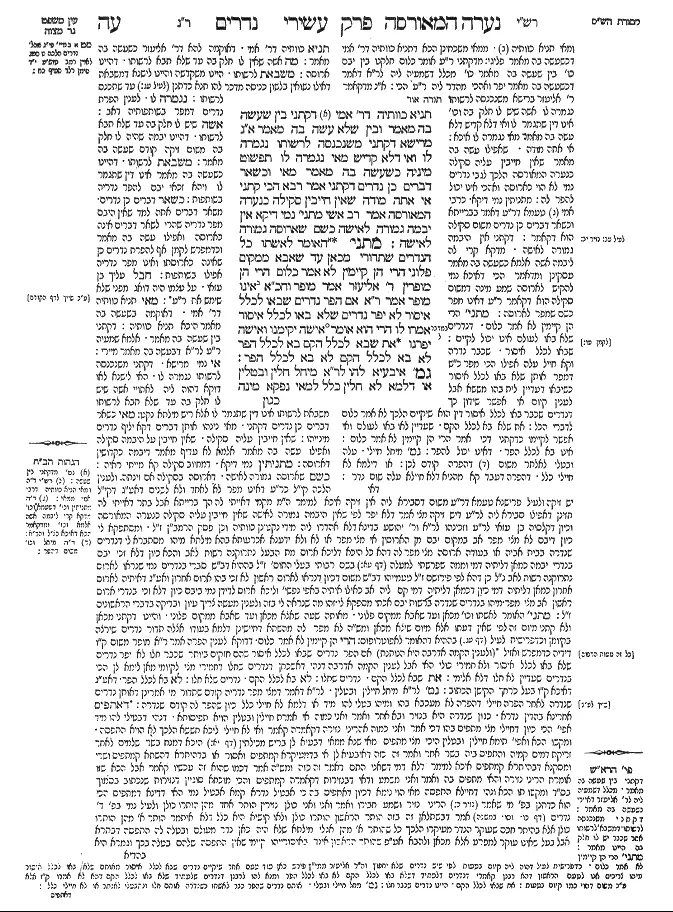
Nedarim 75a - Guemara
תניא כוותיה דר' אמי דקתני בין שעשה בה מאמר ובין שלא עשה בה מאמר א"נ מרישא דקתני משנכנסה לרשותו נגמרה לו ואי דלא קדיש מאי נגמרה לו תפשוט מיניה כשעשה בה מאמר מאי וכשאר דברים כן נדרים דקתני אמר רבא הכי קתני אי אתה מודה שאין חייבין סקילה כנערה המאורסה אמר רב אשי מתני' נמי דיקא אין יבמה גמורה לאישה כשם שארוסה גמורה לאישה מתני׳ האומר לאשתו כל הנדרים שתדורי מכאן עד שאבא ממקום פלוני הרי הן קיימין לא אמר כלום הרי הן מופרין ר' אליעזר אמר מופר וחכ"א אינו מופר אמר ר"א אם הפר נדרים שבאו לכלל איסור לא יפר נדרים שלא באו לכלל איסור אמרו לו הרי הוא אומר (במדבר ל, יד) אישה יקימנו ואישה יפרנו את שבא לכלל הקם בא לכלל הפר לא בא לכלל הקם לא בא לכלל הפר גמ׳ איבעיא להו לר"א מיחל חלין ובטלין או דלמא לא חלין כלל למאי נפקא מינה
Comments from Rashi on Masechet Nedarim Page 75a
ומאי תניא כוותיה . ממאי משכחינן הכא דתניא כוותיה דר' אמי דכשעשה בה מאמר פליגי: מדקתני ר"ע אומר כלום חלקנו בין יבם כו' בין שעשה בה מאמר כו' . מכלל דשמעיה ליה לר"א דאמר דכשעשה בה מאמר יפר ואהכי מהדר ליה ר"ע הכי: א"נ . מדקאמר ר' אליעזר ברישא משנכנסה לרשותו נגמרה לו אשה שיש לו חלק בה וכו' אינו דין שתגמר לוואי דלא קדיש דלא עשה בה מאמר מאי עמרה לו איכא: אי אתה מודה . שאפילו עשה בה מאמר שאין חייבין עליה סקילה כנערה המאורסה הלכך לגבי נדרים נמי לא הוי כארוסה ואהכי אינו יכול להפר לה: מתניתין נמי דיקא . כרבי אמי טעמא דר"ע דאמר בברייתא וכשאר דברים כן נדרים משום סקילה הוא דקאמר: דקתני אין היבמה גמורה לאישה . מדקא קרי לה ליבמה אשה אלמא כשעשה בה מאמר עסקינן ומדאמר הכי דאיכא נמי להקיש לארוסה שמע מינה דמשום סקילה הוא דקאמר ר"ע דאינו מפר כשם שמפר לארוסה: מתני' הרי הן קיימין לא אמר כלום . דנדרים שלא באו לעולם אינו יכול לקיים: שבאו לכלל איסור . שכבר נדרה יקא חייל עלה אפילו הכי מפר כ"ש דמפר אותן שלא באו לכלל איסור כשיבאו דעדיין לית בהו מששא אבל לענין קיום אי אפשר שידון כך דנדרים שכבר באו לכלל איסור דין הוא שיקיים הלכך לא אמר כלום לדברי הכל: את שלא בא לכלל הקם . שעדיין לאו באו לעולם ואי אפשר לקיימו כדקתני דכי אמר הרי הן קיימין לא אמר כלום: אינו בא לכלל הפר . דאינו יכול להפר: גמ' מיחל חיילי . עלה ובטלי לאלתר משום דהפרה קודם לכן: או דילמא לא חיילי כלל . דהפרה דעבד קא מהניא דלא חיילא עלה שום נדר:
Nedarim 75a - Mishnah translated into english
is it taught in the baraita in accordance with the opinion of Rabbi Ami? The Gemara explains that support for Rabbi Ami’s opinion is found in that which is taught in the baraita, as Rabbi Akiva mentions the following distinction: Whether he performed levirate betrothal or whether he did not perform levirate betrothal. This indicates that Rabbi Eliezer’s statement is referring to a yevama with whom he performed levirate betrothal.
Alternatively, support can be derived from the first clause of the baraita, which teaches: Once she enters his jurisdiction, she is fully under his authority. If the baraita is referring to a situation where he did not betroth her in levirate betrothal, in what sense is she fully under his authority? Deduce from it that the situation is one in which he has performed levirate betrothal.
The Gemara then asks with regard to the baraita itself. What is the meaning of the phrase: And just as in other matters there is no such distinction, so too with regard to vows, that Rabbi Akiva teaches in the baraita? Rava said: This is what Rabbi Akiva is teaching: Do you not concede that one is not liable to be punished with stoning for adulterous relations with a yevama as he would be if she were a betrothed young woman? The status of the relationship is inferior to proper marriage, as one who engages in sexual intercourse with a yevama does not incur the death penalty. Accordingly, the authority of the yavam with regard to vows is also inferior.
Rav Ashi said: The mishna (74a) is also precisely formulated to indicate this, as it teaches: A yevama is not her husband’s full-fledged wife in the same manner that a betrothed woman is her husband’s full-fledged wife.
MISHNA: One who says to his wife: All vows that you will vow from now until I arrive from such and such a place are hereby ratified, has not said anything, i.e., the vows are not ratified. However, if he states that all vows that she will take until then are hereby nullified, Rabbi Eliezer said: They are nullified, while the Rabbis say: They are not nullified. Rabbi Eliezer said in explanation: If one can nullify vows that have reached the status of a prohibition, i.e., that have already taken effect, shall he not be able to nullify vows that have not reached the status of a prohibition?
The Rabbis said to him in response: The verse states: “Every vow, and every binding oath to afflict the soul, her husband may ratify it, or her husband may nullify it” (Numbers 30:14). This teaches: That which has reached the status of eligibility for ratification, i.e., a vow that she has already taken, has reached the status of eligibility for nullification. However, a vow that has not reached the status of eligibility for ratification has not reached the status of eligibility for nullification either, and it cannot be nullified.
GEMARA: A dilemma was raised before the Sages: According to Rabbi Eliezer, do the vows that the husband nullifies in advance take effect momentarily and are then canceled immediately after? Or perhaps they do not take effect at all. The Gemara inquires: In what case is there a difference between these possibilities?
Traduction : The William Davidson digital edition of the Koren Noé Talmud, with commentary by Rabbi Adin Even-Israel Steinsaltz.