 Talmud Bavli
Nedarim 63a : Youtube
Daf TubeYoutube
2 video classes :
Nedarim Page 63a
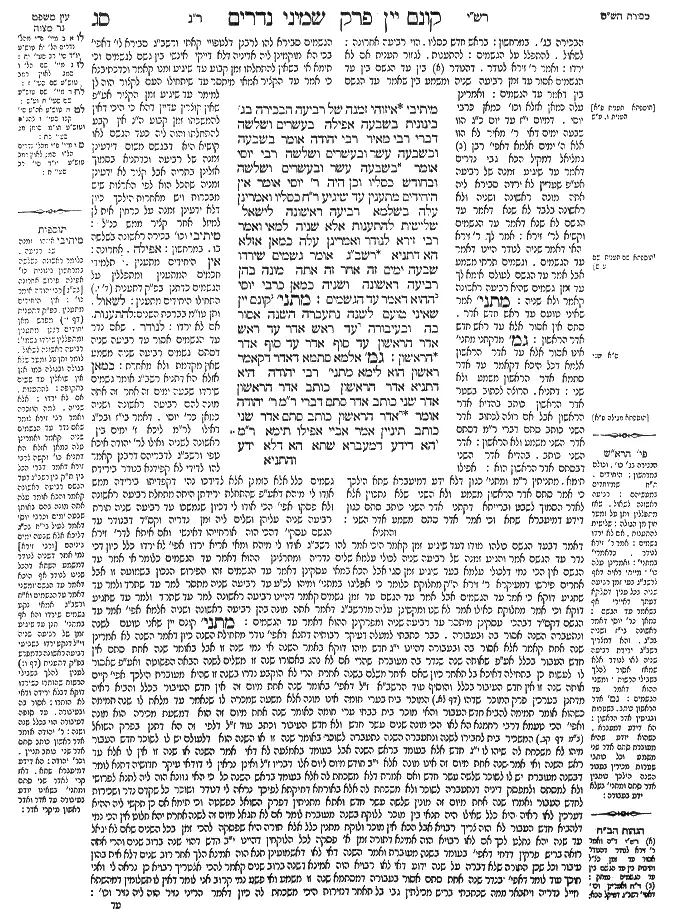
Nedarim 63a - Guemara
מיתיבי איזוהי זמנה של רביעה הבכירה בג' בינונית בשבעה אפילה בעשרים ושלשה דברי רבי מאיר רבי יהודה אומר בשבעה ובשבעה עשר ובעשרים ושלשה רבי יוסי אומר בשבעה עשר ובעשרים ושלשה ובחודש כסליו וכן היה ר' יוסי אומר אין היחידים מתענין עד שיגיע ר"ח כסליו ואמרינן עלה בשלמא רביעה ראשונה לישאל שלישית להתענות אלא שניה למאי ואמר רבי זירא לנודר ואמרינן עלה כמאן אזלא הא דתניא רשב"ג אומר גשמים שירדו שבעה ימים זה אחר זה אתה מונה בהן רביעה ראשונה ושניה כמאן כרבי יוסי ההוא דאמר עד הגשמים:
מתני׳ קונם יין שאיני טועם לשנה נתעברה השנה אסור בה ובעיבורה עד ראש אדר עד ראש אדר הראשון עד סוף אדר עד סוף אדר הראשון:
גמ׳ אלמא סתמא דאדר דקאמר ראשון הוא לימא מתני' רבי יהודה היא דתניא אדר הראשון כותב אדר הראשון אדר שני כותב אדר סתם דברי ר"מ ר' יהודה אומר אדר הראשון כותב סתם אדר שני כותב תיניין אמר אביי אפילו תימא ר"מ הא דידע דמעברא שתא הא דלא ידע
Comments from Rashi on Masechet Nedarim Page 63a
הבכירה בג' . במרחשון: בראש חדש כסליו . הוי רביעה אחרונה: לשאול . להתפלל על הגשמים: להתענות . לגזור תענית אם לא ירדו: ואמר ר' זירא לנודר . דהנודר בין עד הגשם בין עד הגשמים אסור עד זמן רביעה שניה ומשמע בין שאמר עד הגשם בין דאמר עד הגשמים: אמר לך ר' זירא האי דיאמר שניה לנודר היינו דאמר עדי הגשמים . וגשמים תרתי משמע . אבל אמר עד הגשם לעולם אימא לך עד זמן גשמים שהיא רביעה ראשונה קאמר ולא שניה: ואמרינן עלה כמאן אזלא וכו' במאן כרבי יוסי . דמיום י"ז עד יום כ"ג הוו שבעה ימים דאי ר' מאיר לא הוו אלא ה' ימים אלמא דאפי' רבן גמליאל דמקיל הכא גבי נדרים דאמר עד שיגיע זמנה של רביעה אע"פ שעדיין לא ירדה סבירא ליה אתה מונה ראשונה ושניה ולא ראשונה בלבד לא שנא דאמר עד הגשם לא שנא דאמר עד הגשמים וקשיא לר' זירא: מתני' אמר שאיני טועם עדי ראש חדיש אדר . סתם אין אסור אלא עד ראש חדש אדר הראשון: גמ' מדקתני מתני' אינו אסור אלא עד אדר הראשון אלמא דכל היכא דקאמר עד אדר סתמא אדר הראשון משמע ולא שני: דתניא . הרוצה לכתוב בשטר אדר הראשון כותב בהדיא אדר הראשון אבל אם רוצה לכתוב אדר השני כותב סתם דברי ר"מ דסתם אדר השני משמע ולא הראשון: אדר השני כותב . בהדיא אדר השני דבסתם אדר הראשון תוא: אפילו תימא . מתניתין ר"מ ומתני' כגון דלא ידע דמיעברא שתא הילכך כי אמר סתם אדר הראשון משמע ולא השני שלא נתכוין אלא לאדר הסמוך לשבט וברייתא דקתני אדר השני כותב סתם כגון דידע דמיעברא שתא וכי אמר אדר סתם משמע אדר השני:
Comments from Tosafot - Nedarim 63a
מיתיבי איזהו זמנה של רביעה . כלומר ראשונה בשלשה במרחשון בינונית כו' אפילה פירוש אחרונה [בכ''ג] רבי יהודה אומר כו': אין היחידים מתענין . בפ''ק דתענית (דף י .) מפרש מאן יחידים רבנן מתענין ומתפללין שירדו גשמי': רביעה ראשונה לשאול . לומר ותן טל ומטר שלא בגולה ובגולה כמו אנן אין שואלין עד ששים בתקופה: להתענות . אם לא ירדו: אלא שנייה . למה הוזכרה ואמר רבי זירא לומר שאם נדר עד הגשמים שניה קאמר ואמרינן עלה כמאן אזלא הא דתניא כו' וקשה לרבי זירא דאמר דברי הכל בין ת''ק בין רשב''ג דעד הגשם רביעה ראשונה קאמר והכא אומר עלה אתה מונה בהם באותן שבעה ימים וכרבי יוסי דאמר לעיל בי''ח בכ''ג דליכא אלא שבעה ימים ביניהם [ורבי זירא] נמי אמר דשניה לנודר דמשמע השתא דהכל שנינו לנודר אף היכא דאמר עד הגשם . ומשני דאמר עד הגשמים וא''ת ורשב''ג אמאי נקט גשמים שירדו והא אף במתני' תנן עד שיגיע זמן של רביעה שניה וי''ל דנקט ירדו בשביעי רביעה ראשונה כדמפרש בפ''ק דתענית (דף ו:) לענין להלך בשבילי הרשות שהותרו כשירדו דוקא דבלא ירידה ודאי לא הותרו: אסור בה ובעיבורה . עד סופה דעיבורה הוי בכלל שנה ושנה: ר' יהודה אומר אדר ראשון כותב סתם אדר שני כותב תניין . וכר' יהודה: הא דידע דמיעברא שתא . דאז קרי לאדר שני סתם ומתני' בשאינו יודע בעיבורה עד אדר ואדר ראשון מיקרי אדר:
Nedarim 63a - Mishnah translated into english
The Gemara raises an objection against the statement by Rabbi Zeira from the following baraita: When is the time of the rainfall? The early rainfall occurs on the third of the month of Marḥeshvan; the intermediate rainfall is on the seventh of the month, while the late rainfall is on the twenty-third of the month. This is the statement of Rabbi Meir. Rabbi Yehuda says: The respective dates are on the seventh, on the seventeenth, and on the twenty-third of Marḥeshvan.
Rabbi Yosei says: The first two time periods are on the seventeenth and on the twenty-third of Marḥeshvan, and the last period is at the beginning of the month of Kislev. And so too, Rabbi Yosei would say: The learned individuals, who would start to fast due to a drought at an earlier time than the rest of the community, do not start to fast until the New Moon of Kislev arrives and no rain has fallen.
And we say about this: Granted, they disagreed over the time of the first rainfall, as this time is relevant with regard to asking for rain through prayer. The time when the third rainfall is expected is relevant with regard to fasting due to lack of rain. But as for the expected time for the second rainfall, for what purpose did they disagree about its date? And Rabbi Zeira said: It is significant for one who vows until the rain.
And furthermore, we say about this: In accordance with whose opinion is that which is taught in the baraita: Rabban Shimon ben Gamliel says: In the case of rains that fell for seven days, one after another, you count them as the first rainfall and the second. In accordance with whose opinion is this statement? In accordance with the opinion of Rabbi Yosei, who is the only tanna who holds that the first and second periods of rainfall span seven days. It is evident from this discussion that Rabban Shimon ben Gamliel argues that one who vows until the rain must wait until after the second actual rainfall. This contradicts the statement of Rabbi Zeira that until the rain is referring to the date when rain is supposed to fall.
The Gemara answers: That baraita is referring to one who said: Until the rains, rather than: Until the rain. Consequently, the expiration of his vow is determined by the actual time of rainfall.
MISHNA: In the case of one who said: Wine is konam for me, and for that reason I will not taste it for the entire year, if the year was extended, i.e., it was declared to be a leap year, he is prohibited from drinking wine during the year and its intercalated month. If he vowed until the beginning of the month of Adar, the vow remains in effect until the beginning of the first Adar. Similarly, if he says that his vow applies until the end of Adar, the vow remains in effect until the end of the first Adar.
GEMARA: The Gemara comments on the statement in the mishna that if one takes a vow until the beginning of Adar, it remains in effect until the beginning of the first Adar. Apparently, when one says Adar without specification, his statement is understood as a reference to the first Adar.
The Gemara asks: Shall we say that the mishna is in accordance with the opinion of Rabbi Yehuda? As it is taught in a baraita: In the first month of Adar, when dating a document, one writes that the document was composed in the first Adar. During the second Adar, one writes the name of the month of Adar without specification; this is the statement of Rabbi Meir. Rabbi Yehuda says the reverse: During the first Adar one writes the name of the month without specification, and in the second Adar he writes that the document was composed in the second Adar.
Abaye said: You can even say that the mishna is in accordance with the opinion of Rabbi Meir, as there is a difference between the cases: In this baraita, the case is one where the individual who took the vow knew that the year was extended, i.e., declared as a leap year, and the disagreement concerns which Adar is considered the principal one. Conversely, that mishna is referring to a case where he did not know that it is a leap year and that there are two months of Adar. Consequently, when he referred to Adar, all agree that he meant the first Adar.
Traduction : The William Davidson digital edition of the Koren Noé Talmud, with commentary by Rabbi Adin Even-Israel Steinsaltz.