 Talmud Bavli
Nedarim 36a : Youtube
Daf TubeYoutube
2 video classes :
Nedarim Page 36a
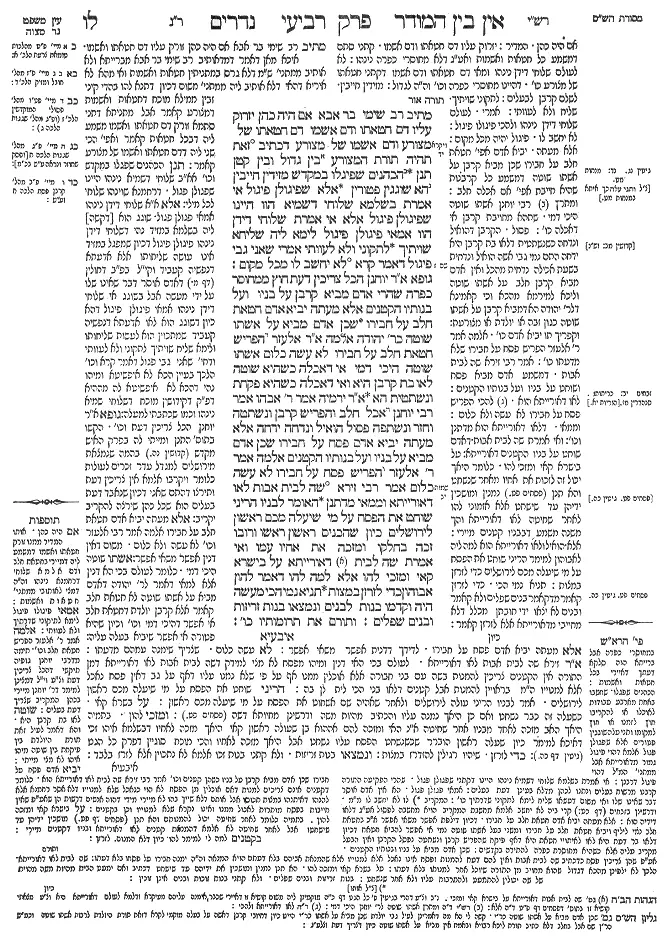
Nedarim 36a - Guemara
מתיב רב שימי בר אבא אם היה כהן יזרוק עליו דם חטאתו ודם אשמו דם חטאתו של מצורע ודם אשמו של מצורע דכתיב (ויקרא יד, ב) זאת תהיה תורת המצורע בין גדול ובין קטן תנן (משנה גיטין ה, ד) הכהנים שפיגלו במקדש מזידין חייבין הא שוגגין פטורין אלא שפיגולן פיגול אי אמרת בשלמא שלוחי דשמיא הוו היינו שפיגולן פיגול אלא אי אמרת שלוחי דידן הוו אמאי פיגולן פיגול לימא ליה שליחא שויתיך לתקוני ולא לעוותי אמרי שאני גבי פיגול דאמר קרא (ויקרא ז, יח) לא יחשב לו מכל מקום גופא אמר רבי יוחנן הכל צריכין דעת חוץ ממחוסר כפרה שהרי אדם מביא קרבן על בניו ועל בנותיו הקטנים אלא מעתה יביא אדם חטאת חלב על חבירו שכן אדם מביא על אשתו שוטה כרבי יהודה אלמה אמר רבי אלעזר הפריש חטאת חלב על חבירו לא עשה כלום? אשתו שוטה היכי דמי אי דאכלה כשהיא שוטה לאו בת קרבן היא ואי דאכלה כשהיא פקחת ונשתטית, הא אמר רבי ירמיה אמר רבי אבהו אמר רבי יוחנן אכל חלב והפריש קרבן ונשתטה וחזר ונשתפה פסול הואיל ונדחה ידחה אלא מעתה יביא אדם פסח על חבירו שכן אדם מביא על בניו ועל בנותיו הקטנים אלמה אמר רבי אלעזר הפריש פסח על חבירו לא עשה כלום אמר רבי זירא שה לבית אבות (שמות יב, ג) לאו דאורייתא וממאי מדתנן (משנה פסחים ח, ג) האומר לבניו הריני שוחט את הפסח על מי שיעלה מכם ראשון לירושלים כיון שהכניס ראשון ראשו ורובו זכה בחלקו ומזכה את אחיו עמו ואי אמרת שה לבית דאורייתא על בישרא קאי ומזכי להו אלא למה להו דאמר להון אבוהון כדי לזרזן במצות תניא נמי הכי מעשה היה וקדמו בנות לבנים ונמצאו בנות זריזות ובנים שפלים:
ותורם את תרומותיו כו':
Comments from Rashi on Masechet Nedarim Page 36a
אם היה כהן . המדיר: יזרוק עליו דם חטאתו ודם אשמו . קתני סתם דמשמע כל חטאות ואשמות ואע"ג דלא מחוסרי כפרה נינהו: לא לעולם שלוחי דידן נינהו ומאי דם חטאתו ודם אשמו דקתני חטאתו של מצורע כו'. דהיינו מחוסרי כפרה וכו' וה"ה לגדול: מזידין חייבין . לשלם קרבן לבעלים: אלא מעתה . יביא אדם אפי' חטאת חלב על חבירו שכן מביא קרבן על אשתו שוטה דמשמע כל קרבנות שהוא חייבת אפי' אם אכלה חלב: ומתרץ רבי יוחנן אשתו שוטה היכי דמי שתהא מחויבת קרבן אי דאכלה כו': לתקוני שויתיך . שליח ולא לעוותי: אמרי . לעולם שלוחי דידן נינהו ולהכי פיגולו פיגול: לא יחשב לו . פיגול יהיה מכל מקום: אלא מעתה . יביא אדם אפי' חטאת חלב על חבירו שכן מביא קרבן על אשתו שוטה דמשמע כל קרבנות שהוא חייבת אפי' אם אכלה חלב: ומתרץ רבי יוחנן אשתו שוטה היכי דמי . שתהא מחויבת קרבן אי דאכלה כו': פסול . הקרבן דהואיל ונדחה כשנשתטית דלאו בת קרבן היא ידחה התם נמי גבי אשה הואיל ונדחית בשעת אכילה נדחית מהכל ואין אדם מביא קרבן חלב על אשתו שוטה וליכא למירמא מהכא וכי קאמינא דלר' יהודה הא דמביא קרבן על אשתו שוטה כגון זבה או יולדת או מצורעת: וקפריך תו יביא אדם כו' . אלמה אמר ר' אלעזר הפריש פסח על חבירו שלא מדעתו כו': אמר רבי זירא שה לבית אבות . דמשמע אדם מביא פסח ושוחט על בניו ועל בנותיו הקטנים: לאו דאורייתא הוא . להכי הפריש פסח על חבירו לא עשה ולא כלום: וממאי . דלאו דאורייתא הוא מדתנן וכו': ואי אמרת שה לבית אבות . דאדם שוחט על בניו הקטנים דאורייתא: על בישרא קאי ומזכי להו . כלומר היאך יכול זה לזכות את אחיו מאחר שנשחט והא תנן (פסחים פט.) נמנין ומושכין ידיהן עד שישחט אלא אזמוני להו לאחר שחיטה לאו דאורייתא והך משנה משמע דבבניו קטנים מיירי: אלא . הואיל ולאו דאורייתא הוא למה ליה לאבוהון למימר הריני שוחט את הפסח על מי שיעלה מכם לירושלים כדי לזרזן במצות: תניא נמי הכי . כדי לזרזן קאמר מדקאמר בנים שפלים ולא קאמר ובנים לא יצאו ידי חובתן מכלל דלא מחייבי מדאורייתא אלא לזרזן קאמר:
Comments from Tosafot - Nedarim 36a
אם היה כהן . אותו המדיר ממנו זורק חטאתו ואשמו דמשמע ליה דמיירי בחטאת חלב ודם אלמא שלוחי דרחמנא נינהו וה''ה דמצי לאותובי ממתני' חטאות ואשמות: אמאי פיגולו פיגול לימא לתיקוני שדרתיך ולא לעוותי: אלמה אמר ר' אלעזר הפריש חטאת חלב וכו' . תימה מדרבי יוחנן גופיה תיקשי דהכל צריכין דעת וצ''ע וי''ל דמצינן למימר דר' יוחנן מיירי בכהן המקריב שצריך דעת בעלים: שוטה לאו בת קרבן היא . והא דאמר לעיל זאת תורת היולדת בין פיקחת בין שוטה מיהו איהו לא מצי מייתי: יביא אדם פסח על חבירו שכן אדם מביא קרבן על בניו כשהן קטנים וכו' אמר רבי זירא שה לבית לאו דאורייתא הוא . כלומר דקטנים אינם צריכים למנות דאם אוכלין מן הפסח לא הוי כנאכל שלא למנוייו דלא אסר רחמנא אלא להנהו דאיתנהו במצות תכוסו אבל אותם דלא שייך בהו לא מיירי מידי דהוה אנשים דרשות הן שאע''פ שאין חייבות בפסח מותרות לאכול ממנו ואינו נקרא שלא למנוייו וכן בקטנים: על בישרא קאי ומזכה להון . בתמיה כלומר לאחר שחיטה יכול להמנותם והא תנן (פסחים דף פט.) מושכין ידיהן עד שישחטו אבל לאחר שחיטה לא אלמא דהמנאת קטנים לאו דאורייתא ובניו דקטנים מיירי: בקטנים למה לי למימר להו . כיון דלא המנום. לזרזן:
Nedarim 36a - Mishnah translated into english
Rav Shimi bar Abba raised an objection from the Tosefta (2:7): If the one who vowed to prohibit another from benefiting from him was a priest, he may sprinkle the blood of his sin-offering and the blood of his guilt-offering on the other’s behalf. Apparently, the priest may perform all sacrificial rites for one prohibited from benefiting from him, even those that require knowledge of the one for whom the offering atones.
The Gemara answers. The reference is to blood of the sin-offering of a leper and blood of the guilt-offering of a leper. These are offerings brought by a leper who is lacking atonement, in order to complete his purification process, as it is written: “This is the law of the leper” (Leviticus 14:2). And the verse comes to teach that the halakhot of a leper apply to both an adult and a minor. This offering, too, does not require the knowledge of the one for whom the offering atones.
The Gemara cites another proof to resolve the dilemma with regard to the nature of the agency of a priest. We learned in a mishna: In the case of priests who rendered an offering piggul in the Temple, i.e., they sacrificed an offering intending to consume it after its appointed time, if they did so intentionally, i.e., with full awareness of the period during which the offering may be consumed, they are obligated to pay. The Gemara infers: If they did so unwittingly, they are exempt from payment. However, in any event, when they rendered the offering piggul, it acquired the status of piggul and is disqualified.
The Gemara asks: Granted, if you say that the priests are agents of Heaven, this is why when their actions cause piggul it is piggul; their actions are independent of the one bringing the offering. However, if you say that the priests are our agents, why when their actions cause piggul is it piggul? Let the one bringing the offering say to the priest: I designated you an agent to perform the task properly but not to perform the task improperly.
The Sages say in response: It is different with regard to piggul, as in its regard the verse states and emphasizes: “He who offered it, it will not be imputed to him” (Leviticus 7:18). This implies that it is piggul in any case, e.g., even if one’s actions cause the offering to be piggul without the consent of the owner. Therefore, there is no proof with regard to the nature of the agency of the priest.
§ With regard to the matter itself, Rabbi Yoḥanan said: Everyone who brings an offering requires knowledge, except for those offerings brought by those lacking atonement; this can be proven from the fact that a person brings a purification offering for his minor sons and daughters. The Gemara asks: However, if that is so, let a person bring a sin-offering on behalf of another who unwittingly ate forbidden fat without his knowledge, just as a man brings an offering for his wife who is an imbecile, in accordance with the opinion of Rabbi Yehuda. Why then did Rabbi Elazar say: One who separated a sin-offering on behalf of another who unwittingly ate forbidden fat has done nothing?
The Gemara refutes the analogy between the cases. What are the circumstances of the case of his wife who is an imbecile? If she ate the forbidden fat when she was an imbecile, she is not subject to liability to bring an offering, as one lacking halakhic competence is exempt from punishment and needs no atonement.
And if she ate the forbidden fat when she was halakhically competent and then became an imbecile, didn’t Rabbi Yirmeya say that Rabbi Abbahu said that Rabbi Yoḥanan said: If one ate forbidden fat unwittingly, and separated an offering, and became an imbecile, and became competent again, the offering is disqualified. Since it was disqualified when he was demented, it will be disqualified forever. It is clear, therefore, that the sin-offering that one brings for his wife who is an imbecile is not a sin-offering for eating forbidden fat, as that would require halakhic intelligence. It is merely for completion of the purification process, e.g., a woman after childbirth, for which halakhic competence is not required. Therefore, no proof may be cited from the case of one’s wife who is an imbecile to the case of bringing a sin-offering on behalf of another who ate fat.
The Gemara asks: However, if that is so, let a person bring a Paschal lamb on behalf of another without his knowledge, just as a person brings a Paschal lamb for his minor sons and daughters. Why then did Rabbi Elazar say: One who separated a Paschal lamb on behalf of another has done nothing?
Rabbi Zeira said: The verse states: “A lamb for each father’s house, a lamb for the household” (Exodus 12:3). From here it is derived that all members of a household, including minor sons and daughters, are registered to the group eating a Paschal lamb. However, this is a custom; it is not by Torah law.
And from where is this halakha learned? It is from that which we learned in a mishna (Pesaḥim 89a): With regard to one who says to his minor sons: I am hereby slaughtering the Paschal lamb on behalf of the one of you who will ascend to Jerusalem first, and he will be privileged to eat from that lamb, then once the first of his children introduces his head and most of his body into Jerusalem, he acquires his portion and acquires portions on behalf of his brothers with him. And if you say that the halakha derived from the phrase “a lamb for the household” is by Torah law, and the minors are obligated to register for the Paschal lamb, although the son who reached Jerusalem first acquired his portion based on the stipulation of his father, how can he stand over the meat of the Paschal lamb after it was slaughtered and acquire it on behalf of his brothers? Apparently, minors are not required by Torah law to register as members of the group eating the Paschal lamb.
The Gemara asks: However, why do they require that their father say to them: The one of you who will ascend to Jerusalem first will be privileged to eat from that lamb, when no actual acquisition takes place? It is in order to motivate them in the performance of mitzvot. This is also taught in a baraita: There was an incident that transpired where a father said to his sons and daughters that they should compete to see who reaches the sacrifice of the Paschal lamb first, and the daughters preceded the sons, and the daughters were found to be motivated and the sons to be lazy [shefalim]. Since the baraita did not say that the result was that daughters acquired their portion, apparently the father’s statement was merely motivational.
§ We learned in the mishna that among the tasks that one may perform for someone who is prohibited by vow from benefiting from him is: And he separates his teruma.
Traduction : The William Davidson digital edition of the Koren Noé Talmud, with commentary by Rabbi Adin Even-Israel Steinsaltz.