 Talmud Bavli
Nedarim 29a : Youtube
Daf TubeYoutube
2 video classes :
Nedarim Page 29a
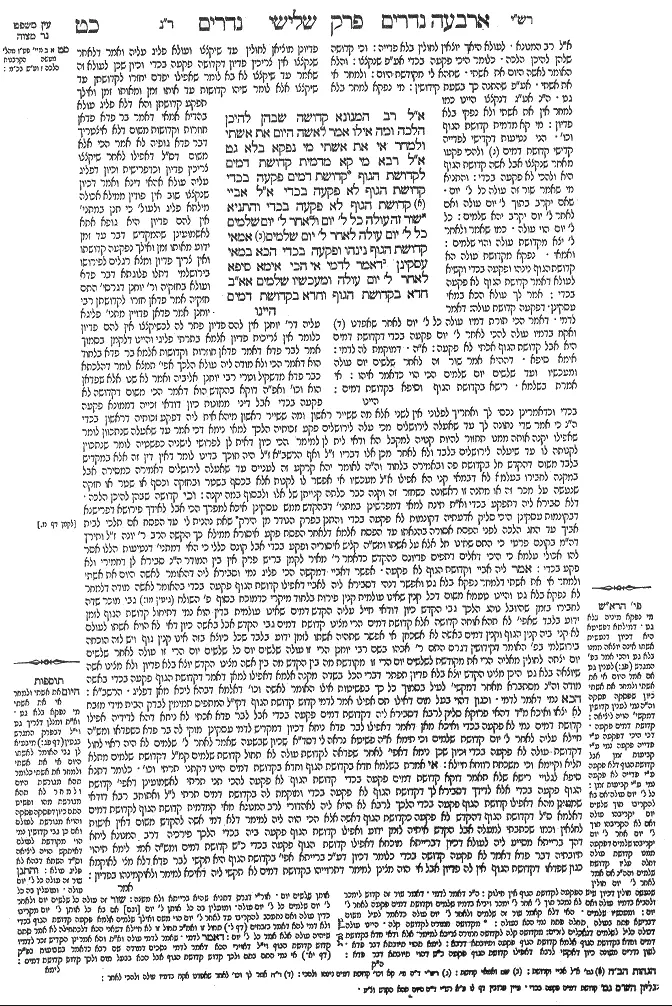
Nedarim 29a - Guemara
אמר ליה רב המנונא קדושה שבהן להיכן הלכה ומה אילו אמר לאשה היום את אשתי ולמחר אי את אשתי מי נפקא בלא גט אמר ליה רבא מי קא מדמית קדושת דמים לקדושת הגוף קדושת דמים פקעה בכדי קדושת הגוף לא פקעה בכדי אמר ליה אביי קדושת הגוף לא פקעה בכדי והתניא שור זה עולה כל שלושים יום ולאחר שלושים יום שלמים כל שלושים יום עולה לאחר שלושים יום שלמים אמאי קדושת הגוף נינהו ופקעה בכדי הכא במאי עסקינן דאמר לדמי אי הכי אימא סיפא לאחר שלושים יום עולה ומעכשיו שלמים אי אמרת בשלמא חדא בקדושת הגוף וחדא בקדושת דמים
Comments from Rashi on Masechet Nedarim Page 29a
א"ל רב המנונא . לעולא היאך יוצאין לחולין בלא פדייה: וכי קדושה שלהן להיכן הלכה . כלומר היכי פקעה בכדי אע"פ שנקצצו: והלא האומר לאשה היום את אשתי . שתהא לי מקודשת היום: ולמחר אי את אשתי . אע"פ שהתנה כך בשעת קידושין: מי נפקא למחר בלא גט . ה''נ אע''ג דנקצצו היינו כמו למחר אין את אשתו ולא נפקי בלא פדיון: מי קא מדמית קדושת הגוף . וכו'. הני נטיעות דקדישי לפדייה קדישי קדושת דמים ולהכי פקעו מאחר שנקצצו אבל אשה קדושת הגוף היא ולהכי לא פקעה בכדי: והתניא מי שאמר שור זה עולה כל ל' יום . שאם יקרב בתוך ל' יום עולה ואם לאחר ל' יום יקרב יהא שלמים: כל ל' יום הוי עולה . כמו שאמר ולאחר ל' יצא מקדושת עולה והוי שלמים: ואמאי . נפקא מקדושת עולה הא קדושת הגוף נינהו ופקעה בכדי וקשיא לעולא דאמר קדושת הגוף לא פקעה בכדי: אמר לך עולא הכא במאי עסקינן . דפקעה קדושת עולה: דאמר לדמי . דאמר הכי תורת דמיו עולה כל ל' יום לאחר שאפדנו ואקח בדליו עולה להכי לאחר ל' יום פקעה בכדי דקדושת דמים היא אבל קדושת הגוף אכתי לא פקעה: א''ה . דמוקמת לה לדמי: אימא סיפא . דההיא אמר שור זה לאחר שלשים יום עולה ומעכשיו ועד שלשים יום שלמים הכי הוי כדאמר איהו: אי אמרת בשלמא . רישא בקדושת הגוף וסיפא בקדושת דמים:
Comments from Tosafot - Nedarim 29a
היום את אשתי ולמחר אי את אשתי מי נפקא בלא גט . וא''ת ומנלן דצריך גט וי''ל דבפרק המגרש בגטין (דף פג:) מיבעיא לן גבי האומר לאשתו היום אי את אשתי ולמחר את אשתי כלומר תהא מגורשת היום ולמחר לא תהא מגורשת מהו ופשיט התם כיון דפסקה פסקה והויא מגורשת לעולם ואם כן גבי קדושין נמי הוי מקודשת לעולם דאיתקש הויה ליציאה וס''ד השתא דבהא לא פליג עולא: והתנן שור זה עולה כל ל' יום עולה . ומועלין בה כל אותן שלשים יום . אור''י דגרס דתניא שהיא ברייתא ולא משנה: שור זה עולה כל שלשים יום ולאחר ל' יום שלמים כל ל' יום עולה . ומועלין בה כל אותן ל' יום [וגם] אם בא כל אותן ל' יום מקריבו כדין עולה ואם נתעכב להקריבו עד לאחר ל' יום הוי משם ואילך שלמים אלמא פקעה קדושת הגוף בכדי ולא דמי להא דאמר בזבחים (דף ל .) תחול זו ואח''כ תחול זו לא חיילא דשאני הכא דלכתחילה לא אמר סתם שיהיה עולה אלא אמר כל ל' יום: דאמר לדמי . שאמר לדמי עולה וא''ת והא אמרינן הקדיש זכר לדמיו קדוש קדושת הגוף וי''ל דאיירי הכא דאמר לדמי נסכים דמודה שם רבא כדאמר בשבועות בפ''ק (דף יא .) אי נמי התם בתם ולכך קדוש קדושת הגוף אבל הכא בבעל מום ולכך קדוש קדושת דמים:
Nedarim 29a - Mishnah translated into english
Rav Hamnuna said to Ulla: Where did their sanctity go? How can the consecrated saplings become non-sacred without being redeemed? And what would happen if one said to a woman while performing betrothal: Today you are my wife and tomorrow you are not my wife? Would she exit the marriage the next day without a bill of divorce? Likewise, in the mishna, once one consecrated the saplings, how is their sanctity withdrawn without redemption?
Rava said to him: How do you compare sanctity inherent in its value to inherent sanctity? Sanctity inherent in its value departs with nothing being done, since it is conditional. When the condition is fulfilled and the saplings are cut, the sanctity is removed. However, inherent sanctity, which relates to an entity that itself is consecrated, e.g., a betrothed woman, does not depart with nothing being done. An action must be performed in order to remove it.
Abaye said to him: And does inherent sanctity not depart with nothing being done? But isn’t it taught in a baraita that if one said: This ox is a burnt-offering for all of thirty days and after thirty days it is a peace-offering, for all of thirty days it is a burnt-offering and after thirty days it is a peace-offering. One can ask: Why is this so? These offerings are examples of inherent sanctity, and it departs with nothing being done. After thirty days, it is transformed into a peace-offering without any action being taken.
The Gemara answers: With what are we dealing here? It is a case where one did not consecrate the animal as a burnt-offering or peace-offering but rather he said that he was consecrating it for its monetary value, with which to purchase a burnt-offering or peace-offering. Therefore, there was no inherent sanctity.
The Gemara asks: If so, say the latter clause: If he said that after thirty days it should be a burnt-offering, and from now until thirty days it should be a peace-offering, his words are binding. Granted, if you say that one clause is referring to inherent sanctity and one clause is referring to sanctity inherent in its value,
Traduction : The William Davidson digital edition of the Koren Noé Talmud, with commentary by Rabbi Adin Even-Israel Steinsaltz.
Nedarim 29a : Significance
Next step
Finished studying Nedarim 29a? Carry on with the rest of the tractate.
Study Nedarim 29bFrequently asked questions: Nedarim 29a
Where is Nedarim 29a in tractate Nedarim?
Nedarim 29a is page 55 of 180 in tractate Nedarim (Seder Nashim).
When is daf 29 of Nedarim studied in Daf Yomi?
Daf Yomi covers one daf a day, both sides. Daf 29 of Nedarim will be studied on April 26, 2030.
Is there a video class on Nedarim 29a?
Yes, by Daf Tube, Rabbi Dr. Moshe Weisblum. These classes were published on YouTube by their authors and are gathered on this site.
What is tractate Nedarim about?
The Masechet Nedarim is the third tractate of the Seder Nashim. The gemara Nedarim is the study of the laws relating to the neder, a kind of vow or oath in Judaism. The Nedarim tractate is a gemara which contains 11 chapters.
Your study is also dedicated to them
- L'ilui Nishmat Avraham Ben Simha
- L'ilui Nishmat אליעזר בן רחל
- L'ilui Nishmat Jamila bat Chlomo Abensour