 Talmud Bavli
The learning on the whole site is dedicated : L'ilui Nishmat Jacques Isaac Ben Amram Loubaton
The learning on the whole site is dedicated : L'ilui Nishmat אסתר בת חיים
The learning on the whole site is dedicated : L'ilui Nishmat Avraham Ben Simha
Nedarim 71a : Youtube
Daf TubeYoutube
2 video classes :
Nedarim Page 71a
Nedarim 71a - Guemara
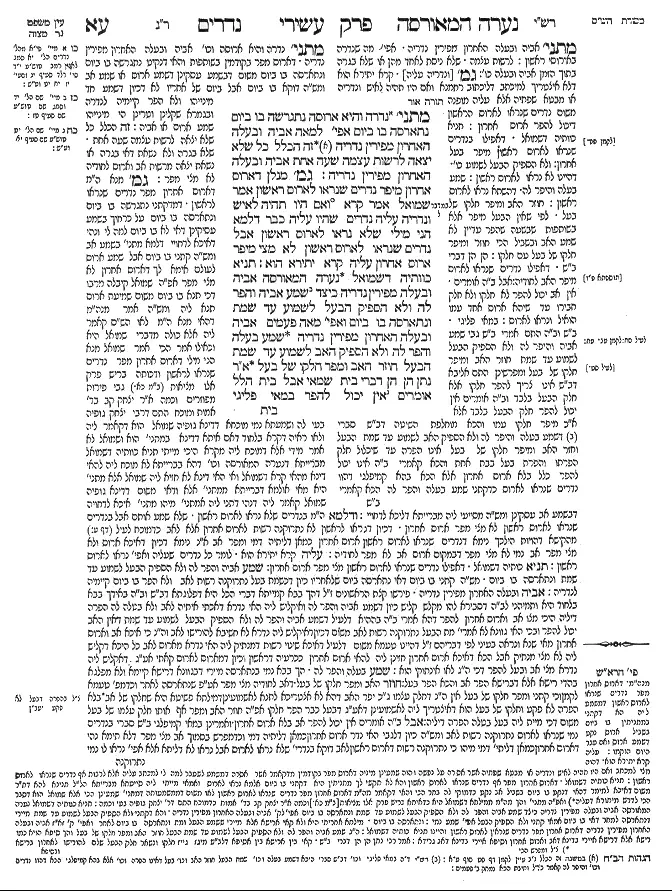
מתני׳ נדרה והיא ארוסה נתגרשה בו ביום נתארסה בו ביום אפי' למאה אביה ובעלה האחרון מפירין נדריה זה הכלל כל שלא יצאה לרשות עצמה שעה אחת אביה ובעלה האחרון מפירין נדריה גמ׳ מנלן דארוס אחרון מיפר נדרים שנראו לארוס ראשון אמר שמואל אמר קרא (במדבר ל, ז) ואם היו תהיה לאיש ונדריה עליה נדרים שהיו עליה כבר דלמא הני מילי שלא נראו לארוס ראשון אבל נדרים שנראו לארוס ראשון לא מצי מיפר ארוס אחרון עליה קרא יתירא הוא תניא כוותיה דשמואל נערה המאורסה אביה ובעלה מפירין נדריה כיצד שמע אביה והפר לה ולא הספיק הבעל לשמוע עד שמת ונתארסה בו ביום ואפי' מאה פעמים אביה ובעלה האחרון מפירין נדריה שמע בעלה והפר לה ולא הספיק האב לשמוע עד שמת הבעל חוזר האב ומפר חלקו של בעל א"ר נתן הן הן דברי בית שמאי אבל בית הלל אומרים אין יכול להפר במאי פליגי
Comments from Rashi on Masechet Nedarim Page 71a
מתני' אביה ובעלה האחרון מפירין נדריה . אפי' מה שנדרה באירוסי ראשון: לרשות עצמה . שלא ניסת לאחד מהן או שלא בגרה בתוך הזמן אביה ובעלה כו': גמ' [ונדריה עליה] . קרא יתירא הוא דלא איצטריך למיכתב דליכתוב רחמנא ואם היו תהיה לאיש ונדריה או מבטא שפתיה אלא עליה מופנה משום נדרים שנראו לארוס הראשון דיכול להפר ארוס אחרון: תניא כוותיה דשמואל . דאפילו בנדרים שנראו לארוס ראשון מיפר בעל אחרון: ולא הספיק הבעל לשמוע כו' . דהיינו לא נראו לארוס ראשון: שמע בעלה והיפר לר . דהשתא נראו לארוס ראשון: חוזר האב ומיפר חלקו של בעל . לפי שאין הבעל מיפר אלא בשותפות שבשעה שהפר עדיין לא שמע האב ובשביל הכי חוזר ומיפר חלקו של בעל עם חלקו: הן הן דברי ב"ש . דאפילו נדרים שנראו לארוס מיפר האב לחודיה: אבל ב"ה אומרים . אין אב יכול להפר לא חלקו ולא חלק חבירו עד שיהא ארוס אחד עמו הואיל ונראו לארוס: במאי פליגי . ב"ש וב"ה התם אמרי ב"ש גבי שמע אביה והיפר לה ולא הספיק הבעל לשמוע עד שמת חוזר האב ומיפר חלקו של בעל ומפרשינן התם אליבא דב"ש אינו צריך להפר חלקו אלא חלק הבעל בלבד וב"ה אומרים אין יכול להפר חלק הבעל בלבד אלא א"כ מיפר חלקו עמו והכא מוחלפת השיטה דב"ש סברי דשמע בעלה והיפר לה ולא הספיק האב לשמוע עד שמת הבעל וחזר האב ומיפר חלקו סל בעל אינו הפרה עד שיכלול חלק הפרתו והפרת בעל בבת אחת והכא קאמרי ב"ה אינו יכול להפר כלל בלא ארוס אחרון אלא הכא בהא קמיפלגי דהוו נדרים שנראו לארוס כדקתני שמע בעלה והפר לה הכא קאמרי
Nedarim 71a - Mishnah translated into english
MISHNA: If she took a vow as a betrothed woman and then was divorced on the same day, and she was again betrothed on the same day to another man, or even to one hundred men, one after the other, on a single day, her father and her last husband nullify her vows. This is the principle: With regard to any young woman who has not left her father’s jurisdiction and entered into her own jurisdiction for at least one moment, through full marriage or reaching majority, her father and her final husband nullify her vows.
GEMARA: From where do we derive that her final betrothed can nullify her vows that were disclosed to the first betrothed? Shmuel said that the verse states: “And if she be to a husband and her vows are upon her…and he nullifies her vow” (Numbers 30:7–9), indicating that he can nullify vows that were upon her already. The Gemara asks: Perhaps this statement applies only to vows that were not discerned by the first betrothed, but vows that were discerned by the first betrothed, the final betrothed cannot nullify.
The Gemara answers: The phrase “upon her” is a superfluous part of the verse. One can derive from it that all her vows, including those of which an earlier betrothed had been aware, can be nullified by the final betrothed.
It is taught in a baraita in accordance with the opinion of Shmuel: With regard to a betrothed young woman, her father and her husband together nullify her vows. How so? If her father heard and nullified the vow for her, and the husband did not manage to hear it before he died, and she was betrothed on the same day to another man, or even one hundred times on the same day, her father and her final husband nullify her vows. If her husband heard and nullified the vow for her, and the father did not manage to hear it before the husband died, the father may go back and nullify the husband’s portion.
Rabbi Natan said: This is the statement of Beit Shammai, that each of them nullifies half of the betrothed young woman’s vow. However, Beit Hillel say that the father cannot nullify the vow on his own. The Gemara asks: About what do Beit Shammai and Beit Hillel disagree?
Traduction : The William Davidson digital edition of the Koren Noé Talmud, with commentary by Rabbi Adin Even-Israel Steinsaltz.