 Talmud Bavli
Nedarim 49a : Youtube
Daf TubeYoutube
2 video classes :
Nedarim Page 49a
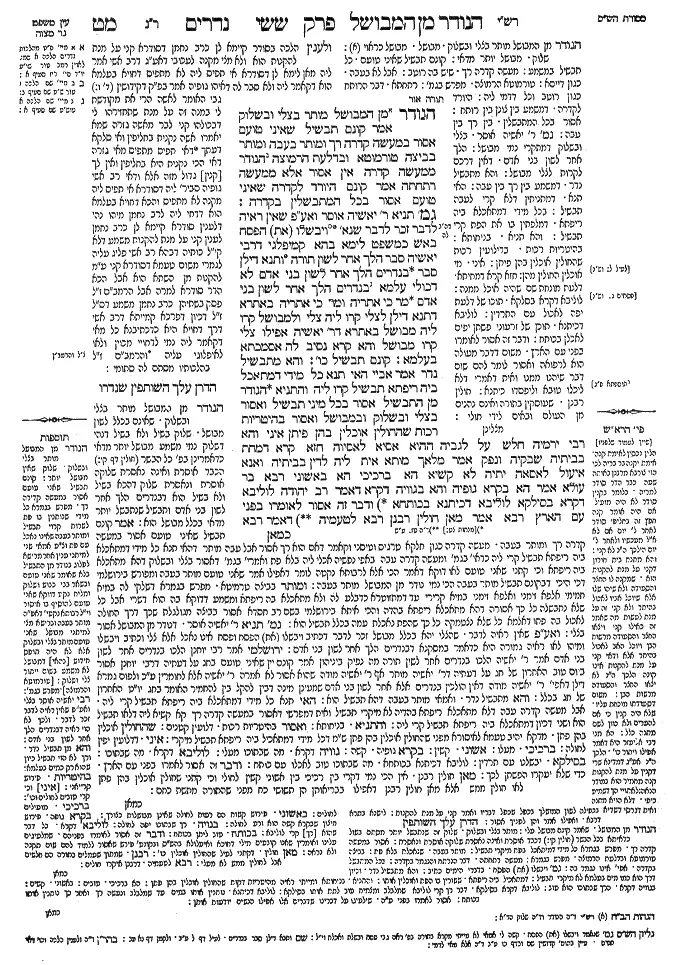
Nedarim 49a - Guemara
מתני׳ הנודר מן המבושל מותר בצלי ובשלוק אמר קונם תבשיל שאיני טועם אסור במעשה קדרה רך ומותר בעבה ומותר בביצה טורמוטא ובדלעת הרמוצה הנודר ממעשה קדרה אין אסור אלא ממעשה רתחתה אמר קונם היורד לקדרה שאיני טועם אסור בכל המתבשלין בקדרה:
גמ׳ תניא ר' יאשיה אוסר ואע"פ שאין ראיה לדבר זכר לדבר שנא' (דברי הימים ב לה, יג) ויבשלו את הפסח באש כמשפט לימא בהא קמיפלגי דרבי יאשיה סבר הלך אחר לשון תורה ותנא דילן סבר בנדרים הלך אחר לשון בני אדם לא דכולי עלמא בנדרים הלך אחר לשון בני אדם מר כי אתריה ומר כי אתריה באתרא דתנא דילן לצלי קרו ליה צלי ולמבושל קרו ליה מבושל באתרא דר' יאשיה אפילו צלי קרו מבושל והא קרא נסיב לה אסמכתא בעלמא:
קונם תבשיל כו':
והא מתבשיל נדר אמר אביי האי תנא כל מידי דמתאכל ביה ריפתא תבשיל קרו ליה והתניא הנודר מן התבשיל אסור בכל מיני תבשיל ואסור בצלי ובשלוק ובמבושל ואסור בהיטריות רכות שהחולין אוכלין בהן פיתן איני והא רבי ירמיה חלש על לגביה ההוא אסיא לאסיוה חזא קרא דמחת בביתיה שבקיה ונפק אמר מלאך מותא אית ליה לדין בביתיה ואנא איעול לאסאה יתיה לא קשיא הא ברכיכי הא באשוני רבא בר עולא אמר הא בקרא גופיה והא בגוויה דקרא דאמר רב יהודה לוליבא דקרא בסילקא לוליבא דכיתנא בכותחא ודבר זה אסור לאומרו בפני עם הארץ רבא אמר מאן חולין רבנן רבא לטעמיה דאמר רבא
Comments from Rashi on Masechet Nedarim Page 49a
מתני' הנודר מן המבושל מותר בצלי ובשלוק . מבושל מבושל כראוי: שלוק . מבושל יותר מדאי: קונם תבשיל שאיני טועם . כל תבשיל במשמע: מעשה קדרה רך . שיש בה רוטב: אבל לא בעבה . כגון דייסא: טורמוטא הרמוצה מפרש בגמ': רתחתא . דבר הרותח כגון רוטב וכל דדמי ליה: היורד לקדרה . דמשמע בין צונן בין רותח: אסור בכל המתבשלין . בין רך בין עבה: והא תניא . בניחותא: גמ' ר' יאשיה אוסר . בצלי ובשלוק דמתקרי נמי מבושל: הלך אחר לשון בני אדם . דאין דרכם לקרות לצלי מבושל: והא מתבשיל נדר . דמשמע בין רך בין עבה: האי תנא . דמתניתין דלא קרי לעבה תבשיל: בכל מידי דמתאכלא ביה ריפתא . דמלפתין בו את הפת קרי תבשיל: והא תניא . בניחותא: בהיטריות רכות . בדילועין רכות שהחולין אוכלין בהן פיתן: איני . מי אוכלין החולין מהן: חזא קרא דמחיתא . דלעת מונחת שם שהיה אוכל ממנה: לוליבא דקרא בסלקא . תוכו של דלעת יפה לאכול עם התרדין: לוליבא דכיתנא . תוכן של זרעוני פשתן יפים לאכלן בכותח: ודבר זה אסור לאומרו בפני עם הארץ . משום דדבר מעולה הוא לרפואה ואסור לומר להם שום דבר שיהנו ממנו ואית דאמרי דלא ליכלו טובא וליפסדו כיתנא: חולין רבנן . שעוסקין בתורה ואינם נהנים מן העולם ובאים לידי חולי:
Comments from Tosafot - Nedarim 49a
מתני' הנודר מן המבושל מותר בצלי ובשלוק . שלוק שאין מבושל יותר: קונם תבשיל שאני טועם אסור במעשה קדירה רך . מפרש בגמרא כל מידי שנותנין בו פת לשרות קרוי תבשיל ומותר בעבה שאינו נאכל עם פת וצ''ע אמאי שני למיתני ענין אחר מרישא לפלוג בנודר מן התבשיל בלא שאומר שאני טועם ובשאר בבי כבוש ושלוק ומליח נקט דווקא שאני טועם להוסיף בו איסור וי''ל רבותא נקטי' דאפ''ה מותר בעבה וברישא מצי למיתני מבושל שאני טועם מותר בצלי ובשלוק אלא לא היה תופס חידוש [בהאי] דמבושל לא משמע בשום ייתור צלי ושלוק: [טורמוטא והרמוצה] . מפרש בגמ': רבי יאשיה אוסר בצלי ואע''פ שאין ראיה לדבר זכר לדבר . ולכך לא הוי ראיה דבנדרים הלך אחר לשון בני אדם: והא מן תבשיל נדר . ורך לא הוי תבשיל כיון שהוא רק כמים בעלמא: בהיטריות . פירוש קרייאני: [איני] וכי קרי טובים לחולים וכו': ברכיכי . מועילים לחולים: באשוני . פירוש קשות הם רעות לחולה שאינן מבושלות כצורך: בקרא גופה . פירוש חיצון שבקרא קשה הוא ורע לחולה: בגויה . רך שבתוכו יפה לחולה: לוליבא דקרא . כל דבר שהוא [רך] קרי לוליבא: בכותח . טוב ליתן בכותח: ודבר זה אסור לאומרו בפניהם . שמלעיגים עלינו ואומרין שאנו קובעים מילי דחוכא ואיטלולא בהש''ס ובקונט' פירש שאסור ללמוד להם שום תקנה ולא נראה: מאן חולין . דקתני לעיל שהחולין אוכלין כו': רבנן . שמתוך שעמלים בתורה הם חלשים אבל לחולין ממש לא מעלי: רבא לטעמיה . דרבנן איקרו חולים:
Nedarim 49a - Mishnah translated into english
MISHNA: In the case of one who vows that cooked foods are forbidden to him, he is permitted to eat roasted and boiled foods, as they are not defined as cooked. If one said: Cooked food is konam for me, and for that reason I will not taste it, he is prohibited from tasting a loose cooked food but is permitted to taste a thick one, which people do not generally refer to as a cooked food. And he is likewise permitted to eat a turemuta egg and the remutza gourd, as they are not considered cooked foods either. In the case of one who vows that food cooked in a dish is forbidden to him, he is prohibited from deriving benefit only from food that is cooked by boiling it in a dish. However, if one said: That which enters into a dish is konam for me, and for that reason I will not taste it, he is prohibited from tasting anything cooked in a dish.
GEMARA: It is taught in a baraita: In the case of one who vowed that cooked foods are forbidden to him, Rabbi Yoshiya maintains that he is prohibited from eating roasted foods. And although there is no biblical proof of the matter, there is an allusion to the matter, as it is stated: “And they cooked the Paschal offering with fire according to the ordinance” (II Chronicles 35:13). Since the Paschal offering must be roasted, it is evident that roasting can also be referred to as cooking.
The Gemara suggests: Let us say that they disagree with regard to this following principle, that Rabbi Yoshiya holds that one should follow the language of the Torah, and our tanna holds that with regard to vows one should follow the language of people.
The Gemara refutes this suggestion: No, it is possible that everyone agrees that with regard to vows one should follow the language of people. Rather, this Sage stated his opinion in accordance with the language of his locale, and this Sage stated his opinion in accordance with the language of his locale. In the locale of our tanna, roasted food is called roasted and cooked food is called cooked, and in the locale of Rabbi Yoshiya even roasted food is called cooked.
The Gemara raises a difficulty: But doesn’t Rabbi Yoshiya cite a verse as proof for his opinion, which shows that his opinion is not based on the vernacular? The Gemara answers: The verse is cited as a mere support for his opinion, as implied by his statement that the verse is only an allusion, not a full proof.
It is stated in the mishna that one who said: A cooked food is konam for me and for that reason I will not taste it, he is prohibited from tasting a loose cooked food but is permitted to taste a thick one. The Gemara asks: Why is he permitted to eat it? But didn’t he vow that a cooked food, which includes one that is thick, is forbidden to him?
Abaye said: This tanna maintains that anything with which bread is eaten is called a cooked food, whereas a thick dish is eaten without bread. And it is taught likewise in a baraita: One who vows that a cooked food is forbidden to him is prohibited from eating all types of cooked foods, and he is therefore prohibited from eating roasted, boiled, and cooked foods. And he is also prohibited from eating soft gourds [hiteriyyot], with which the sick eat their bread. This indicates that a cooked food is one eaten with bread.
The Gemara asks: Is that so, that the sick eat gourds? But Rabbi Yirmeya fell ill, and a certain doctor came to him to heal him. He saw a gourd that was placed in his house, and he left Rabbi Yirmeya and exited the house and said: This person has an angel of death, a gourd, in his house, and I will enter to heal him? This incident teaches that gourds are detrimental for the sick.
The Gemara responds: This is not difficult. This baraita is referring to soft gourds, which are beneficial to the sick, and this incident is referring to hard ones, which are detrimental. Rava bar Ulla said a different answer: This incident is referring to the gourd itself, which is detrimental, and this baraita is referring to the innards [luliva] of the gourd, as Rav Yehuda said: The innards of the gourd are best eaten with chard; the innards of flax seeds are best eaten with kuteḥa, a dip made from bread crumbs and sour milk. And one may not say this matter in the presence of an ignoramus, so that ignoramuses do not uproot flax for consumption of its seeds.
Rava said a different response: Who are the sick mentioned in the baraita, for whom a gourd is beneficial? They are the Sages, who are weakened by their toil in the study of Torah and their abstention from worldly pleasures, although they are not actually sick. Therefore, there is no contradiction. Gourds are harmful for people who are actually sick. The Gemara comments: Rava conforms to his standard line of reasoning, as Rava said:
Traduction : The William Davidson digital edition of the Koren Noé Talmud, with commentary by Rabbi Adin Even-Israel Steinsaltz.