 Talmud Bavli
The learning on the whole site is dedicated : L'ilui Nishmat Avraham Ben Simha
The learning on the whole site is dedicated : L'ilui Nishmat Yaakov ben Myriam
The learning on the whole site is dedicated : L'ilui Nishmat Jacques Isaac Ben Amram Loubaton
Nedarim 48a : Youtube
Daf TubeYoutube
2 video classes :
Nedarim Page 48a
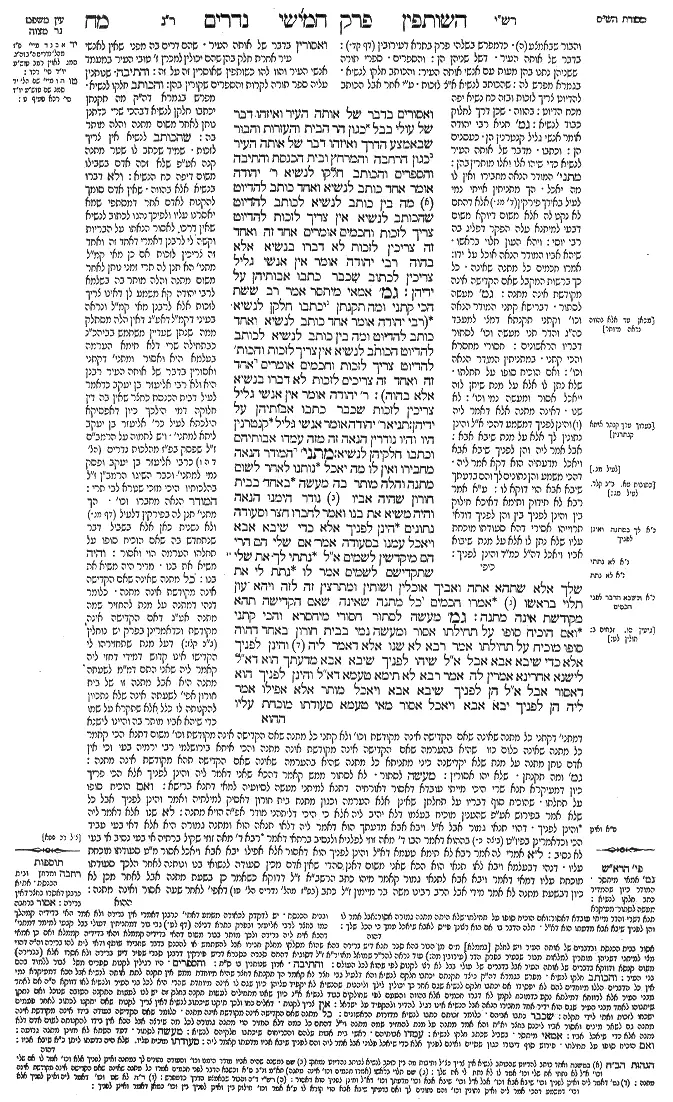
Nedarim 48a - Guemara
ואסורים בדבר של אותה העיר ואיזהו דבר של עולי בבל כגון הר הבית והעזרות והבור שבאמצע הדרך ואיזהו דבר של אותה העיר כגון הרחבה והמרחץ ובית הכנסת והתיבה והספרים והכותב חלקו לנשיא ר' יהודה אומר אחד כותב לנשיא ואחד כותב להדיוט מה בין כותב לנשיא לכותב להדיוט שהכותב לנשיא אין צריך לזכות להדיוט צריך לזכות וחכמים אומרים אחד זה ואחד זה צריכין לזכות לא דברו בנשיא אלא בהוה רבי יהודה אומר אין אנשי גליל צריכין לכתוב שכבר כתבו אבותיהן על ידיהן:
גמ׳ אמאי מיתסר אמר רב ששת הכי קתני ומה תקנתן יכתבו חלקן לנשיא רבי יהודה אומר אחד כותב לנשיא ואחד כותב להדיוט ומה בין כותב לנשיא לכותב להדיוט הכותב לנשיא אין צריך לזכות והכות' להדיוט צריך לזכות וחכמים אומרים אחד זה ואחד זה צריכים לזכות לא דברו בנשיא אלא בהוה:
ר' יהודה אומר אין אנשי גליל צריכין לזכות שכבר כתבו אבותיהן על ידיהן:
תניא ר' יהודה אומר אנשי גליל קנטרנין היו והיו נודרין הנאה זה מזה עמדו אבותיהם וכתבו חלקיהן לנשיא:
מתני׳ המודר הנאה מחבירו ואין לו מה יאכל נותנו לאחר לשום מתנה והלה מותר בה מעשה באחד בבית חורון שהיה אביו נודר הימנו הנאה והיה משיא את בנו ואמר לחברו חצר וסעודה נתונים הינן לפניך אלא כדי שיבא אבא ויאכל עמנו בסעודה אמר אם שלי הם הרי הם מוקדשין לשמים א"ל נתתי לך את שלי שתקדישם לשמים אמר לו נתת לי את שלך אלא שתהא אתה ואביך אוכלין ושותין ומתרצין זה לזה ויהא עון תלוי בראשו אמרו חכמים כל מתנה שאינה שאם הקדישה תהא מקודשת אינה מתנה:
גמ׳ מעשה לסתור חסורי מיחסרא והכי קתני ואם הוכיח סופו על תחילתו אסור ומעשה נמי בבית חורון באחד דהוה סופו מוכיח על תחילתו אמר רבא לא שנו אלא דאמר ליה והינן לפניך אלא כדי שיבא אבא אבל א"ל שיהו לפניך שיבא אבא מדעתך הוא דא"ל לישנא אחרינא אמרין לה אמר רבא לא תימא טעמא דא"ל והינן לפניך הוא דאסור אבל א"ל הן לפניך שיבא אבא ויאכל מותר אלא אפילו אמר ליה הן לפניך יבא אבא ויאכל אסור מאי טעמא סעודתו מוכחת עליו
Comments from Rashi on Masechet Nedarim Page 48a
בדבר של אותה העיר . דשל שניהן הן: והבור שבאמצע . כדמפרש בשלהי פרק בתרא דעירובין (דף קד.): והספרים . ספרי תורה ששניהן נתנו בהן מעות עם אנשי אותה העיר: והכותב חלקו לנשיא . בגמרא מפרש לה: שהכותב לנשיא א"צ לזכות . ע"י אחר אבל הכותב להדיוט צריך לזכות ובזה כח נשיא יפה מכח הדיוט: בהווה . שכן דרך לחלוק כבוד לנשיא: גמ' תניא רבי יהודה אומר אנשי גליל קנטרנין הן . כעסנים הן: וכתבו . מדבר של אותה העיר לנשיא כוי שיהו אלו ואלו מותרין בהן: מתני' המודר הנאה מחבירו ואין לו מה יאכל . הך מתניתין אייתי נמי לעיל באידך פירקין (נדרים ד' מג.) אלא דהתם לא נקט לה אלא משום דיוקא משום דבעי למיתנא עלה הפקר דפליג בה רבי יוסי: ויהא העון תלוי בראשו . שיהא אביו המודר הנאה אוכל על ידו: אמרו חכמים כל מתנה שאינה . כל כך ברשות המקבל שאם הקדישה אינה מקודשת אינה מתנה: גמ' מעשה לסתור . דברישא קתני המודר הנאה וכו' וקתני תקנתא דמצי למעבד כה"ג והדר תני נעשה וכו' לסתור דבריו הראשונים: חסורי מחסרא והכי קתני . במתניתין המודר הנאה וכו': ואם הוכיח סופו על תחלתו . שלא נתן לו אלא על מנת שיתן לזה ייאכל אסור ומעשה נמי וכו': לא שנו . דאינה מתנה אלא דאמר ליה והינן לפניך דמשמע דהכי א"ל והינן נתונין לך אלא על מנת שיבא אבא: אבל אמר ליה והן לפניך שיבא אבא ויאכל מדיעתיה הוא דקא אמר ליה . דהכי משמע והן נתונים לך והם בדעתך שיבא אבא הוי דוקא לו: ע"א אמר רבא לא תידוק ותימא דאיכא חילוק בין והינן לפניך בין והן לפניך דודאי תרוייהו אסירי דהא סעודתו מוכחת עליו שלא נתן לו אלא על מנת שיבוא אביו ויאכל דה"ל כמ"ד והינן לפניך:
Comments from Tosafot - Nedarim 48a
בדברים של אותה העיר . שהם דרים בה שהן (מפני) שותפין וזה אסור מפני חלקו של זה: רחבה ומרחץ ובית הכנסת . אתיא כרבנן דאסרו בחצר דאין ברירה: אסור ברחבה ובבית הכנסת . יש לדקדק לכאורה משמע דאתי' כרבנן דאמרי אין ברירה ולא אמר האי בדידיה קמהלך כמו בחצר לרבי אליעזר ובפרק בתרא דביצה (דף לט .) גבי בור דמתניתין דעולי בבל קבעי למימר דמתני' דהכא אית ליה ברירה ולכך מותר בבור משום דהאי בדידיה קממלא והאי בדידיה קממלא ואם כן אמאי אסור בבית הכנסת ובדברים של אותה העיר ויש לחלק [בממלא] מים מן הבור בהא סבר תנא דיש ברירה בהא שהוא מסלקו מחלק חבירו אבל להשתמש או להכנס בדבר שחבירו שותף ודאי לית להו ברירה וה''ה דהוי מצי למיתני דשניהן מותרין למלאות מבור שבעיר בפרק הדר (עירובין מה:) עוד נראה להר''ר שמואל מאויר''א ז''ל דסוגיא דהתם סברה כסברא דריש פירקין דרבנן סברי שפיר דיש ברירה ולא אסרו אלא (בברירה) משום קנסא ודווקא בדברים של אותה העיר אבל בדברים של עולי בבל לא רצו לקנוס לפי שהוא לכל העולם: והתיבה . ארון שנותנין בו ס''ת: והספרים . היו רגילין לקנות ספרים משל צבור ללמוד בהם בני העיר: והכותב חלקו לנשיא . מפרש בגמרא דה''ק כיצד תקנתם יכתבו חלקם לנשיא והא דלעיל גבי חצר לא קאמר הך תקנתא דחצר שהיא מיוחדת ממש אין תקנה לתת אותה לנשיא אבל הכא דמעיקרא נמי אין כל הדברים הללו מיוחדים להם לא יפסידו אם יכתבו חלקם לנשיא שגם אחר כך יכולין לילך וליהנות שהנשיא לא יקפיד עליהן כיון שגם לו אינה מיוחדת שהרי היא לכל בני העיר ולנשיא לאו דווקא ה''ה אם לאחד מבני העיר אלא לרווחא דמילתא נקט כדמוכח לקמן לא דברו חכמים אלא בהווה והטעם לפי שחולקים כבוד לנשיא א''נ כיון שאנו מתחילים לעשות תקנה בחלק זה יש לנו לעשות התקנה הטובה שנוכל ואם נתקן שיתנוהו לאחד מבני העיר שגם הוא ידיר אחד מחבירו הנאה אבל הנשיא אינו רגיל להדיר ולהקפיד על ישראל: אין צריך לקנות . דאלים כחו ולכך תיקנו שיכתוב לנשיא דאין צריך לקנות שאם יתקנו לכתוב לאחר פעמים ישכחו לזכות ואתי לידי תקלה: שכבר כתבו אביהם . כלומר זכותם כתבו לנשיא מדורות הראשונים: אמאי מיתסר . בשביל שכתב חלקו לנשיא: עמדו אבותיהם . ראשי בית אבות שלהם והכריחום שיכתבו חלקיהם לנשיא: כל מתנה שאם הקדישה אינה מקודשת אינה מתנה . כלומר שאם הקדישה בעודה בידו אינה מקודשת אינה מתנה גם לשאר מינים ואסור אביו ליכנס בחצר וא''ת והא אמר מתנה על מנת להחזיר שמה מתנה וי''ל דהתם כל כמה דלא החזיר הוי מתנה גמורה לכל מה שירצה אבל הכא אין בידו להקנותה לשום אדם דלא נתנה אלא כדי שיאכל אביו: מעשה לסתור . דעד השתא לא חזינן מתנה גרועה: ואם הוכיח סופו על תחילתו . פירוש סוף דיבורו כגון שסיים ואינם לפניך אלא כדי שיאכל פלוני אבל אמר ליה והם לפניך שיבא אביו מדעתו קאמר ליה: סעודתו מוכיח עליו . שלא היה בדעתו ליתן כ''א שיבא אביו:
Nedarim 48a - Mishnah translated into english
But it is prohibited for them to benefit from objects of that city, which are considered to be jointly owned by all its residents. And what are examples of objects belonging to those who ascended from Babylonia? For example, the Temple Mount, and the Temple Courtyards, and the water cistern in the middle of the road. And what are objects of that city? For example, the city square, and the bathhouse, and the synagogue, and the ark which houses the Torah scrolls, and the Torah scrolls. And one who writes, i.e., signs, his portion of the shared objects of that city over to the Nasi.
Rabbi Yehuda says: This is the halakha with regard to both one who writes his portion over to the Nasi and one who writes it over to a common person. Rabbi Yehuda adds: What is the difference between one who writes it over to the Nasi and one who writes it over to a common person? That one who writes it to the Nasi need not formally confer possession of the item, whereas one who writes it over to a common person must confer possession to him. And the Rabbis say: Both this one and that one must confer possession, and they specifically mentioned the Nasi only so as to speak in the present, addressing situations that were prevalent. Rabbi Yehuda says: The people of Galilee do not have to write their portion over to the Nasi because their fathers already wrote it for them, declaring that all the public property belongs to him.
GEMARA: The mishna appears to teach that one who is prohibited by a vow from benefiting from another may not benefit from property written over to the Nasi. The Gemara asks: Why is it forbidden? Rav Sheshet said: This is what the mishna is teaching: And what is their remedy, i.e., what can be done to enable the forbidden individuals to benefit from communal property? They should write their portion over to the Nasi, thereby relinquishing their shares in the communal property.
The Gemara continues its quotation from the mishna: This is the halakha with regard to both one who writes his portion over to the Nasi and one who writes it over to a common person. Rabbi Yehuda adds: What is the difference between one who writes it over to the Nasi and one who writes it over to a common person? That one who writes it to the Nasi need not formally confer possession of the item, whereas one who writes it over to a common person must confer possession to him. And the Rabbis say: Both this one and that one must confer possession, and they specifically mentioned the Nasi only so as to speak in the present.
§ The mishna teaches: Rabbi Yehuda says: The people of Galilee do not have to confer possession of their portion to the Nasi because their forefathers already wrote it for them. It is taught in a baraita that Rabbi Yehuda says: The people of Galilee were quarrelsome [kanteranin] and would often take vows prohibiting benefit from one another. So their forefathers arose and wrote their portions of the public property over to the Nasi so that they would be able to use communal property.
MISHNA: With regard to one who is prohibited by a vow from deriving benefit from another and he does not have anything to eat, the other may give the food to someone else as a gift and he is then permitted to eat it. The mishna recounts: An incident occurred involving someone in the city of Beit Ḥoron whose father had vowed not to derive benefit from him, and the son was marrying off his own son and wanted his father to be able to participate in the wedding meal. And he therefore said to another: The courtyard where the wedding will take place and the wedding meal are given before you as a gift, but only so that my father will come and eat with us at the meal.
The recipient said: If they are mine, they are all hereby consecrated to Heaven, i.e., the Temple, and are forbidden to everyone. The son said to him in anger: And did I give you my property so that you should consecrate it to Heaven? He, the recipient, said to him: You gave me your property only so that you and your father would eat and drink and thereby appease each other, and the sin of transgressing the vow would be hung on his, i.e., my, head, as I enabled the transgression. The Sages therefore said: Any gift that is not so absolute so that if the recipient were to consecrate the gift it would be consecrated, is not a gift. In other words, in order for it to be a gift, the recipient must have the ability to consecrate it.
GEMARA: The Gemara asks: Was an incident cited to contradict that which was initially stated in the mishna? The mishna explicitly stated that one may give a gift to another in order to bypass the prohibition of a vow. The Gemara answers: The mishna is incomplete and is teaching like this: And if his ultimate actions prove the nature of his initial intent, i.e., if the prior owner protests that he gave the gift only as a technicality in order to bypass the vow, it is forbidden. And to illustrate this point, there was also an incident in Beit Ḥoron concerning someone whose ultimate protest proved that his initial intent was not to give a true gift.
Rava said: They taught this prohibition only in a case where he said to him: And the gifts are given before you only so that my father should come, as he explicitly mentioned that he did not intend to give an absolute gift. But if he said to him less explicitly: That they should be before you that my father should come, there is no prohibition, since he is essentially saying to him: It is up to your judgment whether or not to invite him.
Some say another version of this statement. Rava said: Do not say that the reason for the prohibition is because he said to him: And the gifts are given before you only so that my father will come, and that is why it is forbidden; but if he said to him: They are before you so my father should come and eat, it would be permitted. This is not so. Rather, even if he said to him: They are before you, my father should come and eat, it is forbidden. What is the reason for this? His wedding meal proves about him that his sole intention was to bypass the vow.
Traduction : The William Davidson digital edition of the Koren Noé Talmud, with commentary by Rabbi Adin Even-Israel Steinsaltz.