 Talmud Bavli
Nedarim 5a : Youtube
Daf TubeYoutube
2 video classes :
Nedarim Page 5a
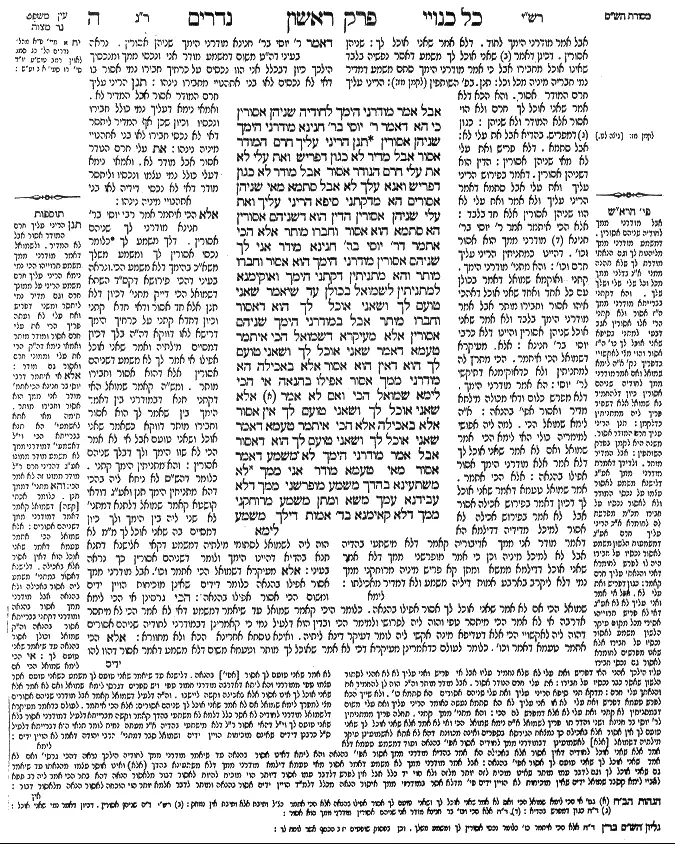
Nedarim 5a - Guemara
אבל אמר מודרני הימך לחודיה שניהן אסורין כי הא דאמר ר' יוסי בר' חנינא מודרני הימך שניהן אסורין תנן הריני עליך חרם המודר אסור אבל מדיר לא כגון דפריש ואת עלי לא את עלי חרם הנודר אסור אבל מודר לא כגון דפריש ואנא עלך לא אבל סתמא מאי שניהן אסורים הא מדקתני סיפא הריני עליך ואת עלי שניהן אסורין הדין הוא דשניהם אסורין הא סתמא הוא אסור וחברו מותר אלא הכי אתמר דר' יוסי בר' חנינא מודר אני לך שניהם אסורין מודרני הימך הוא אסור וחברו מותר והא מתניתין דקתני הימך ואוקימנא למתניתין לשמואל בכולן עד שיאמר שאני טועם לך ושאני אוכל לך הוא דאסור וחברו מותר אבל במודרני הימך שניהם אסורין אלא מעיקרא דשמואל הכי איתמר טעמא דאמר שאני אוכל לך ושאני טועם לך הוא דאין הוא אסור אלא באכילה הא מודרני ממך אסור אפילו בהנאה אי הכי לימא שמואל הכי ואם לא אמר אלא שאני אוכל לך ושאני טועם לך אין אסור אלא באכילה אלא הכי איתמר טעמא דאמר שאני אוכל לך ושאני טועם לך הוא דאסור אבל אמר מודרני הימך לא משמע דאמר אסור מאי טעמא מודר אני ממך לא משתעינא בהדך משמע מופרשני ממך דלא עבידנא עמך משא ומתן משמע מרוחקני ממך דלא קאימנא בד' אמות דילך משמע
Comments from Rashi on Masechet Nedarim Page 5a
אבל אמר מודרני הימך לחוד . דלא אמר שאני אוכל לך: שניהן אסורין . דכיון דאמר שאני אוכל לך משמע דאסר נפשיה בלבד שאינו אוכל מחבירו אבל כי אמר מודרני הימך סתם משמע דמדיר נמי חבריה מיניה מכל וכל: תנן . בפ' השותפין (לקגן מז:): הריני עליך חרם המודר אסור . והא הכא דלא אמר שאני אוכל לך חרם ולא הוי אסור אלא המודר ולא שניהן: כגון דמפריש . בהדיא אבל את עלי לא: אבל סתמא . דלא פריש ואת עלי לא מאי שניהן אסורין: הדין הוא דשניהן אסורין . דאמר בפירוש הריני עליך ואת עלי אבל סתמא דאמר הריני עליך ולא אמר ואת עלי לא הוו שניהן אסורין אלא חד בלבד: אלא הכי איתמר אמר ר' יוסי בר' חנינא מודרני ממך הוא אסור וכו' . דהיינו כמתניתין הריני עליך חרם וכו': והא מתני' מודרני הימך . קתני ואוקמא שמואל דאמר בכולן עם כל אחד ואחד שאני אוכל דאהכי איהו אסור וחבירו מותר אבל אמר מודרני הימך בלבד ולא אמר שאני אוכל שניהן אסורין והיינו דלא כרבי יוסי בר' חנינא: אלא מעיקרא דשמואל הכי איתמר . הכי מתרץ לה למתניתין ולא כדאוקימנא דתיקשי לר' יוסי: הא אמר מודרני הימך . דלא מפרש כלום ודאי מכולה מילתא מדיר ואסור אפי' בהנאה: א"ה לימא שמואל הכי . למה ליה אפושי למימריה כולי האי לימא הכי אמר שמואל ואם לא אמר שאני אוכל לך דלא אמר אלא מודרני הימך אסור אפילו בהנאה: אלא הכי אתמר . אמר שמואל טעמא דאמר שאני אוכל לך דכיון דאמר בפירוש אכילה אסור אבל לא אמר בפירוש אכילה לא אסור למיכל מדידיה דדילמא הא דאמר מודר אני ממך אדיבוריה קאמר דלא מישתעי בהדיה אבל לא למיכל מיניה וכן כי אמר מופרשני ממך דלא אמר שאני אוכל דדילמא ממשא ומתן קא פריש מיניה מרוחקני ממך נמי דלא ליקרב בארבע אמות דיליה משמע ולא דמדיר מאכילתו:
Comments from Tosafot - Nedarim 5a
תנן הריני עליך חרם המודר אסור אבל לא המדיר . ולשמואל דאמר מודרני ממך משמע תרוייהו הכי נמי נימא הריני עליך חרם משמע הריני על ממונך חרם וגם מדיר נמי ליתסר ומשני דפריש ואת עלי לא ועתה פריך הרי את עלי חרם אסור ומודר מותר ואמאי נימא דה''ק הרי את עלי וממוני חרם ואסור גם מודר: אלא אי איתמר דרבי יוסי בר חנינא הכי אתמר מודר אני ממך הוא אסור וחבירו מותר . תימה מאי אתא לאשמעי' הא תנא בברייתא הכי וי''ל דאשמעי' דמודרני ממך לא משמע מודר ממונו אע''ג דהריני חרם ר''ל מודר ממונו זה לא אמר הכי: והא מתני' דממך תנן . כלומר אכתי [קשה] דשמואל קאמר דאמר דמודרני ממך דשניהם אסורים: אלא שמואל הכי אתמר טעמא דאמר שאני אוכל הוא דאין אסור אלא באכילה. דלישנא דאסור במתני' משמע ליה אסור באכילה ולא בהנאה אבל מודרני ממך אסור בהנאה ומודרני דקתני בברייתא אסור בהנאה וה''ק שמואל וכולן אסור בהנאה עד שיאמר שאני טועם לך: אי הכי לימא שמואל הכי אם לא אמר שאני טועם לך אסור [אפי'] בהנאה . דלישנא עד שיאמר שאני טועם לך משמע כשאני טועם אסר עצמו טפי ממודרני והא ליתא דאדרבה מודרני חמור טפי ויש ספרים דגרסי לימא שמואל ואם לא אמר אלא שאני אוכל לך אינו אסור אלא באכילה וקשה ליישבו. וה''ה דלעיל דשמואל קאמר אבל מודרני שניהם אסורים מצי למפרך לימא שמואל אם לא אמר שאני אוכל לך שניהם אסורים: אלא הכי איתמר . לעולם כדאמר מעיקרא דלשמואל מודרני לחודיה לא אסר כלל דלמא לא משתעי בהדך קאמר וקשה מברייתא דלעיל דמודרני אסור בלא שאני טועם לך וי''ל דהאי אסור ר''ל דלא מישתעי בהדיה א''נ מעתה נחית לומר תנאי היא דברייתא דלעיל ס''ל כרבנן דידים שאינם מוכיחות הויין ידים ושמואל סבר דמתני' כרבי יהודה דאמר לא הויין ידים:
Nedarim 5a - Mishnah translated into english
However, if he said only: I am avowed from you, they are both prohibited from deriving benefit from one another. This is like that which Rabbi Yosei, son of Rabbi Ḥanina, said: If one says: I am avowed from you, they are both prohibited.
The Gemara asks: We learned in a mishna (47b) that if one says to another: I am hereby to you like an item dedicated to the Temple, the one to whom the vow was said is prohibited from deriving benefit from the one who made the vow, but the one who made the vow is not prohibited from deriving benefit from the one with regard to whom the vow was said. However, according to Shmuel, both should be prohibited. The Gemara answers: It is referring to a case where he specified this by saying: And you are not like an item dedicated to the Temple for me.
The Gemara asks: That mishna also taught that if one says: You are to me like an item dedicated to the Temple, the one who makes the vow is prohibited to derive benefit from the other, but the one to whom the vow was said is not prohibited from deriving benefit from the one who makes the vow. However, according to Shmuel, both should be prohibited. The Gemara answers: Here too, it is referring to a case where he specified this by saying: And I am not like an item dedicated to the Temple for you.
The Gemara asks: But if he stated his vow in an unspecified manner, what, are they both prohibited from deriving benefit from each other? From the fact that it teaches in the latter clause that if one says to another: I am hereby to you, and you are to me, like an item dedicated to the Temple, they are both prohibited from deriving benefit from each other, it can be derived that it is in this case both are prohibited, but if one stated his vow in an unspecified manner, he is prohibited from deriving benefit from the other individual and the other is permitted to derive benefit from him. This is not in accordance with the opinion of Shmuel.
Rather, this is how the opinion of Rabbi Yosei, son of Rabbi Ḥanina, was stated: If one said to another: I am avowed to you, they are both prohibited from deriving benefit from one another. However, if he says: I am avowed from you, he is prohibited from deriving benefit from the other person and the other is permitted to derive benefit from him.
The Gemara asks: But didn’t the mishna teach a case of one who declared: I am avowed from you, and yet we established the mishna, according to Shmuel, as teaching that in all these cases it is only if he says: That which I taste of yours, or: That which I eat of yours, that he is prohibited from deriving benefit from the other person, and the other is permitted? However, if he merely says: I am avowed from you, they are both prohibited. Consequently, Shmuel does not distinguish between the expressions: I am avowed from you, and: I am avowed to you.
Rather, this is how the opinion of Shmuel was originally stated: The reason is that he said: That which I eat of yours, or: That which I taste of yours. It is for this reason that he is prohibited only from eating anything belonging to the other person. However, if he said: I am avowed from you, without further specification, he is prohibited even from deriving any form of benefit from the other.
The Gemara asks: If so, let Shmuel say as follows: And if he said only: That which I eat of yours, or: That which I taste of yours, he is prohibited only from eating an item belonging to his fellow, but he is permitted to derive benefit from it.
Rather, this is how Shmuel’s opinion was stated: The reason is that he said: That which I eat of yours, or: That which I taste of yours; it is in these cases that he is prohibited from eating any item belonging to his fellow. However, if he said simply: I am avowed from you, that statement does not indicate that he said he is prohibited from eating an item belonging to his fellow. What is the reason for this? The statement: I am avowed from you, indicates: I am not speaking with you. Similarly, the statement: I am separated from you, indicates: I am not doing business with you. The statement: I am distanced from you, indicates that I will not stand within four cubits of you.
Traduction : The William Davidson digital edition of the Koren Noé Talmud, with commentary by Rabbi Adin Even-Israel Steinsaltz.