 Talmud Bavli
The learning on the whole site is dedicated : L'ilui Nishmat רינה בת לדיסיה
The learning on the whole site is dedicated : For the success of Elyahou ben H'anna & family
The learning on the whole site is dedicated : L'ilui Nishmat Rav Chlomo Ben Jamilla
Nedarim 61a : Youtube
Daf TubeYoutube
2 video classes :
Nedarim Page 61a
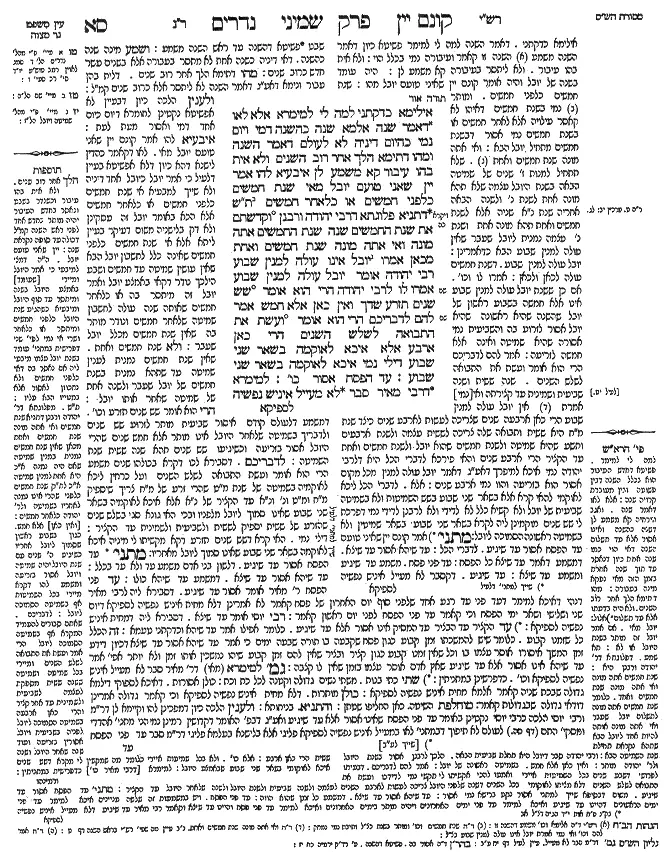
Nedarim 61a - Guemara
אילימא כדקתני למה לי למימרא אלא לאו דאמר שנה אלמא שנה כהשנה דמי ויום נמי כהיום דיניה לא לעולם דאמר השנה ומהו דתימא הלך אחר רוב השנים ולא אית בהו עיבור קא משמע לן איבעיא להו אמר יין שאני טועם יובל מאי שנת חמשים כלפני חמשים או כלאחר חמשים ת"ש דתניא פלוגתא דרבי יהודה ורבנן (ויקרא כה, י) וקדשתם את שנת החמשים שנה שנת החמשים אתה מונה ואי אתה מונה שנת חמשים ואחת מכאן אמרו יובל אינו עולה למנין שבוע רבי יהודה אומר יובל עולה למנין שבוע אמרו לו לרבי יהודה הרי הוא אומר (ויקרא כה, ג) שש שנים תזרע שדך ואין כאן אלא חמש אמר להם לדבריכם הרי הוא אומר (ויקרא כה, כא) ועשת את התבואה לשלש השנים הרי כאן ארבע אלא איכא לאוקמה בשאר שני שבוע דילי נמי איכא לאוקמה בשאר שני שבוע:
עד הפסח אסור כו':
למימרא דרבי מאיר סבר לא מעייל איניש נפשיה
Comments from Rashi on Masechet Nedarim Page 61a
אילימא כדקתני . דאמר השנה למה לי למימר פשיטא כיון דאמר השנה משמע השנה זו קאמר ועיבורה נמי בכלל הוי: ולא אית בהו עיבור . ולא ליתסר בעיבורה קא משמע לן: היה עומד בשנה של יובל והיה אומר קונם יין שאיני טועם יובל מהו: שנת חמשים כלפני חמשים . ומותר נמי בשנת חמשים דאיהו לא קאסר עילויה אלא לאחר חמשים או בשנת חמשים נמי אסור דבשנת חמשים מתחיל יובל הבא: ואי אתה מונה שנת חמשים ואחת . שלא תתחיל למנות ז' שנים של שמיטה הבאה בשנת היובל עצמה שלא תהא מונה אחת לשנת נ' ולשנה הבאה אחריה שנת נ"א שניה אלא לשנת חמשים ואחת תהא מונה אחת ושנת נ' עצמה נמנית ליובל שעבר שאין עולה למנין שבוע הבא כדאמרינן: יובל עולה למנין שבוע . דשנת חמשים עולה לכאן ולכאן: אמרו לו וכו' . אם כן ששנת יובל עולה למנין שבוע אינו אלא חמשה בשבוע ראשון של יובל שהשנה שהיא ראשונה שהיא יובל אסור לזרוע בה והשביעית נמי אסורה שהיא שמיטה ואינה אלא חמשה לזריעה: אמר להם לדבריכם הרי הוא אומר ועשת את התבואה לשלש השנים . שנה ששית ושנה שביעית ושמינית עד קצירתה ואי [נמי] אמרת אין יובל עולה למנין שבוע הרי כאן ארבעה שנים שצריכה לעשות לארבע שנים כיצד שנת מ"ח היא ששית ותבואה שלה צריכה לששית עצמה ולשנת ארבעים ותשע שהיא שמיטה ולשנת חמשים שהוא יובל ולשנת חמשים ואחת עד הקציר הרי ארבע שנים והאי פירכא לדברי הכל היא דלרבי יהודה נמי איכא למיפרך דאע"ג דאמר יובל עולה למנין מכל מקום אסור הוא בזריעה והוו נמי ארבע שנים: אלא . לדברי הכל ליכא לאוקמי להאי קרא אלא בשאר שני שבוע בשש השמיטות ולא בשמיטה שביעית של יובל ולא קשיא כלל לא לדידי ולא לרבנן לדידי נמי דפרכת לי שש שנים מוקמינן ליה לקרא בשאר שני שבוע בשאר שמיטין ולא בשמיטה ראשונה הסמוכה ליובל: מתני' אמר קונם יין שאיני טועם עד הפסח אסור עד שיגיע . לדברי הכל: עד שיהא אסור עד שיצא . דמשמע דאמר עד שיצא כל הפסח: עד פני פסח . משמע עד שיגיע ומשמע עד שיצא: עד שיגיע . דקסבר לא מעייל איניש נפשיה
Comments from Tosafot - Nedarim 61a
הלך אחר רוב שנים . ולא אית בהו עיבור וכשנדר בשבט ונאסר בחדש העיבור יהיה מותר בחדש אחד לפני ראש השנה קמ''ל דכולה עד סופה נקראת שנה: יין שאני טועם יובל . ה''ה דמצי למיבעי כי אמר היובל ומיירי [שעומד] באמצע היובל בשנה ומיתסר עד סוף היובל ומיבעיא כשהגיע שנת היובל כלפני חמשים ומיתסר או כלאחר ושרי אי נמי לפי' שני דפרישית במתני' עומד בשנת יובל עצמו מיבעי ליה אם נאסר בה דאי כלפני חמשים ולא נתכוון לאסור אלא במנוייו הבא עליו: ת''ש . מפלוגתא דר' יהודה ורבנן דתניא שנת חמשים ואי אתה מונה שנת חמשים ואחת מכאן שאין שנת חמשים נמנית במנין שמיטה שאם היה נמנה א''כ היא אחת למנין שמיטה א''כ לת''ק שנת חמשים כלפני שהרי אינו נמנה לאחריו בשמיטה ולר' יהודה כלאחר חמשים: [ואין כאן] אלא חמש . כגון בשבוע ראשון שסמוך ליובל אחריו כשיגיע ה' שנים עם שנת היובל יהיה שמיטה ויובל אסור בזריעה ומשמע להו דקרא מיירי בכל השמיטות אף בשמיטה הסמוכה ליובל: לדבריכם . שאתם סבורים להעמיד המקרא אף בשמיטה הסמוכה ליובל הרי אמר ועשת את התבואה לשלש השנים ומיירי בכל שמיטה ושמיטה ששנה ששית מספקת לעצמה לשביעית ולשמינית עד אחר קציר והרי כאן ארבעה בשמיטה הסמוכה ליובל לפניה בשביעית ויובל אסורין בזריעה ועוד שנה שאחר היובל ושנה ששית הרי כאן ארבע: אלא כו' . ולא בכל שמיטות איירי כלומר מה שמקשין לי מקרא דשש שנים איכא לאוקומי בשאר שני שבוע שבאמצע היובל: למימרא [דרבי מאיר כו'] כדפרישית במתניתין:
Nedarim 61a - Mishnah translated into english
If we say that it is exactly as it teaches, why do I need to state this halakha? It is obvious that a year means that entire year, even if it is a leap year. Rather, is it not referring to a case where he did not say that the vow applies this year, but rather, he said that it applies for a year, and the mishna teaches that the vow applies for the remainder of that year? Apparently, saying that a vow applies for a year is comparable to saying it applies this year; and similarly, the halakha in a case where one accepts a vow for a day should also be like the halakha in a case where one accepts a vow for today.
The Gemara refutes this argument: No, actually, the case in the mishna is that he said his vow should apply this year, and it was necessary to state this halakha lest you say: Follow the majority of years, which do not have an intercalated month, and his vow should be understood as referring to a twelve month period. The tanna therefore teaches us that the phrase this year means that the vow should last until the end of the year.
A dilemma was raised before the Sages: If one said: Any wine that I taste for a Jubilee is hereby forbidden to me, what is the halakha? Is the fiftieth year considered as before fifty, i.e., is it included in the vow, or is it considered as after fifty, in which case it is not included in the vow?
The Gemara answers: Come and hear, as it is taught in a baraita that there is a dispute between Rabbi Yehuda and the Rabbis: The verse states: “And you shall sanctify the fiftieth year” (Leviticus 25:10), from which it is derived: You count it as the fiftieth year, i.e., the Jubilee Year, but you do not count it as both the fiftieth year and the first year of the next Sabbatical and Jubilee cycles. From here they stated: The Jubilee Year is not included in the counting of the seven-year cycle of the Sabbatical Year. Rather, the year following the Jubilee Year is considered the first year of the next seven-year cycle. Rabbi Yehuda says: The Jubilee Year is included in the counting of the following seven-year cycle of the Sabbatical Year.
The Rabbis said to Rabbi Yehuda: Doesn’t the verse state: “Six years you shall sow your field” (Leviticus 25:3)? But according to your opinion there are only five years here, in the Sabbatical cycle following the Jubilee Year, as the first year would be the Jubilee Year, when it is forbidden to sow one’s field.
Rabbi Yehuda said to them: There is a difficulty according to your statement as well. Doesn’t the verse state: “And it shall bring forth produce for the three years” (Leviticus 25:21)? The Torah promises the Jewish people that in the year preceding the Sabbatical Year, the land will bring forth enough produce to last for the duration of that year, for the Sabbatical Year, and for part of the following year, until the new produce grows. However, in the case of the Jubilee, there are four years to account for, as agricultural labor is prohibited in the forty-ninth year, which is a Sabbatical Year, and in the following year, which is the Jubilee Year.
Rather, you must say that it is possible to establish the verse as referring to the other years of seven-year cycles, i.e., other Sabbatical Years apart from the Sabbatical Year right before the Jubilee Year. With regard to my opinion also, it is possible to establish the verse you presented as a difficulty as referring to the other years of seven-year cycles, i.e., other Sabbatical cycles apart from the cycle immediately following the Jubilee. With regard to the dilemma cited previously, according to the Rabbis, just as the Jubilee Year does not count as part of the ensuing Jubilee cycle because it is considered the end of the previous Jubilee cycle, if one takes a vow and states that it applies for the Jubilee cycle, the Jubilee Year is included in the vow. According to Rabbi Yehuda, the Jubilee Year itself actually begins the next Jubilee cycle, and therefore if one takes a vow for the current Jubilee cycle, the Jubilee Year itself is not included.
§ It was taught in the mishna that if one vows that wine is forbidden to him until Passover, he is prohibited from drinking wine until the Festival arrives. However, if one vows that wine is forbidden to him until before Passover, there is a dispute as to whether the vow remains in effect until the beginning or the end of the Festival. The Gemara asks: Is this to say that Rabbi Meir, who holds that it is prohibited only until the beginning of Passover, maintains that a person does not place himself
Traduction : The William Davidson digital edition of the Koren Noé Talmud, with commentary by Rabbi Adin Even-Israel Steinsaltz.