 Talmud Bavli
Nedarim 87a : Youtube
Daf TubeYoutube
2 video classes :
Nedarim Page 87a
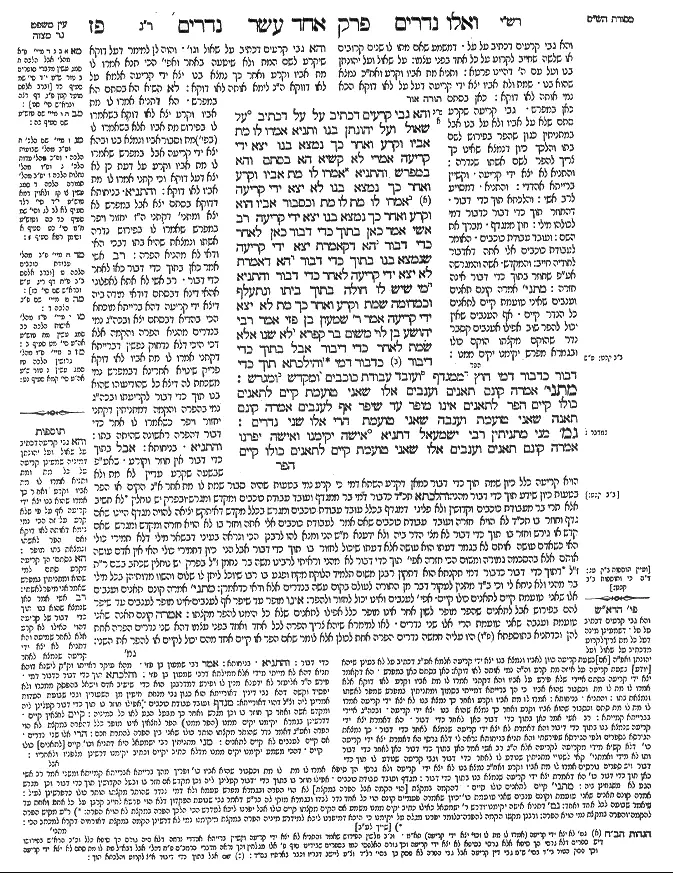
Nedarim 87a - Guemara
והא גבי קרעים דכתיב על על דכתיב (שמואל ב א, יב) על שאול ועל יהונתן בנו ותניא אמרו לו מת אביו וקרע ואחר כך נמצא בנו יצא ידי קריעה אמרי לא קשיא הא בסתם והא במפרש והתניא אמרו לו מת אביו וקרע ואחר כך נמצא בנו לא יצא ידי קריעה אמרו לו מת לו מת וכסבור אביו הוא וקרע ואחר כך נמצא בנו יצא ידי קריעה רב אשי אמר כאן בתוך כדי דבור כאן לאחר כדי דבור הא דקאמרת יצא ידי קריעה שנמצא בנו בתוך כדי דבור הא דאמרת לא יצא ידי קריעה לאחר כדי דבור והתניא מי שיש לו חולה בתוך ביתו ונתעלף וכמדומה שמת וקרע ואחר כך מת לא יצא ידי קריעה אמר ר' שמעון בן פזי אמר רבי יהושע בן לוי משום בר קפרא לא שנו אלא שמת לאחר כדי דיבור אבל בתוך כדי דיבור כדבור דמי והילכתא תוך כדי דבור כדבור דמי חוץ ממגדף ועובד עבודת כוכבים ומקדש ומגרש מתני׳ אמרה קונם תאנים וענבים אלו שאני טועמת קיים לתאנים כולו קיים הפר לתאנים אינו מופר עד שיפר אף לענבים אמרה קונם תאנה שאני טועמת וענבה שאני טועמת הרי אלו שני נדרים גמ׳ מני מתניתין רבי ישמעאל דתניא (במדבר ל, יד) אישה יקימנו ואישה יפרנו אמרה קונם תאנים וענבים אלו שאני טועמת קיים לתאנים כולו קיים
Comments from Rashi on Masechet Nedarim Page 87a
והא גבי קרעים דכתיב על על . דמשמע שאם מתו לו שנים קרובים או שלשה שחייב לקרוע על כל אחד בפני עצמו: על שאול ועל יהונתן בנו ועל עם ה' . דהיינו פרטא: ותניא מת אביו וקרע ואח"כ נמצא שהוא בנו . שמת ולא אביו יצא ידי קריעה דעל על לאו דוקא הכא נמי אותה לאו דוקא: כאן בסתם כאן במפרש . גבי קריעה שקרע סתם שלא על אביו ולא על בנו אבל במתניתין כגון שהפר בפירוש לשם בתו והלכך כיון דנמצא שאינו כך צריך להפר לשם אשתו שנדרה: והתניא לא יצא ידיי קריעה . וקשיין ברייתא אהדדי: והתניא . דמסייע לרב אשי: והלכתא תוך כדיי דבור . דהחוזר תוך כדי דבור כדבור דמי לכולהו מילי: חוץ ממגדף . מברך את השם: ועובד עבודת כוכבים . האומר לעבודת כוכבים אלי אתה דאדבור לחודיה חייב: והמקדש . אשה והמגרשה אע"פ שחוזר בתוך כדי דבור אינה חזרה: מתני' אמרה קונם תאנים וענבים שאיני טועמת קיים לתאנים כל הנדר קיים . אף הענבים שאין יכול להפר שוב אפילו אענבים קסבר נדר שהוקם מקצתו הוקם כולו ובגמרא מפרש יקימנו יקים ממנו:
Comments from Tosafot - Nedarim 87a
והא גבי קריעה דכתיב על שאול ועל יהונתן דמיניה שמעינן קריעה על כל מת ומת ותניא אמרו לו מת אביו וקרע ואחר כך אמרו שהוא בנו יצא ידי קריעה אף על פי שלא קרע על זה הכי נמי נימא דאותה לאו דוקא ואם הפר לאשתו ונמצאת בתו מופר: הא בסתם . הך קריעה דקרע סתם למי שהוא ומתניתין במפרש שאמר אני מיפר לאשתי: רב אשי אמר כאן שנמצא שהוא בנו תוך כדי דבור של קריעה דהוי כאילו לא קרע אלא לאחר שמיעה והא דתניא לא יצא ידי קריעה שנמצא לאחר כדי דבור: והתניא . בניחותא: אמר רבי שמעון בן פזי . מהא עיקר ראייתו וק''ק לישנא דוהא תניא דהא לא מייתי מידי אלא ממילתא דרבי שמעון בן פזי: והלכתא תוך כדי דבור כדבור דמי . פירש ה''ר אליעזר לא ידענא מנין לו ופירש דמדרבנן הוא כדי שישיב אדם וישאל בהפסק ממכרו ולא יפסיד וקשה דהא גבי דינין דאורייתא הוא כגון גבי מנחת חיטין מן השעורין וגבי שבועת העדות אמרינן ליה וצ''ל דהוי דאורייתא: מגדף ועובד עבודת כוכבים . אפילו חוזר בו תוך כדי דבור קטלינן ליה ומקדש אשה ואחר כך חוזר בו וכן מגרש ואחר כך מבטל הגט לאו כל כמיניה: קיים לחצאין קיים . דדרשינן בגמרא יקימנו יקים ממנו (הפר ממנו) הפר לחצאין אינו מופר כלל דהפרה במקצת לא הוי הפרה ואע''ג דאמר נדר שהותר מקצתו הותר כולו שאני בין הפרה להתרת חכם: הרי אלו שני נדרים . אם קיים לענבים לא קיים לתאנים: מני מתניתין רבי ישמעאל היא דתניא וכו' קיים [לתאנים] כולו קיים . דהכי משמע יקימנו יקים ממנו מדלא כתיב יקיים וכתיב יקימנו דרשינן מלפניו ולאחריו:
Nedarim 87a - Mishnah translated into english
The Gemara comments: But is it not so that with regard to the tears in one’s clothing that are made for the dead, as it is written “for,” “for,” and about which is written: “And David took hold of his garments and rent them, and likewise all the men that were with him, and they wailed, and wept, and fasted until the evening, for Saul, and for Jonathan his son, and for the people of the Lord, and for the house of Israel, because they were fallen by the sword” (II Samuel 1:11–12). The use of the word “for” with regard to each of them indicates that one must make a separate tear in his garment for each person who died.
The Gemara asks: And yet it is taught in a baraita: If they said to him that his father had died and he rent his garment over his death, and afterward it was discovered that it was not his father who died, but his son, he has fulfilled his obligation of rending his garment. This shows that even if a person mistakenly tore his garment for the wrong person he has nevertheless fulfilled the obligation. Here too, if a man nullified the vow of his wife, thinking that it was the vow of his daughter, his nullification should be effective.
The Gemara responds: The apparent contradiction is not difficult. That baraita refers to a case where he received a non-specific report, i.e., he was told that an unspecified relative died. In such a case his obligation to rend his garment has been discharged. And this mishna refers to a case where the bearer of the news mistakenly specified that his daughter had taken the vow, when in reality his wife had. In such a case, his nullification is ineffective.
And it is taught similarly in the following baraita: If they said to him that his father had died and he rent his garment over his death, and afterward it was discovered that it was not his father who died, but his son, he has not fulfilled his obligation of rending his garment. If, however, they said to him that a relative of his had died, and he thought it was his father and he rent his garment over his death, and afterward it was discovered that it was not his father who died, but his son, he has fulfilled his obligation of rending his garment. This proves that a distinction is made between one who rends his garment relying on a specific report and one who does so following a non-specific report.
Rav Ashi says that the discrepancy between the baraitot with regard to the rending of garments can be reconciled in a different manner: Here, the person who rent his garment for the wrong relative realized his error within the time required for speaking the short phrase: Greetings to you, my teacher. Until that time has passed his action is seen as incomplete and can therefore still be modified. There, the mistake was noted only after the time required for speaking a short phrase.
This case, where you said that he has fulfilled his obligation of rending his garment even though he had initially been told explicitly that his father died, deals with a situation where it was discovered within the time required for speaking a short phrase, i.e., immediately after he rent his garment, that the deceased was his son. However, that case, where you said that he has not fulfilled his obligation of rending his garment, deals with a situation where he became aware of his mistake after the time required for speaking a short phrase, i.e., a short while later.
And it is taught in the following baraita: One who has an ill relative in his house, and the latter fainted and lost consciousness, and it seemed to him that the ill person had died and therefore he rent his garment over his assumed death, if it turned out that he had not yet actually died at that point and it was only afterward that he died, the relative has not fulfilled his obligation of rending his garment. And with regard to this baraita, Rabbi Shimon ben Pazi said that Rabbi Yehoshua ben Levi said in the name of Bar Kappara: They taught that he has not fulfilled his obligation of rending only if the ill person died after the time required for speaking a short phrase. But if he passed away within the time required for speaking a short phrase, it is all considered like continuous speech, and his relative has fulfilled his obligation. That is to say, his act of rending is not viewed as complete until the time required for saying a short phrase has elapsed, and until that time has passed the act can still be modified.
The Gemara concludes: And the halakha is: The legal status of a pause or retraction within the time required for speaking a short phrase is like that of continuous speech, and so a person can retract what he first said if he issues the retraction within this period of time after he finished speaking. This principle holds true in almost every area of halakha, except for the case of one who blasphemes God; or in the case of an idol worshipper, who verbally accepts an idol as his god; or one who betroths a woman; or one who divorces his wife. In these four cases, a person cannot undo his action, even if he immediately retracts what he said within the time required for saying a short phrase.
MISHNA: If a woman said: Tasting these figs and grapes is konam for me, and her husband upheld her vow with regard to figs, the entire vow is upheld, but if he nullified it with regard to figs it is not nullified until he also nullifies the vow with regard to grapes. If she said: Tasting a fig and tasting a grape are konam for me, these are viewed as two separate vows; if the husband upholds one of the vows it has no effect on the other one.
GEMARA: Whose opinion is expressed in the mishna? The Gemara answers: It follows the opinion of Rabbi Yishmael, as it is taught in a baraita: The verse concerning vows that states: “Her husband may uphold it, or her husband may nullify it” (Numbers 30:14), may be expounded as follows. If a woman said: Tasting these figs and grapes is konam for me, and her husband upheld her vow with regard to figs, the entire vow is upheld.
Traduction : The William Davidson digital edition of the Koren Noé Talmud, with commentary by Rabbi Adin Even-Israel Steinsaltz.