 Talmud Bavli
Nedarim 38a : Youtube
Daf TubeYoutube
2 video classes :
Nedarim Page 38a
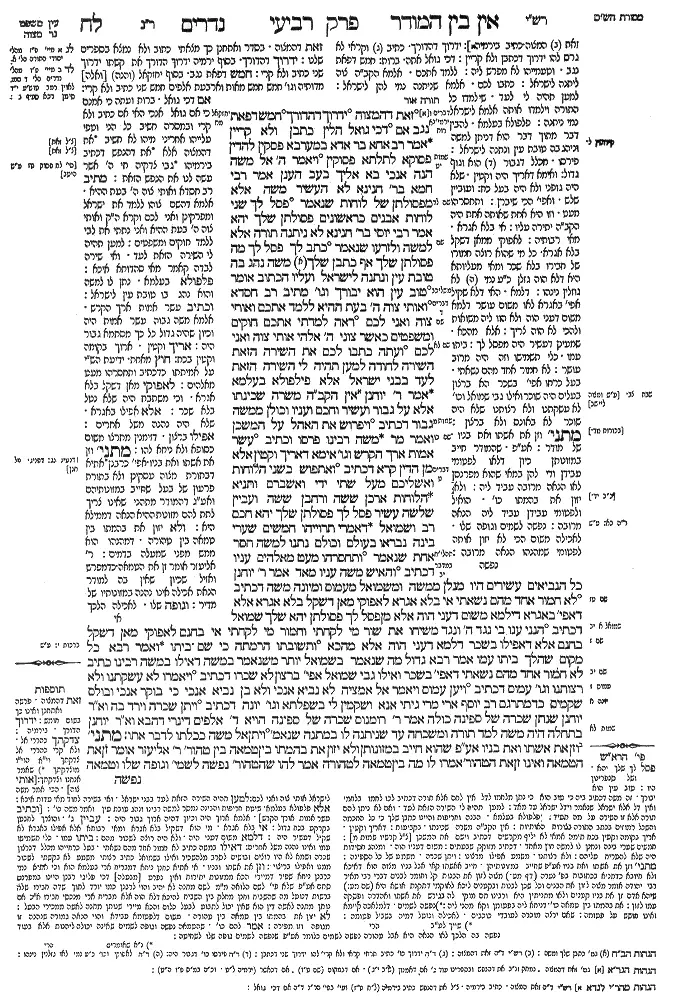
Nedarim 38a - Guemara
זאת דהמצוה (דברים ו, א) ידרוך דהדורך (ירמיהו נא, ג) חמש דפאת נגב (יחזקאל מח, טז) אם דכי גואל (רות ג, ט) הלין כתבן ולא קריין אמר רב אחא בר אדא במערבא פסקין להדין פסוקא לתלתא פסוקין ויאמר ה' אל משה הנה אנכי בא אליך בעב הענן (שמות יט, ט) אמר רבי חמא ברבי חנינא לא העשיר משה אלא מפסולתן של לוחות שנאמר פסל לך שני לוחות אבנים כראשונים (שמות לד, א) פסולתן שלך יהא אמר רבי יוסי ברבי חנינא לא ניתנה תורה אלא למשה ולזרעו שנאמר כתב לך (שמות לד, כז) פסל לך (שם, א) מה פסולתן שלך אף כתבן שלך משה נהג בה טובת עין ונתנה לישראל ועליו הכתוב אומר טוב עין הוא יבורך וגו' (משלי כב, ט) מתיב רב חסדא ואותי צוה ה' בעת ההיא ללמד אתכם (דברים ד, יד) ואותי צוה ואני לכם ראה למדתי אתכם חוקים ומשפטים כאשר צוני ה' אלהי (דברים ד, ה) אותי צוה ואני לכם ועתה כתבו לכם את השירה הזאת (דברים לא, יט) השירה לחודה למען תהיה לי השירה הזאת לעד בבני ישראל (שם) אלא פילפולא בעלמא אמר רבי יוחנן אין הקב"ה משרה שכינתו אלא על גבור ועשיר וחכם ועניו וכולן ממשה גבור דכתיב ויפרוש את האהל על המשכן (שמות מ, יט) ואמר מר (בכורות מד א) משה רבינו פרסו וכתיב עשר אמות ארך הקרש וגו' (שמות כו, טז) אימא דאריך וקטין אלא מן הדין קרא דכתיב ואתפוש בשני הלוחות ואשליכם מעל שתי ידי ואשברם (דברים ט, יז) ותניא (בבא בתרא יד א) הלוחות ארכן ששה ורחבן ששה ועביין שלשה עשיר פסל לך (שם, א) פסולתן שלך יהא חכם רב ושמואל דאמרי תרוייהו חמשים שערי בינה נבראו בעולם וכולם ניתנו למשה חסר אחת שנאמר ותחסרהו מעט מאלהים (תהלים ח, ו) עניו דכתיב והאיש משה עניו מאד (במדבר יב, ג) אמר ר' יוחנן כל הנביאים עשירים היו מנלן ממשה ומשמואל מעמוס ומיונה משה דכתיב לא חמור אחד מהם נשאתי (במדבר טז, טו) אי בלא אגרא לאפוקי מאן דשקל בלא אגרא אלא דאפילו באגרא דילמא משום דעני הוה אלא מן פסל לך פסולתן יהא שלך שמואל דכתיב הנני ענו בי נגד ה' ונגד משיחו את שור מי לקחתי וחמור מי לקחתי (שמואל א יב, ג) אי בחנם לאפוקי מאן דשקל בחנם אלא דאפילו בשכר דלמא דעני הוה אלא מהכא ותשובתו הרמתה כי שם ביתו (שמואל א ז, יז) ואמר רבא (ברכות י ב) כל מקום שהלך ביתו עמו אמר רבא גדול מה שנאמר בשמואל יותר משנאמר במשה דאילו במשה רבינו כתיב לא חמור אחד מהם נשאתי דאפילו בשכר ואילו גבי שמואל אפילו ברצון לא שכרו דכתיב (שמואל א יב, ד) ויאמרו לא עשקתנו ולא רצותנו וגו' עמוס דכתיב ויען עמוס ויאמר אל אמציה לא נביא אנכי ולא בן נביא אנכי כי בוקר אנכי ובולס שקמים (עמוס ז, יד) כדמתרגם רב יוסף ארי מרי גיתי אנא ושקמין לי בשפלתא וגו' (ת"י) יונה דכתיב ויתן שכרה וירד בה (יונה א, ג) ואמר ר' יוחנן שנתן שכרה של ספינה כולה אמר ר' רומנוס שכרה של ספינה הויא ד' אלפים דינרי דהבא ואמר ר' יוחנן בתחילה היה משה למד תורה ומשכחה עד שניתנה לו במתנה שנאמר ויתן אל משה ככלתו לדבר אתו (שמות לא, יח) מתני׳ וזן את אשתו ואת בניו אף על פי שהוא חייב במזונותן ולא יזון את בהמתו בין טמאה בין טהורה רבי אליעזר אומר זן את הטמאה ואינו זן את הטהורה אמרו לו מה בין טמאה לטהורה אמר להו שהטהורה נפשה לשמים וגופה שלו וטמאה
Comments from Rashi on Masechet Nedarim Page 38a
זאת המצוה . כתיב בירמיה: ידרוך דהדורך . כתיב וקראי לא גרס להו ידרוך דכתבן ולא קריין: דכי גואל אתה . ברות: חמש דפאת נגב . וטעמייהו לא מפרש ליה: ללמד אתכם . אלמא הקב"ה צוה ליתנה לישראל: כתבו לכם . אלמא שניתנה נמי להן לישראל: למען תהיה לי לעד . שילמדו כל התורה וילמדו אותה אלמא לישראל נמי ניתנה: פלפולא בעלמא . להבין דבר מתוך דבר הוא דניתן למשה ונוהג בה טובת עין ונתנה לישראל: פירסו . מכלל דגבור הוא וגוף גדול: ואימא דאריך היה וקטין . שלא היה גופני ולא היה בעל כח: ועוביין שלש . ואפי' הכי שיברן: ותחסרהו מעט . וזו היא אחת שאותה אחת היה הקב"ה יתירה עליו: אי בלא אגרא . מאי רבותיה: לאפוקי ממאן דשקל בלא אגרא . כל מי שהוא רוצה חמורו של חבירו בלא שכר ומאי מעליותא היא דלא הוה גזלן כ"ע נמי לא גוזלין נינהו: דלמא . האי דלא שקיל אפי' באגרא לאו משום עושר דלמא משום דעני הוה ולא הוו ליה משואות ולהכי לא הוה צריך: אלא מהכא . שמעינן דעשיר היה מפסל לך: ביתו עמו . כלי תשמישו וזה היה מרוב עושר: לא חמור אחד מהם נשאתי . בעל כרחו אפי' בשכר הא ברצון בעלים היה שוכר ואילו גבי שמואל וכו' לא עשקתנו ולא רצותנו שלא היה שוכר לא באונס ולא ברצון: מתני' וזן את אשתו ואת בניו . של מודר: אע"פ . שהמודר חייב במזונותן כיון דלאו לפטומי עבידן ודי להן במאי שהוא מפרנסן לאו הנאה מרובה עביד ליה: ולא יזון את בהמתו בו' . הואיל ולפטומי עבידן עביד ליה הנאה מרובה: נפשה לשמים וגופה שלו . לאכילה משום הכי לא יזון אותה לפטומי שמהנהו הנאה מרובה:
Comments from Tosafot - Nedarim 38a
זאת דהמצוה . פרשה ואתחנן ואינו כך בשום חומש: ידרוך הדורך . בירמיה: צדקתך כהררי אל . ולא קרי כהררי אל צדקתך וי''א הוי''ו מוצדקתך שאמר אנחנו וצדקתך: [אותי צוה] . הכי אמר משה לישראל אותי צוה ואני לכם: למען תהיה השירה הזאת לעד בבני ישראל . ואי בשירה לחוד מאי עדות איכא: אלא פלפולא בעלמא . שיטת חריפות והבינה נמסר למשה רבינו ונהג טובת עין ואמר משה כו': [וכתיב עשר אמות אורך הקרש] . אלמא ארוך היה וכיון דהיה ארוך גבור היה: עביין ג' . והוצרך לחבטן בקרקע בכח גדול: אי בלא אגרא . מי הוא דשקיל בלא אגרא ומאי רבותא אלא אפילו באגרא לא שקיל דעשיר היה: דלמא משום דעני היה . ולא היה רוצה לשכור מהם: ביתו עמו . כלי תשמישו עמו ואינו נהנה משל אחרים: דאילו במשה כתיב לא חמור אחד מהם נשאתי . בעל כרחייהו מכלל דברצון שכרה ושמא לא היו רוצים ובושים לסרב מלהשכיר ואילו בשמואל כתיב רצותי משמע לא בקשתי לשכור ממנו ואפילו בריצוי: וזן את אשתו ובניו . אי אתיא כחנן ניחא דמבריח ארי בעלמא הוא וכי אתיא נמי כרבנן ניחא שפיר דמיירי הכא ממזונות יתירות ואין נפרע [מבעלה] דכי פליגי רבנן היינו במפרנס סתם אע''פ שלא פי' לשם הלואה מ''מ לשם מתנה לא יהיב והוי לרבנן כמו יורד לתוך שדה חבירו שלה ברשות דנוטל מה שהשביח וחנן מחלק בין השביח להיכא דלא הוה אלא מבריח ארי מנכסי חבירו א''כ אם נותן מתנה לאשה דין הוא שאין יכול לתבוע לבעל כלום והכא מיירי שנותן מתנה לאשה ממכירי הבעל: לא יזון את בהמתו בין טמאה בין טהורה . משום דלפטומא עבידא והוי הנאה גמורה שנהנה זו מגופה וזו מפירה: אמר להם כו' . שהטמאה נפשה וגופה לשמים שאינה יכולה ליהנות אלא בעוד נפשה בה הלכך לאו הנאה היא אבל טהורה נפשה לשמים כלומר אע''פ שנפשה לשמים גופה שלו לשחיטה:
Nedarim 38a - Mishnah translated into english
The same is true for “this” that is in the verse “and this is the mitzva” (Deuteronomy 6:1); and for “bend” that is in the verse “let the archer bend his bow” (Jeremiah 51:3); and for “five” that is in the verse “and the south side four thousand and five hundred” (Ezekiel 48:16); and for “if” that is in the verse “that if I am a near kinsman” (Ruth 3:12). All these are written but not read.
Rav Aḥa bar Adda said: In the West, Eretz Yisrael, they divide this verse into three verses: “And the Lord said to Moses, behold I come to you in a thick cloud, that the people may hear as I speak with you, and may also believe in you forever; and Moses told the words of the people unto the Lord” (Exodus 19:9).
§ Rabbi Ḥama, son of Rabbi Ḥanina, said: Moses became wealthy only from the waste remaining from hewing the Tablets of the Covenant, as it is stated: “Hew for you two tablets of stone like the first” (Exodus 34:1). “Hew for you” means that their waste shall be yours. As the tablets were crafted from valuable gems, their remnants were similarly valuable.
Rabbi Yosei, son of Rabbi Ḥanina, said: The Torah was given initially only to Moses and his descendants, as it is stated: “Write for you” (Exodus 34:27), and it is also stated: “Hew for you” (Exodus 34:1), meaning: Just as their waste is yours, so too their writing is yours. However, Moses treated the Torah with generosity and gave it to the Jewish people. And about him, the verse says: “He that has a bountiful eye shall be blessed, as he gives of his bread to the poor” (Proverbs 22:9).
Rav Ḥisda raised an objection from the verse that states: “And the Lord commanded me at that time to teach you statutes and laws” (Deuteronomy 4:14). This indicates that Moses was commanded to teach Torah to the Jewish people from the outset. The Gemara answers: The verse means: And the Lord commanded the Torah to me, Moses, and I, on my own initiative, decided to teach you its statutes and laws. The Gemara cites an additional verse proving that God commanded to teach the Jewish people from the outset: “Behold, I have taught you statutes and laws, as the Lord my God commanded me” (Deuteronomy 4:5). The Gemara answers: The Lord commanded the Torah to me, Moses, and I decided to teach you statutes and laws.
The Gemara cites an additional verse: “Now therefore write this song for you, and teach it the children of Israel” (Deuteronomy 31:19). Apparently, Moses was commanded to teach the Torah to the Jewish people. The Gemara answers: The verse is referring to the song of Ha’azinu (Deuteronomy 31) alone and not to the rest of the Torah. The Gemara asks: But the continuation of that cited verse: “That this song may be a witness for Me among the children of Israel” (Deuteronomy 31:19), indicates that the reference is to the entire Torah, in which the mitzvot are written. Rather, the Torah was given from the outset to all of the Jewish people, and when Rabbi Yosei, son of Rabbi Ḥanina, said that the Torah was given exclusively to Moses, he was referring merely to the profound analysis of the Torah. Moses opted to teach it to the people on his own initiative.
Rabbi Yoḥanan said: The Holy One, Blessed be He, rests His Divine Presence only upon one who is mighty, and wealthy, and wise, and humble. And all of these qualities are derived from Moses. He was mighty, as it is written: “And he spread the tent over the Tabernacle” (Exodus 40:19), and the Master said: Moses, our teacher, spread it himself. And it is written: “Ten cubits shall be the length of a board, and a cubit and a half the breadth of each board” (Exodus 26:16). Moses was tall and strong enough to spread the tent over the boards alone. The Gemara asks: Say that he was tall and thin, and the fact that he was mighty cannot be derived.
Rather, the fact that Moses was mighty is derived from this verse, as it is written: “And I took hold of the two tablets, and cast them out of my two hands, and broke them before your eyes” (Deuteronomy 9:17), and it is taught in a baraita: The tablets, their length was six handbreadths, and their width was six handbreadths, and their thickness was three handbreadths. If Moses was capable of lifting and casting a burden that heavy, apparently he was mighty.
Moses was wealthy, as it is written: “Hew for you” (Exodus 34:1), from which it was derived: The waste of the Tablets of the Covenant shall be yours, and that waste consisted of precious stones. That Moses was wise is derived from the statement of Rav and Shmuel, who both say: Fifty measures of understanding were created in the world, and all were given to Moses except one, as it is stated: “Yet you have deprived him of little, of God” (Psalms 8:6). He lacked only complete knowledge of God. Moses was humble, as it is written: “Now the man Moses was very humble” (Numbers 12:3).
§ Rabbi Yoḥanan said: All the prophets were wealthy. From where do we derive this? It is derived from Moses, and from Samuel, and from Amos, and from Jonah, who were all wealthy.
Moses was wealthy, as it is written: “I have not taken one donkey from them” (Numbers 16:15). The Gemara analyzes the statement of Moses. If he said that he did not take a donkey without payment, was his intent to exclude himself from the category of one who takes items that belong to others without paying? That is obvious, as one who does so is a thief. Rather, he said that even with payment he did not take a donkey. Apparently, he was wealthy and did not need to purchase anything. The Gemara rejects this proof. Perhaps, on the contrary, he did not purchase a donkey because he was poor and could not afford it. Rather, it is derived from the verse written with regard to the Tablets of the Covenant: “Hew for you” (Exodus 34:1), which indicates that their waste shall be yours.
Samuel was wealthy, as it is written: “Here I am; witness against me before the Lord, and before His anointed: Whose ox have I taken, or whose donkey have I taken?” (I Samuel 12:3). If he is saying that he did not take an ox or a donkey for free, was his intent to exclude himself from the category of one who takes items that belong to others for free? Rather, he is saying that even with payment he did not take a donkey or an ox. Apparently, he was wealthy. The Gemara rejects this proof. Perhaps, on the contrary, the reason he did not purchase the donkeys is due to the fact that he was poor. Rather, the fact that Samuel was wealthy is derived from here, as it is written: “And his return was to Ramah, for there was his house” (I Samuel 7:17). And Rava said: Everywhere he went, his home was with him. He was so wealthy that he could afford to hire servants and pack animals to take all his belongings from place to place.
Rava said: That which is stated with regard to Samuel is greater than that which is stated with regard to Moses, as with regard to Moses our teacher it is written: “I have not taken one donkey from them” (Numbers 16:15), meaning that he did not take an item from another against his will even with payment. Whereas with regard to Samuel, even with the consent of the owner, he would not rent an item from him, as it is written: “And they said: You have not defrauded us, nor oppressed us [ratzotanu], neither have you taken anything from any man’s hand” (I Samuel 12:4), even with his consent [ratzon].
Amos was wealthy, as it is written: “Then answered Amos, and said to Amaziah: I am neither a prophet, nor son of a prophet, but I am a herdsman, and a dresser of sycamore-trees” (Amos 7:14). Amos is saying, as Rav Yosef translates: Because I am the owner of flocks and I have sycamores in the lowland, and I do not come to prophesy for financial gain. Apparently, Amos was wealthy.
Jonah was wealthy, as it is written: “And he went down to Jaffa, and found a ship going to Tarshish, so he paid its cost and went down into it” (Jonah 1:3), and Rabbi Yoḥanan said: He paid the cost of the entire ship. Rabbi Romanus said: The cost for the entire ship was four thousand gold dinars.
And Rabbi Yoḥanan said: Initially, Moses would study Torah and forget it, until it was given to him as a gift, as it is stated: “And He gave it to Moses when he concluded speaking with him” (Exodus 31:18). Once the Torah was given him as a gift, it became his and he was able to remember it.
MISHNA: And with regard to one for whom benefit from another is forbidden by vow, that other person may feed his wife and children, although the one who is bound by the vow is obligated in their support and benefits when another supports them. And he may not feed his animal, whether it is a kosher animal or whether it is a non-kosher animal. Rabbi Eliezer says: He may feed the non-kosher animal, and he may not feed the kosher animal. The Rabbis said to him: What is the difference between kosher and non-kosher animals in this respect? Rabbi Eliezer said to them: The kosher animal’s being belongs to Heaven, and the animal’s body is the property of its owner, as he can eat it. Therefore, the owner benefits directly when another feeds his animal. And a non-kosher animal,
Traduction : The William Davidson digital edition of the Koren Noé Talmud, with commentary by Rabbi Adin Even-Israel Steinsaltz.