 Talmud Bavli
Nedarim 55b : Youtube
Daf TubeYoutube
2 video classes :
Nedarim Page 55b
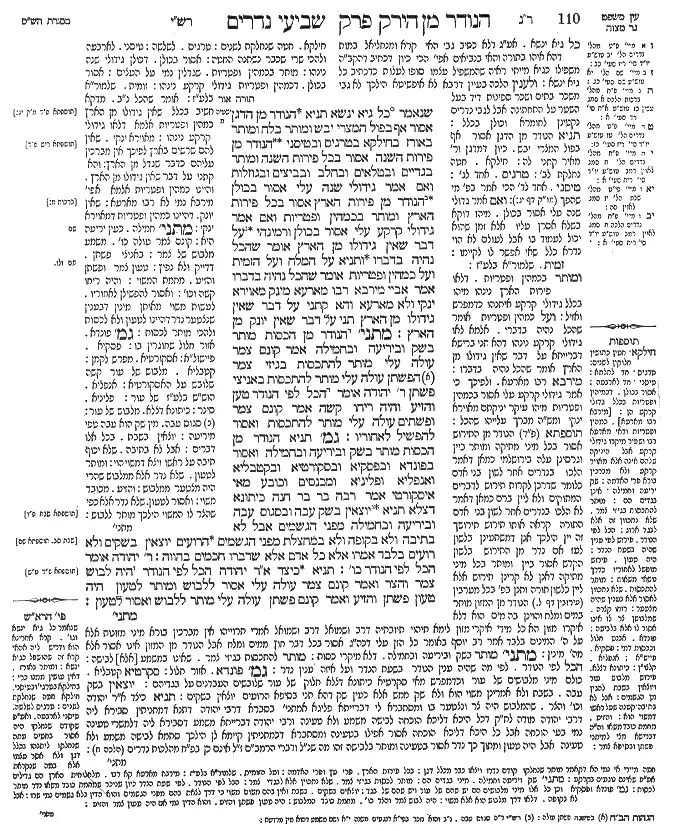
Nedarim 55b - Guemara
שנאמר (ישעיהו מ, ד) כל גיא ינשא תניא הנודר מן הדגן אסור אף בפול המצרי יבש ומותר בלח ומותר באורז בחילקא בטרגיס ובטיסני הנודר מן פירות השנה אסור בכל פירות השנה ומותר בגדיים ובטלאים ובחלב ובביצים ובגוזלות ואם אמר גידולי שנה עלי אסור בכולן הנודר מן פירות הארץ אסור בכל פירות הארץ ומותר בכמהין ופטריות ואם אמר גידולי קרקע עלי אסור בכולן ורמינהי על דבר שאין גידולו מן הארץ אומר שהכל נהיה בדברו ותניא על המלח ועל הזמית ועל כמהין ופטריות אומר שהכל נהיה בדברו אמר אביי מירבא רבו מארעא מינק מאוירא ינקי ולא מארעא והא קתני על דבר שאין גידולו מן הארץ תני על דבר שאין יונק מן הארץ:
מתני׳ הנודר מן הכסות מותר בשק וביריעה ובחמילה אמר קונם צמר עולה עלי מותר להתכסות בגיזי צמר הפשתן עולה עלי מותר להתכסות באניצי פשתן ר' יהודה אומר הכל לפי הנודר טען והזיע והיה ריחו קשה אמר קונם צמר ופשתים עולה עלי מותר להתכסות ואסור להפשיל לאחוריו:
גמ׳ תניא הנודר מן הכסות מותר בשק וביריעה ובחמילה ואסור בפונדא ובפסקיא ובסקורטיא ובקטבליא ואנפליא ופליניא ומכנסים וכובע מאי איסקורטי אמר רבה בר בר חנה כיתונא דצלא תניא יוצאין בשק עבה ובסגוס עבה וביריעה ובחמילה מפני הגשמים אבל לא בתיבה ולא בקופה ולא במחצלת מפני הגשמים הרועים יוצאין בשקים ולא רועים בלבד אמרו אלא כל אדם אלא שדברו חכמים בהווה:
ר' יהודה אומר הכל לפי הנודר כו':
תניא כיצד א"ר יהודה הכל לפי הנודר היה לבוש צמר והצר ואמר קונם צמר עולה עלי אסור ללבוש ומותר לטעון היה טעון פשתן והזיע ואמר קונם פשתן עולה עלי מותר ללבוש ואסור לטעון:
Comments from Rashi on Masechet Nedarim Page 55b
חילקא . חטה שנחלקת לשנים: טרגיס . לשלשה: טיסני . לארבעה ולהכי שרי שכבר נשתנה החטה: אסור בכולן . דכולן גידולי שנה נינהו: מותר בכמהין ופטריות . שגדלין נמי על העצים: אסור בכולן . דכמהין ופטריות גידולי קרקע נינהו: זומית . שלמור"א בלע"ז: אומר שהכל נ"ב . מדקא חשיב בכלל שאין גידולו מן הארץ כמהין ופטריות אלמא דלאו גידולי קרקע נינהו: מאוירא ינקי . שאין להם שרשים בארץ לפיכך אין מברכין עליהם כדבר שגדל מן הארץ: והא קתני על דבר שאין גידולו מן הארץ . והיינו כמהין ופטריות אלמא אפי' מירבא נמי לא רבו מארעא: שאין יונק . דהיינו כמהין ופטריות דמאוירא ינקי: מתני' חמילה . כעין יריעה היא: קונם צמר עולה כו' . משמע מלבוש של צמר: באניצי פשתן . . דדייק ולא נפיץ: טעון צמר ופשתן והזיע . מחמת המשוי: והיה ריחו קשה וכו': ואסור להפשילן לאחוריו . לעשות משוי מאותן מינין דבענין שנצטער נדר דהיינו לטעון ולא לכסות ולהכי מותר לכסות: גמ' פונדא . אזור חלול שחוגרין בו: פסקיא . פיישול"א: אסקורטיא . מפרש לקמן: קטבליא . מלבוש של עור קשה שלובש על האסקורטיא: אנפליא . הוש"ש בלע"ז של עור: פליניא . סינר: כיתונא דצלא . מלבוש של עור: סגוס עבה . מין שק הוא עבה טפי מיריעה: יוצאין בשבת .בכל אלו דברים: אבל לא בתיבה . שלא יכוף תיבה על ראשו ויצא דמשוי הוי: ומותר לטעון . שלא נדר אלא ממלבוש שהרי היה מצטער ממלבוש: והזיע . מכובד משוי: ואסור לטעון . שלא נדר אלא כפי שהצר לו המשוי הילכך מותר ללבוש:
Comments from Tosafot - Nedarim 55b
חילקא . חטין כתושין חלוקין לשנים: טרגיס . חד לתלתא: טיסני . חד לארבעה: אסור בכולן . דכמיהין ופטריות בכלל גדולי קרקע הן: [מירבא רבו מארעא] . כמהין ופטריות ודאי מארעא רבו ושפיר מיקרו גידולי קרקע אבל היניקה שלהם אינה אלא מאויר קרקע ולא מברכין בורא פרי האדמה: שק יריעה וחמילה . אינן בגדים הם: מותר להתכסות בגיזי צמר . שלא נתכוון זה אלא לבגד ארוג: הכל לפי הנודר . פירוש לפי ענין שהיה בשעת הנדר: היה טעון . פירוש מופשל לאחוריו כדרך נושאי משאות: מותר להתכסות . שלא נתכוון לאסור אלא בענין שהיה מצטער: רוחו קצרה . שמלבושן צר לו אינו אסור לו אלא בלבישה: פונדא . אבנט חלול וככסות דמי: פסקיא . פייש''א: אנפליא . קלצו''ן: כיתונא דצלא . פירוש מלבוש עור ויוצאין בשבת להגין מן הגשמים: אבל לא בתיבה . קטנה שעל ראשו דמשוי הוא: והזיע . מחמת כובד משאו וה''ה דברישא מצי למיתני פשתן ובסיפא צמר:
Nedarim 55b - Mishnah translated into english
as it is stated: “Every valley shall be lifted” (Isaiah 40:4). When Rav Yosef heard that interpretation, he understood that Rava was aware of the error of his ways in acting arrogantly toward his teacher, and was pacified by Rava’s display of humility.
§ It is taught in a baraita: For one who vows that grain [dagan] is forbidden to him, it is prohibited to partake of the dry cowpea, and it is permitted for him to partake of fresh cowpea. And it is permitted for him to partake of rice, as well as of wheat kernels split into two parts [ḥilka], of wheat kernels crushed into three parts [targeis], and wheat kernels crushed into four parts [tisnei]. For one who vows that produce of the year is forbidden to him, it is prohibited to partake of all produce of the year that grew from the ground or on trees, and it is permitted for him to partake of goats, and of lambs, and of milk, and of eggs, and of chicks born that year, as they are not included in the category of produce. And if he said: Growths of the year are forbidden to me, it is prohibited for him to eat all of them.
For one who vows that produce of the land is forbidden to him, it is prohibited for him to partake of all produce that grows from the land, and it is permitted for him to partake of truffles and mushrooms that are not in the category of produce of the land. But if he said: The growths of the ground are forbidden to me, it is prohibited for him to eat all of them.
And the Gemara raises a contradiction from a mishna (Berakhot 40b): And over a food item whose growth is not from the ground, one recites: By Whose word all things came to be. And it is taught in a baraita: Over salt and over brine [zamit], and over truffles and mushrooms, one recites: By Whose word all things came to be. Apparently, truffles and mushrooms are not in the category of growths of the ground. Abaye said: They grow from the earth, but with regard to sustenance, they draw sustenance from the air and not from the earth. The Gemara asks: Why is that distinction significant? Isn’t it taught: Over a food item whose growth is not from the ground one recites the blessing: By whose word all things came to be? Even according to Abaye, mushrooms grow from the ground. The Gemara answers: Emend the mishna to read: Over a food item that does not draw sustenance from the ground, one recites: By Whose word all things came to be.
MISHNA: For one who vows that a garment is forbidden to him, it is permitted to wear sackcloth, and to wear a sheet, and to wear a coarse curtain [ḥamila], as these are not in the category of garments. For one who said: Wool is konam for me and I will therefore not place it upon myself, it is permitted for him to cover himself with wool fleece, which is not considered a garment, and it is prohibited for him to wear only a woolen fabric. For one who said: Flax is konam for me and I will therefore not place it upon myself, it is permitted for him to cover himself with uncombed flax in bundles, and it is prohibited for him to wear only a flaxen fabric.
Rabbi Yehuda says: Everything is determined according to the one who vows. If one was bearing a burden of wool and linen, and was sweating, and its smell was unpleasant for him, and in reaction, he said: Wool and linen are konam for me and I will therefore not place them upon myself, it is permitted for him to cover himself with wool and linen garments, but it is prohibited for him to sling them over his shoulder behind him as a burden. The circumstances of his vow make it clear that he intends to forswear carrying wool and linen as a burden rather than the wearing of them as a garment.
GEMARA: It is taught in a baraita: For one who vows that a garment is forbidden to him, it is permitted to wear sackcloth, and to wear a sheet and to wear a coarse curtain, and it is prohibited for him to wear a money belt [punda], or to wear a sash [pesakiyya], or to wear a sekurtiyya, or to wear a leather spread [katavliyya], or to wear a leather sock [anpilya] or to wear a leather apron [pelinya], and trousers, and a hat. The Gemara asks: What is the meaning of iskurtei, mentioned in the baraita as sekurtiyya? Rabba bar Ḥana said: It means a tanner’s apron.
It is taught in a baraita: One may go out into the public domain on Shabbat covered in thick sackcloth or in a coarse woolen blanket [sagos], or in a sheet or in a coarse curtain as protection from the rain. They are considered garments, not burdens. However, he may neither go out covered in a box, nor in a basket, nor in a mat as protection from the rain, as they are considered burdens, not garments. Shepherds may go out on Shabbat covered in sackcloth, as they typically go out in sackcloth garments. And the Sages did not say this only with regard to shepherds; rather, they said that all people may go out wearing sackcloth; however, the Sages spoke in the present, addressing situations that were prevalent.
§ We learned in the mishna that Rabbi Yehuda says: Everything is determined according to the one who vows. It is taught in a baraita: How, i.e., in what circumstances, did Rabbi Yehuda say: Everything is according to the one who vows? If one was wearing a woolen garment and it caused him discomfort, and in reaction he said: Wool is konam for me, and I will therefore not place it upon myself, it is prohibited for him to wear woolen garments, but it is permitted to place a burden of woolen garments upon him. If one was burdened with flax and was sweating, and said: Flax is konam for me, and I will therefore not place it upon myself, it is permitted for him to wear flaxen garments and it is prohibited for him to place a burden of flaxen garments upon him.
Traduction : The William Davidson digital edition of the Koren Noé Talmud, with commentary by Rabbi Adin Even-Israel Steinsaltz.