 Talmud Bavli
The learning on the whole site is dedicated : L'ilui Nishmat Jamila bat Chlomo Abensour
The learning on the whole site is dedicated : L'ilui Nishmat יוסף בן מושה
The learning on the whole site is dedicated : L'ilui Nishmat Nissim ben Barukh Malka
Nedarim 27a : Youtube
Daf TubeYoutube
2 video classes :
Nedarim Page 27a
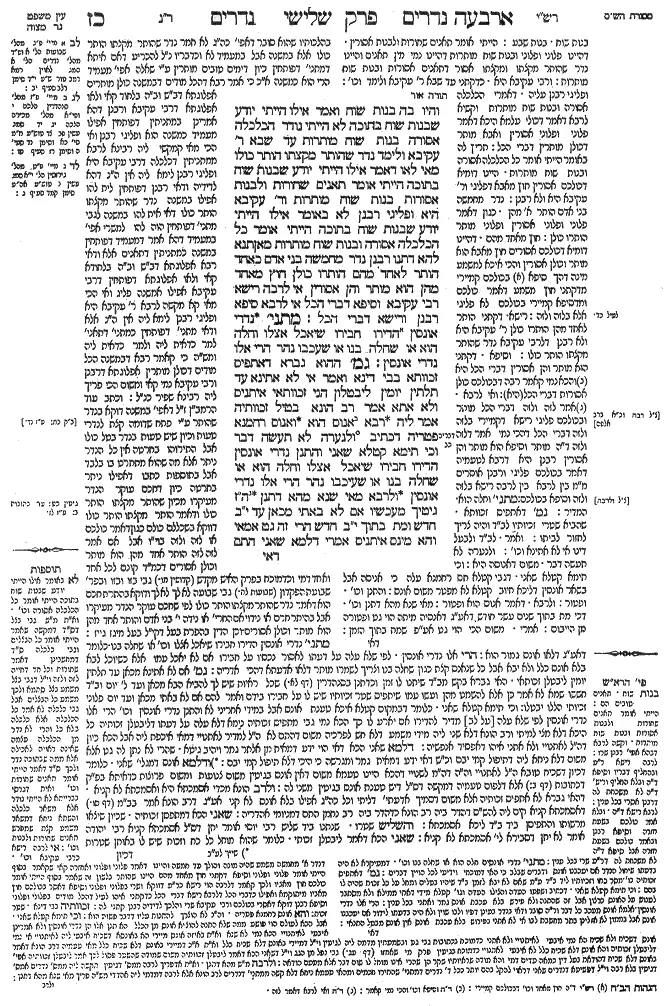
Nedarim 27a - Guemara
והיו בה בנות שוח ואמר אילו הייתי יודע שבנות שוח בתוכה לא הייתי נודר הכלכלה אסורה בנות שוח מותרות עד שבא רבי עקיבא ולימד נדר שהותר מקצתו הותר כולו מאי לאו דאמר אילו הייתי יודע שבנות שוח בתוכה הייתי אומר תאנים שחורות ולבנות אסורות בנות שוח מותרות ורבי עקיבא היא ופליגי רבנן לא באומר אילו הייתי יודע שבנות שוח בתוכה הייתי אומר כל הכלכלה אסורה ובנות שוח מותרות מאן תנא להא דתנו רבנן נדר מחמשה בני אדם כאחד הותר לאחד מהם הותרו כולן חוץ מאחד מהן הוא מותר והן אסורין אי לרבה רישא רבי עקיבא וסיפא דברי הכל אי לרבא סיפא רבנן ורישא דברי הכל:
מתני׳ נדרי אונסין הדירו חבירו שיאכל אצלו וחלה הוא או שחלה בנו או שעכבו נהר הרי אלו נדרי אונסין:
גמ׳ ההוא גברא דאתפיס זכוותא בבי דינא ואמר אי לא אתינא עד תלתין יומין ליבטלון הני זכוותאי איתניס ולא אתא אמר רב הונא בטיל זכוותיה אמר ליה רבא אנוס הוא ואנוס רחמנא פטריה דכתיב (דברים כב) ולנערה לא תעשה דבר וכי תימא קטלא שאני והתנן נדרי אונסין הדירו חבירו שיאכל אצלו וחלה הוא או שחלה בנו או שעיכבו נהר הרי אלו נדרי אונסין ולרבא מאי שנא מהא דתנן הרי זה גיטיך מעכשיו אם לא באתי מכאן עד י"ב חדש ומת בתוך י"ב חדש הרי זה גט אמאי והא מינס איתניס אמרי דלמא שאני התם
Comments from Rashi on Masechet Nedarim Page 27a
בנות שוח . בנות שבע: הייתי אומר תאנים שחורות ולבנות אסורין . דהיינו פלוני ופלוני ובנות שוח מותרות דהיינו נמי מין תאנים והיינו נדר שהותר מקצתו ומקצתו אסור דתאנים אסורות ובנות שוח מותרות: ורבי עקיבא היא . כדקתני עד שבא ר' עקיבא ולימד וכו': ופליגי רבנן עליה . דאמרי הכלכלה אסורה ובנות שוח מותרות וקשיא לרבא דאמר דכולי עלמא היכא דאמר פלוני ופלוני אסורין ואבא מותר דכולן מותרין דברי הכל: תריץ לה באומר הייתי אומר כל הכלכלה אסורה ובנות שוח מותרות . היינו דומיא דכולכם אסורין חוץ מאבא דפליגי ור' עקיבא היא ולא רבנן: נדר מחמשה בני אדם הותר א' מהן . כגון דאמר פלוני ופלוני אסורין ופלוני מותר הותרו כולן: חוץ מאחד מהם . דהיינו דומיא דכולכם אסורים חוץ מאבא הוא מותר וכולן אסורין והכי איכא למשמע מינה דהך סיפא בכולכם קמיירי מדקתני חוץ משמע דאמר כולכם ומדסיפא קמיירי בכולכם לא פליגי אלא בלזה ולזה: רישא . דקתני הותר לאחד מהן הותרו כולן ר' עקיבא היא ולא רבנן דלרבי עקיבא נדר שהותר מקצתו הותר כולו: וסיפא . דקתני הוא מותר והן אסורין דברי הכל היא והכא נמי קאמר רבה דבכולכם כולן אסורות דברי הכל (היא): ואי לרבא . אמר לזה ולזה דברי הכל מותר ובכולכם פליגי רישא דקמיירי בלזה ולזה דברי הכל דהכי נמי אמר דלזה ולזה ד"ה מותר וסיפא הוא מותר והן אסורין רבנן היא דרבא לטעמיה דאמר בכולכם פליגי ורבנן אוסרים מ"מ בין לרבא בין לרבה רישא בלזה ולזה וסיפא בכולכם: מתני' וחלה הוא . המדיר: גמ' דאתפיס זכוותא . שהביא שטרי זכיותיו לב"ד והיה צריך לחזור לביתו: ואמר . לב"ד ולבעל דינו אי לא אתינא וכו': ולנערה לא תעשה דבר . משום דאנוסה היא: וכי תימא קטלא שאני . דגבי קטלא חס רחמנא עלה כי אניסה אבל בשאר אונסין דליכא חיוב קטלא לא מפטר משום אונס: והתנן וכו' . ופטור: ולרבא . דאמר אנוס הוא ופטור: מאי שנא מהא דתנן וכו' . דכי מת בתוך שנים עשר חודש דאע"ג דאנסיה מיתה הוי גט ופטורה מן הייבום: אמרי . משום הכי הוי גט אע"פ שמת בתוך הזמן:
Comments from Tosafot - Nedarim 27a
לא באומר אילו הייתי יודע שבנות שוח בתוכה הייתי אומר כל הכלכלה אסורה וכו' . וא''ת מ''ש גבי בצל דס''ד דמקשה שאמר הייתי אומר כל הבצלים וגבי כלכלה ס''ד דמחשבינן דאמר שחורות וכל חד דחייה לזה ולזה וי''ל דגבי בצל משמע בצל סתמא ולכך משמע כל הבצלים אבל גבי כלכלה לא אמר כל הכלכלה אלא כלכלה בלא כל והרי לא נדר מן הכלכלה עצמה שאינה ראויה לאכילה אלא ממה שבתוכה נדר ולכך ס''ד דאמר הייתי אומר תאנים שחורות וכו' ואית דגרסי בברייתא לא הייתי נודר אלא משאר כלכלה והשתא ניחא דמשאר משמע קצת שמפרש תאנים שחורות ולבנות וכו': אי לרבה רישא כרבי עקיבא וכו' . דנדר א' מחמשה משמע שהיה מונה והולך עד חמשה והיינו דאמר פלוני ופלוני ואחזרה קאי שקאמר בסוף הייתי אומר פלוני ופלוני וסיפא דקתני חוץ מאחד מהם היינו שהותר בלשון זה שאמר בסוף הייתי אומר כולכם חוץ מאביו ולכך קאמר דלרבה הוי רישא כר''ע דווקא ושרי בפלוני ופלוני וסיפא דאסר בכולכם חוץ מאביו מיתוקמא ואפילו כדברי הכל דלרבא רישא דברי הכל כדקתני איהו לעיל דהכל מודים בפלוני ופלוני וסיפא רבנן דוקא דאסרי בכולכם ורבי עקיבא שרי והלכך לדידיה רבנן קתני לה: זכוותיה בבי דינא . שטר זכות: והא אונס רחמנא פטריה . וה''נ לא הוצרך להתנות עליו דדבר פשוט הוא: וכי תימא קטלא שאני . אבל הכא לעולם הוי פושע ממה שלא התנה להוציא אונס מן הכלל הא תנן אלו הן נדרי אונסין ולא אמרינן איבעי לאיתנויי הכא נמי לא שנא וא''ת באיזה אונס מיירי הא באונסא דשכיח איבעי ליה לאיתנויי אי נמי אונס דשכיח ולא שכיח הא נמי איבעי לאיתנויי ולא אתני כדמוכח בכתובות גבי גט ובשמעתין מדמה ליה לגיטין וי''ל דמיירי באונס דלא שכיח כלל וא''ת א''כ דמיירי באונס דלא שכיח כלל מאי טעמיה דרב הונא דאמר דליבטלן זכותיה והא אונס דלא שכיח כלל לא איבעי לאתנויי כדמוכח בגיטין פרק מי שאחזו (דף עג .) גבי נפל מן הגג וי''ל דשאני הכא דאמר ליבטלן זכוותיה משום שמודה שהשטר פסול לכך אמר ליבטלן זכוותיה אפי' באונס דלא שכיח דהודאת בעל דין כמאה עדים דמי והא מודה שראיותיו שקר הן שהרי אינו מוחל לו שום דבר אלא מטעם הודאה:
Nedarim 27a - Mishnah translated into english
and there were benot shuaḥ in it, and he said: Had I known that there were benot shuaḥ in it I would not have taken a vow, the basket and the remaining figs inside are forbidden, while the benot shuaḥ are permitted. This was the accepted ruling until Rabbi Akiva came and taught: A vow which is dissolved partially is dissolved completely. Therefore, all of the produce is permitted. What, is it not referring to a case where one said: Had I known that benot shuaḥ were inside it, I would have said that black and white figs are forbidden, and benot shuaḥ are permitted, and this is the opinion of Rabbi Akiva, and the Rabbis disagree with him? But according to Rava everyone agrees that all the produce is permitted in a case like this.
The Gemara responds: No, it is possible to say that it is speaking of a case where he says: Had I known that there were benot shuaḥ in it I would have said that the entire basket is forbidden and the benot shuaḥ are permitted, which is the opinion of Rabbi Akiva according to Rava.
The Gemara asks: Who is the tanna who taught that which the Sages taught: With regard to one who took a vow, in one utterance, prohibiting himself from deriving benefit from five people, if the vow is dissolved for one of them, then the vow concerning all of them is dissolved; but if he retracted and said: I am prohibited to derive benefit from all of these individuals except for one of them, then he, i.e., that individual who was excluded, is permitted and they, the others, are forbidden?
The Gemara explains two possibilities: If one says that it is in accordance with the explanation of Rabba, then the first clause is referring to a case where after having taken a vow prohibiting himself from deriving benefit from all five people, he retracted and said: Benefit from this one and from that one are forbidden but benefit from one is permitted, and it is in accordance with the opinion of Rabbi Akiva, that a vow which is dissolved partially is dissolved completely. And the latter clause is where he adds to the initial vow by stating: Except for one of them, and everyone agrees that only that one is permitted. If one says that it is in accordance with the explanation of Rava, the latter clause is in accordance with the opinion of the Rabbis, and everyone agrees with the ruling of the first clause.
MISHNA: What are examples of vows impeded by circumstances beyond one’s control? If one’s friend took a vow with regard to him that he should eat with him, and he became sick, or his son became sick, or a river that he was unable to cross barred him from coming, these are examples of vows whose fulfillment are impeded by circumstances beyond one’s control. They are not binding and do not require dissolution.
GEMARA: The Gemara relates that there was a certain man who had a dispute in court with another individual and wanted to postpone the trial to a later time in order to search for more evidence. Meanwhile, he deposited his documents for a favorable verdict, i.e., that supported his claim, in court, and since the other litigant did not believe that he would return, the man said: If I do not come back within thirty days, these documents for a favorable verdict will be void. He was impeded by circumstances beyond his control and did not come back. Rav Huna said: His documents for a favorable verdict are void since he did not return by the specified time.
Rava said to him: He is a victim of circumstances beyond his control and the halakha is that the Merciful One exempted a victim of circumstances beyond his control from responsibility for his actions, as it is written concerning a young woman who was raped: “But unto the damsel you shall do nothing; there is in the damsel no sin worthy of death” (Deuteronomy 22:26).
And if you would say that with regard to the penalty of death, which is extremely severe, the halakha is different, and she is treated leniently and not executed, but with regard to other transgressions one’s actions are treated as deliberate, but didn’t we learn in the mishna here: What are examples of vows whose fulfillment are impeded by circumstances beyond one’s control? If one’s friend took a vow with regard to him that he should eat with him, and he became sick, or his son became sick, or a river that he was unable to cross barred him from coming, these are examples of vows whose fulfillment are impeded by circumstances beyond one’s control; they are not binding and do not require dissolution. This demonstrates that even here the exemption due to circumstances beyond one’s control should apply.
The Gemara asks: And according to Rava, in what way is it different from that which we learned in a mishna (Gittin 76b): If a man says to his wife: This is your bill of divorce from now if I do not arrive from now until the conclusion of twelve months, and he died within those twelve months, this document is a valid bill of divorce from the time of his declaration. Why? But he was a victim of circumstances beyond his control, as death is the ultimate example of this? The Gemara answers: Say that perhaps it is different there,
Traduction : The William Davidson digital edition of the Koren Noé Talmud, with commentary by Rabbi Adin Even-Israel Steinsaltz.