 Talmud Bavli
Nedarim 53b : Youtube
Daf TubeYoutube
2 video classes :
Nedarim Page 53b
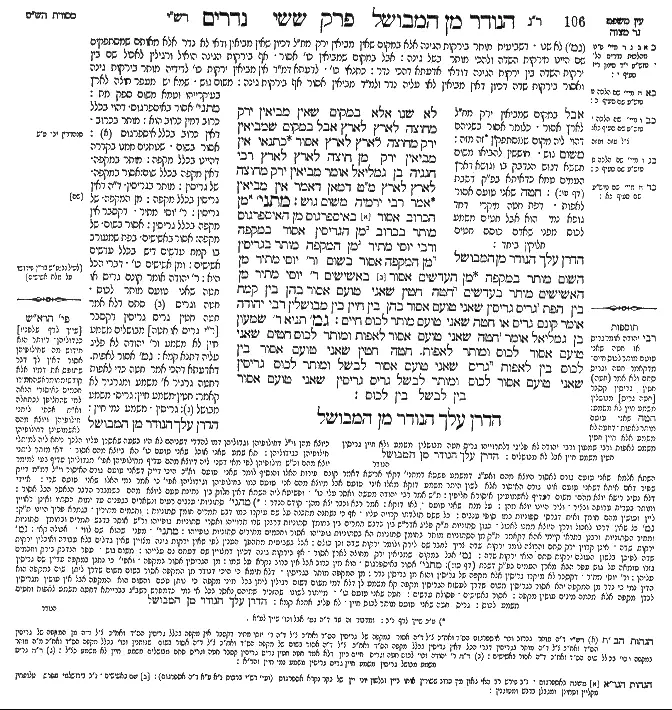
Nedarim 53b - Guemara
לא שנו אלא במקום שאין מביאין ירק מחוצה לארץ לארץ אבל במקום שמביאין ירק מחוצה לארץ לארץ אסור כתנאי אין מביאין ירק מן חוצה לארץ לארץ רבי חנניה בן גמליאל אומר מביאין ירק מחוצה לארץ לארץ מ"ט דמאן דאמר אין מביאין אמר רבי ירמיה משום גוש:
מתני׳ מן הכרוב אסור באיספרגוס מן האיספרגוס מותר בכרוב מן הגריסין אסור במקפה ורבי יוסי מתיר מן המקפה מותר בגריסין מן המקפה אסור בשום ור' יוסי מתיר מן השום מותר במקפה מן העדשים אסור באשישים ר' יוסי מתיר מן האשישים מותר בעדשים חטה חטין שאני טועם אסור בהן בין קמח בין הפת גריס גריסין שאני טועם אסור בהן בין חיין בין מבושלין רבי יהודה אומר קונם גריס או חטה שאני טועם מותר לכוס חיים:
גמ׳ תניא ר' שמעון בן גמליאל אומר חטה שאני טועם אסור לאפות ומותר לכוס חטים שאני טועם אסור לכוס ומותר לאפות חטה חטין שאני טועם אסור בין לכוס בין לאפות גריס שאני טועם אסור לבשל ומותר לכוס גריסין שאני טועם אסור לכוס ומותר לבשל גריס גריסין שאני טועם אסור בין לבשל בין לכוס:
הדרן עלך הנודר מן מבושל
Comments from Rashi on Masechet Nedarim Page 53b
(גמ') לא שנו . דשביעית מותר בירקות הגינה אלא במקום שאין מביאין ירק מח"ל דכיון שאין מביאין ודאי לא נדר אלא מאותם שמסתפקים שם היינו מירקות השדה ולהכי מותר בשל גינה: אבל במקום שמביאין כו' אסור . אף בירקות הגינה הואיל ורגילין לאכול שם בין ירקות השדה בין ירקות הגינה דודאי אדעתא דהכי נדר: כתנאי כו' . לדעתא דמ"ד אין מביאין ירקות כו' לדידיה מותר בירקות גינה ואסור בירקות שדה דכיון דאין מביאין לאו עליה נדר ולמ"ד מביאין אסור אף בירקות גינה: משום גוש . שמא יש מעפר חוצה לארץ בעיקרייהו וטמא משום ספק מת: מתני' אסור באיספרגוס . דהוי בכלל כרוב דמין כרוב הוא: מותר בכרוב . דאין כרוב בכלל איספרגוס: אסור במקפה . של גריסין: מותר בגריסין . ד"ה דאין גריסין בכלל מקפה: מן המקפה . של גריסין: אסור בשום . שנותנים ממנו בקדרה דהיינו בכלל מקפה: ר' יוסי מתיר . דקסבר אין מקפה בכלל גריסין: אסור בשום . של מקפה: מותר במקפה . דאין מקפה בכלל שום: אסור באשישים . בפת שמעורב בו קמח עדשים דיש בכלל עדשים אשישים: ומן אשישים כו' . דברי הכל היא: ר' יהודה אומר קונם גריס או חטה שאגי טועם מותר לכוס . חטה וגריס סתם דלא אמר חטה חטין גריס גריסין דקסבר [ר"י גריס או חטה] מבושלים משמע חיין לא משמע ור' יהודה לא פליג עליה דתנא קמא: גמ' אסור לאפות . דאדעתא דהכי אמר חטה כדי לאפות דחטה גרגיר א' משמע ומגרגיר לא קאמר: חטין . משמע חיין: גריס . משמע מבושל: גריסין . משמע נמי חיין:
Comments from Tosafot - Nedarim 53b
לא שנו דבשביעית מותר בירקות גינה משום דלא שכיחי שיאכלו ירקות גינה אלא במקום שאין מביאין כו' אבל במקום שמביאין שכיח הוא ירקי גינה ונתכוין לאסור ירקי גינה בשביעית: משום גוש . דדרך הירק להיות גוש תלוי בו וגזרו על גוש ארץ העמים: איספרגוס מין כרוב הוא ובכלל כרוב הוא: מן האיספרגוס מותר בכרוב . דשאר כרוב אינם קרויין איספרגוס: מן הגריסין אסור במקפה של גריסין . שנקראת גריסין אף כשהן בתבשיל אבל מן המקפה מותר בגריסין יבשין דלא תימא דכי נדר במקפה מן הראוי למקפה קאמר והיינו גריסין ולרבנן איצטריך דאע''ג דאסרי שום כשנדר במקפה הכא מודו: מן השום מותר במקפה . דלא נתכוון אלא לשום יבש: מן האשישים . פי' פסולת עדשים מותר בעדשים שאין העדשים נקראין אשישין מן העדשים אסור באשישים שהם נקראים על שם העדשים ור''י מתיר דסבר דאינם בכלל עדשים: חטה חטין שאני טועם אסור בין בחטין בין בפת . דחיטה משמע לאפות ומיהו בברייתא בגמ' גרסינן איפכא ושמא טוב לפרש הכא חטה או חיטים גריס או גריסין אסור בין חיין בין מבושלין ורבי שמעין ורבי יהודה מחלקין בין חטה לחטין גריס גריסין כדמפרש גבי חטה חטין רבי יהודה אמר קונם גריס או חטה שאני טועם מותרין לכוס חיין דחטה וגריס משתמעי מבושלין: רבי יהודה אומר גריס או חטה שאני טועם מותר לכוס חיים . מדקאמר חטה וגריס סתם ולא אמר (חטה) חטין גריסין קסבר [חטה גריס] מבושלין משמע חיין לא משמע: חטה שאני טועם מותר לאפות . דחטה לא משמע אלא חיין חטין משמע לאפות ורבי שמעון ורבי יהודה לא פליגי דלתרוייהו גריס חטה מבושלין משמע ולא חיין גריסין חטין משמע חיין אבל לא מבושלים:
Nedarim 53b - Mishnah translated into english
They taught that if he takes the vow in the Sabbatical Year he is permitted to eat garden vegetables only if he is in a place where people do not bring vegetables from outside of Eretz Yisrael to Eretz Yisrael. However, in a place where people bring vegetables from outside of Eretz Yisrael, where the halakhot of the Sabbatical Year do not apply, to Eretz Yisrael, he is prohibited from eating garden vegetables as well, as they are widely available, and therefore included in the unspecified word vegetable.
The Gemara comments that this distinction is like a dispute between tanna’im cited in a baraita: One may not bring vegetables from outside of Eretz Yisrael to Eretz Yisrael. Rabbi Ḥananya ben Gamliel says: One may bring vegetables from outside of Eretz Yisrael to Eretz Yisrael. The Gemara asks: What is the reason of the one who said that one may not bring vegetables from outside of Eretz Yisrael? Rabbi Yirmeya said: It is because a clod of earth might be brought with the vegetables to Eretz Yisrael. Earth from outside of Eretz Yisrael is ritually impure, and bringing it to Eretz Yisrael would spread ritual impurity in the land.
MISHNA: One who vows that cabbage is forbidden to him is prohibited from eating ispargus, as that is a type of cabbage. However, one who vows that ispargus is forbidden to him is permitted to eat cabbage.
One who vows that pounded beans are forbidden to him is prohibited from eating pounded bean stew [mikpa]. However, Rabbi Yosei rules that he is permitted to eat it. One who vows that pounded bean stew is forbidden to him is permitted to eat pounded beans according to all opinions. One who vows that stew is forbidden to him is prohibited from eating the garlic of the stew. However, Rabbi Yosei rules that he is permitted to eat the garlic. One who vows that garlic is forbidden to him is permitted to eat stew.
One who vows that lentils are forbidden to him is prohibited from eating ashishim, a dish made from lentils. However, Rabbi Yosei permits it. It is agreed by all opinions that one who vows that ashishim is forbidden to him is permitted to eat lentils.
If one says: Ḥitta, wheat in singular form, or ḥittim, wheat in plural form, are konam for me, and for that reason I will not taste them, he is prohibited from eating wheat, whether as flour or bread. If one says: Pounded bean or pounded beans are konam for me, and for that reason I will not taste them, he is prohibited from eating them, whether raw or cooked. Rabbi Yehuda says that if one says: Pounded bean or ḥitta is konam for me, and for that reason I will not taste them, he is permitted to chew them raw, as that is not the normal way to eat them, and therefore was not included in the intention of the vow.
GEMARA: It is taught in a baraita that Rabbi Shimon ben Gamliel says that if one vows: Ḥitta is konam for me, and for that reason I will not taste it, he is prohibited from eating baked wheat, i.e., baked wheat bread, but he is permitted to chew wheat grains. If one says: Ḥittim are konam for me, and for that reason I will not taste them, he is prohibited from chewing wheat grains but is permitted to bake them, as this term is referring to grains of wheat. If one says: Ḥitta or ḥittin are konam for me, and for that reason I will not taste them ,he is prohibited both from chewing wheat grains and from baking wheat bread.
Similarly, if one says: Pounded bean is konam for me, and for that reason I will not taste it, he is prohibited from cooking pounded bean, i.e., from eating a dish of cooked pounded beans, as that is what the word pounded bean commonly means, but he is permitted to chew raw pounded beans. If one says: Pounded beans are konam for me, and for that reason I will not taste them, he is prohibited from chewing pounded beans but is permitted to cook them. If one says: Pounded bean or pounded beans are konam for me, and for that reason I will not taste them, he is prohibited from both cooking and chewing pounded beans.
Traduction : The William Davidson digital edition of the Koren Noé Talmud, with commentary by Rabbi Adin Even-Israel Steinsaltz.